Check out this FREE Trial Lesson on Addition & Subtraction for age 3-6!

A

Favorites
With answer key
Interactive
  • 3-6
  • Basic Addition Skills
  • Addition & Subtraction
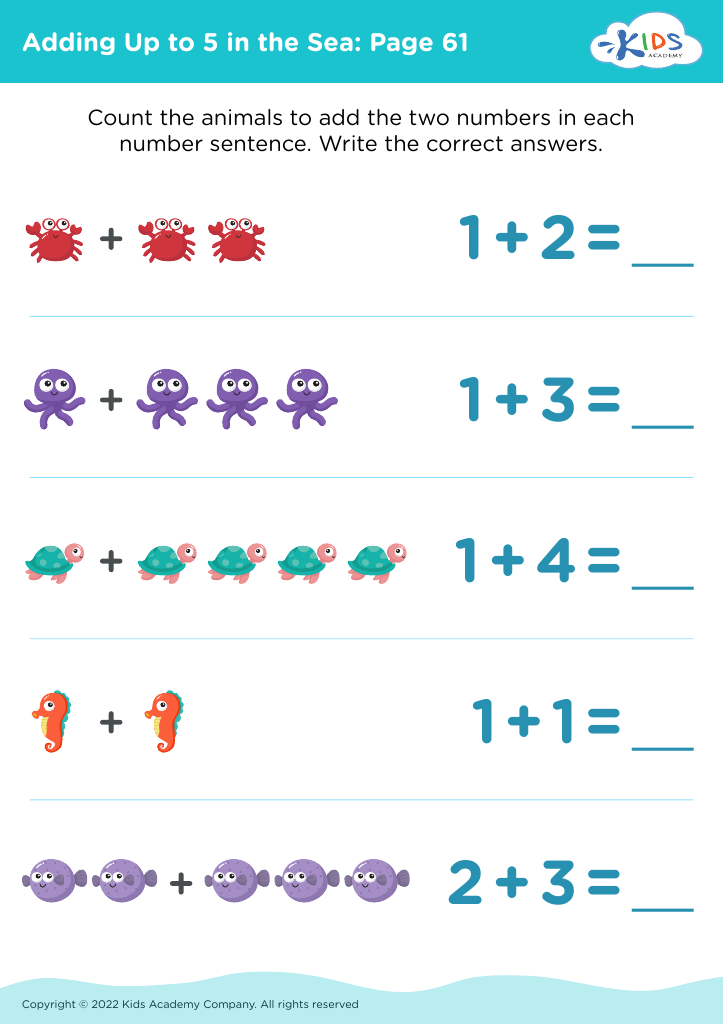
Adding Up to 5 in the Sea: Page 61
Worksheet
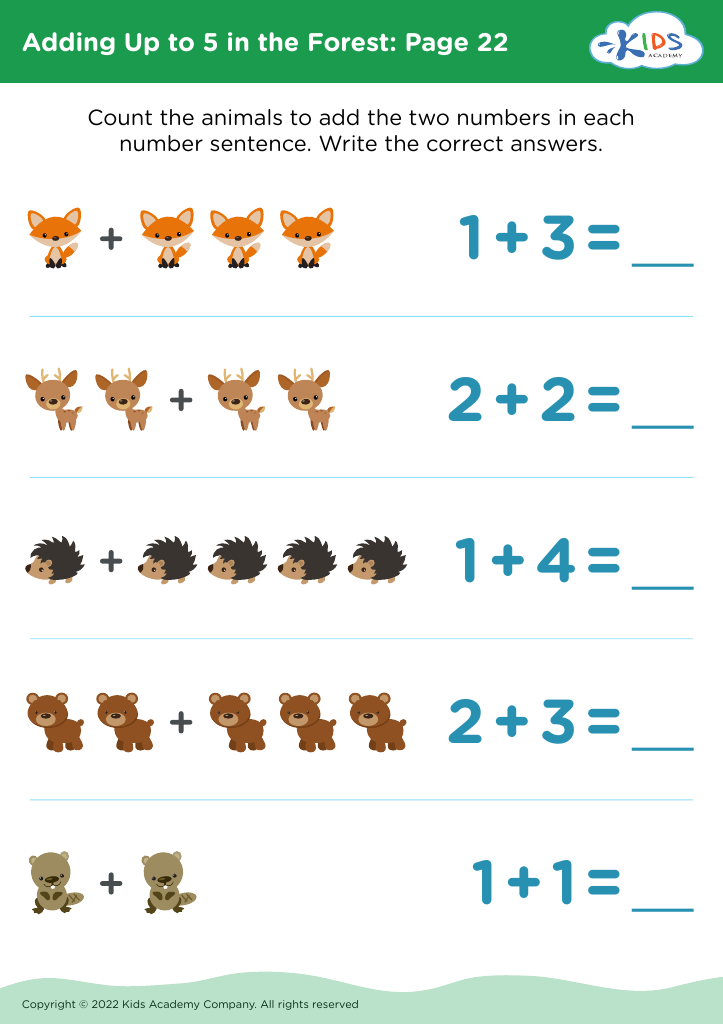
Adding Up to 5 in the Forest: Page 22
Worksheet
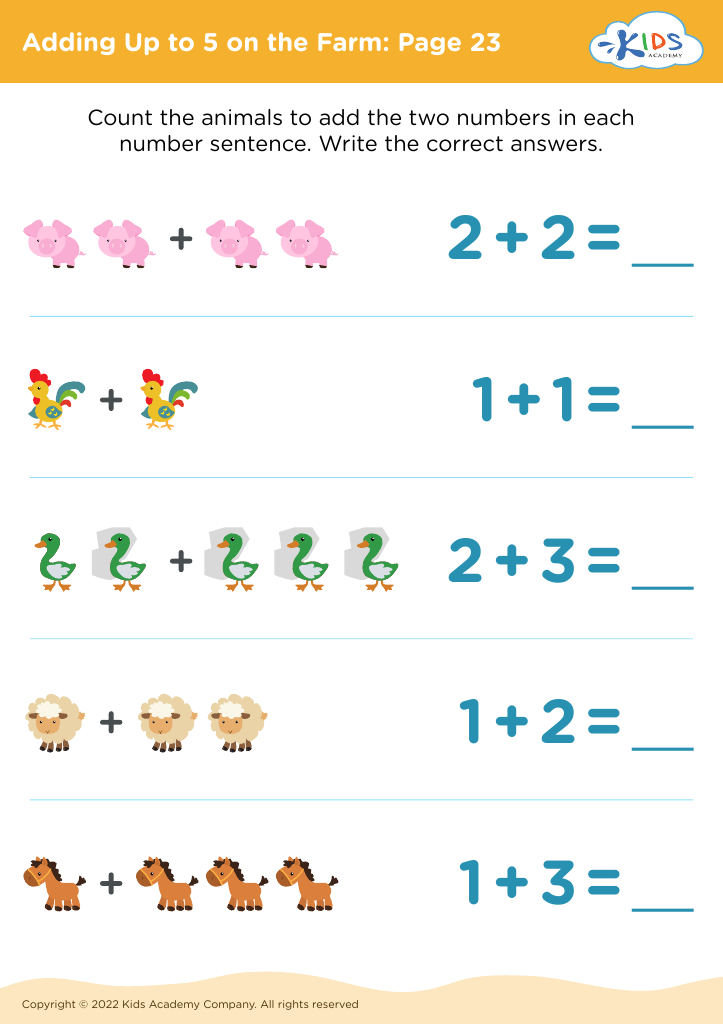
Adding Up to 5 on the Farm: Page 23
Worksheet
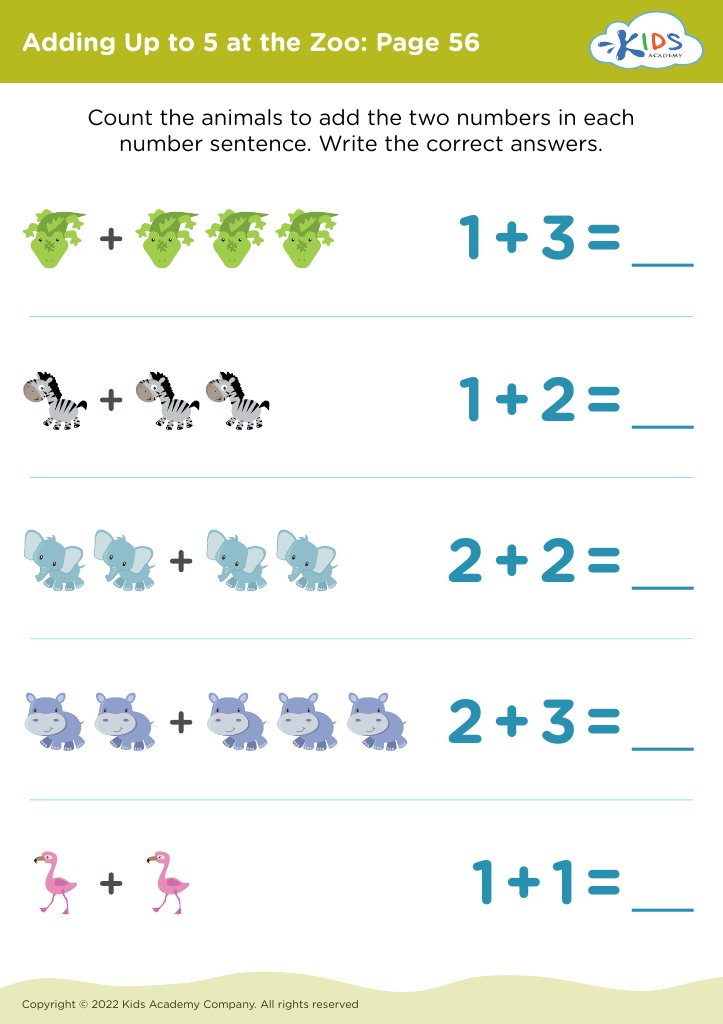
Adding Up to 5 at the Zoo: Page 56
Worksheet
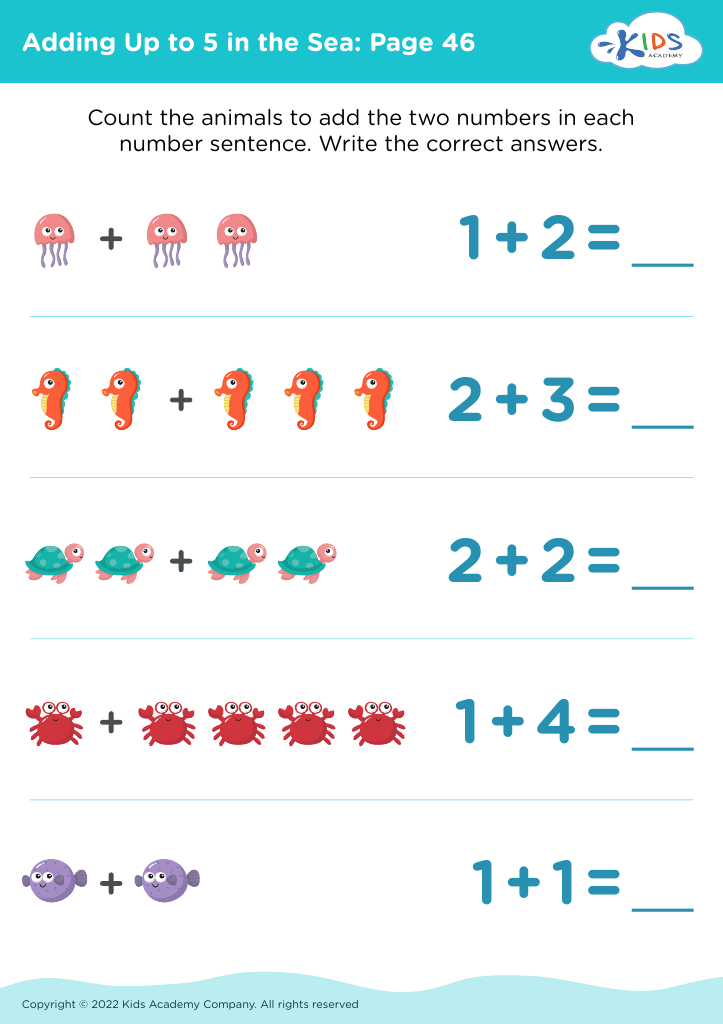
Adding Up to 5 in the Sea: Page 46
Worksheet
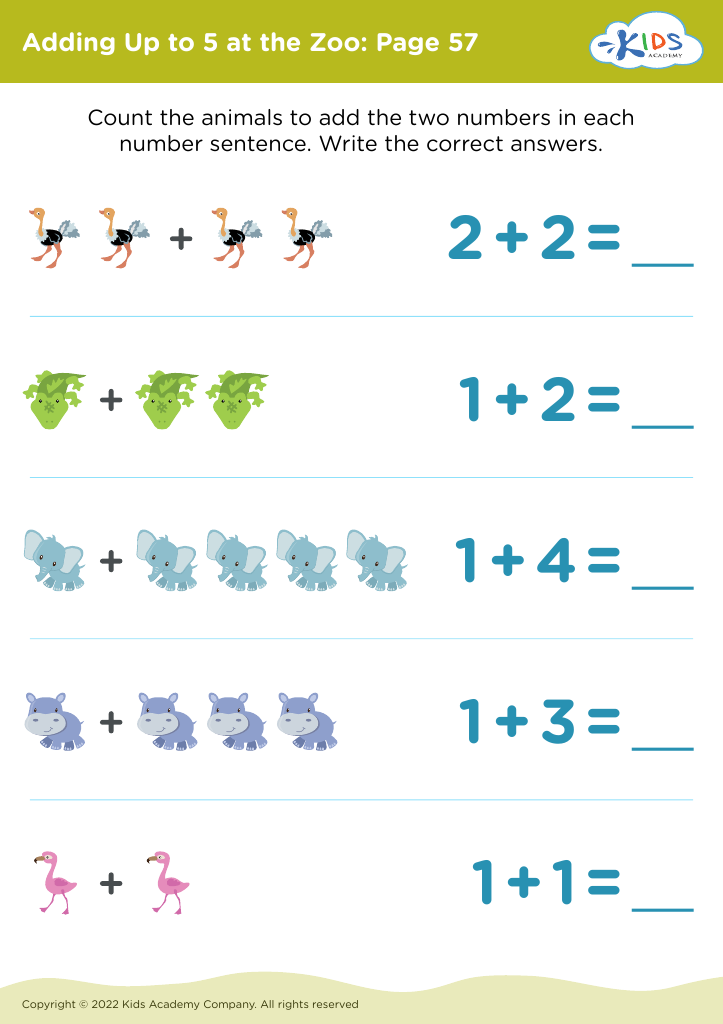
Adding Up to 5 at the Zoo: Page 57
Worksheet
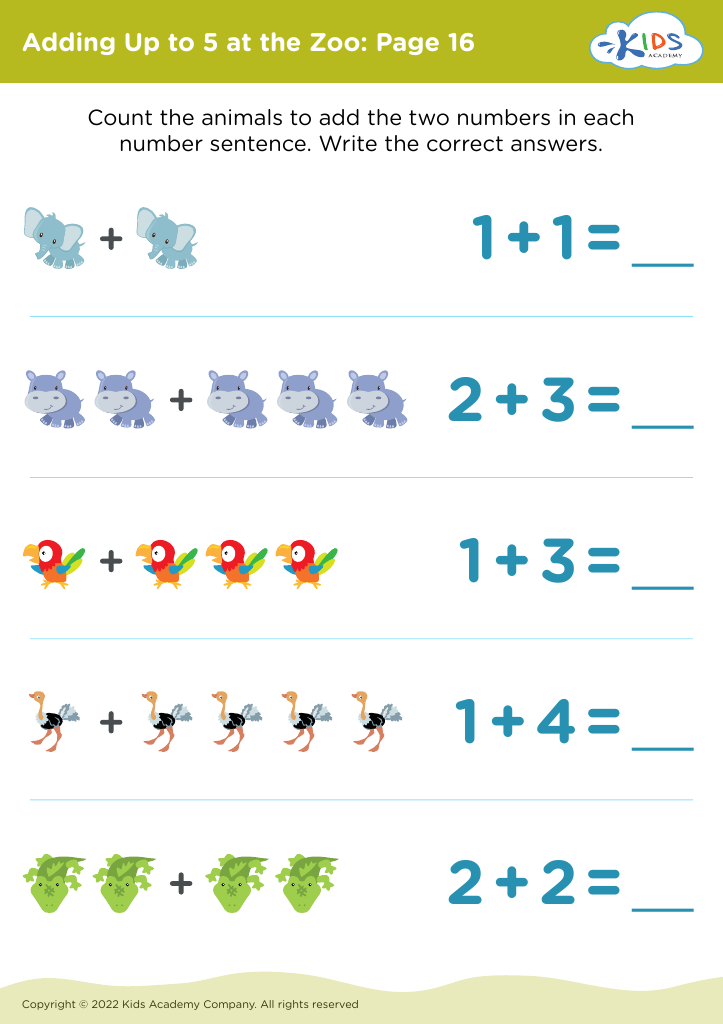
Adding Up to 5 at the Zoo: Page 16
Worksheet
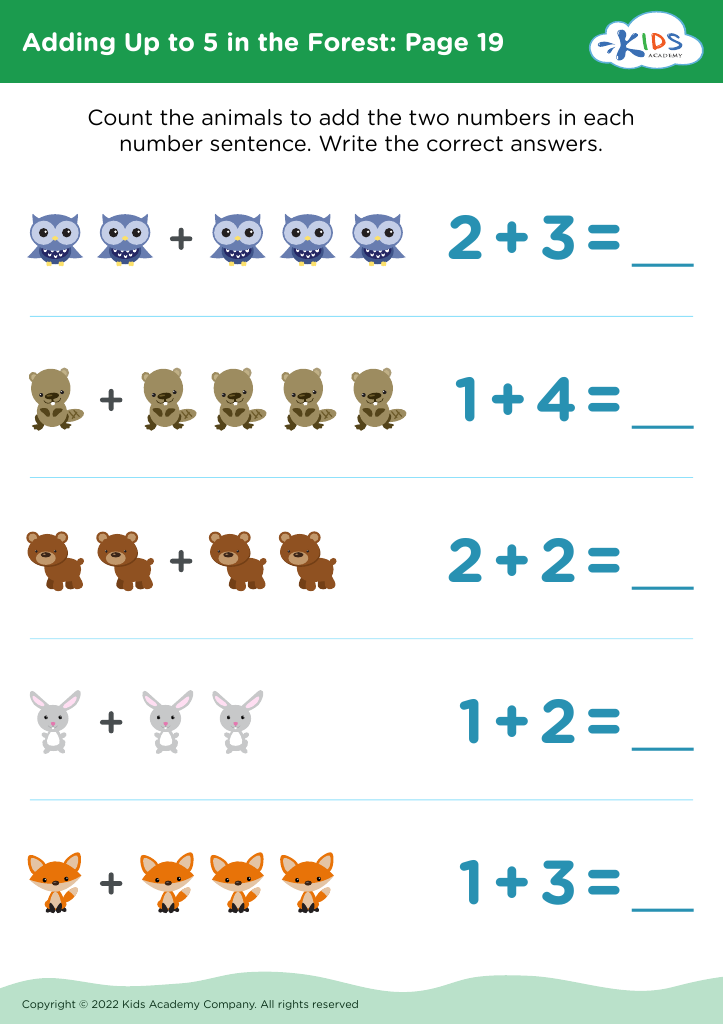
Adding Up to 5 in the Forest: Page 19
Worksheet
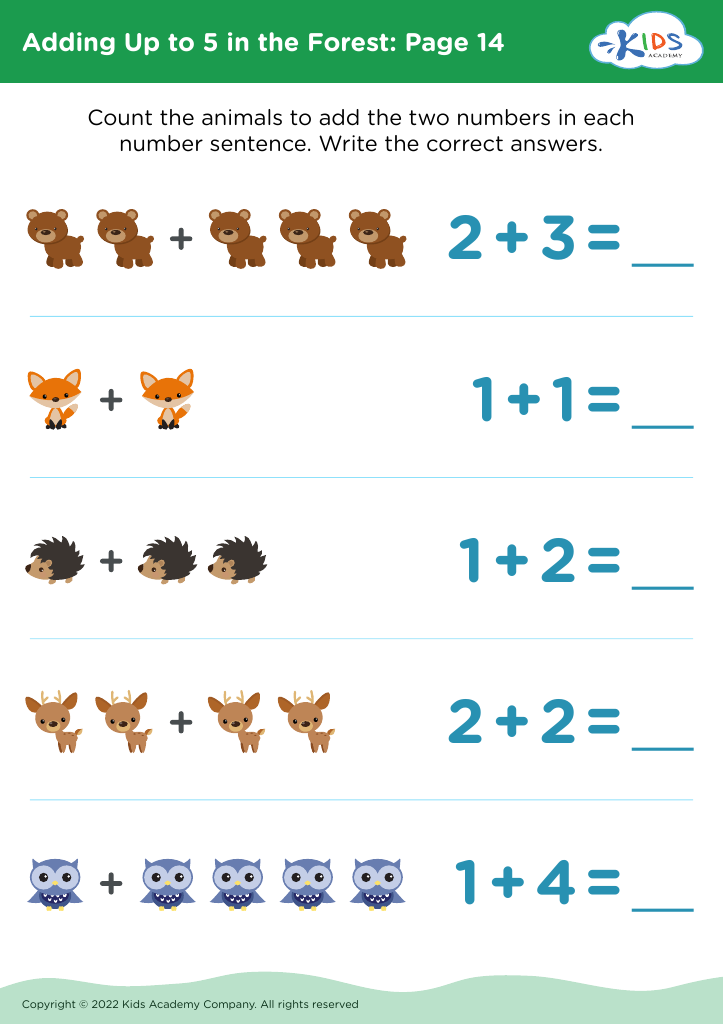
Adding Up to 5 in the Forest: Page 14
Worksheet
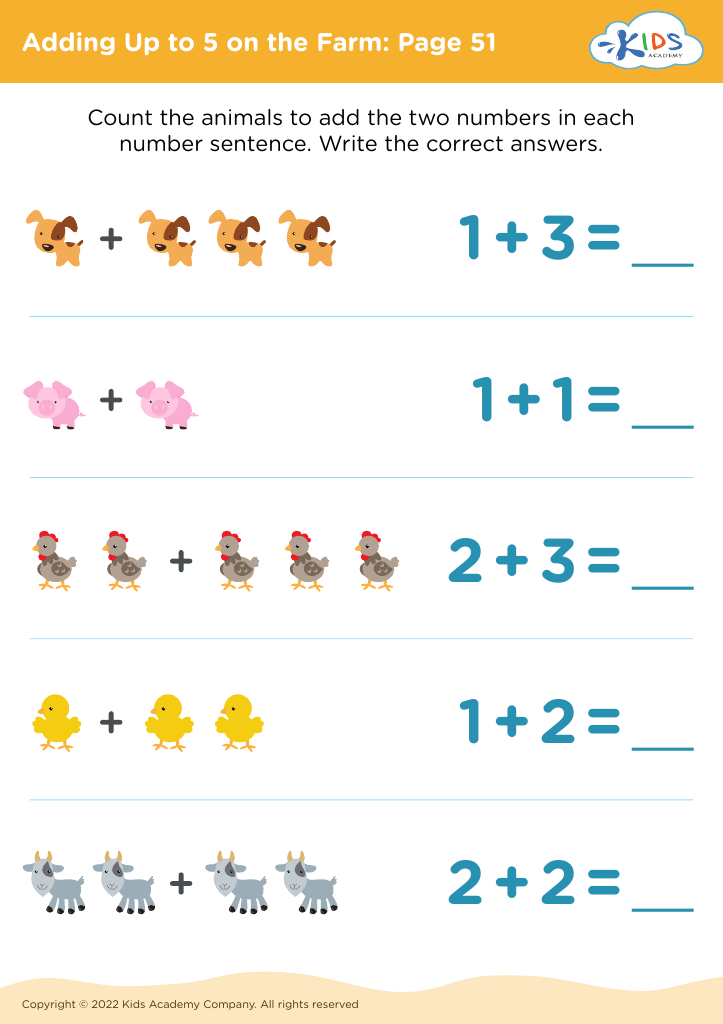
Adding Up to 5 on the Farm: Page 51
Worksheet
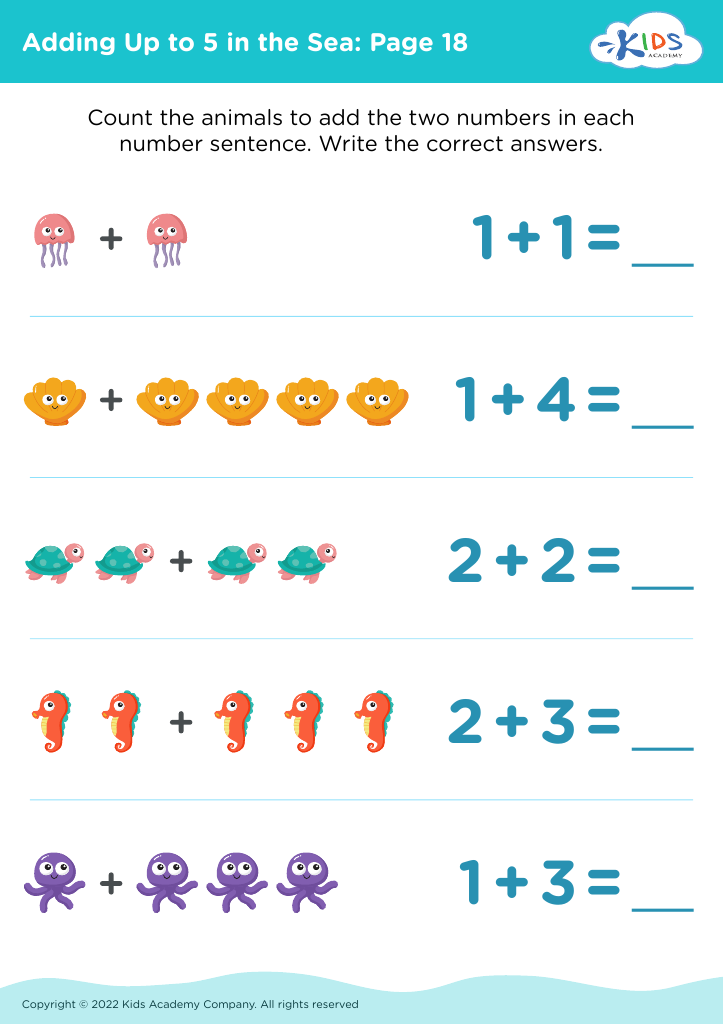
Adding Up to 5 in the Sea: Page 18
Worksheet
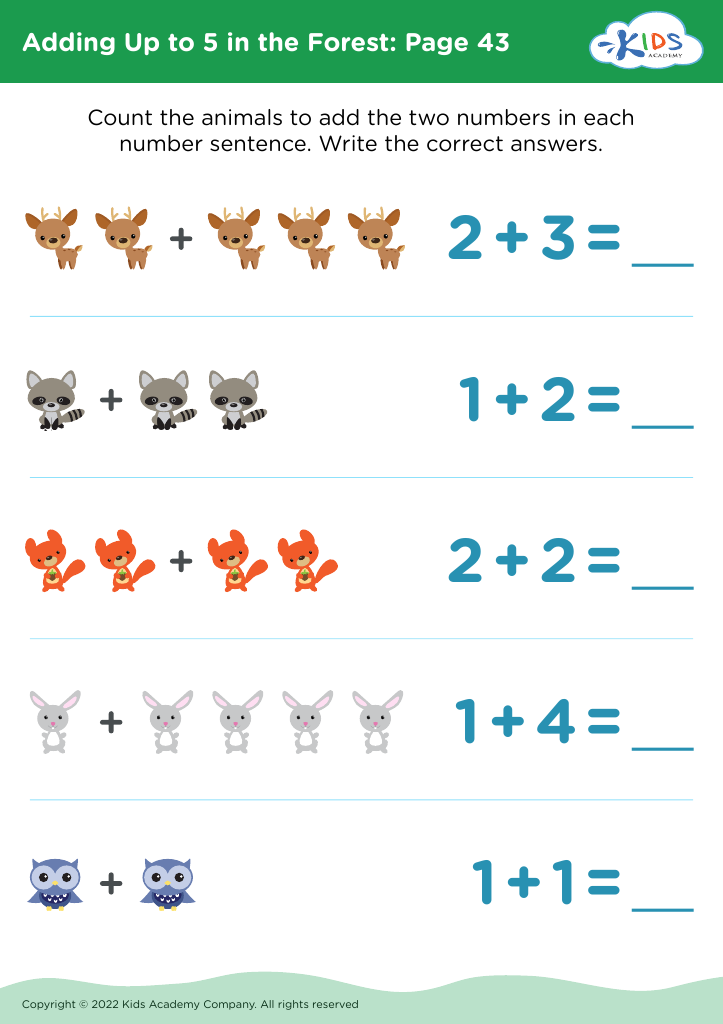
Adding Up to 5 in the Forest: Page 43
Worksheet
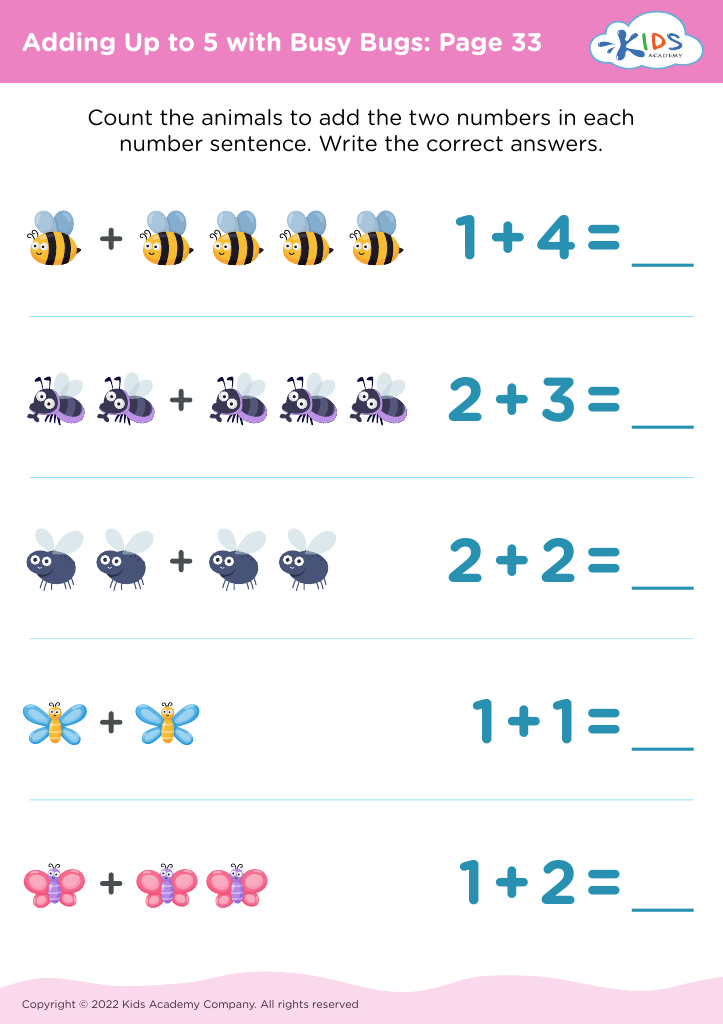
Adding Up to 5 with Busy Bugs: Page 33
Worksheet
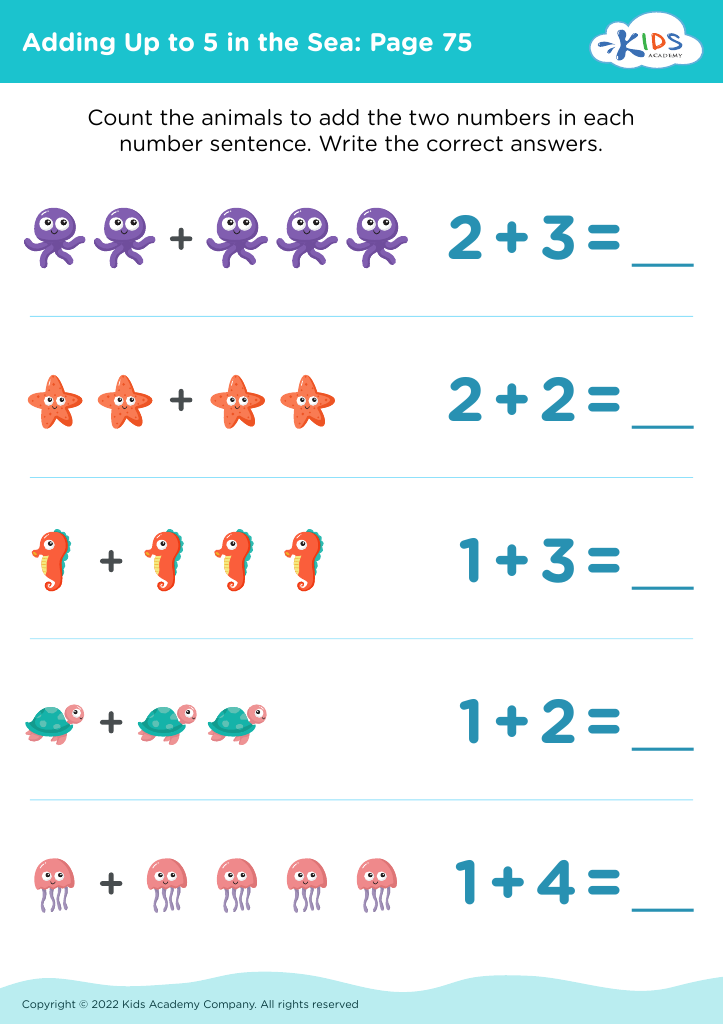
Adding Up to 5 in the Sea: Page 75
Worksheet
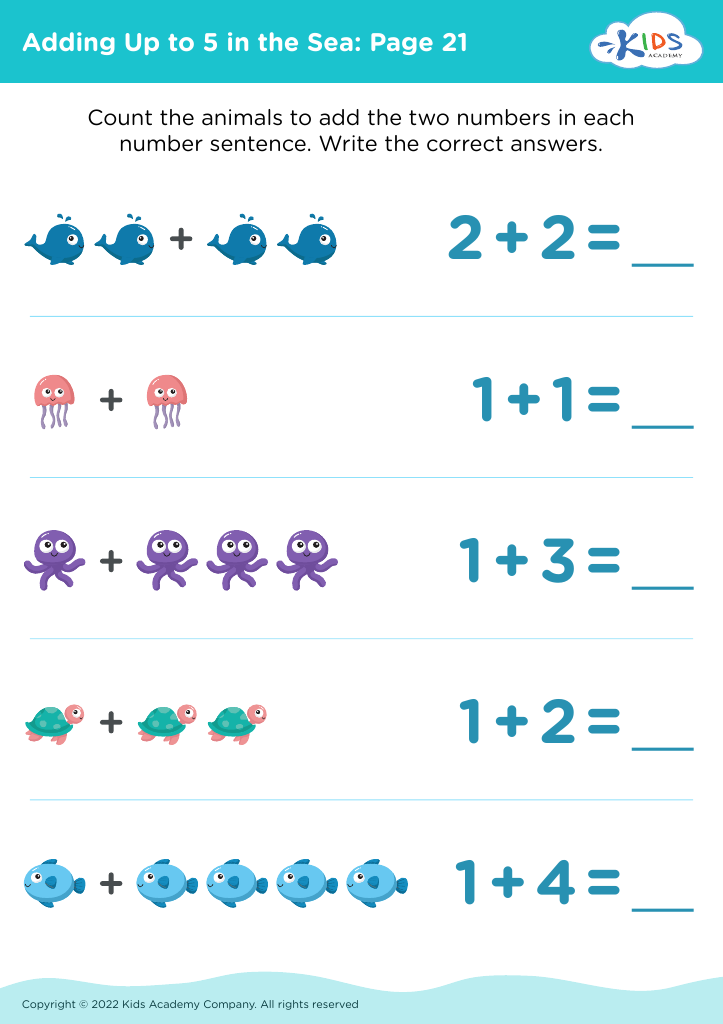
Adding Up to 5 in the Sea: Page 21
Worksheet
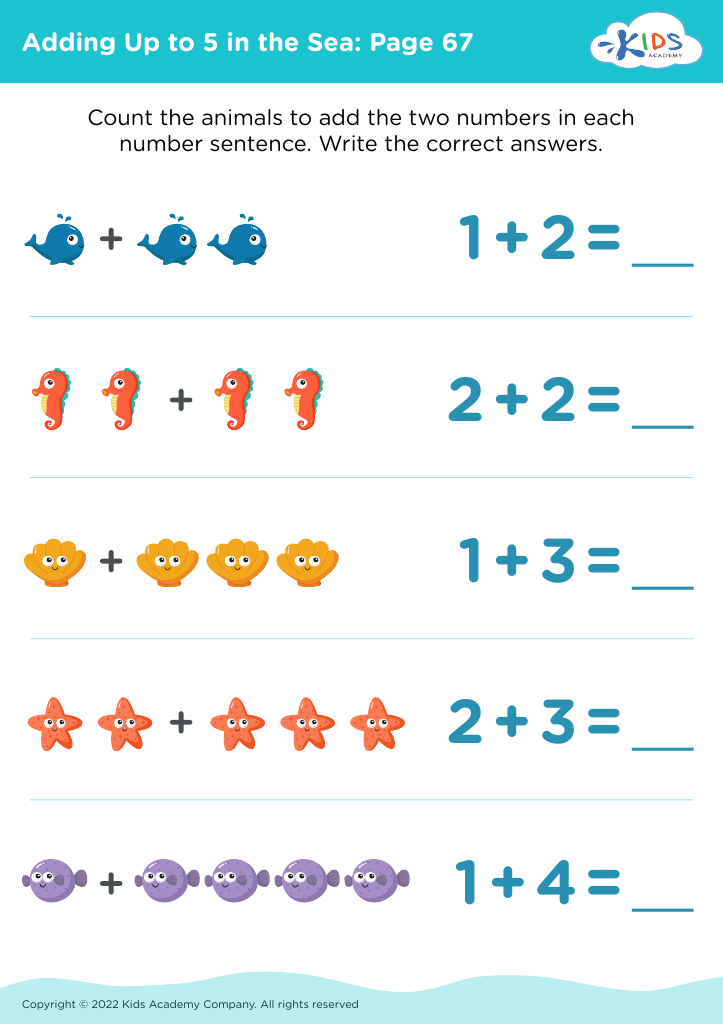
Adding Up to 5 in the Sea: Page 67
Worksheet
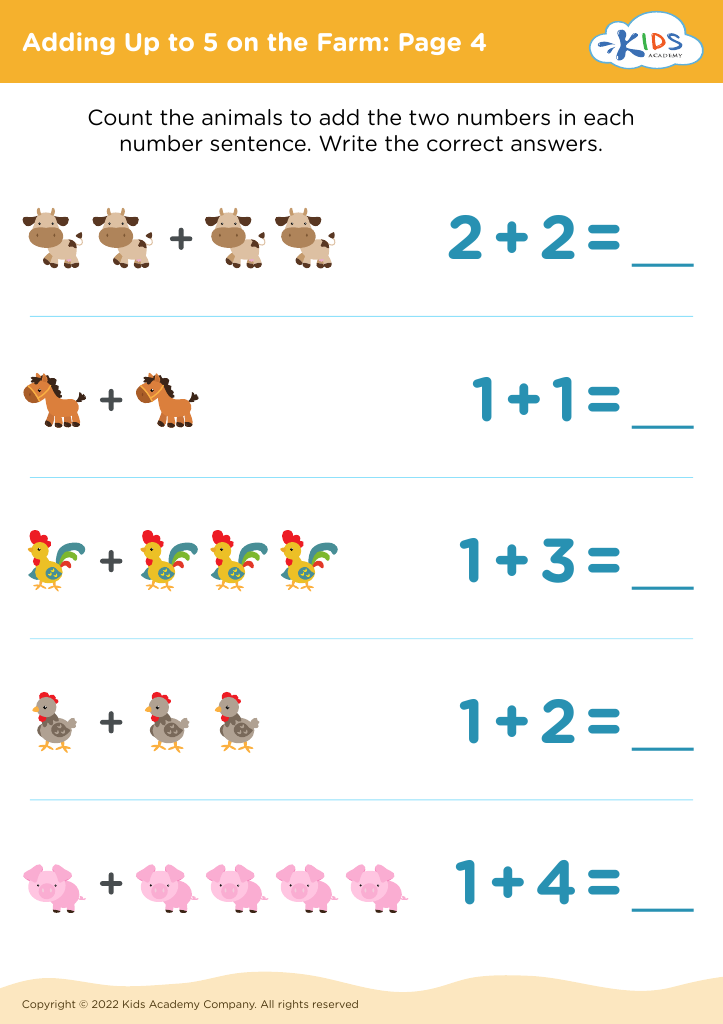
Adding Up to 5 on the Farm: Page 4
Worksheet
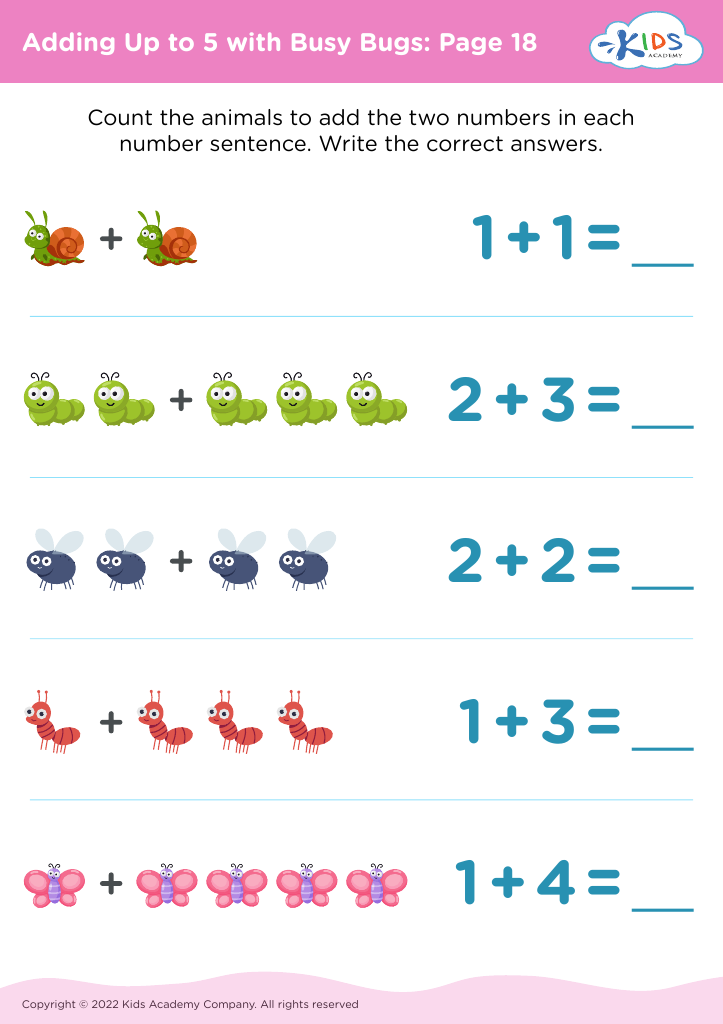
Adding Up to 5 with Busy Bugs: Page 18
Worksheet
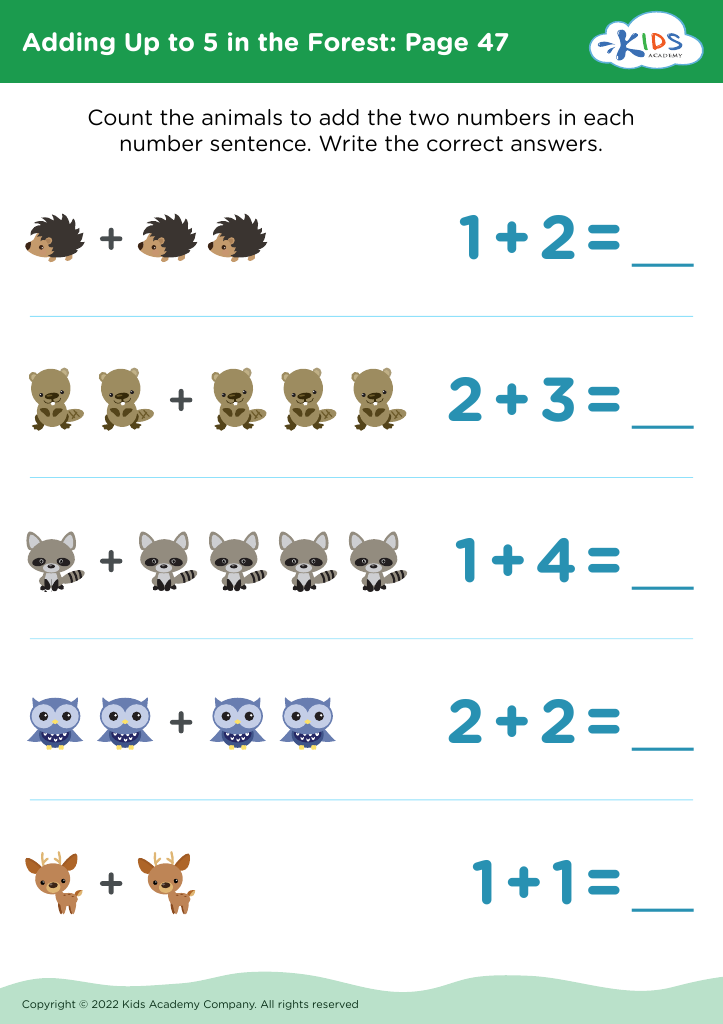
Adding Up to 5 in the Forest: Page 47
Worksheet
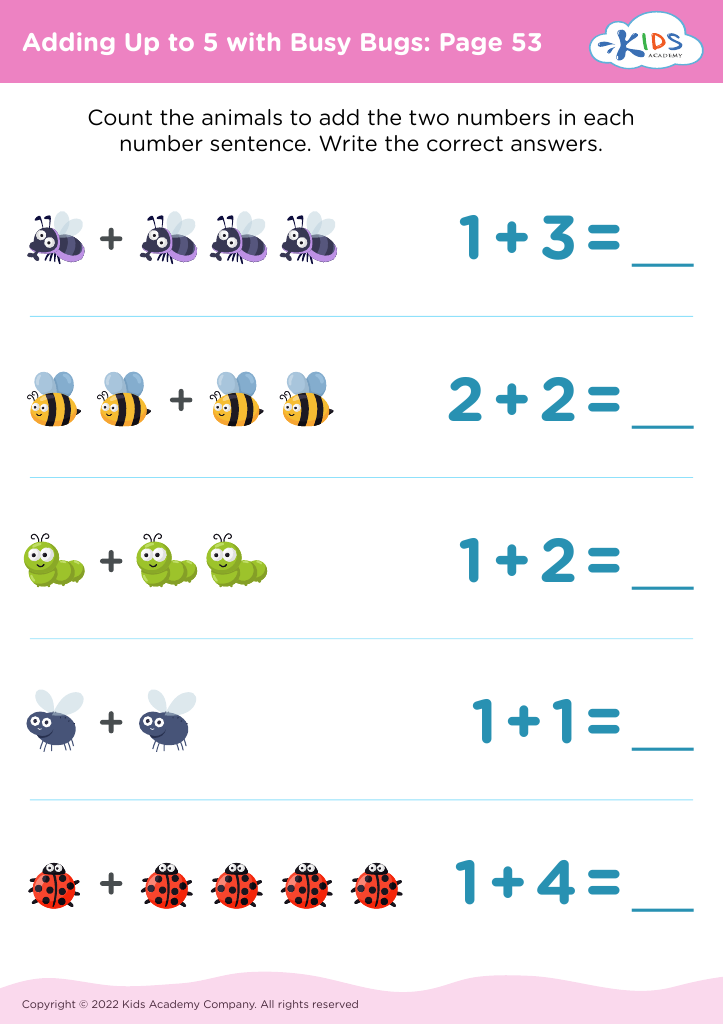
Adding Up to 5 with Busy Bugs: Page 53
Worksheet
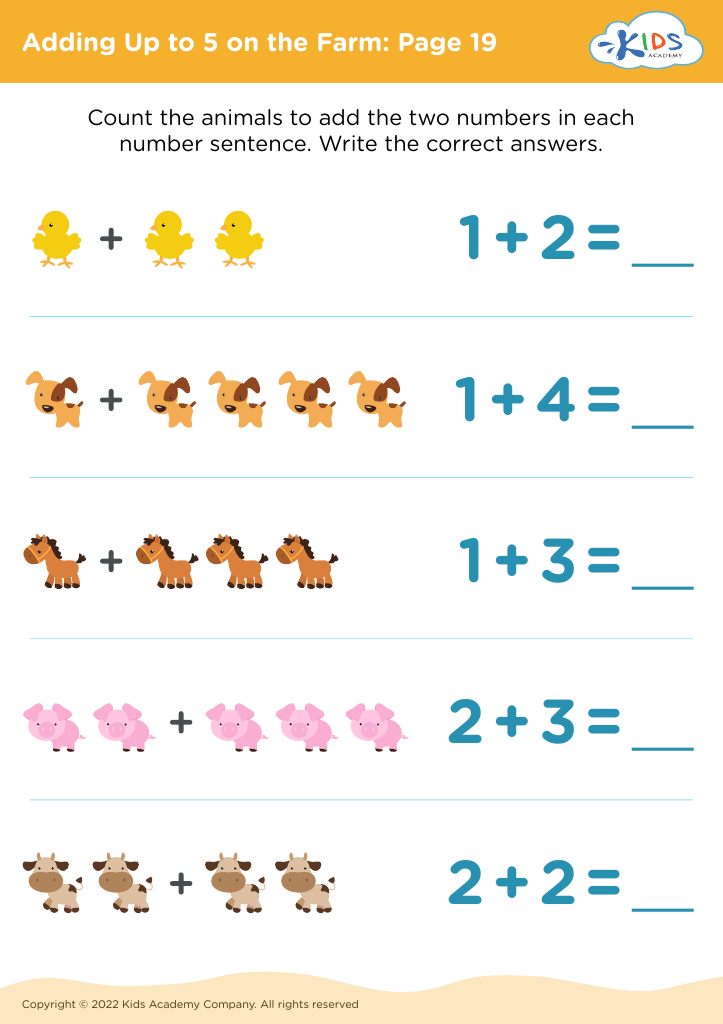
Adding Up to 5 on the Farm: Page 19
Worksheet
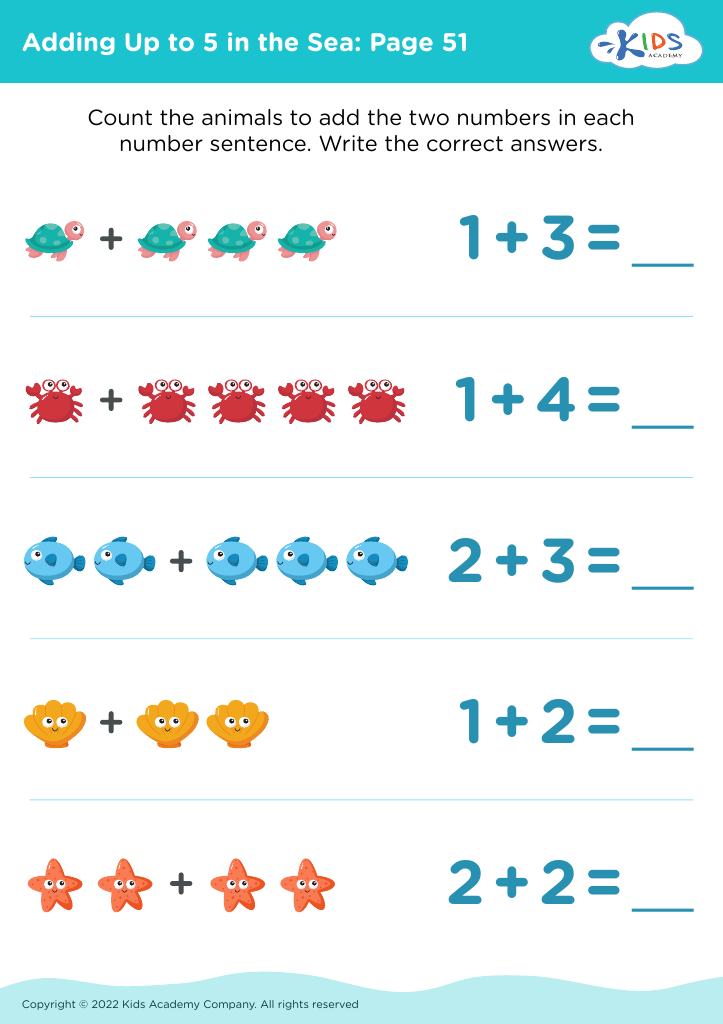
Adding Up to 5 in the Sea: Page 51
Worksheet
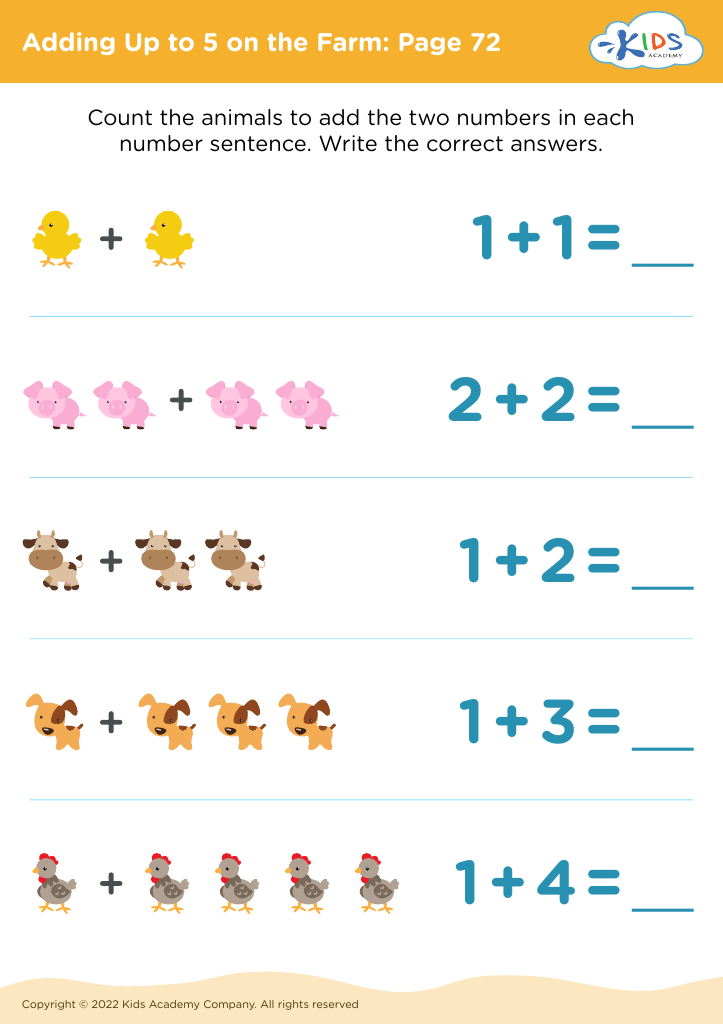
Adding Up to 5 on the Farm: Page 72
Worksheet
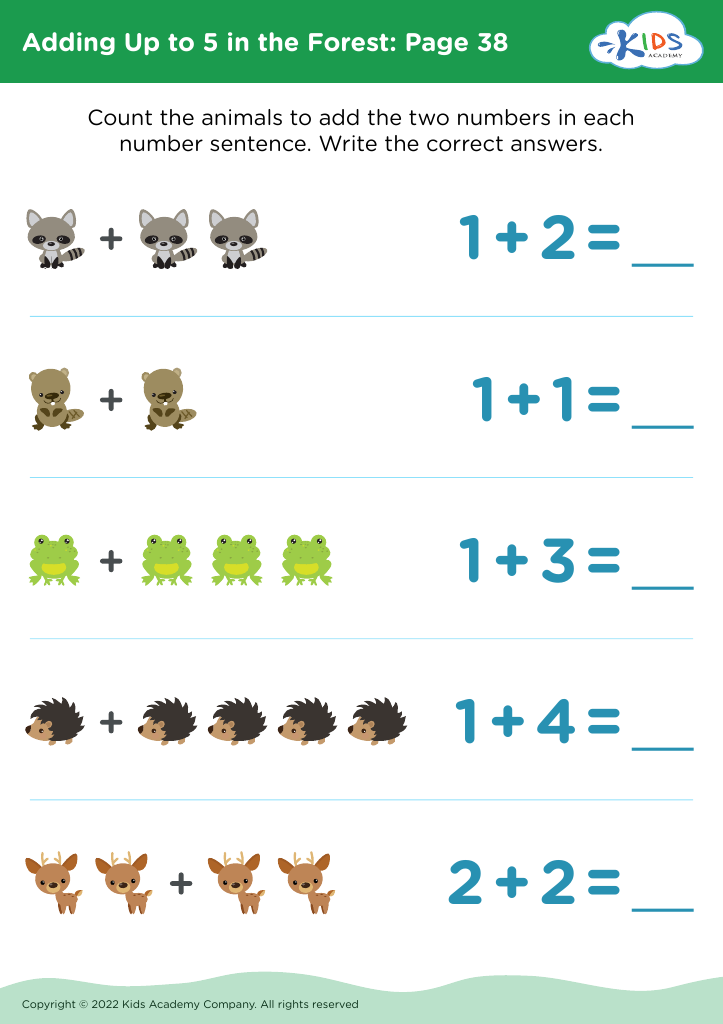
Adding Up to 5 in the Forest: Page 38
Worksheet


Basic addition and subtraction skills are foundational for young children's overall cognitive development and academic success. For children aged 3 to 6, these early mathematical concepts are crucial as they serve as the building blocks for future learning in mathematics and critical thinking. When parents and teachers emphasize these skills, they equip children with the ability to solve problems, develop logical reasoning, and understand patterns in everyday life.

Mastering addition and subtraction helps children grasp the concept of number relationships, enhancing their ability to compare quantities. Moreover, these skills promote self-confidence as children become more adept at tackling mathematical challenges. Engaging in playful activities, such as counting objects or using finger games, makes learning fun and interactive, fostering a positive attitude towards math.

Additionally, early mathematical skills are linked to improved performance in higher-grade math and broader academic areas. By nurturing a strong foundation in addition and subtraction, parents and teachers prepare children for various life situations, enabling them to make informed decisions and navigate everyday challenges with ease. Ultimately, investing time and effort in these basic skills can lead to long-term educational benefits, setting children on the path to success in school and beyond.