Fine motor skills (writing) Addition & Subtraction Worksheets for Ages 3-6 - Page 2
34 filtered results
-
From - To
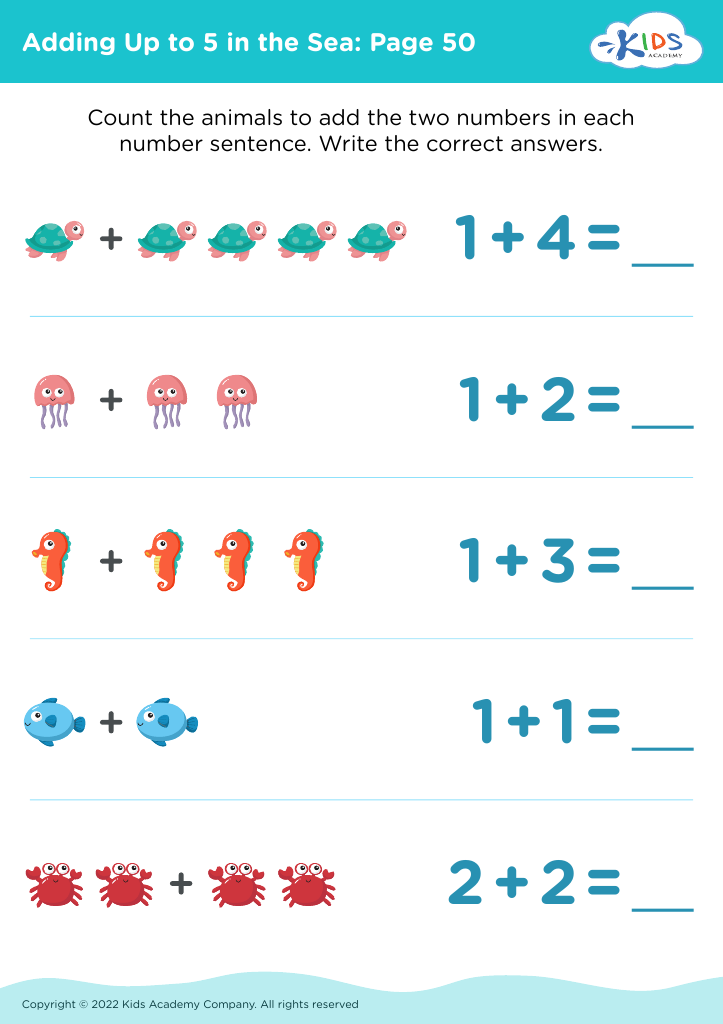
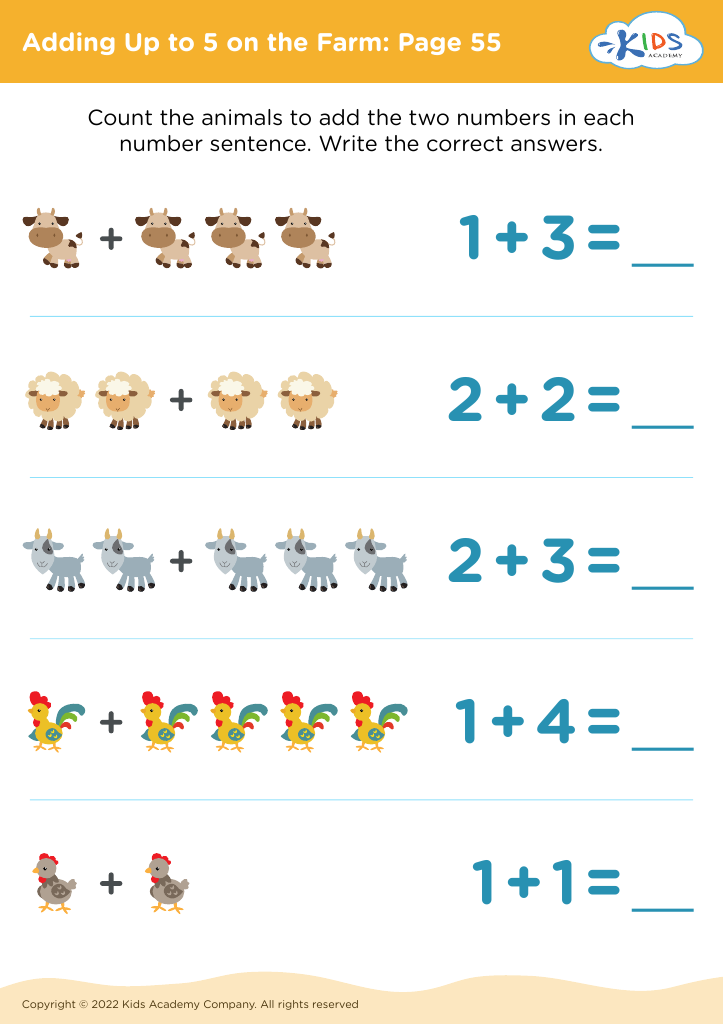
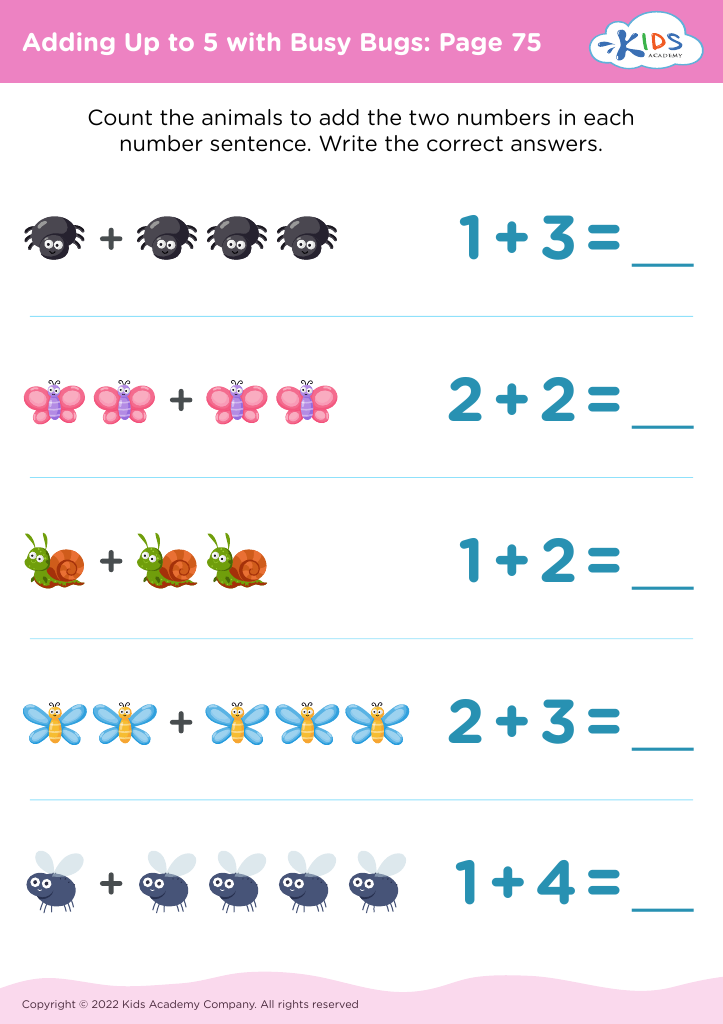
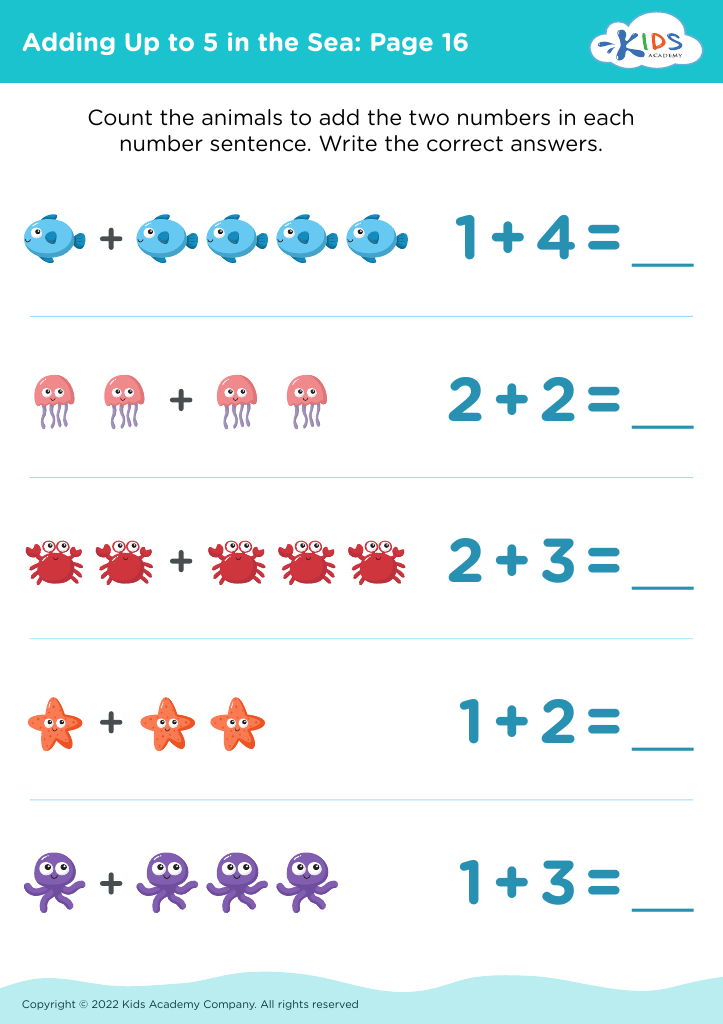
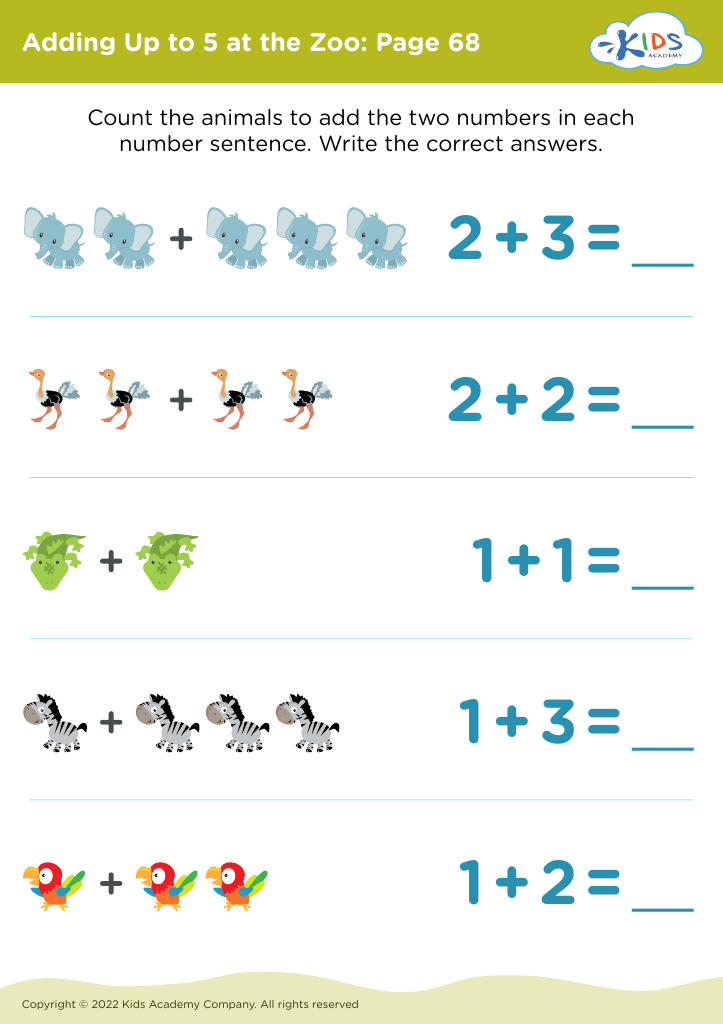
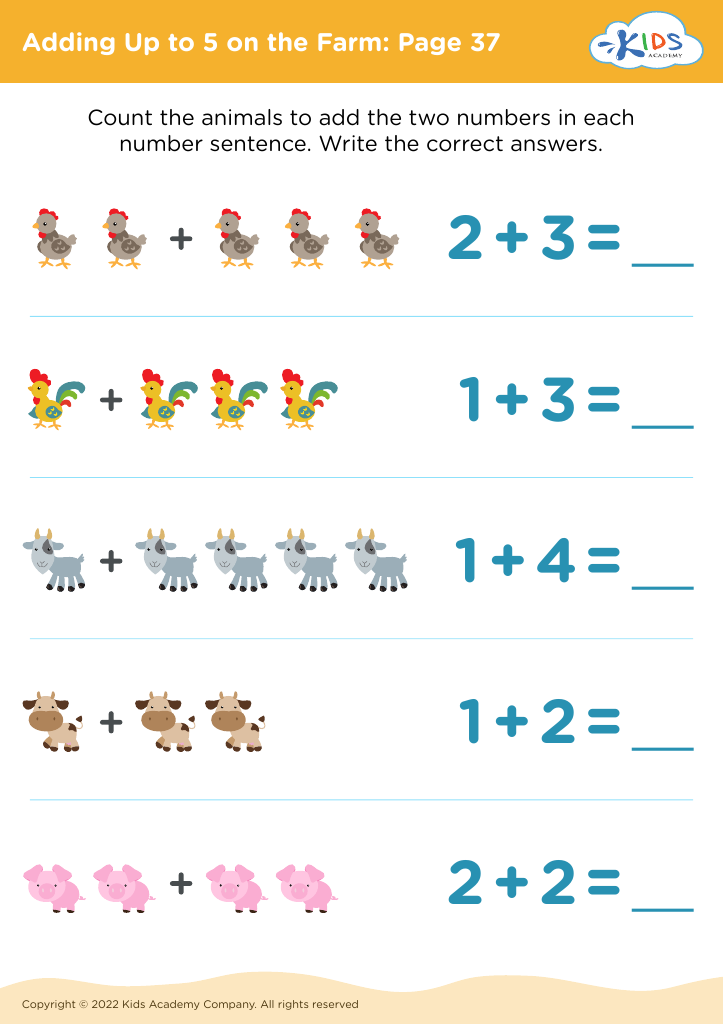
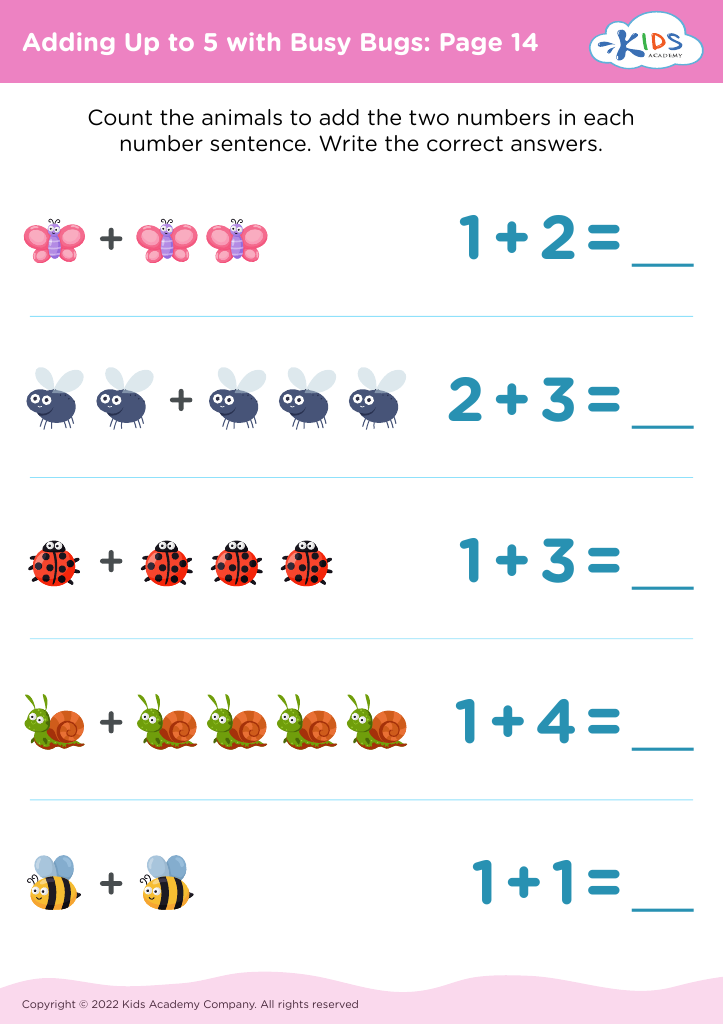
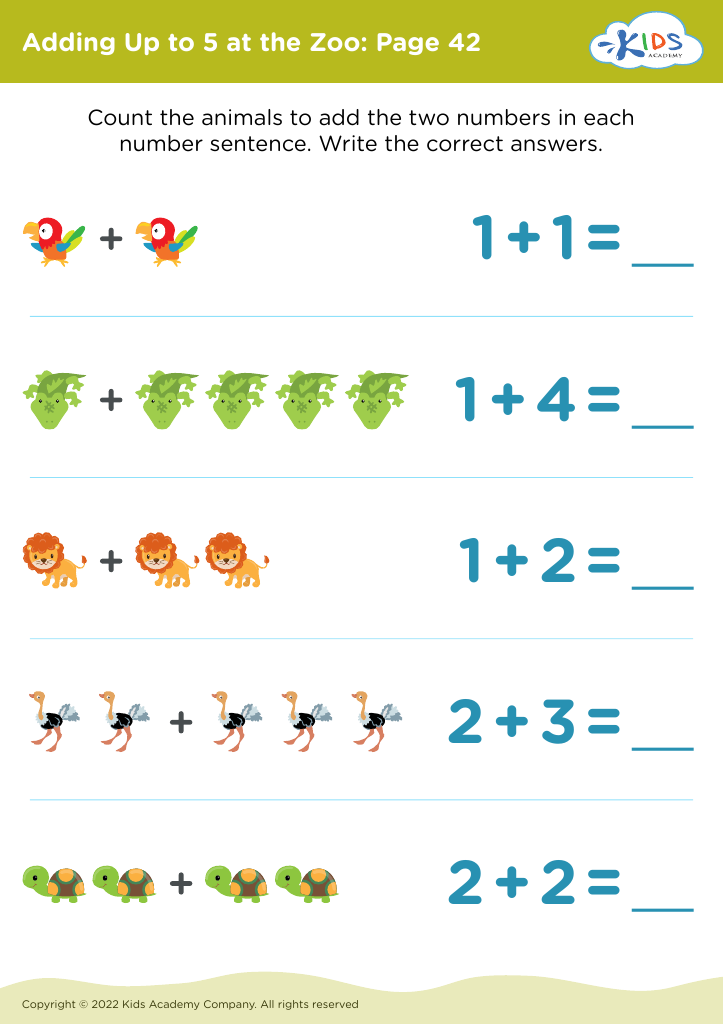
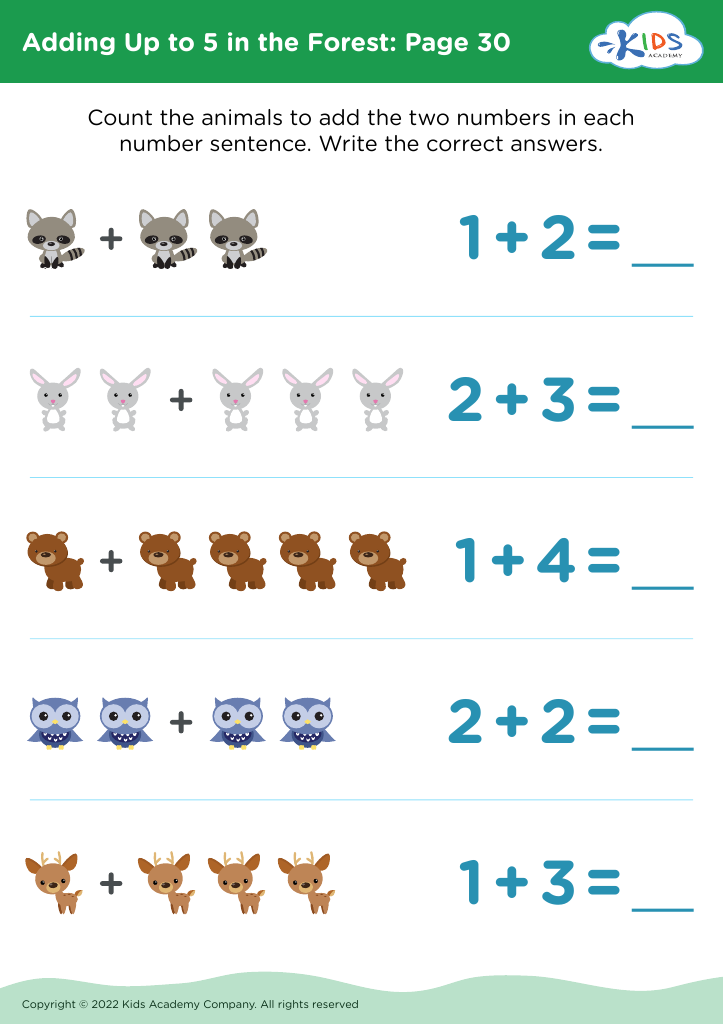
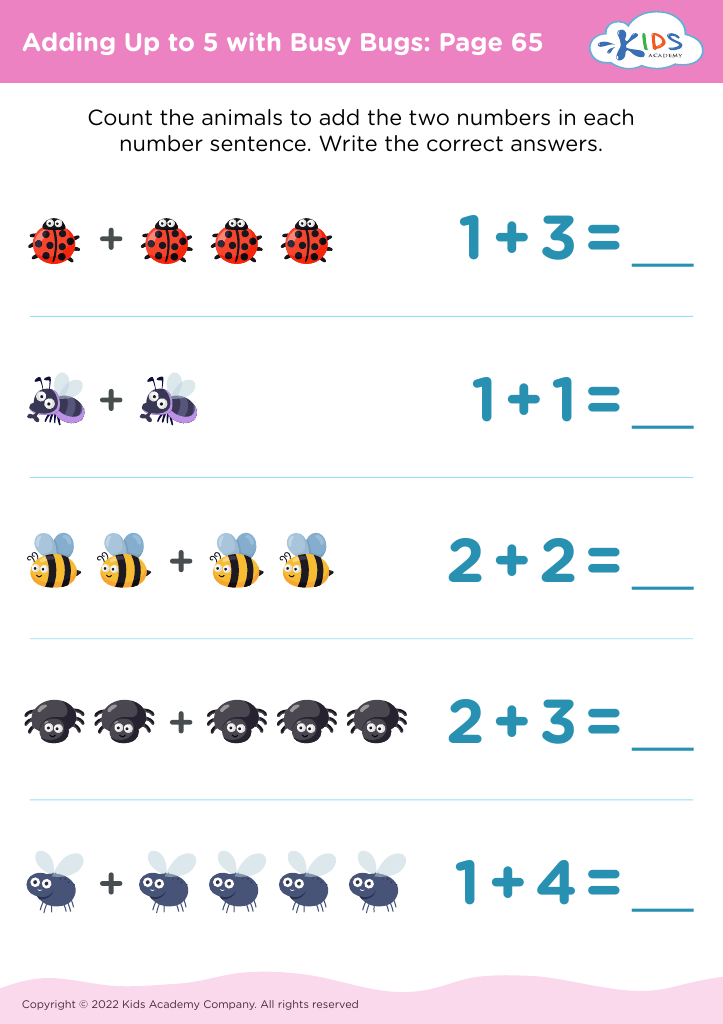








Parents and teachers should care deeply about fine motor skills and foundational math concepts like addition and subtraction for children aged 3-6, as these are crucial developmental milestones with long-lasting impacts. Fine motor skills, including writing, are essential for a child's ability to perform everyday tasks like buttoning clothes, eating independently, and eventually writing legibly. Developing these skills early fosters a sense of independence and boosts a child's confidence and self-esteem. Practicing tasks that improve hand-eye coordination and dexterity—such as holding a pencil, drawing shapes, and cutting with scissors—lays the groundwork for academic success.
Similarly, understanding and manipulating numbers through basic addition and subtraction forms the foundation for later mathematical learning. Early math skills are predictive of future academic achievements and cognitive abilities. Engaging young minds with playful, hands-on activities related to addition and subtraction helps them grasp these fundamental concepts more easily. When children encounter math early, it helps to create a positive attitude towards the subject, reducing anxiety and building a solid base for more complex mathematical thinking.
Combining fine motor skill development with early introductions to math enables children to become well-rounded learners, equipping them with the tools to explore, understand, and interact with the world around them more effectively.








