Filters

8 filtered results

Clear all filters
Favorites
With answer key
Interactive

8 filtered results

Difficulty Level

Grade


Welcome to our collection of Following Instructions Addition & Subtraction Worksheets, designed specifically for ages 3-6! These engaging and interactive worksheets help young learners develop essential math skills while enhancing their ability to follow directions. Each activity encourages children to solve simple addition and subtraction problems based on clear, easy-to-understand instructions. Not only do these worksheets foster a love for math, but they also support the growth of critical thinking and listening skills. Ideal for home, classroom, or co-operative learning environments, our resources make math fun and approachable for early learners. Dive in, and watch your child's confidence blossom!

Check out this FREE Trial Lesson on Addition & Subtraction for age 3-6!

Subtract 10 from Multiples of 10

Favorites
With answer key
Interactive
  • 3-6
  • Following instructions
  • Addition & Subtraction
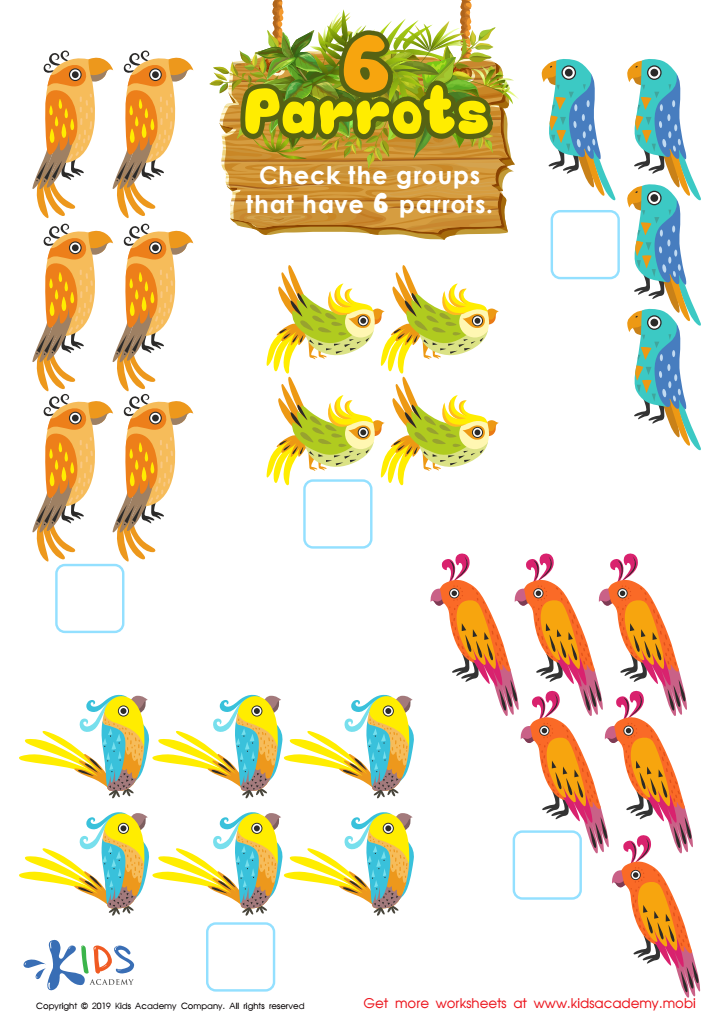
6 Parrots Worksheet
6 Parrots Worksheet

6 Parrots Worksheet

Love parrots? Here's a free worksheet to help your children practice counting to six with colorful parrot representations! Kids will adore counting the parrots and checking off groups of six - and it won't even feel like math! Just a fun way to make some new and exciting friends.
6 Parrots Worksheet
Worksheet
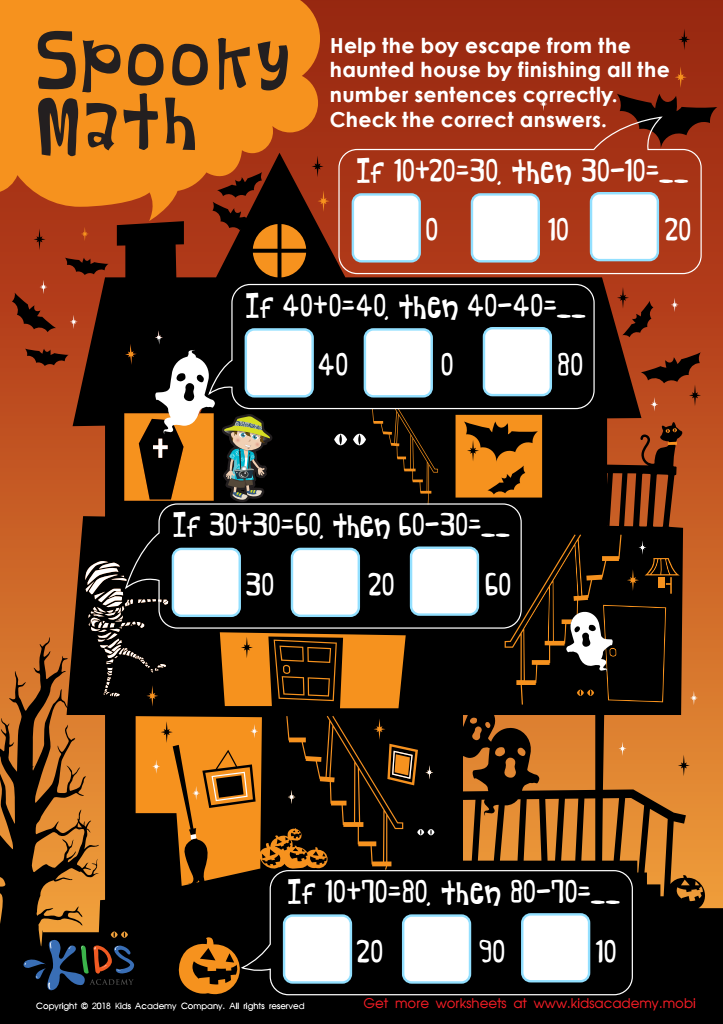
Subtract Tens: Spooky Math Worksheet
Subtract Tens: Spooky Math Worksheet

No need to fear solving math equations! Your mathematician will be a hero and help the boy escape the haunted house. Number families, if/then statements, fun graphics and increased understanding are all part of the equation. They'll have so much fun, they won't even realize it's math!
Subtract Tens: Spooky Math Worksheet
Worksheet
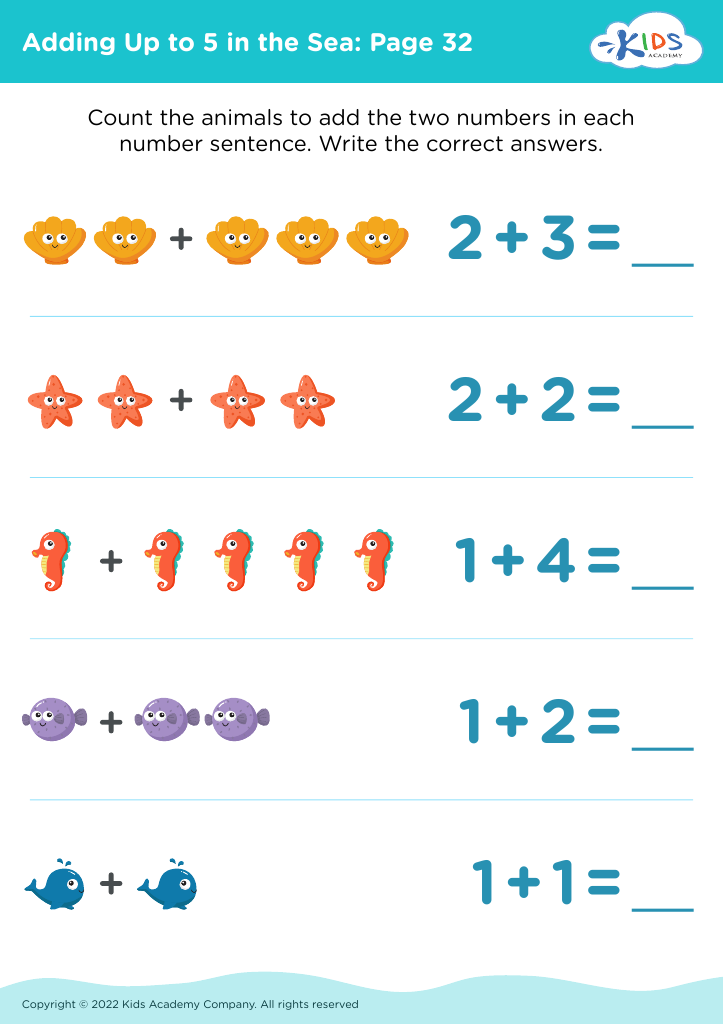
Adding Up to 5 in the Sea: Page 32
Worksheet
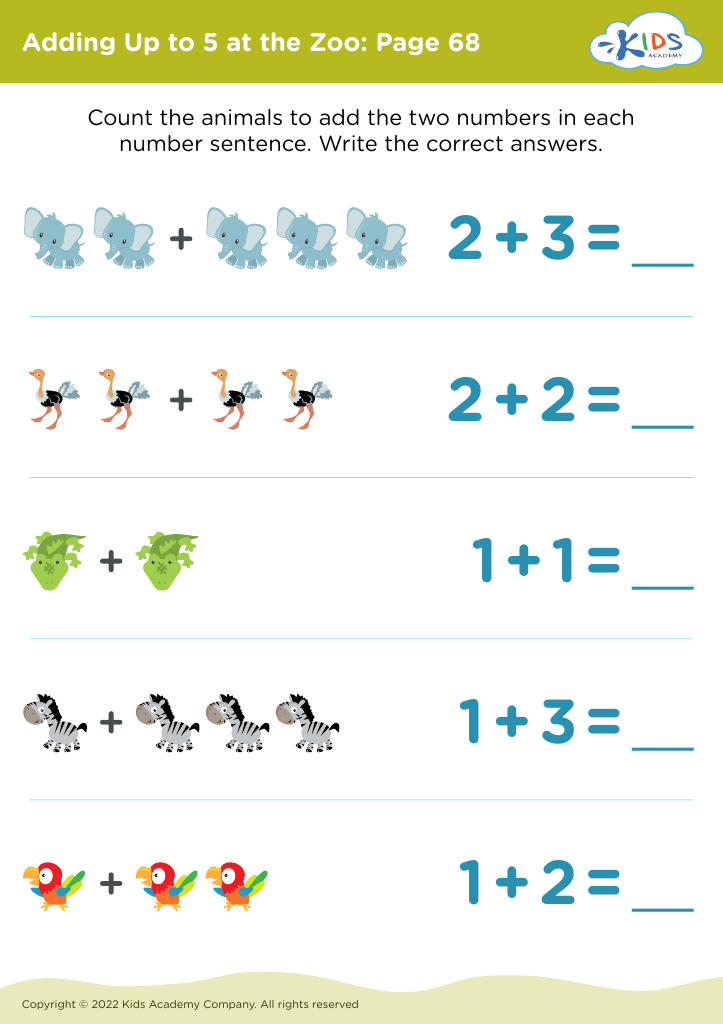
Adding Up to 5 at the Zoo: Page 68
Worksheet
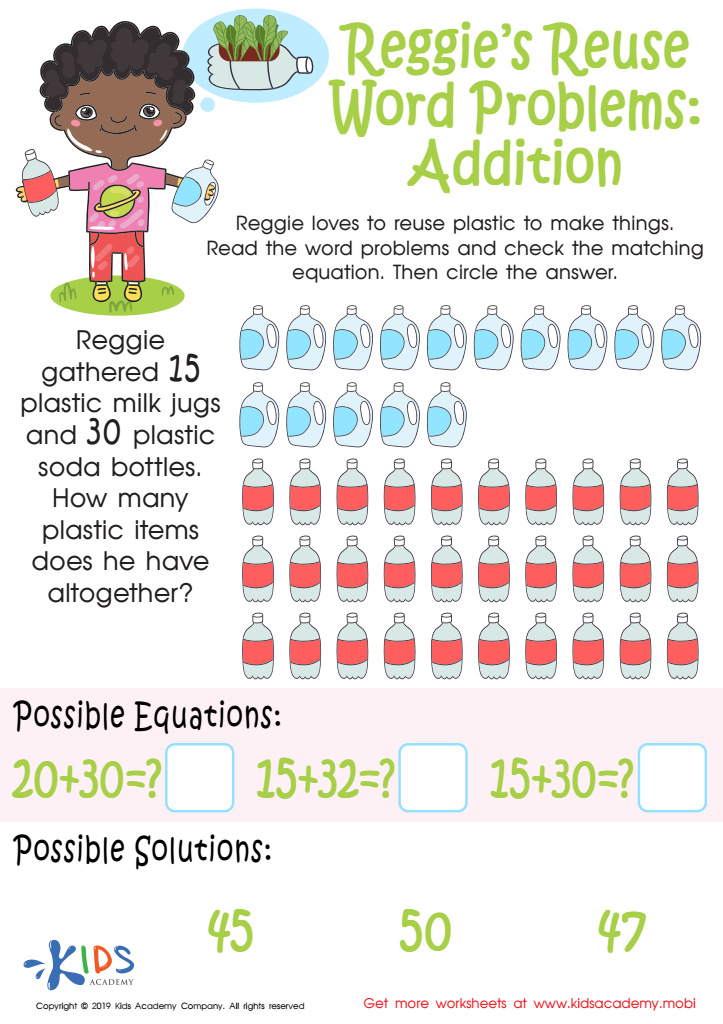
Reggie's Reuse Word Problems: Addition Worksheet
Reggie's Reuse Word Problems: Addition Worksheet

Help Reggie and your child save the planet by using this free worksheet! It reinforces addition word problems using one-to-one picture representation, and helps them pick out the correct number sentence and possible solutions. It's an easy way to help the planet and practice math!
Reggie's Reuse Word Problems: Addition Worksheet
Worksheet
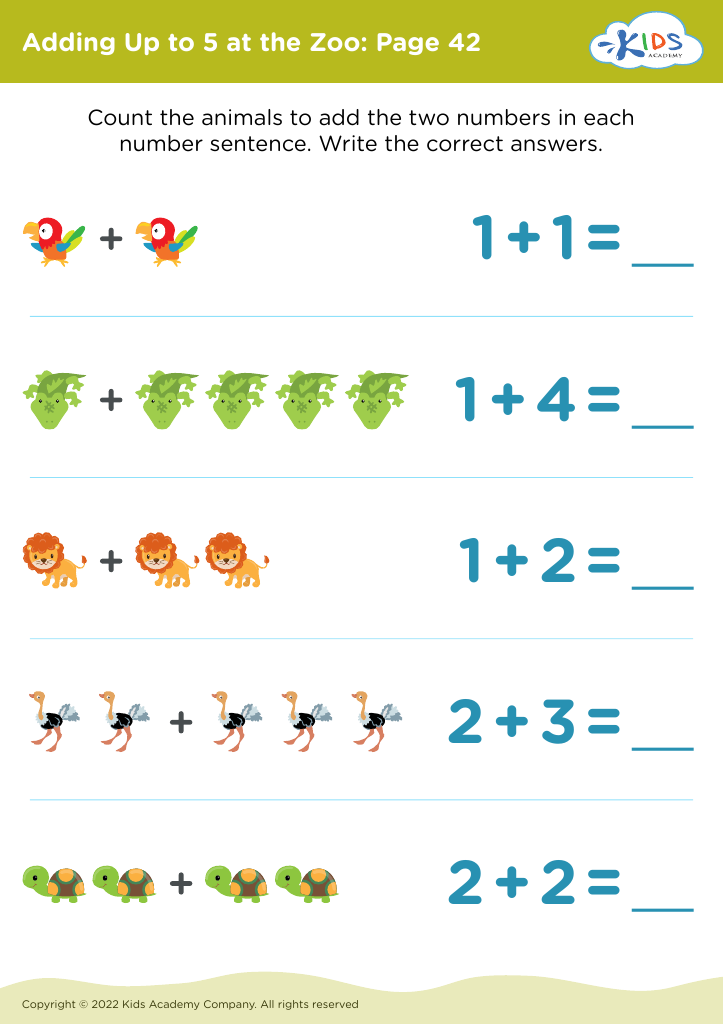
Adding Up to 5 at the Zoo: Page 42
Worksheet
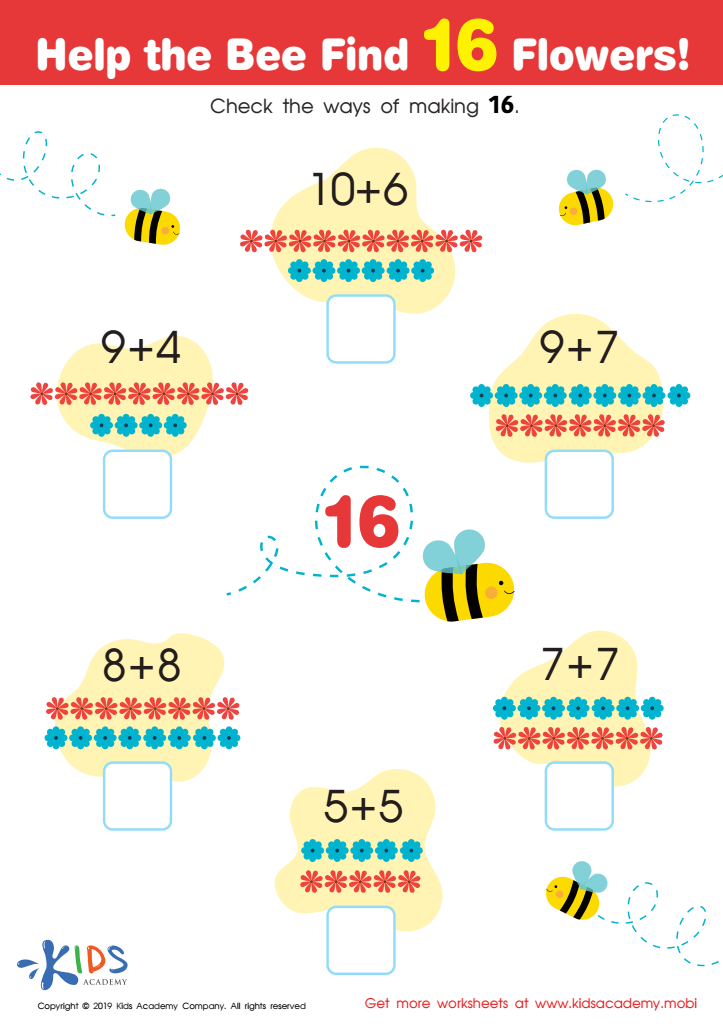
Help the Bee Find 16 Flowers Worksheet

Help the Bee Find 16 Flowers Worksheet

Ask your students to count as high as they can. Show them that different numbers can equal the same figure with examples like 2+2=4 and 3+1=4. Ask for more examples, then help the bees find 16 flowers by checking the ways of making 16.
Help the Bee Find 16 Flowers Worksheet
Worksheet
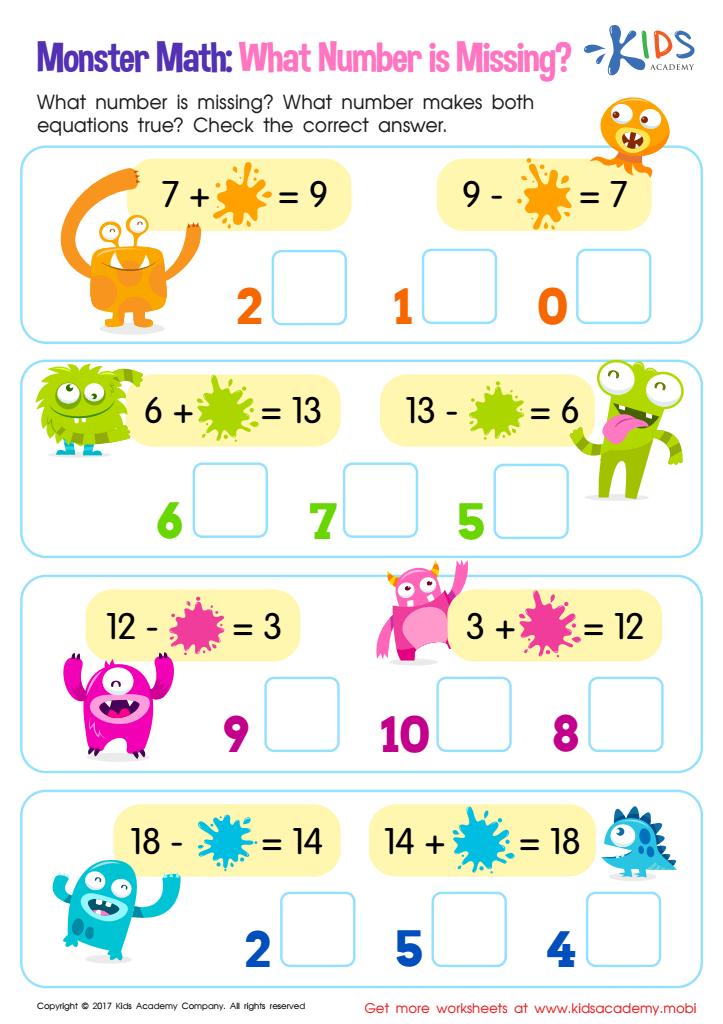
Missing Number: Monster Math Worksheet


Missing Number: Monster Math Worksheet

Engage your child in monster math fun with a worksheet! They'll need to use their counting, addition and subtraction skills to solve equations on both sides. On the left side, they must complete an addition problem and on the right, the equation is in subtraction form. Assist them in selecting the right number out of the given options to make both equations true.
Missing Number: Monster Math Worksheet

Worksheet


Parents and teachers should care about following instructions in addition and subtraction for children aged 3-6 because it lays the foundational skills for math competency and critical thinking. Early math skills are essential not only for future academic success but also for everyday problem solving.

At this age, children are naturally curious and often enjoy hands-on activities. Following instructions in addition and subtraction helps them learn to listen carefully, process information, and execute tasks step-by-step. These skills foster independence and confidence as they begin to understand the concepts of quantity, numbers, and basic operations.

Moreover, teaching these skills at a young age can promote cognitive development. It encourages children to think logically and systematically, which are crucial components for more complex mathematical concepts later on.

In addition, learning to follow instructions helps enhance communication skills and fosters collaboration when working with peers. It sets the stage for a positive learning environment and encourages children to engage with each other.

Overall, focusing on these early math skills and the ability to follow instructions not only nurtures academic growth but also equips children with life skills that will benefit them in various aspects of their future endeavors.