
Observational skills Addition & Subtraction Worksheets for Ages 3-6
3 filtered results
Difficulty Level
Grade
Age
-
From - To
Subject
Activity
Standards
Enhance your child's observational skills with our engaging Addition & Subtraction Worksheets, designed specifically for ages 3-6. These worksheets encourage young learners to closely examine visual scenarios and practice basic math concepts in a fun way. By integrating observation with arithmetic, kids can develop their critical thinking and problem-solving abilities while mastering addition and subtraction. Each activity is thoughtfully crafted to captivate their interest and strengthen their foundational math skills. Perfect for both classroom and at-home learning, our worksheets make math enjoyable and help little learners build confidence in their abilities. Start your child's math journey today!
Favorites
With answer key
Interactive
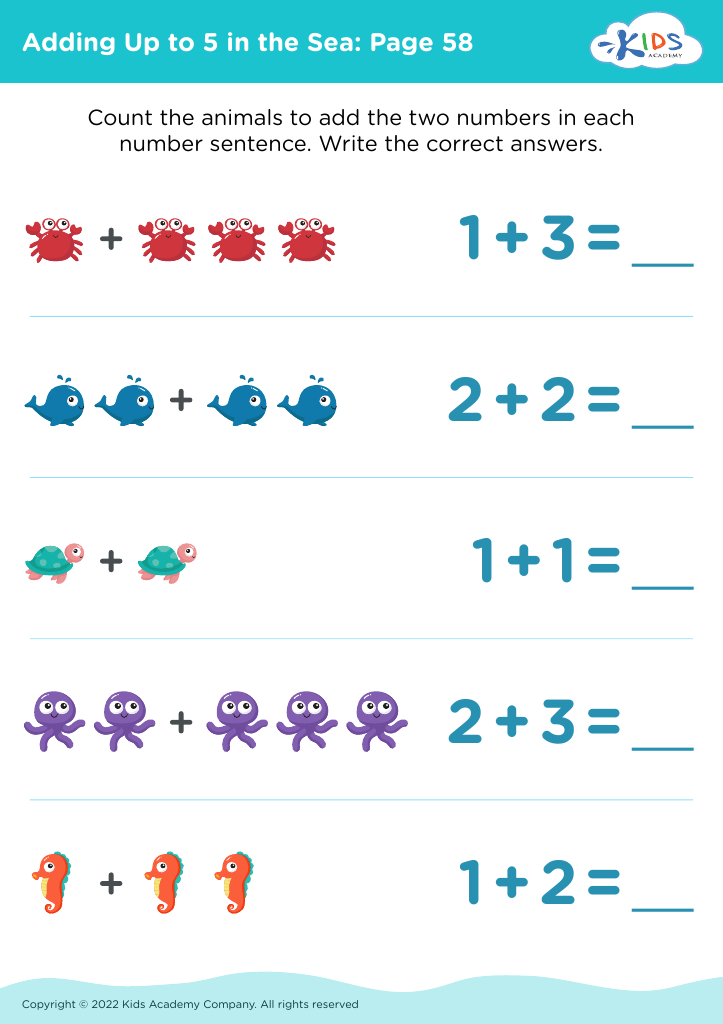
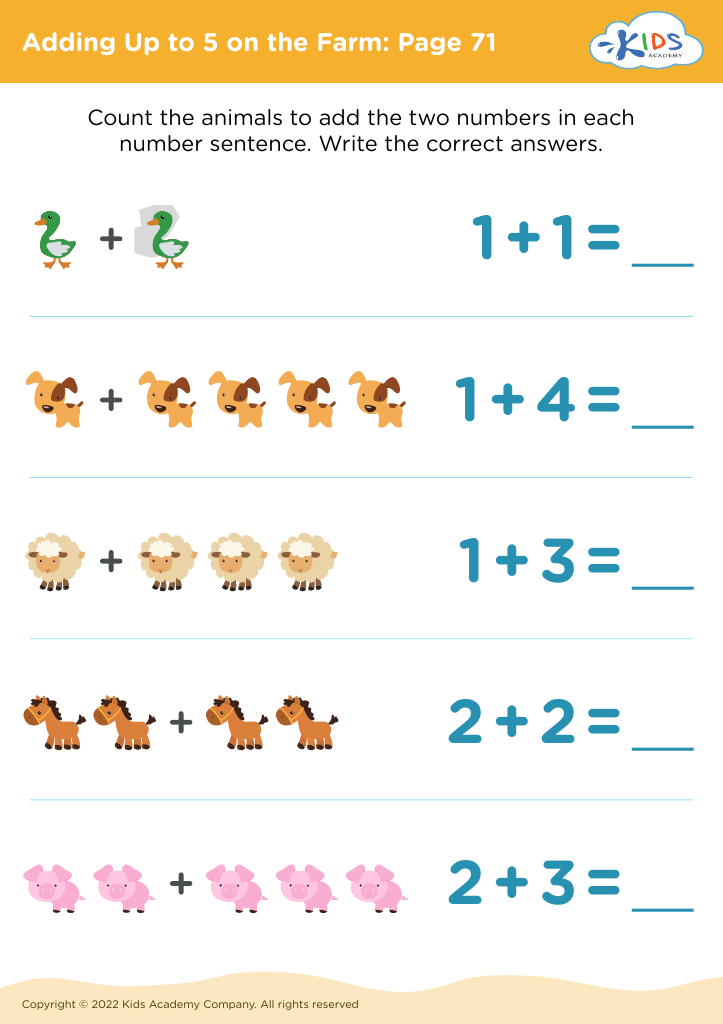
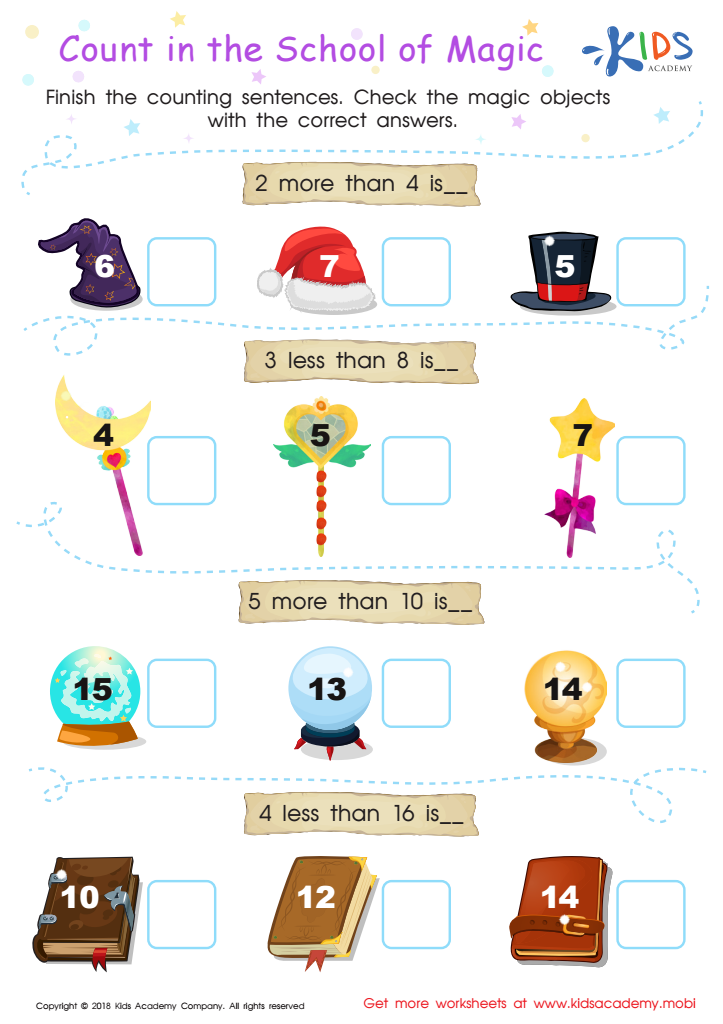
Count in the School of Magic Worksheet
Your math learners can explore the School of Magic with this worksheet. They'll read equations with addition and subtraction numbers under 20, count back and forth to find the answer, then complete the counting sentences. Fun pictures and easy accuracy make it an enjoyable and successful learning experience.
 Assign to My Students
Count in the School of Magic Worksheet
Worksheet
Join Kids Academy for Free
Who is primarily going to use this learning content?








Observational skills are crucial for the development of addition and subtraction in young children aged 3-6. These foundational math concepts rely heavily on children's ability to recognize patterns, quantify objects, and engage in critical thinking. Parents and teachers should care about fostering these skills as they form the basis for a child's overall mathematical understanding.
Enhanced observational skills enable children to analyze situations, identify relationships between numbers, and understand the concept of quantity. For instance, while playing, if children notice that by adding one more block to a tower it becomes taller or that removing one block makes it shorter, they're intuitively grasping addition and subtraction.
Moreover, fostering observational skills encourages curiosity and engagement in learning. When children regularly practice noticing details in their environment—such as counting apples in a bowl or sorting toys by size—they become more confident and competent in their mathematical reasoning. These activities promote critical cognitive skills that extend beyond math, supporting overall academic success.
Parents and teachers play a vital role in creating a supportive environment where observation and exploration are encouraged, ensuring children develop solid foundational skills that will serve them throughout their educational journey. Investing in these skills early on leads to a more positive and effective learning experience.








