Pattern recognition Addition & Subtraction Worksheets for Ages 3-6
4 filtered results
-
From - To
Discover our engaging Pattern Recognition Addition and Subtraction Worksheets designed specifically for children aged 3-6! These worksheets not only introduce basic math concepts but also enhance critical thinking skills through fun, interactive pattern exercises. As kids identify and complete patterns, they develop foundational skills in addition and subtraction. Our resources cater to young learners with vibrant illustrations and age-appropriate challenges, ensuring an enjoyable learning experience. Perfect for both classroom and home use, these worksheets promote cognitive growth while reinforcing essential math skills. Start your child’s math journey today and watch them thrive in their understanding of numbers and patterns!
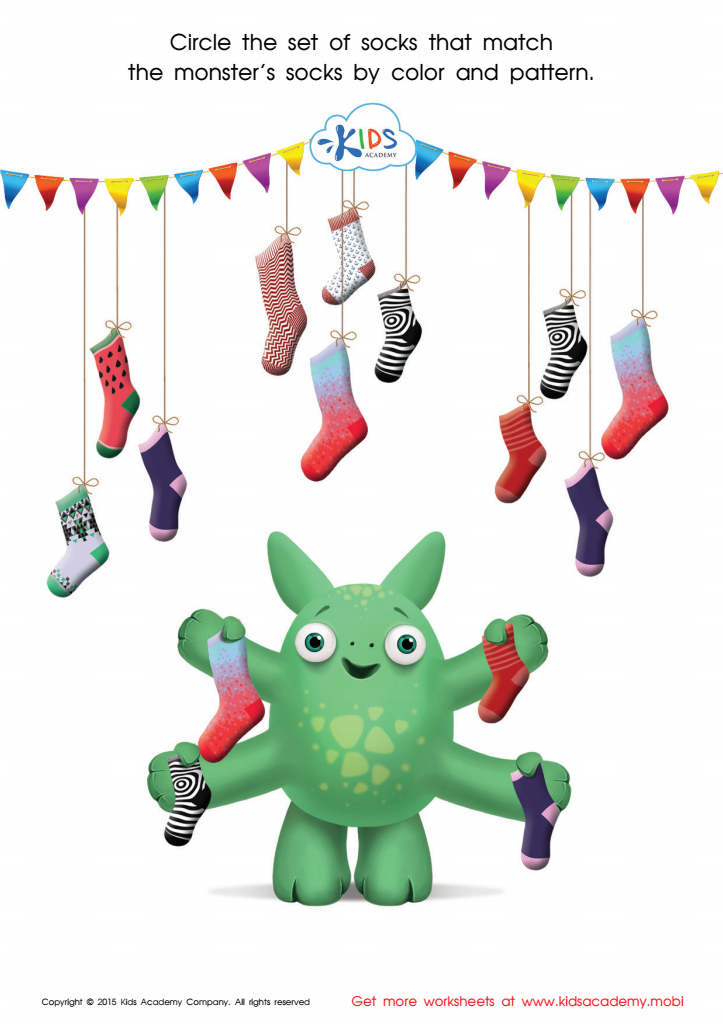
Sort the Monster's Socks Worksheet
 Assign to My Students
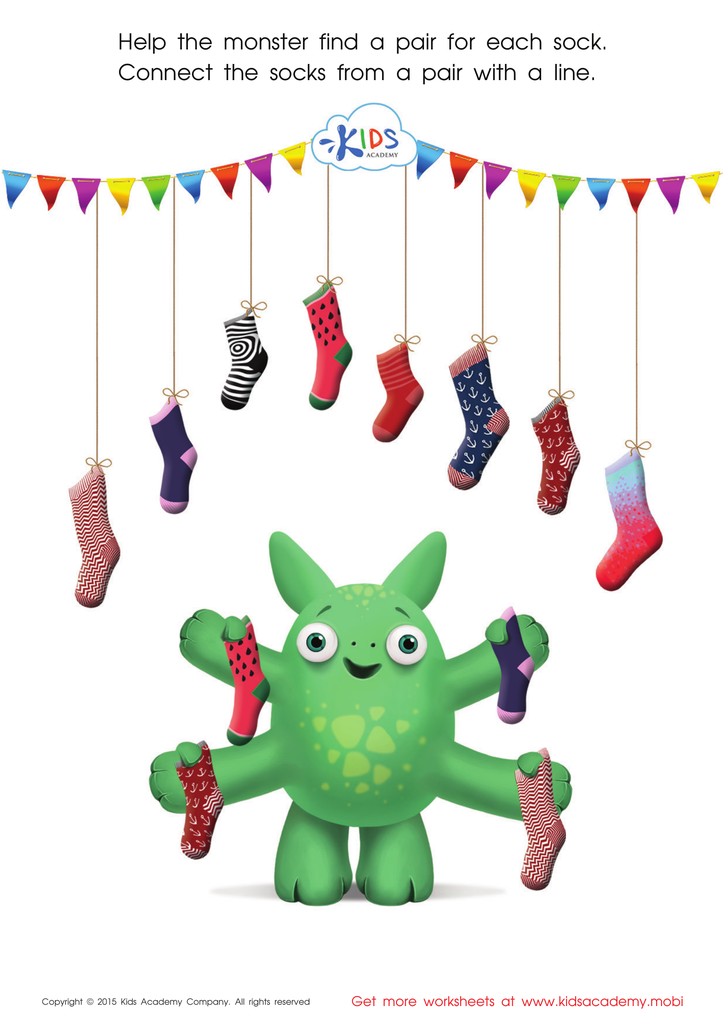
Math Matching Game: Monsterв's Socks Worksheet
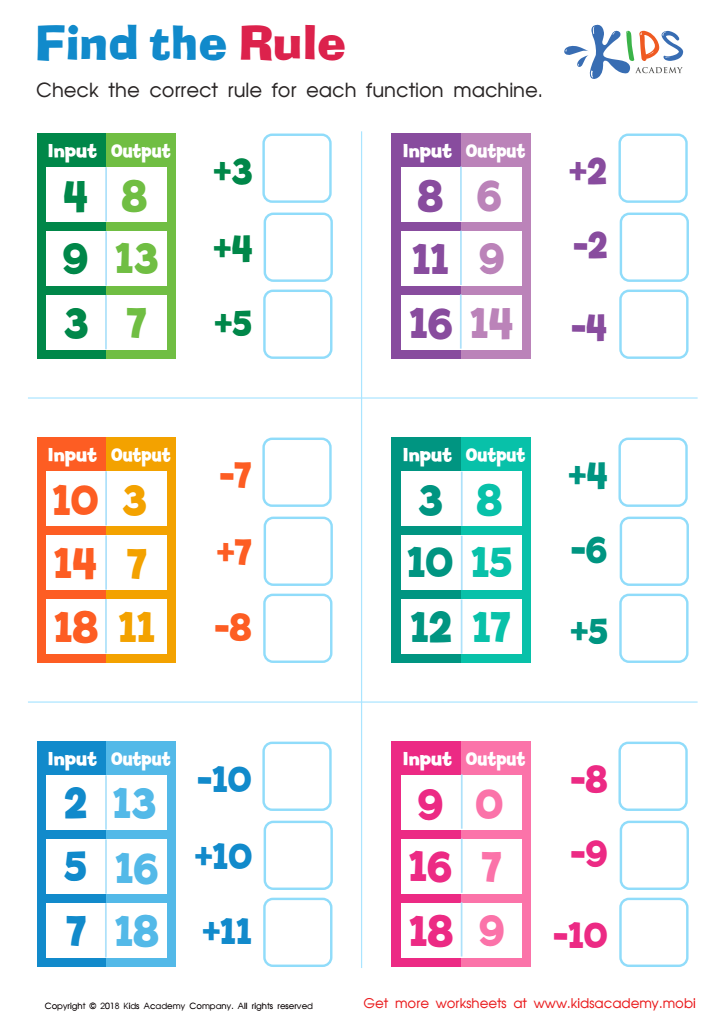
Find the Rule Worksheet
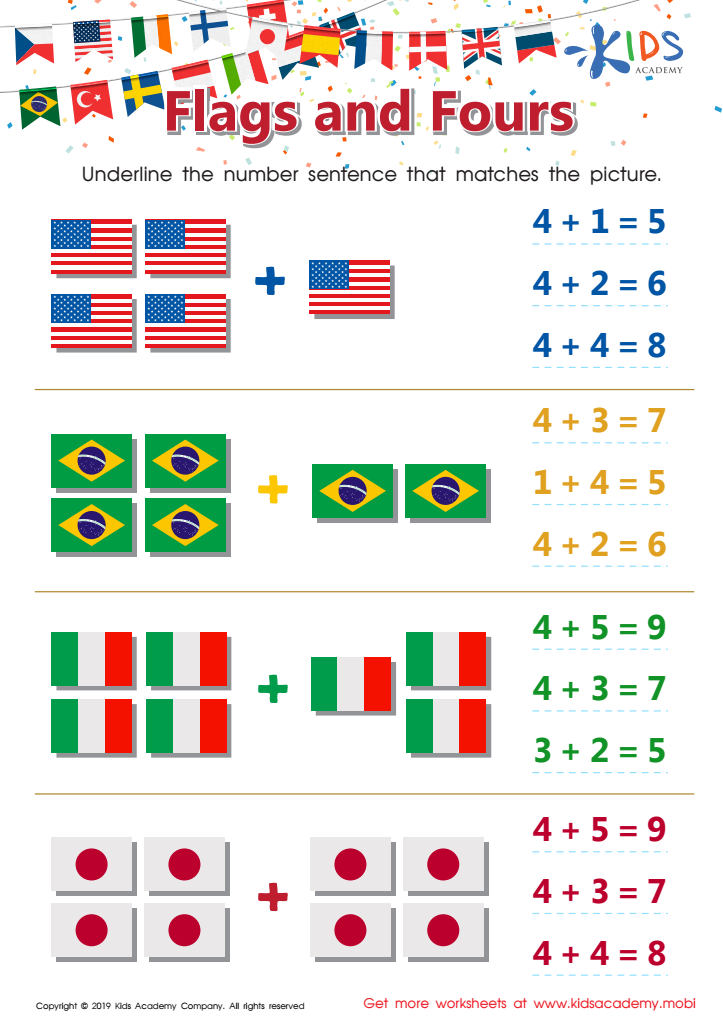
Flags and Fours Worksheet








Pattern recognition in addition and subtraction is crucial for children aged 3-6 as it lays the foundational skills for understanding more complex mathematical concepts later on. At this early age, children begin to develop their ability to identify sequences and relationships among numbers, which is essential for building problem-solving skills.
First, recognizing numerical patterns helps children understand the concept of quantities. For instance, when they see patterns in how numbers add or subtract, they can better grasp the behaviors of numbers—like “which number comes next” or “how many more do I need.” This aids in mental math, promoting fluidity in calculations without relying extensively on fingers or tools.
Furthermore, engaging children in activities that involve patterns—be it through games, songs, or hands-on materials—makes learning interactive and enjoyable. It captivates their burgeoning attention spans and drives curiosity. Consistent exposure to these concepts fosters confidence in their mathematical abilities.
Lastly, strong foundational skills in pattern recognition translate into life-long skills, as mathematics permeates various aspects of everyday living. In essence, teaching children addition and subtraction through pattern recognition enriches their cognitive development and prepares them for future academic success.








