Basic counting skills Addition Worksheets for Ages 3-6
3 filtered results
-
From - To
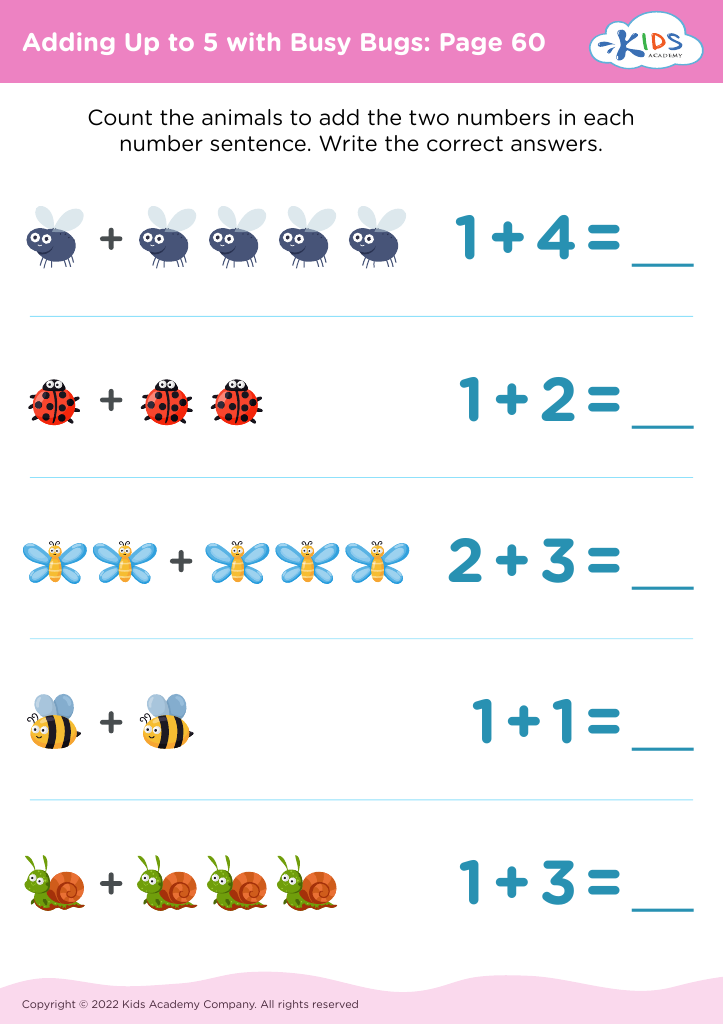
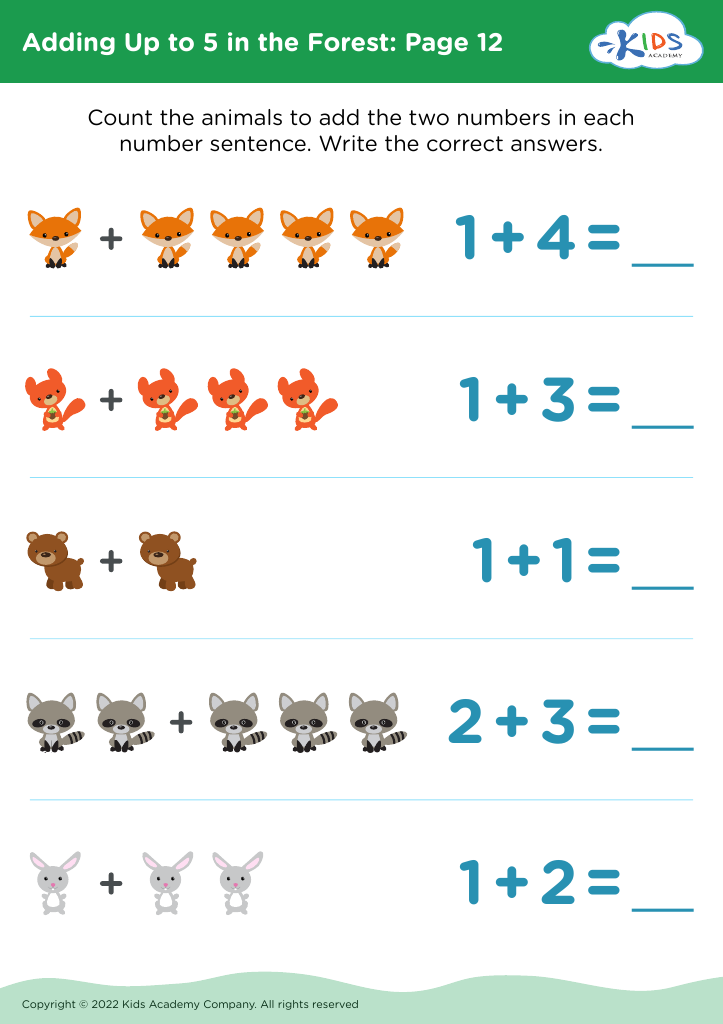
Enhance your child's foundational math abilities with our Basic Counting Skills Addition Worksheets, designed specifically for ages 3-6. These engaging worksheets provide a fun and interactive way for young learners to develop essential counting and addition skills through colorful visuals and age-appropriate exercises. Your child will participate in various activities that reinforce number recognition, counting, and simple addition concepts while building confidence in their early math understanding. Perfect for use at home or in the classroom, our printable worksheets offer a delightful approach to learning math, ensuring your little ones have a solid start as they embark on their educational journey!
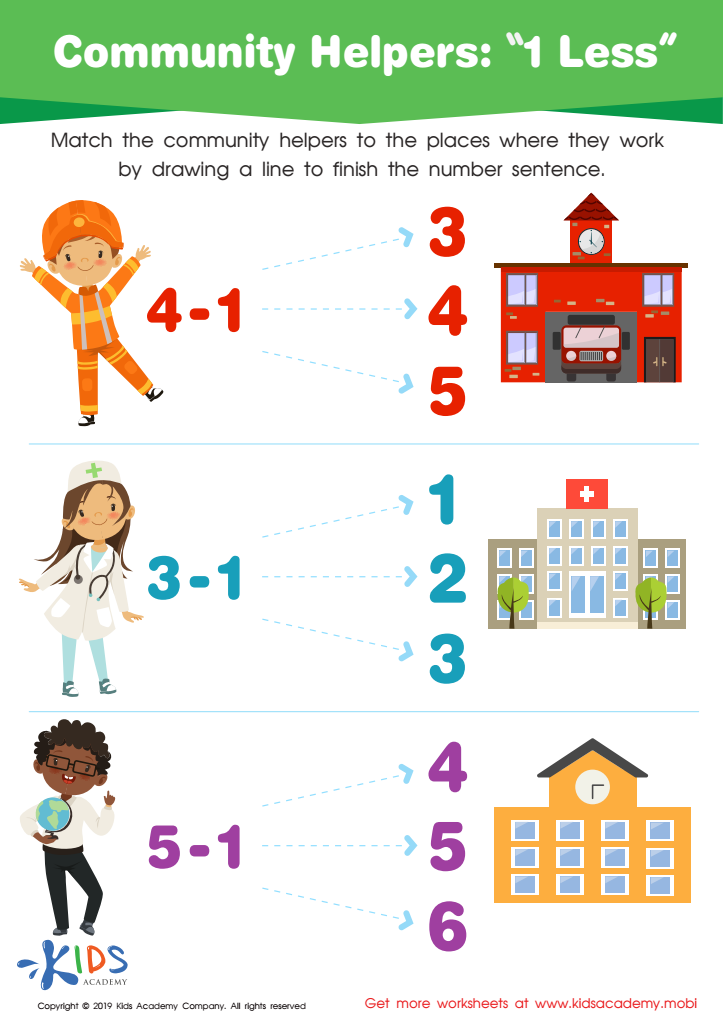
Community Helpers: 1 less Worksheet
 Assign to My Students





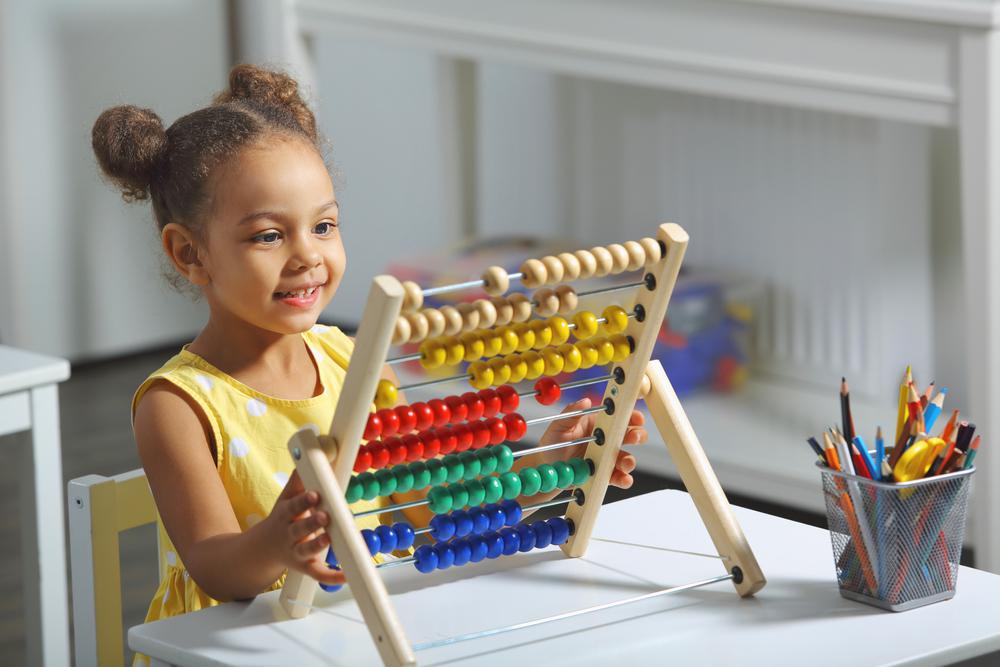


Basic counting skills and addition are crucial foundations for early childhood development. For children aged 3-6, mastering these skills supports cognitive growth and lays the groundwork for future math learning. When parents or teachers prioritize these skills, they help foster critical thinking and problem-solving abilities. Understanding counting enables children to comprehend quantities and organize information, which enhances their overall learning potential.
Moreover, early exposure to counting and simple addition promotes number sense—the ability to recognize numbers and understand their relationships. This is essential for developing mathematical fluency and confidence as children progress in their education. Engaging children through playful activities, such as counting objects, singing number songs, or playing math games, makes learning enjoyable and memorable.
Additionally, basic counting skills contribute to other academic areas, like reading and science, where counting often plays a vital role. It also helps improve fine motor skills, language development, and even social interactions by encouraging collaborative learning experiences during play.
In summary, investing time and effort in teaching young children basic counting and addition skills cultivates a strong foundation for lifelong learning, ensuring they are better equipped to face future educational challenges. Parents and teachers play a critical role in nurturing these essential skills during this pivotal stage.








