Counting skills Addition Worksheets for Ages 3-6 - Page 6
127 filtered results
-
From - To
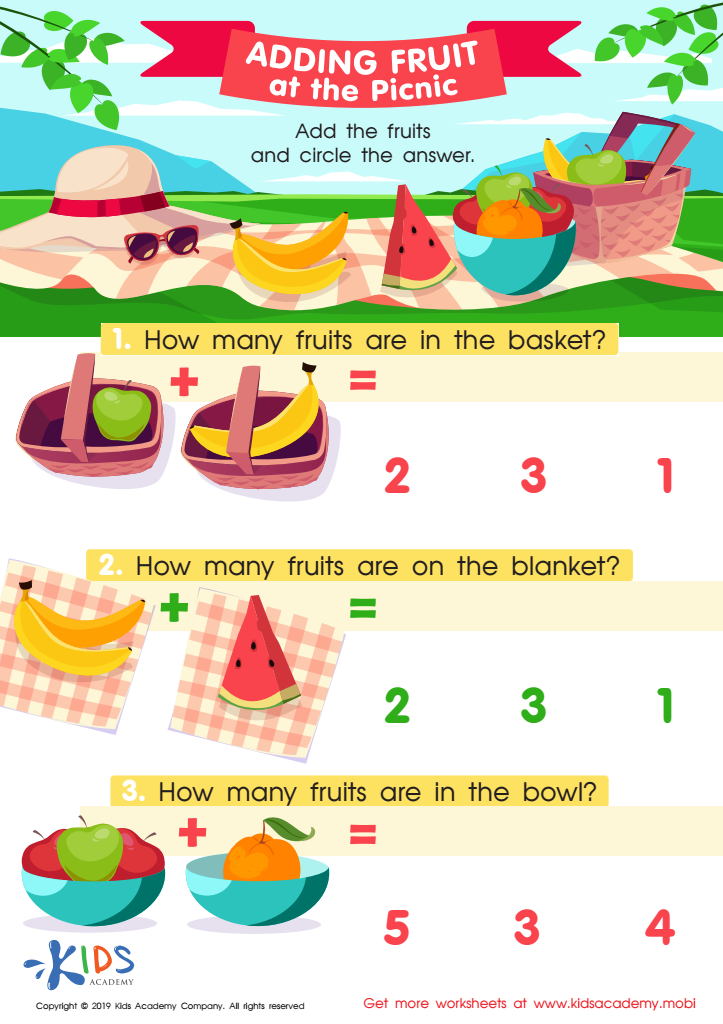
Adding Fruit at the Picnic Worksheet
 Assign to My Students
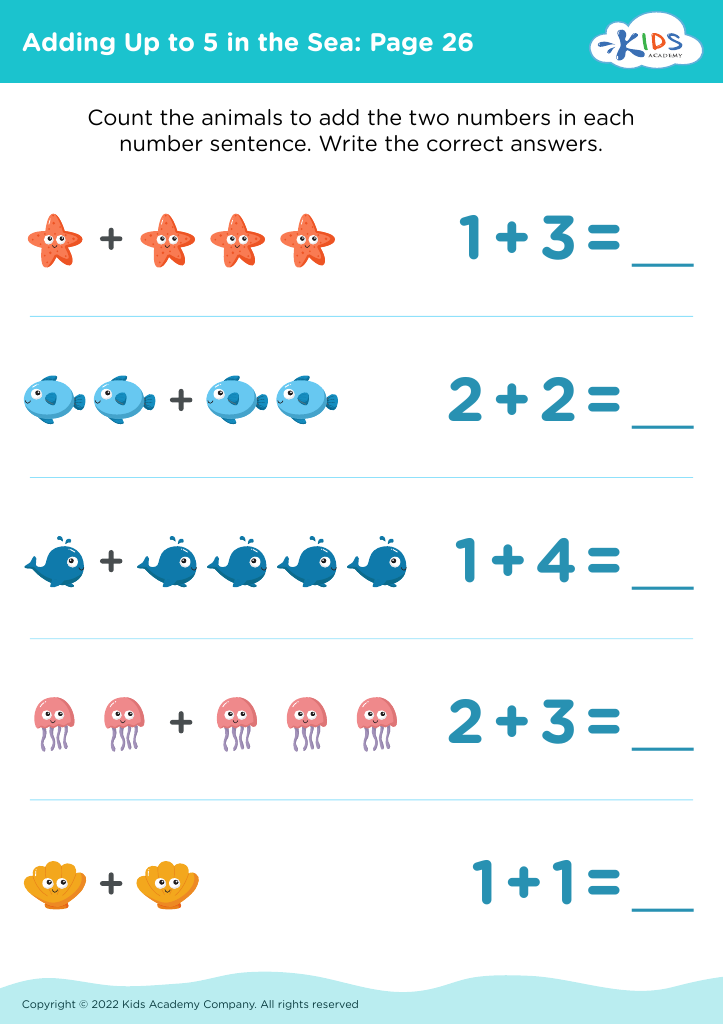
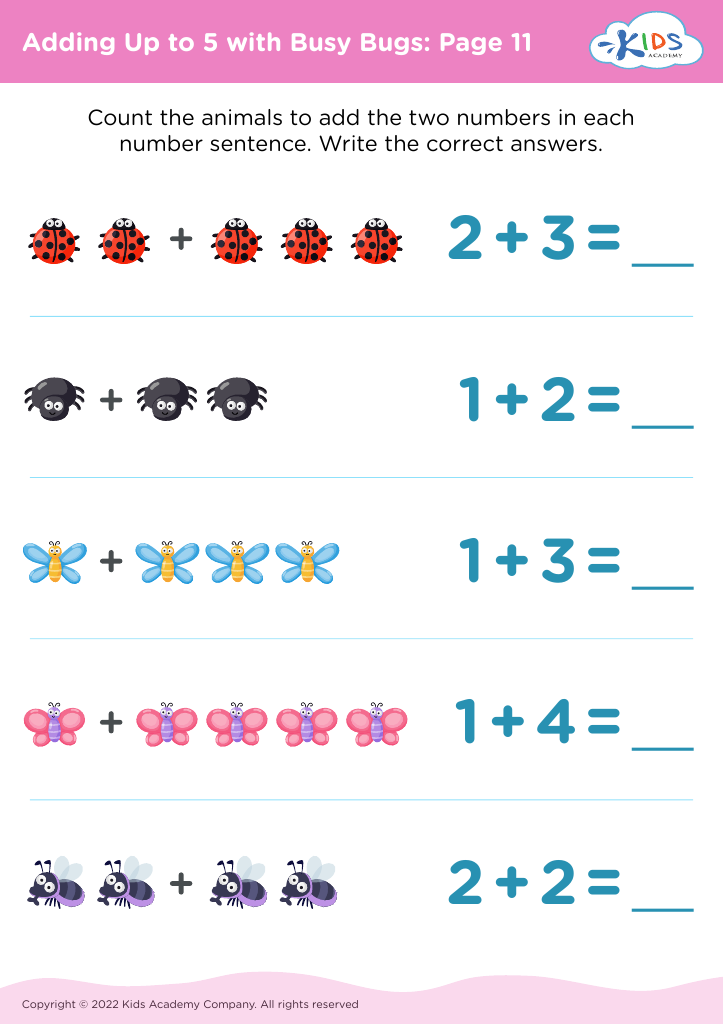
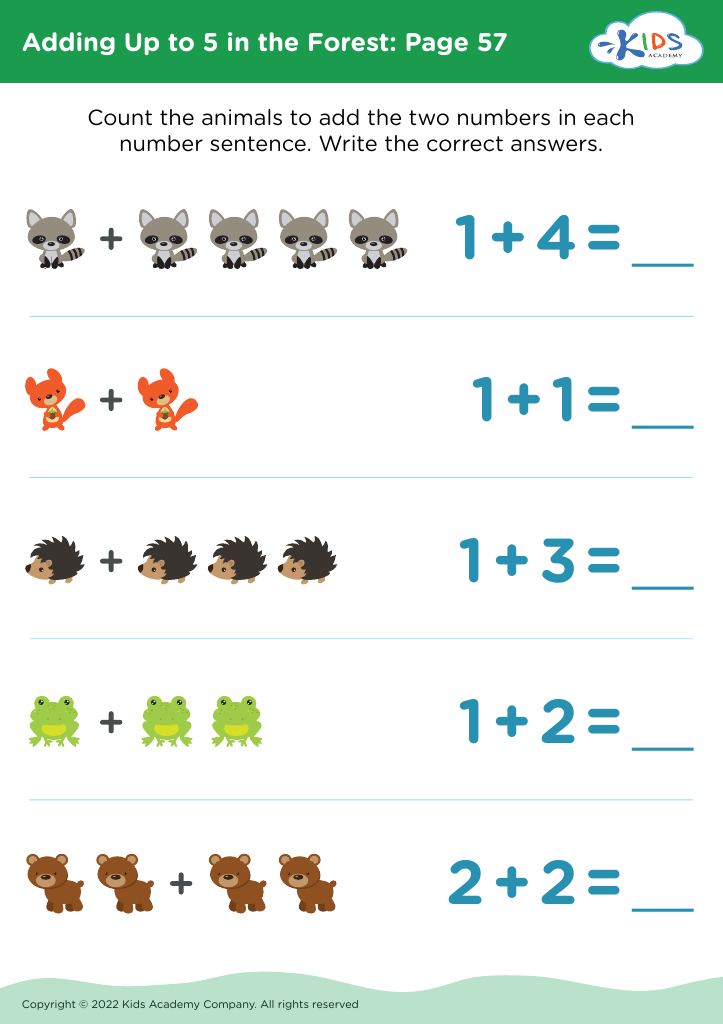
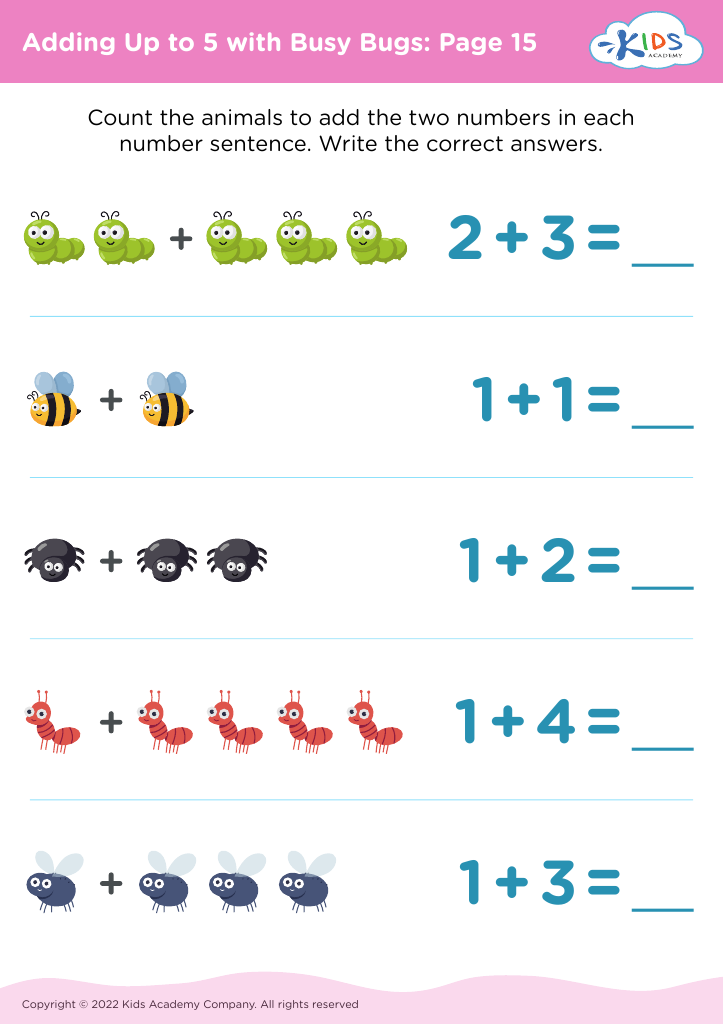








Counting skills and basic addition are foundational building blocks for young children, serving as the bedrock upon which more complex mathematical concepts are built. During the ages of 3 to 6, children's minds are exceptionally receptive to new information and skills, which makes it an ideal period for introducing fundamental math concepts. Counting facilitates children's understanding of quantity, order, and number recognition, which are crucial for daily tasks and future academic success.
Teaching addition at this stage is equally important as it represents a child's first exposure to the concept of combining quantities. This not only develops their math skills but also enhances logical thinking and problem-solving abilities. When children successfully count and add, they gain confidence and a sense of accomplishment that can motivate them to tackle more advanced concepts later on. Furthermore, early math skills are closely linked to literacy skills, as both domains require pattern recognition and sequential thinking.
Moreover, engaging children in counting and addition through playful and interactive methods fosters a positive attitude towards learning. This approach can mitigate math anxiety and build a strong mathematical foundation. Educators and parents who invest time and effort into nurturing these skills give children a significant advantage that can benefit their academic journey and everyday life.








