Filters

127 filtered results

Clear all filters
Favorites
With answer key
Interactive

127 filtered results

Difficulty Level

Grade


Check out this FREE Trial Lesson on Addition for age 3-6!

Writing Number Sentences for Addition Story Problems

Favorites
With answer key
Interactive
  • 3-6
  • Counting skills
  • Addition
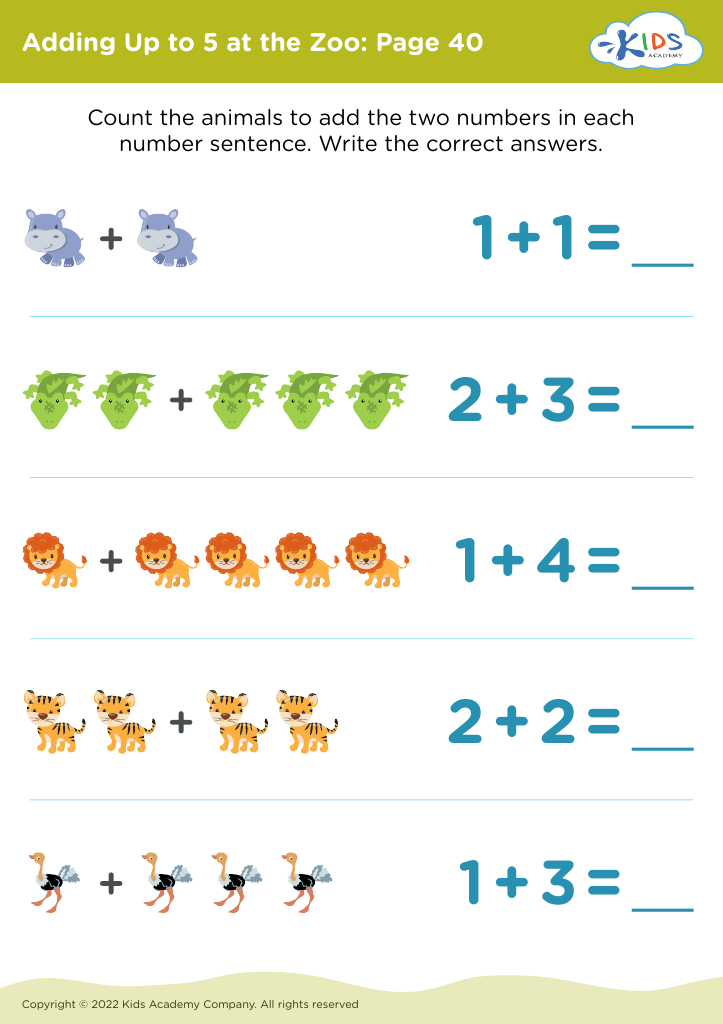
Adding Up to 5 at the Zoo: Page 40
Worksheet
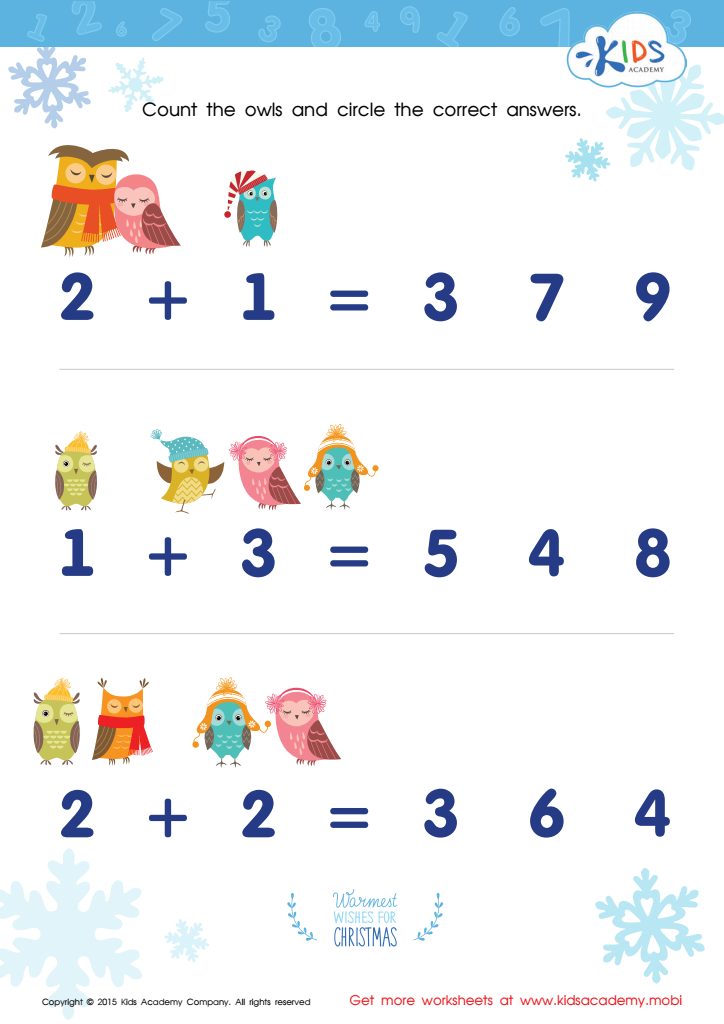
Math PDF Worksheet: Count Little Owls

Count Little Owls Worksheet

Math fun awaits! Count the cute little owls and practice adding single digits up to three indoors. Bright pictures help kids solve these simple problems. Get the free worksheets and enjoy the holiday season with Kids Academy!
Count Little Owls Worksheet
Worksheet
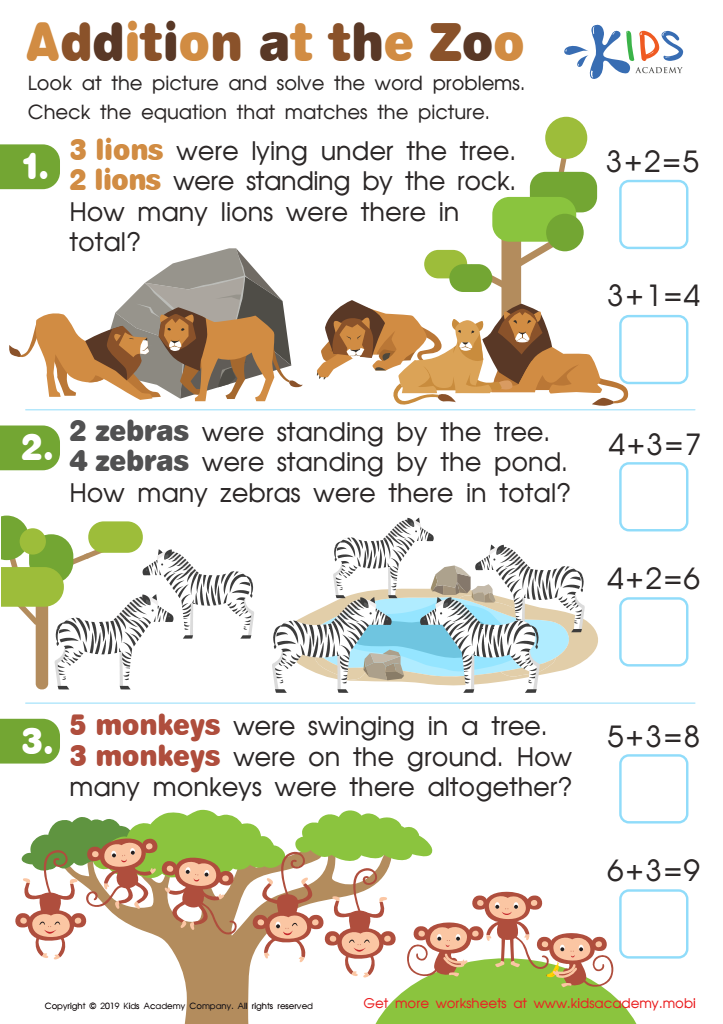
Addition at the Zoo Worksheet

Addition at the Zoo Worksheet

Visit the zoo with your kids and point out all the different animals. Ask them to name their favorites and identify animals on a worksheet. Challenge them to solve word problems related to the pictures. Ask them for the equation that fits the picture and check the answer.
Addition at the Zoo Worksheet
Worksheet
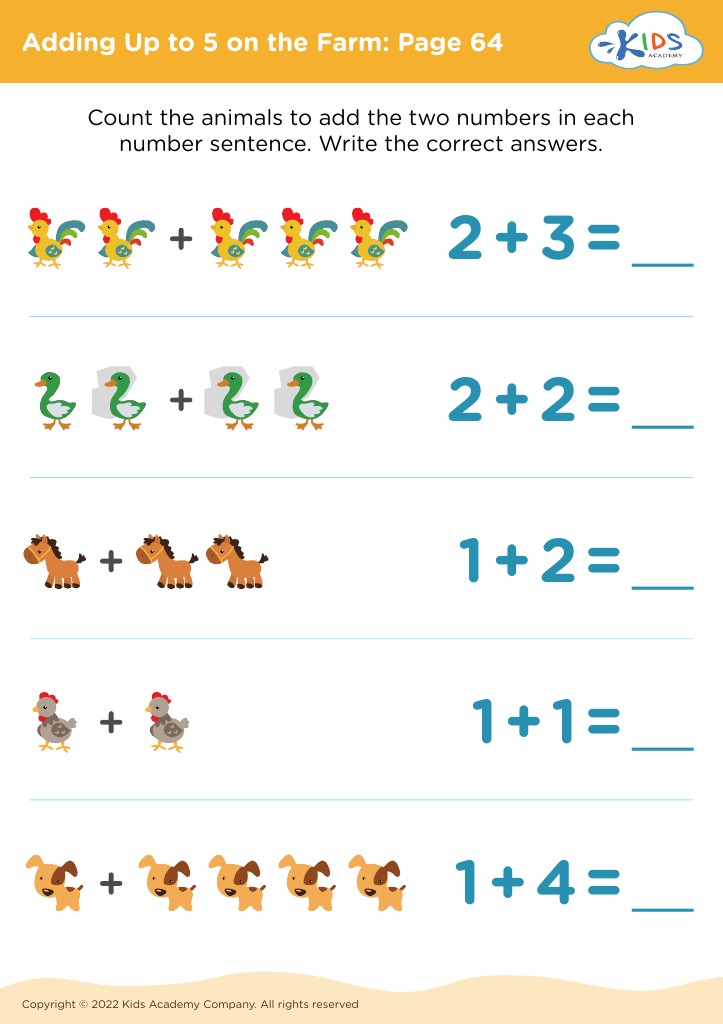
Adding Up to 5 on the Farm: Page 64
Worksheet
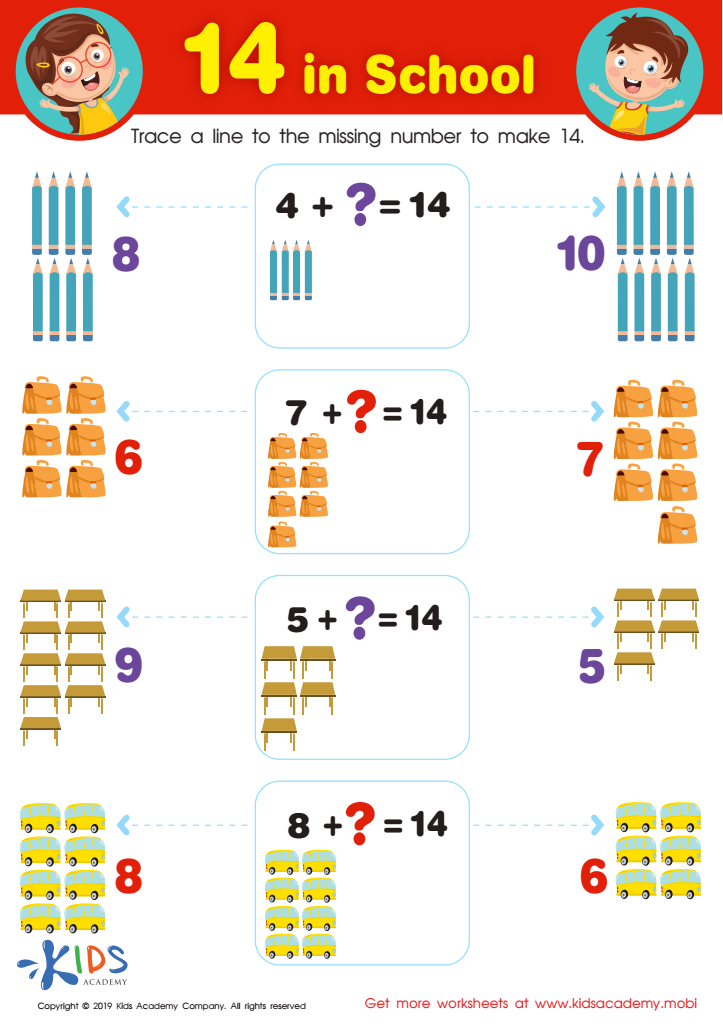
14 in School Worksheet
14 in School Worksheet
Remind your kids that adding different sets of numbers can give the same total (e.g. 2+3=5, 4+1=5). Ask them for more examples. Afterwards, work through the exercise. Help them count the objects and trace a line to the missing number that makes the total 14.
14 in School Worksheet
Worksheet
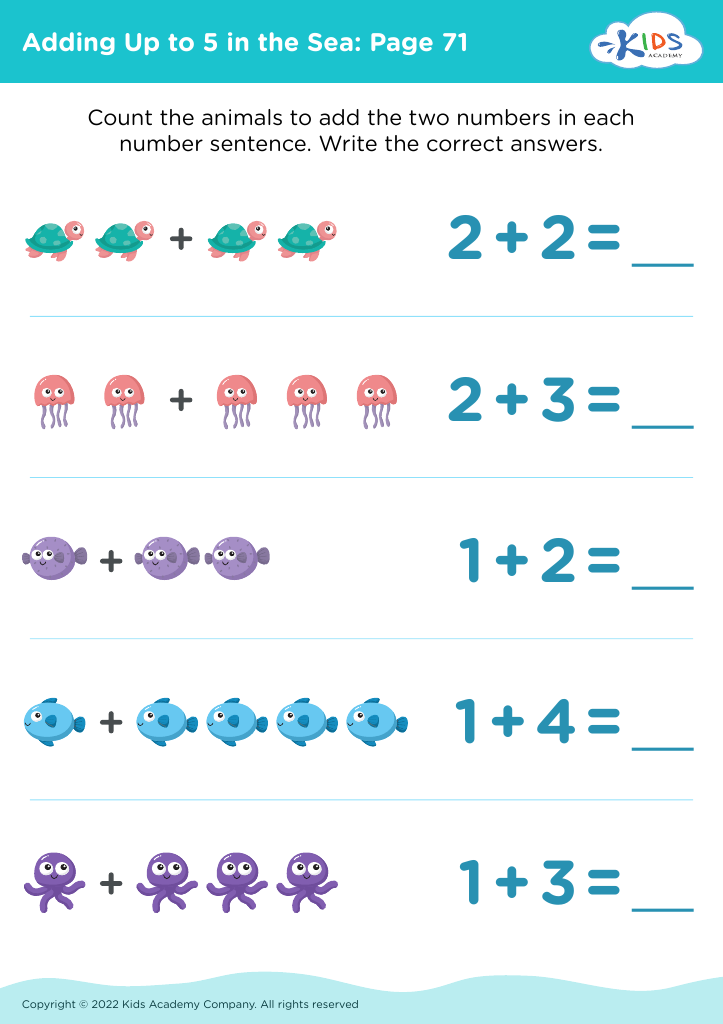
Adding Up to 5 in the Sea: Page 71
Worksheet
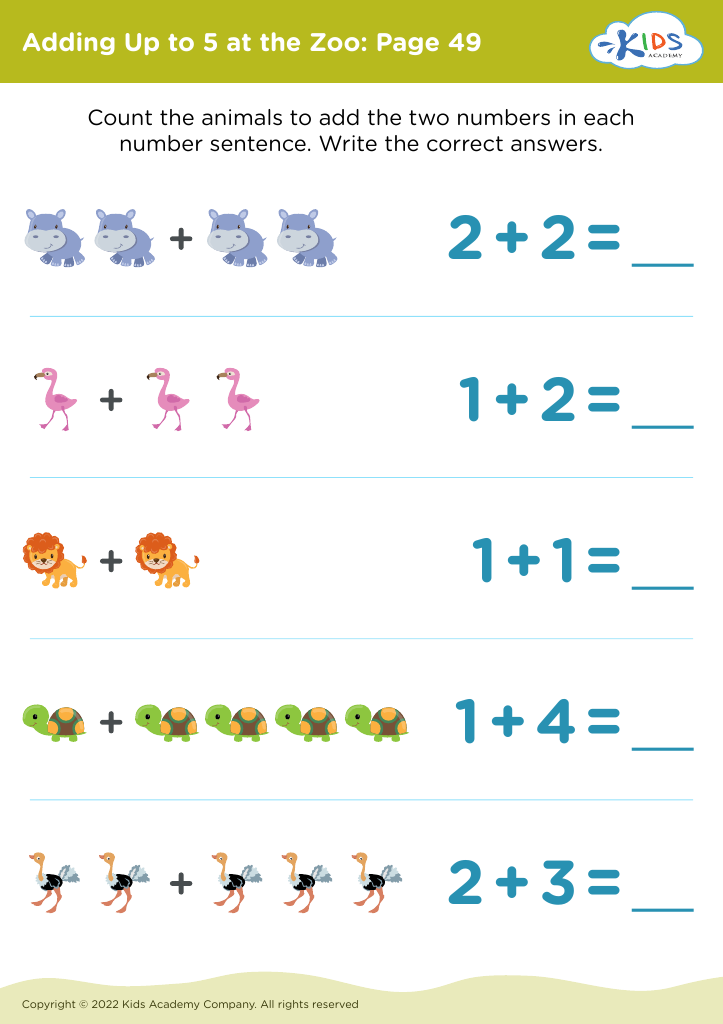
Adding Up to 5 at the Zoo: Page 49
Worksheet
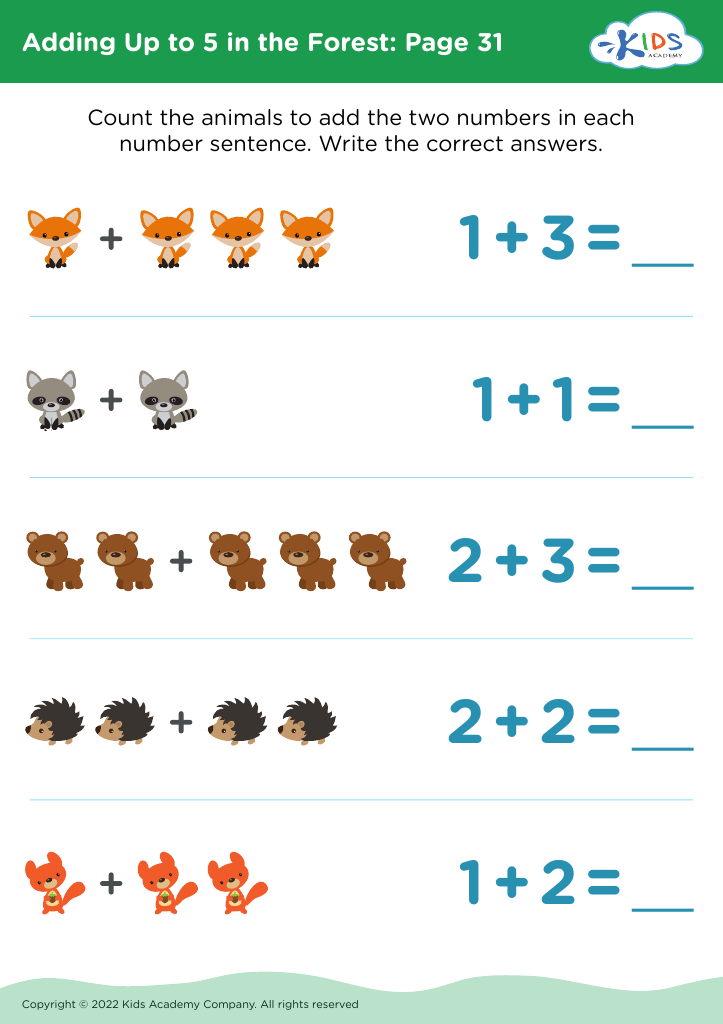
Adding Up to 5 in the Forest: Page 31
Worksheet
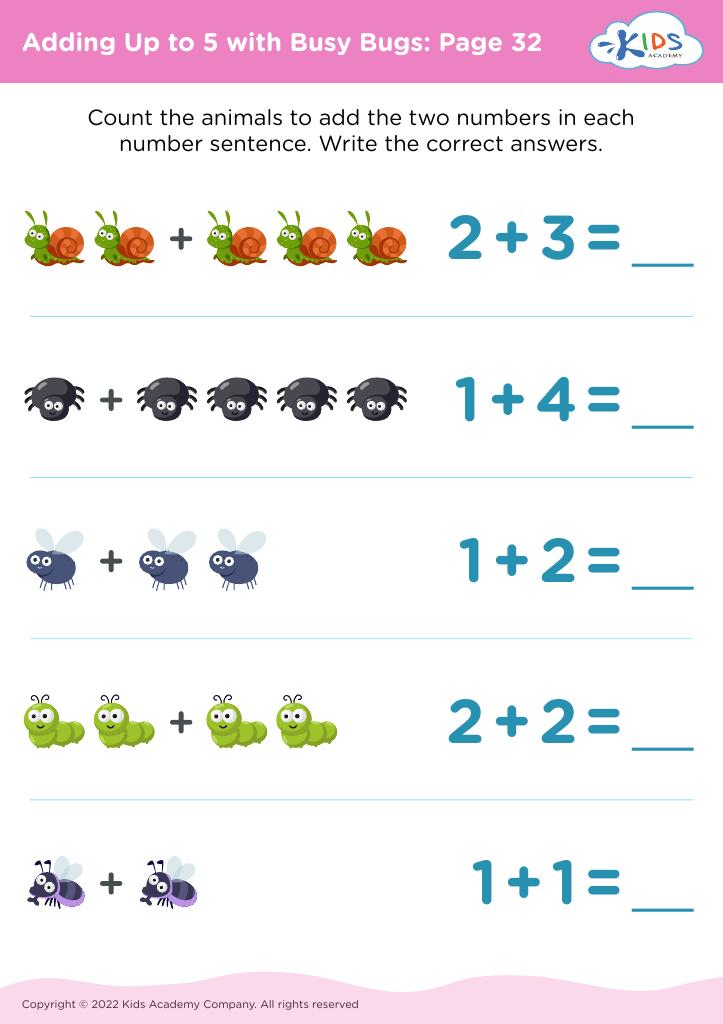
Adding Up to 5 with Busy Bugs: Page 32
Worksheet
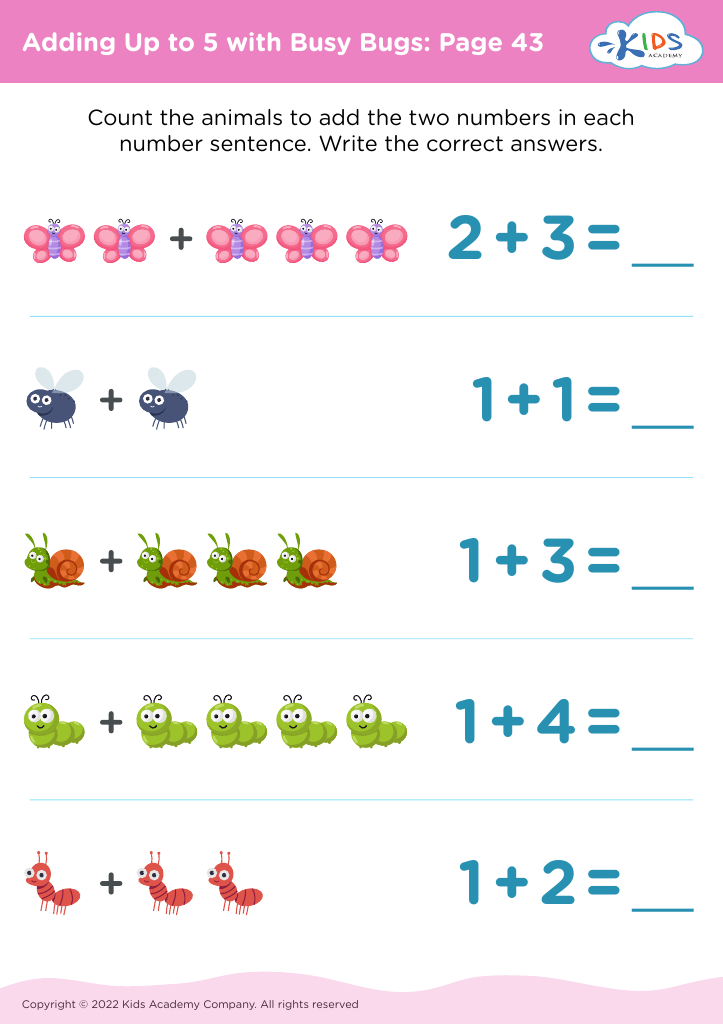
Adding Up to 5 with Busy Bugs: Page 43
Worksheet
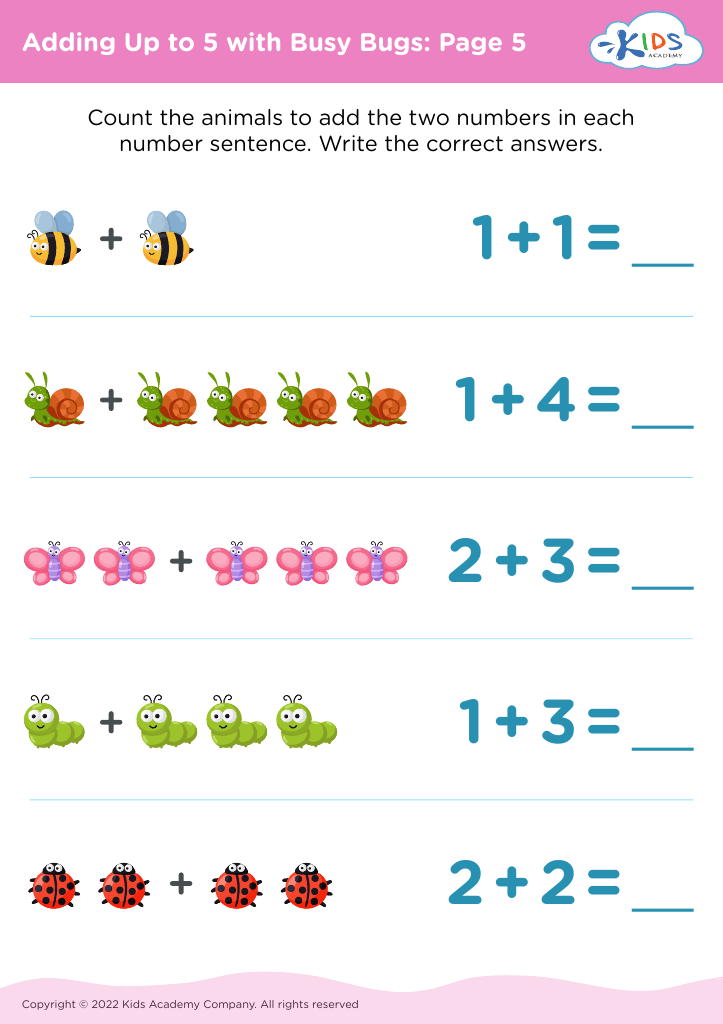
Adding Up to 5 with Busy Bugs: Page 5
Worksheet
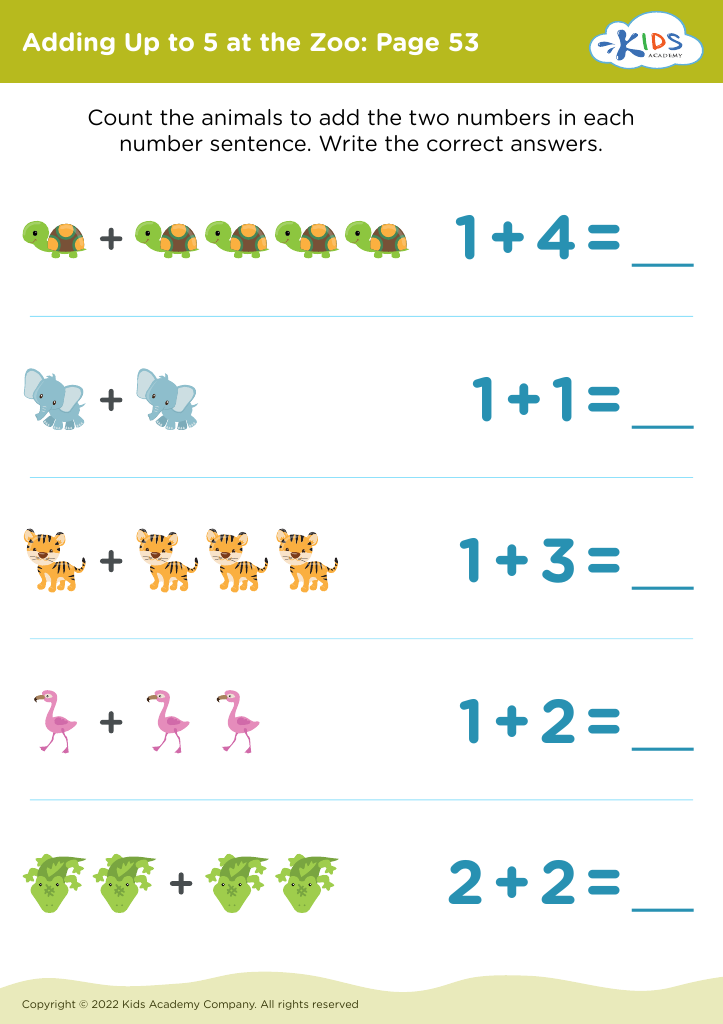
Adding Up to 5 at the Zoo: Page 53
Worksheet
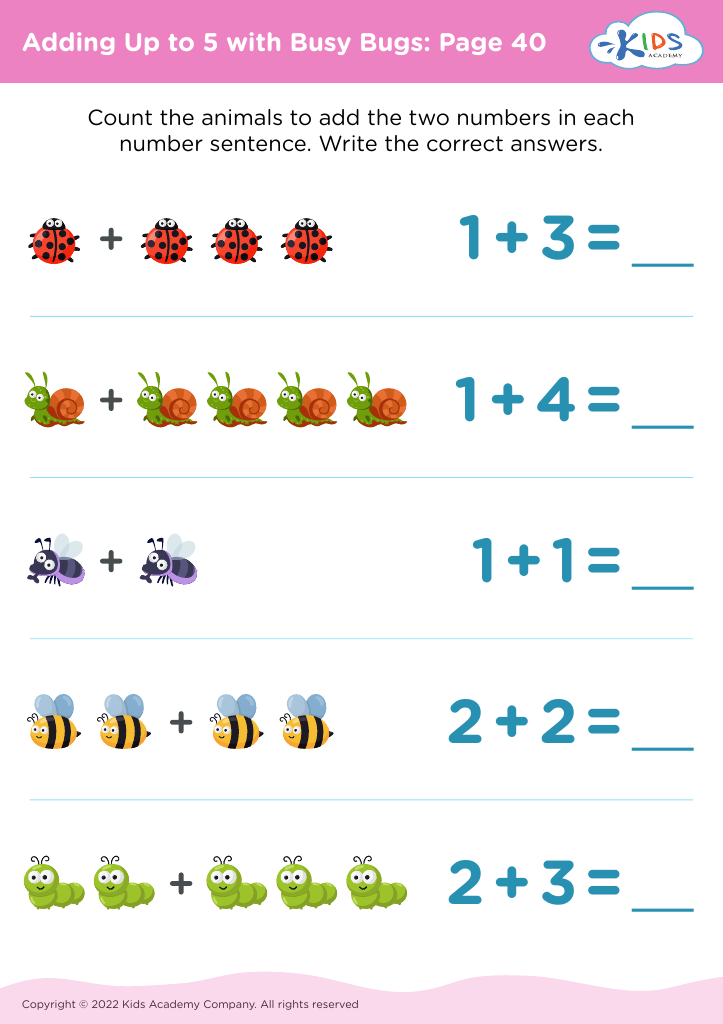
Adding Up to 5 with Busy Bugs: Page 40
Worksheet
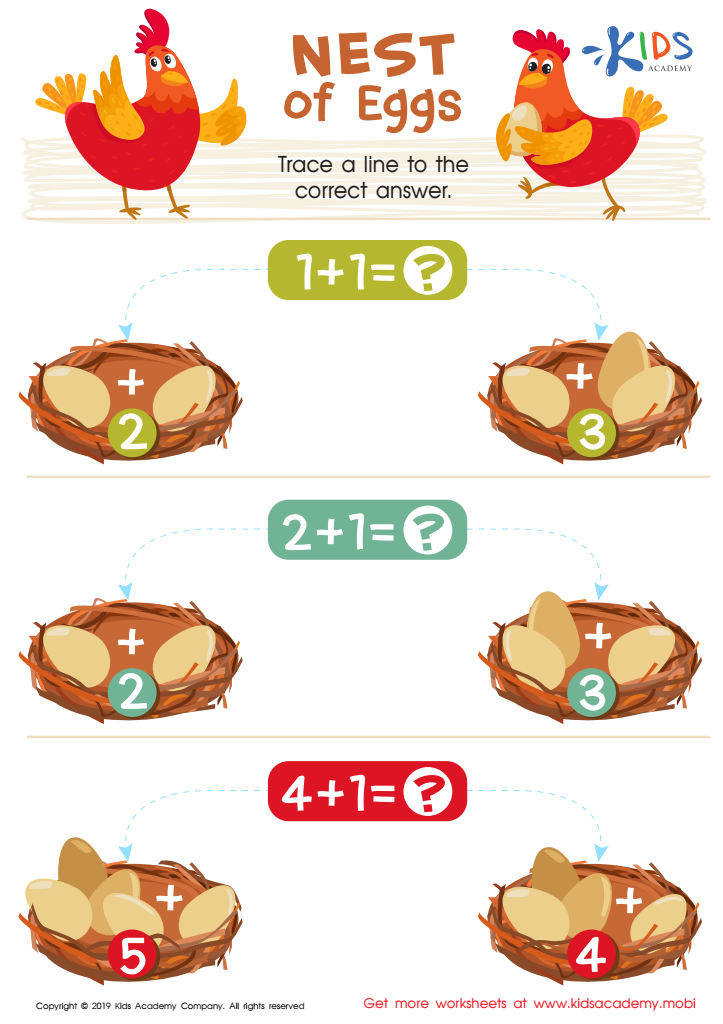
Nest of Eggs Worksheet

Nest of Eggs Worksheet

Help your kids learn math with this worksheet. First discuss the picture with them and then work through the three equations. Encourage them to trace the correct answer afterwards. With your assistance, they'll soon be able to confidently add numbers.
Nest of Eggs Worksheet
Worksheet
Adding in the Arctic Worksheet
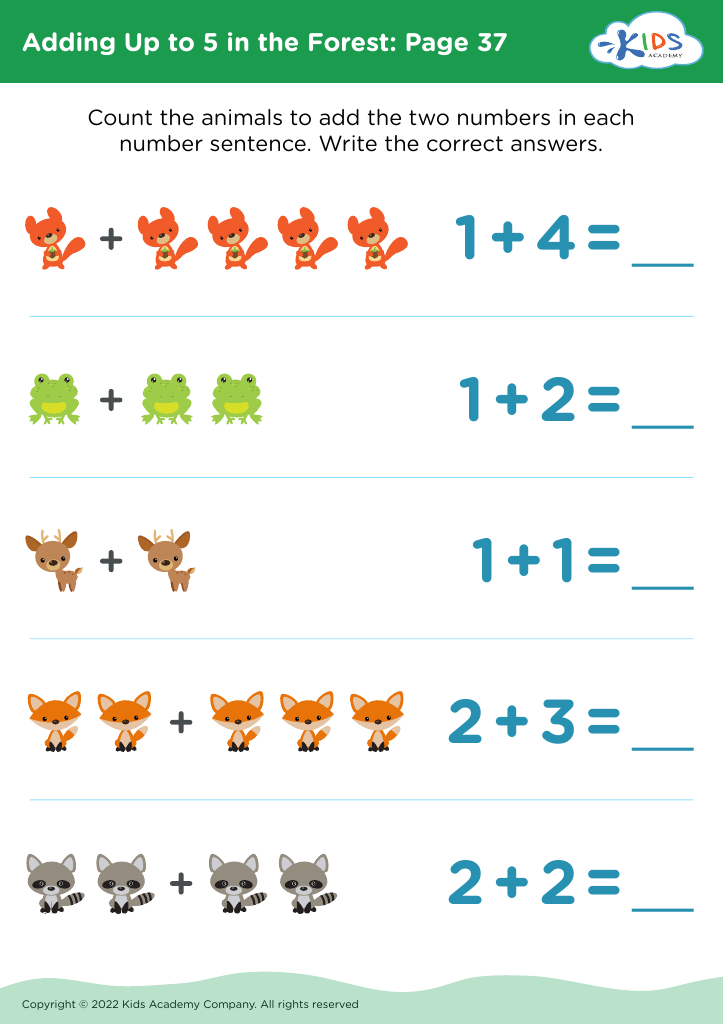
Adding in the Arctic Worksheet
Introduce your kids to the Arctic with this worksheet. Let them look at the pictures, teach them the name of the animals, and help them add up the correct number. Ask your kids to tell you some of the animals found there and what the weather is like. It's a fun and educational way to learn more about the Arctic.
Adding in the Arctic Worksheet
Worksheet
Adding Up to 5 in the Forest: Page 37
Worksheet
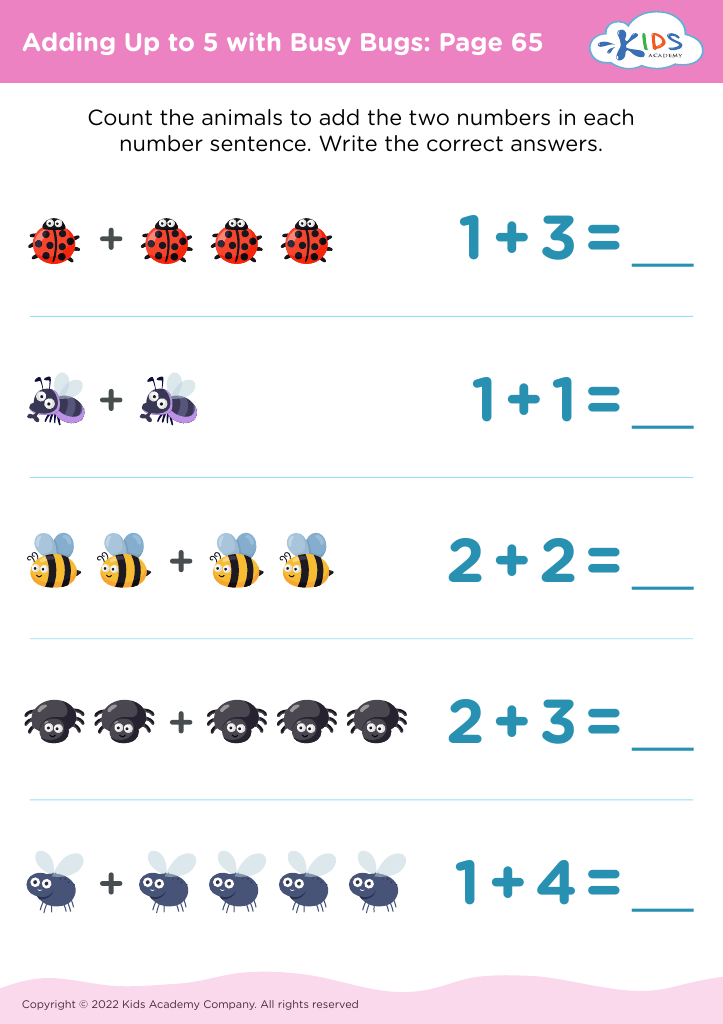
Adding Up to 5 with Busy Bugs: Page 65
Worksheet
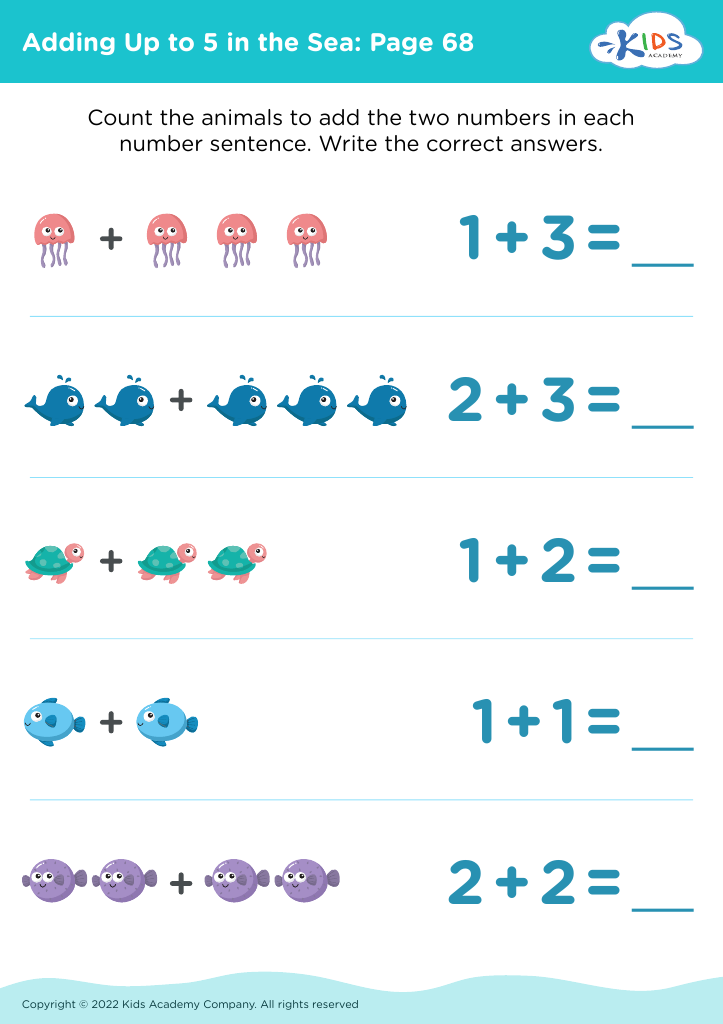
Adding Up to 5 in the Sea: Page 68
Worksheet
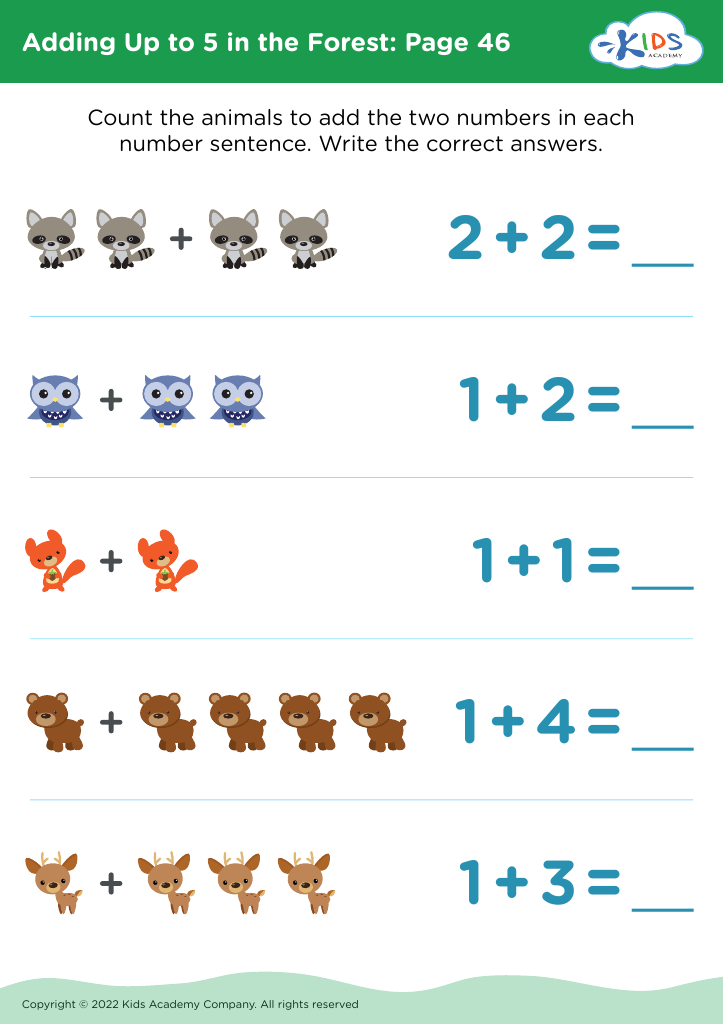
Adding Up to 5 in the Forest: Page 46
Worksheet
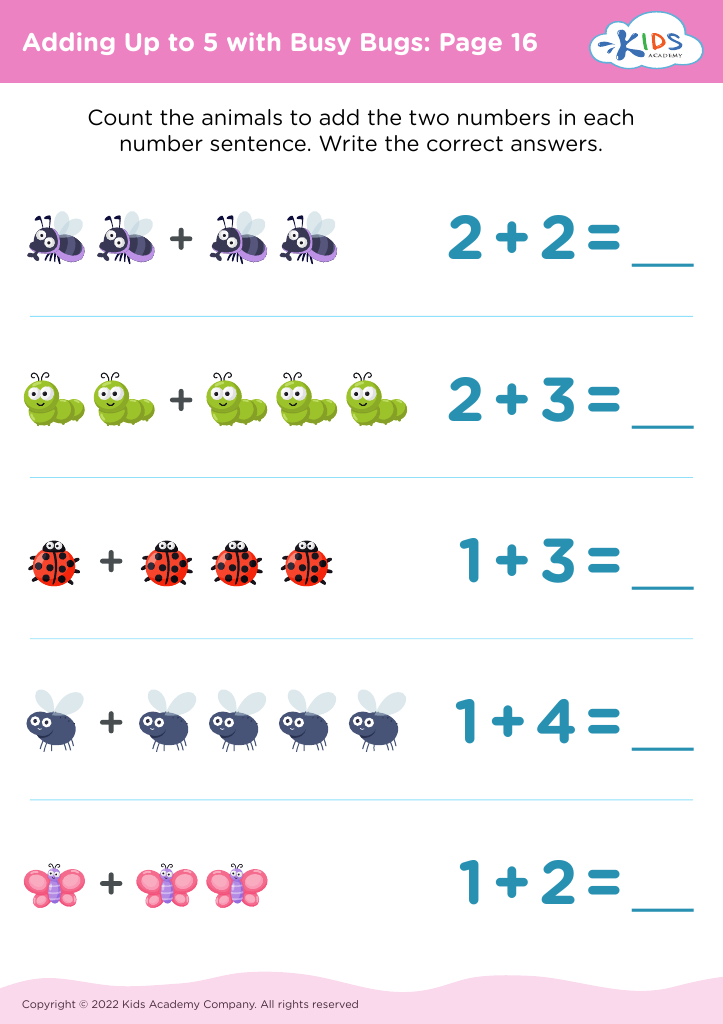
Adding Up to 5 with Busy Bugs: Page 16
Worksheet
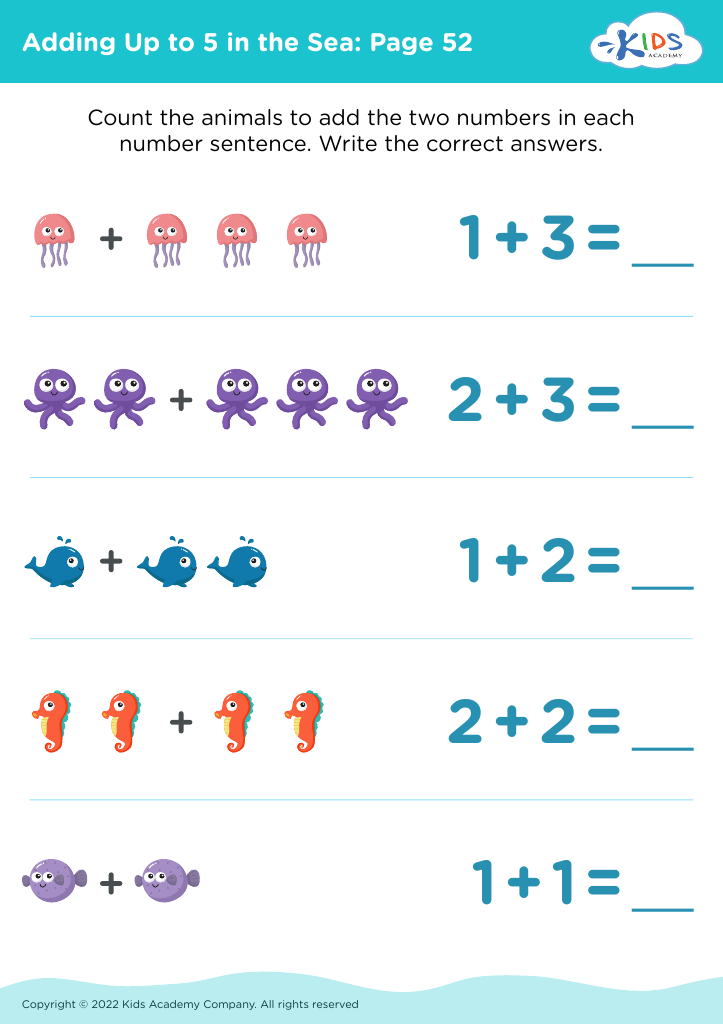
Adding Up to 5 in the Sea: Page 52
Worksheet
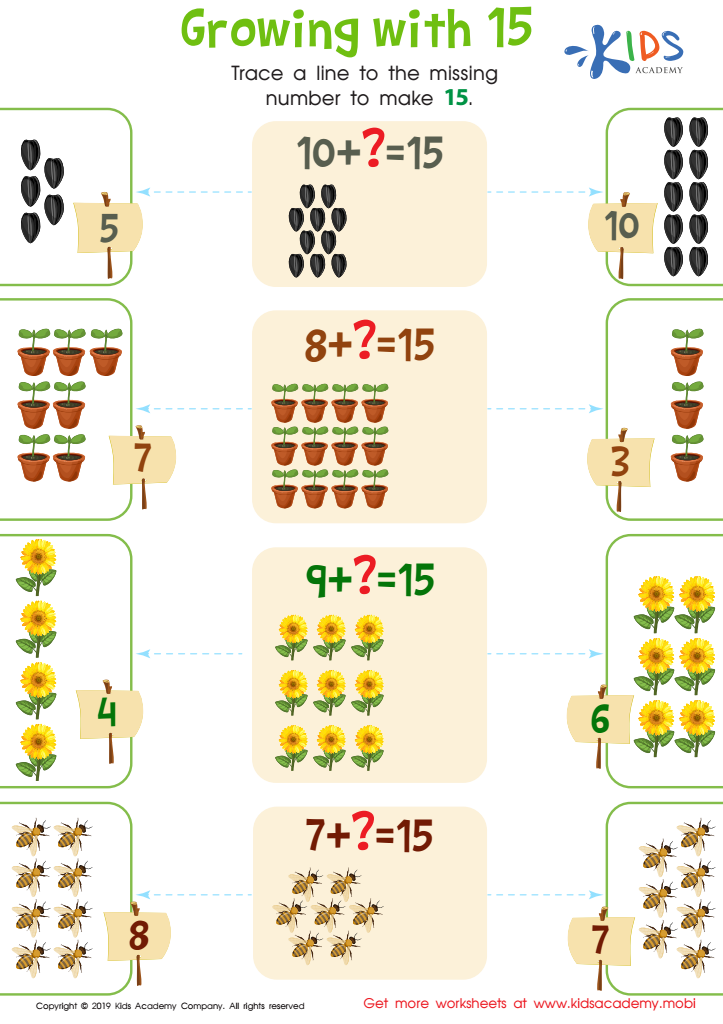
Growing with 15 Worksheet
Growing with 15 Worksheet

Remind your kids that adding different sets of numbers can give the same total (e.g. 2+3=5, 4+1=5). Test their understanding by asking them for more examples. Move onto the worksheet: count objects, then trace the line to the number making a total of 15.
Growing with 15 Worksheet
Worksheet
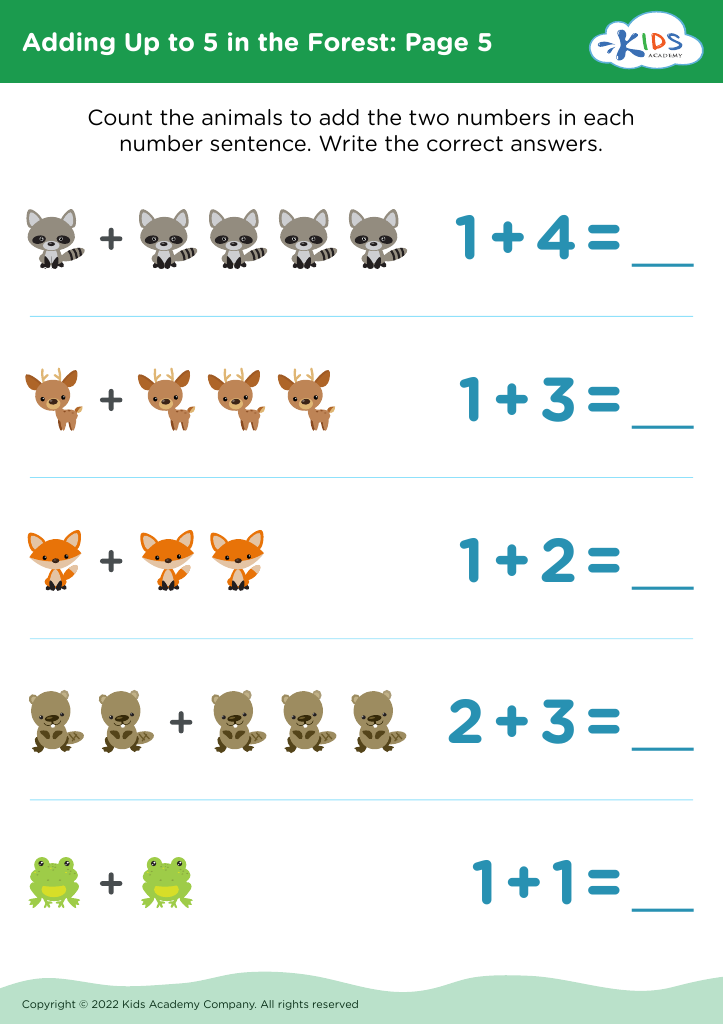
Adding Up to 5 in the Forest: Page 5
Worksheet
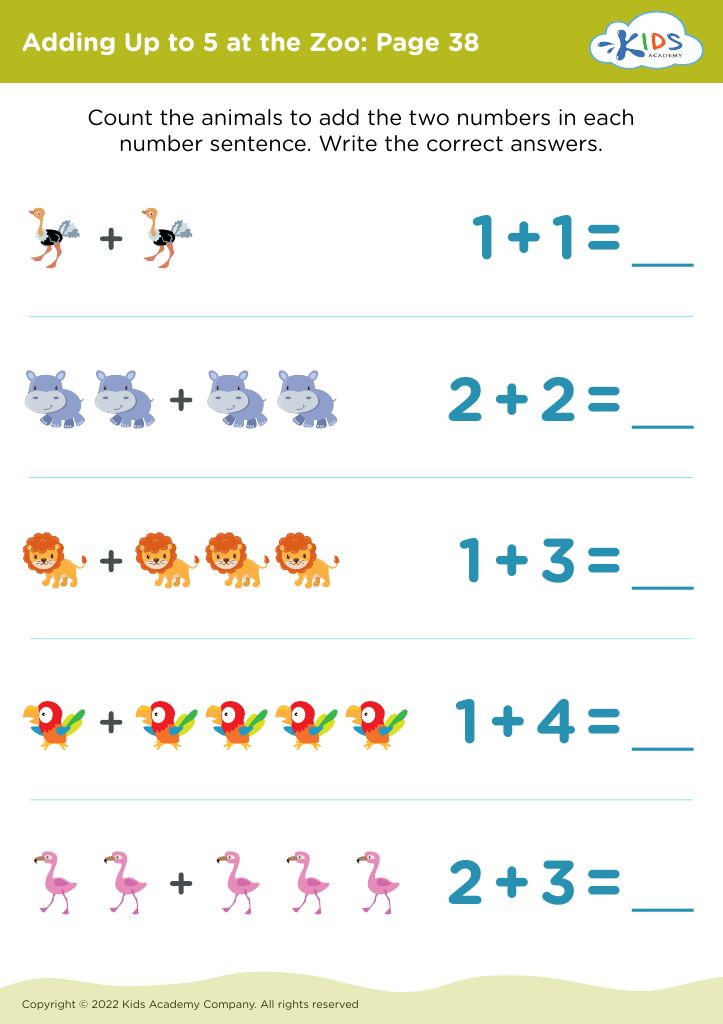
Adding Up to 5 at the Zoo: Page 38
Worksheet


Counting skills and basic addition are foundational building blocks for young children, serving as the bedrock upon which more complex mathematical concepts are built. During the ages of 3 to 6, children's minds are exceptionally receptive to new information and skills, which makes it an ideal period for introducing fundamental math concepts. Counting facilitates children's understanding of quantity, order, and number recognition, which are crucial for daily tasks and future academic success.

Teaching addition at this stage is equally important as it represents a child's first exposure to the concept of combining quantities. This not only develops their math skills but also enhances logical thinking and problem-solving abilities. When children successfully count and add, they gain confidence and a sense of accomplishment that can motivate them to tackle more advanced concepts later on. Furthermore, early math skills are closely linked to literacy skills, as both domains require pattern recognition and sequential thinking.

Moreover, engaging children in counting and addition through playful and interactive methods fosters a positive attitude towards learning. This approach can mitigate math anxiety and build a strong mathematical foundation. Educators and parents who invest time and effort into nurturing these skills give children a significant advantage that can benefit their academic journey and everyday life.