Filters

35 filtered results

Clear all filters
Favorites
With answer key
Interactive

35 filtered results

Difficulty Level

Grade


Subject

    Boost your child's early math and fine motor skills with our "Fine Motor Skills Addition Worksheets for Ages 3-6". Tailored for young learners, these engaging worksheets blend foundational addition concepts with fun activities like tracing and coloring. Perfect for preschool to kindergarten, they encourage precise hand movements, enhancing dexterity and control. As kids solve simple addition problems, they also practice crucial pencil grip and hand-eye coordination. Ideal for parents, teachers, and homeschoolers looking to nurture early academic and motor development. Unlock your child's potential with our expertly designed activities that make learning math enjoyable and effective.
    Check out this FREE Trial Lesson on Addition for age 3-6!

    L

    Favorites
    With answer key
    Interactive
    • 3-6
    • Fine Motor Skills
    • Addition
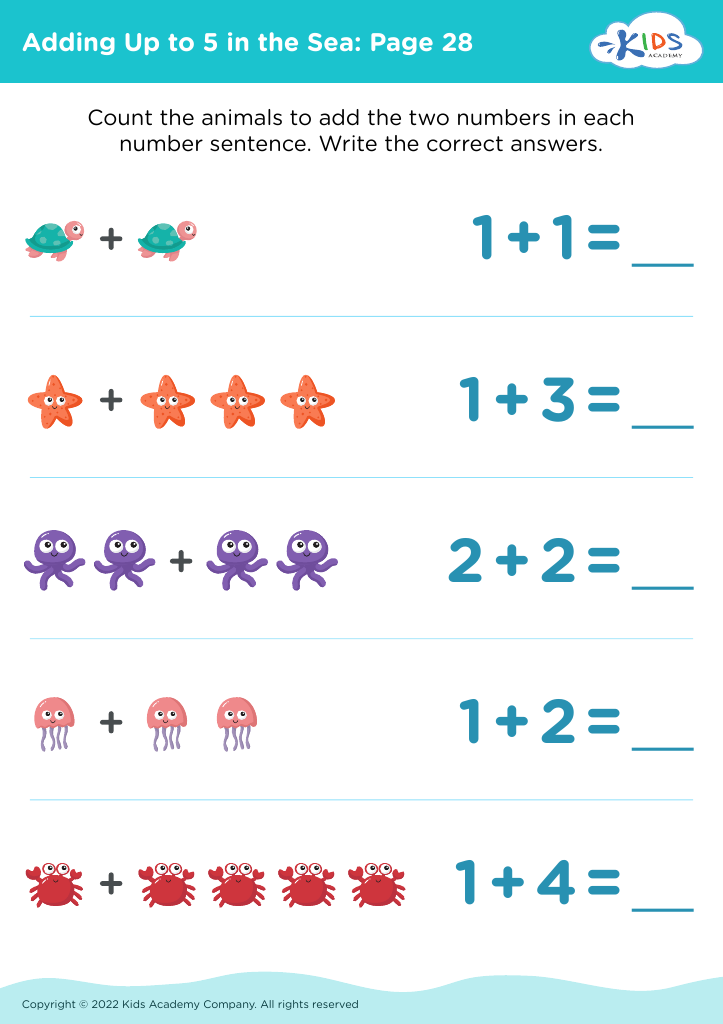
    Adding Up to 5 in the Sea: Page 28
    Adding Up to 5 in the Sea: Page 28
    Adding Up to 5 in the Sea: Page 28
    Worksheet
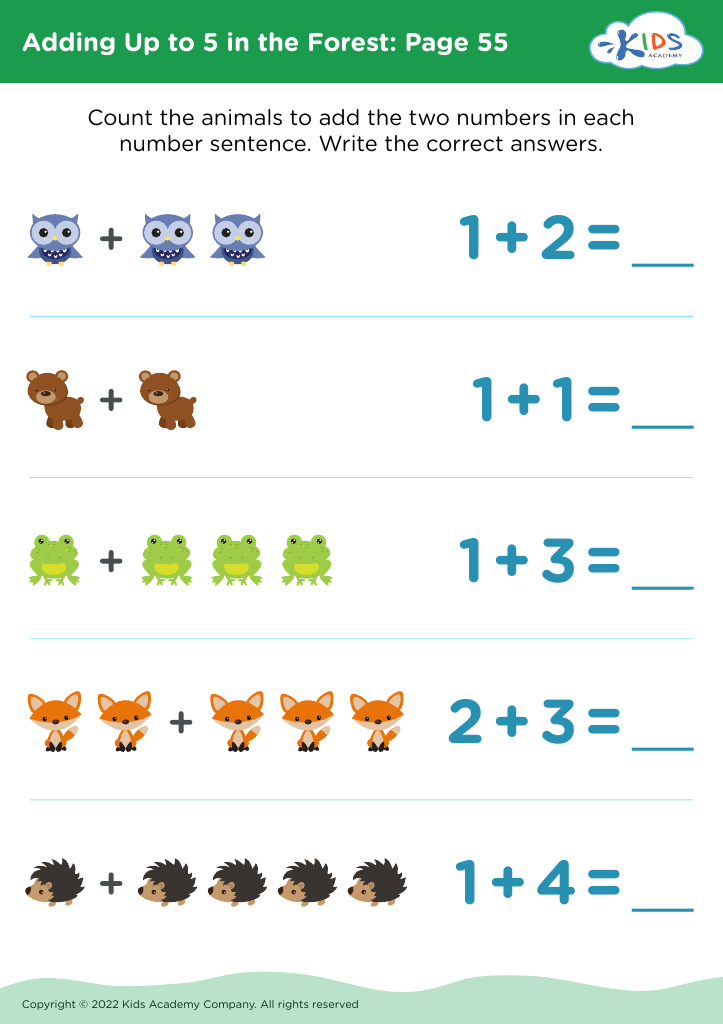
    Adding Up to 5 in the Forest: Page 55
    Adding Up to 5 in the Forest: Page 55
    Adding Up to 5 in the Forest: Page 55
    Worksheet
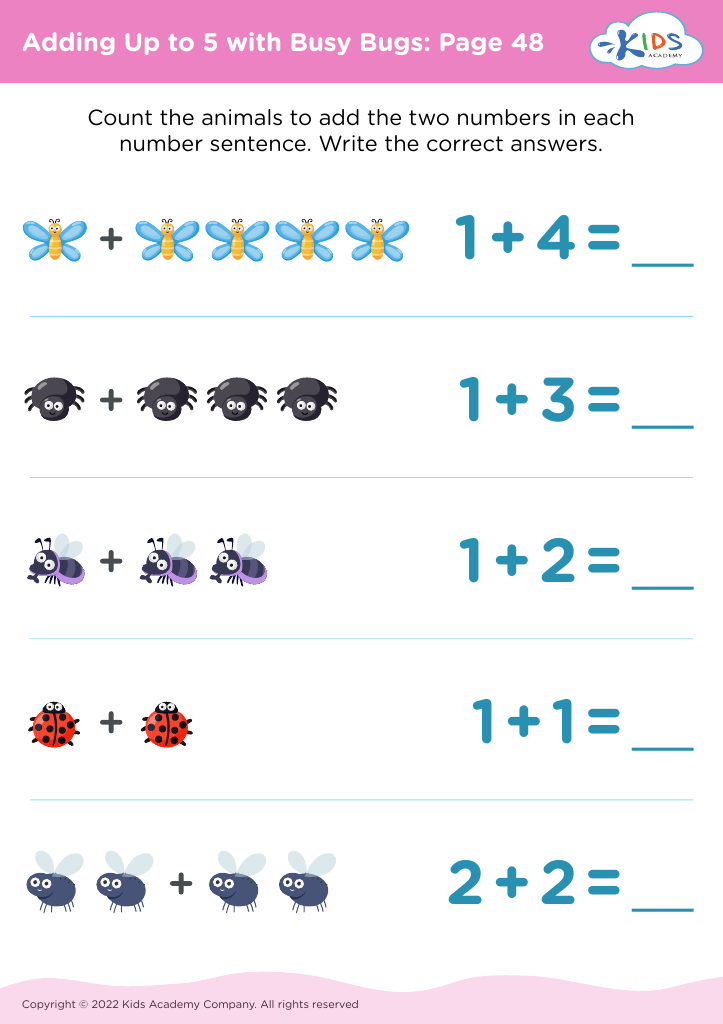
    Adding Up to 5 with Busy Bugs: Page 48
    Adding Up to 5 with Busy Bugs: Page 48
    Adding Up to 5 with Busy Bugs: Page 48
    Worksheet
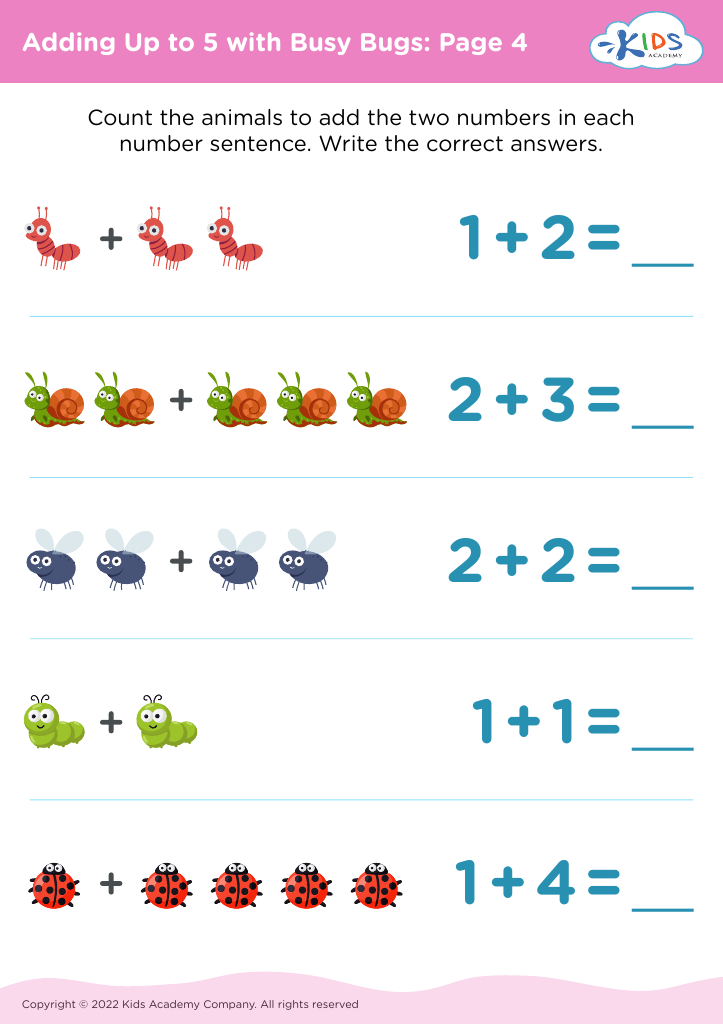
    Adding Up to 5 with Busy Bugs: Page 4
    Adding Up to 5 with Busy Bugs: Page 4
    Adding Up to 5 with Busy Bugs: Page 4
    Worksheet
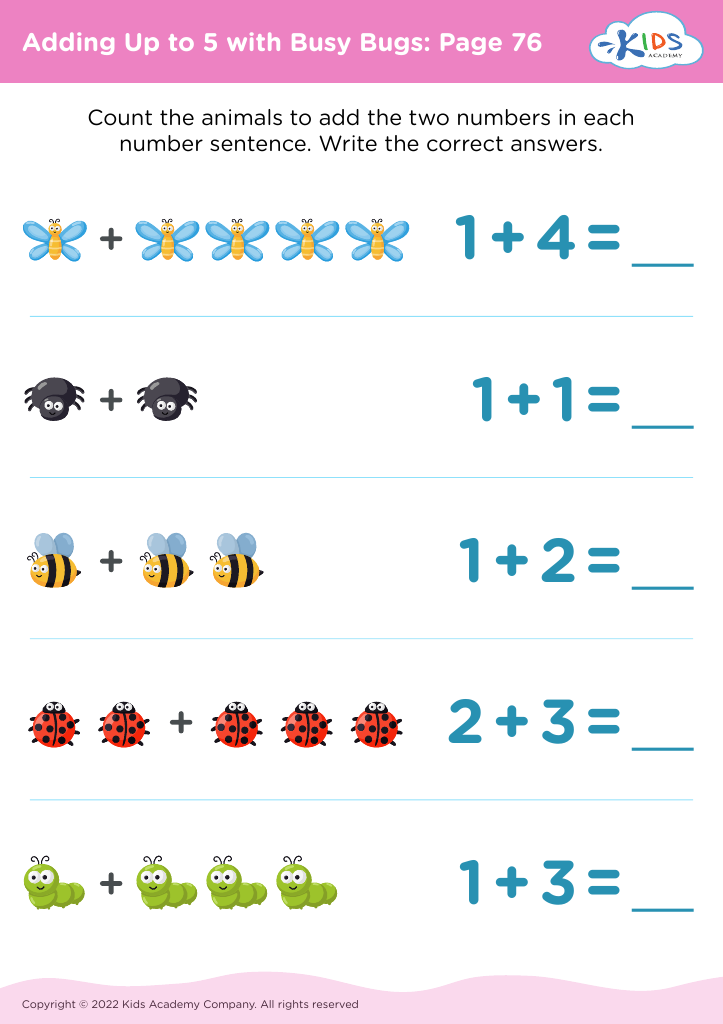
    Adding Up to 5 with Busy Bugs: Page 76
    Adding Up to 5 with Busy Bugs: Page 76
    Adding Up to 5 with Busy Bugs: Page 76
    Worksheet
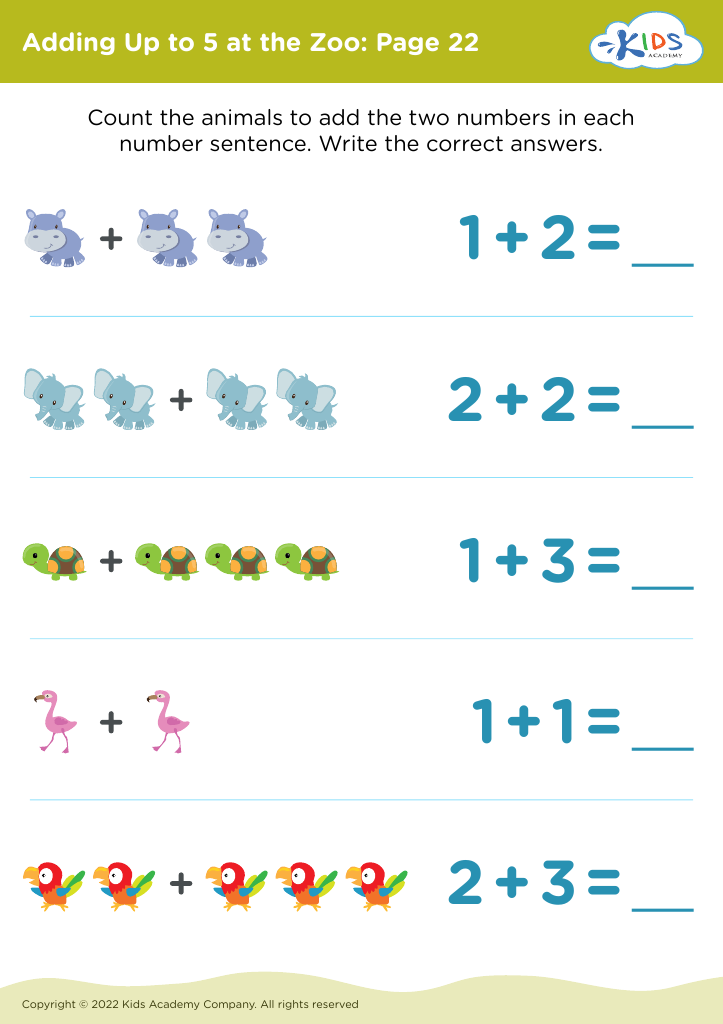
    Adding Up to 5 at the Zoo: Page 22
    Adding Up to 5 at the Zoo: Page 22
    Adding Up to 5 at the Zoo: Page 22
    Worksheet
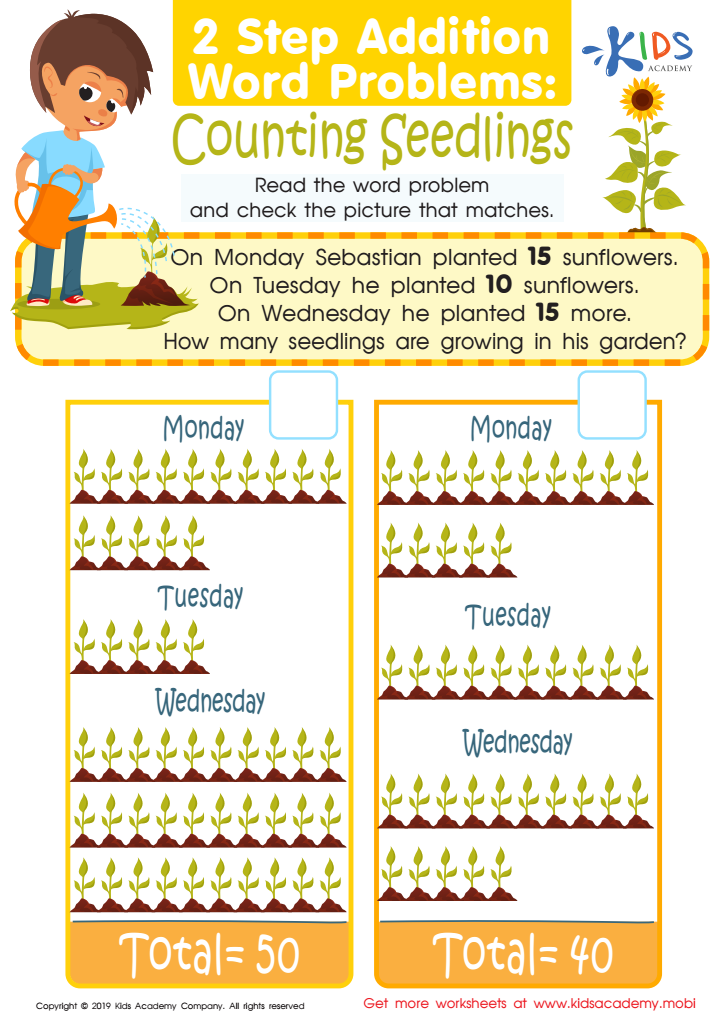
    Counting Seedlings Worksheet
    Counting Seedlings Worksheet

    Counting Seedlings Worksheet

    Understanding math word problems is key. Multiple steps can prove challenging - this free worksheet provides one-to-one picture representation to help kids solve multi-step addition word problems. Strengthen addition skills by choosing the matching picture to the answer.
    Counting Seedlings Worksheet
    Worksheet
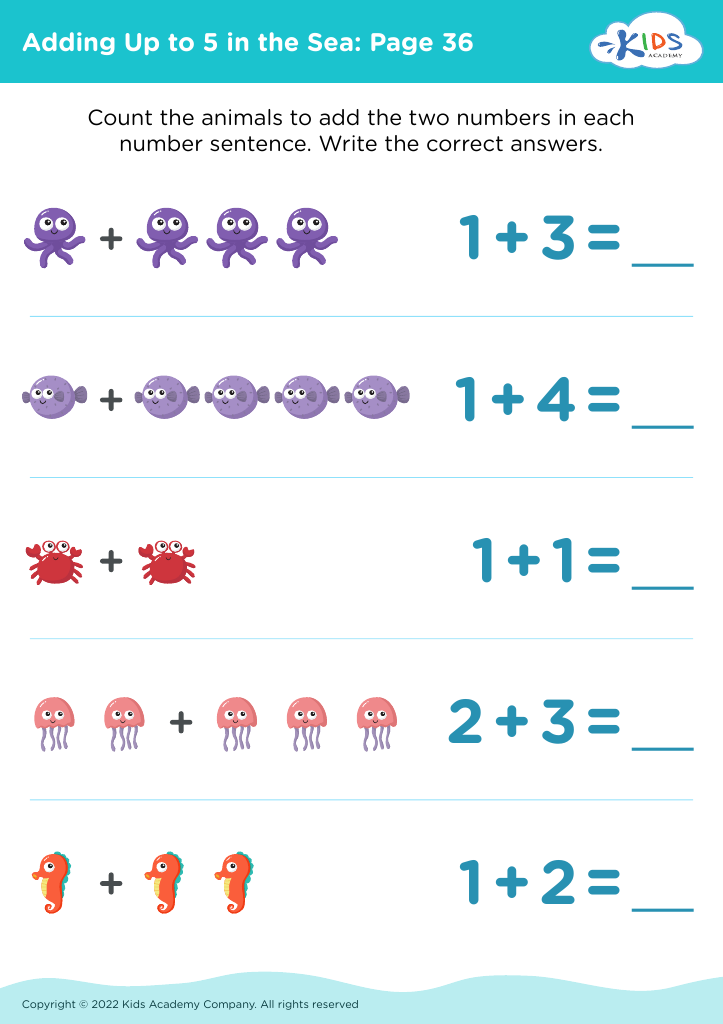
    Adding Up to 5 in the Sea: Page 36
    Adding Up to 5 in the Sea: Page 36
    Adding Up to 5 in the Sea: Page 36
    Worksheet
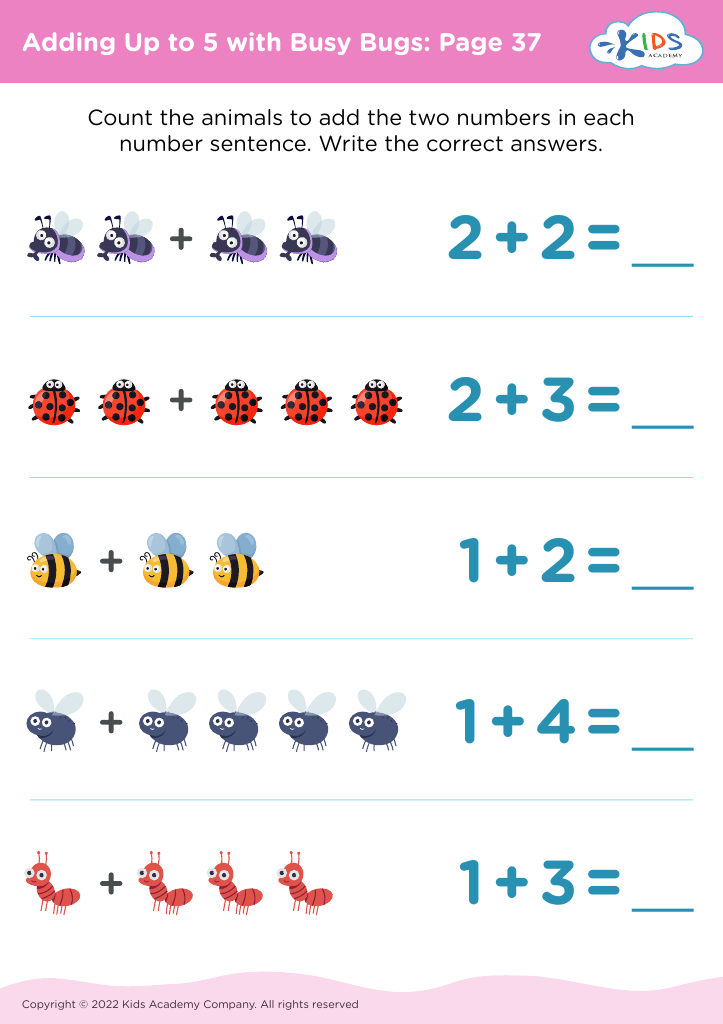
    Adding Up to 5 with Busy Bugs: Page 37
    Adding Up to 5 with Busy Bugs: Page 37
    Adding Up to 5 with Busy Bugs: Page 37
    Worksheet
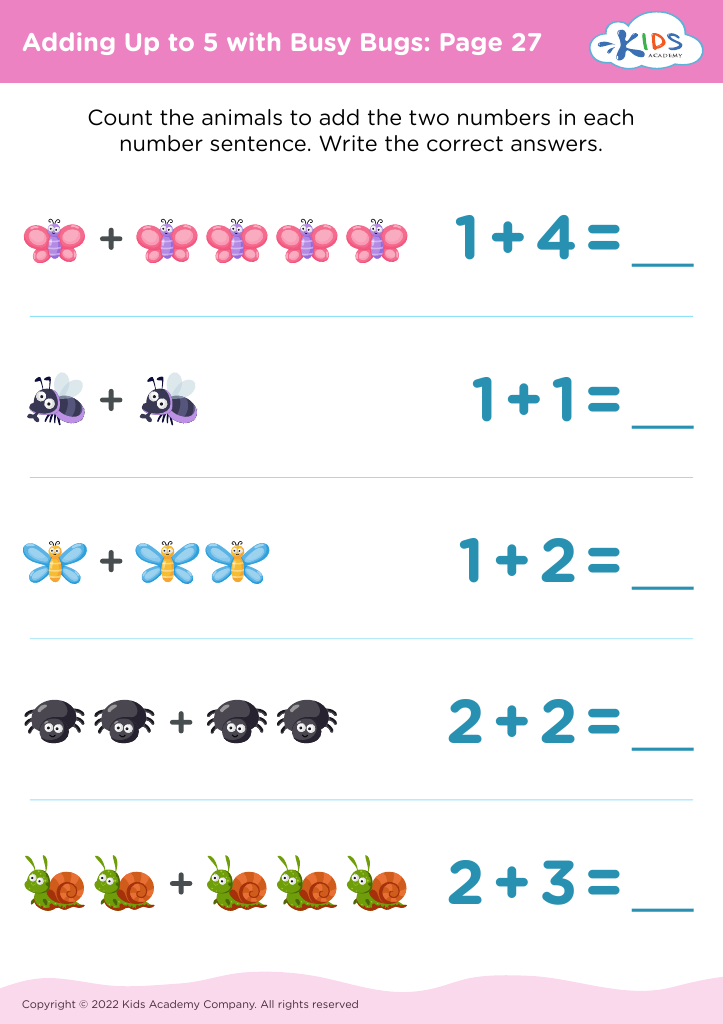
    Adding Up to 5 with Busy Bugs: Page 27
    Adding Up to 5 with Busy Bugs: Page 27
    Adding Up to 5 with Busy Bugs: Page 27
    Worksheet
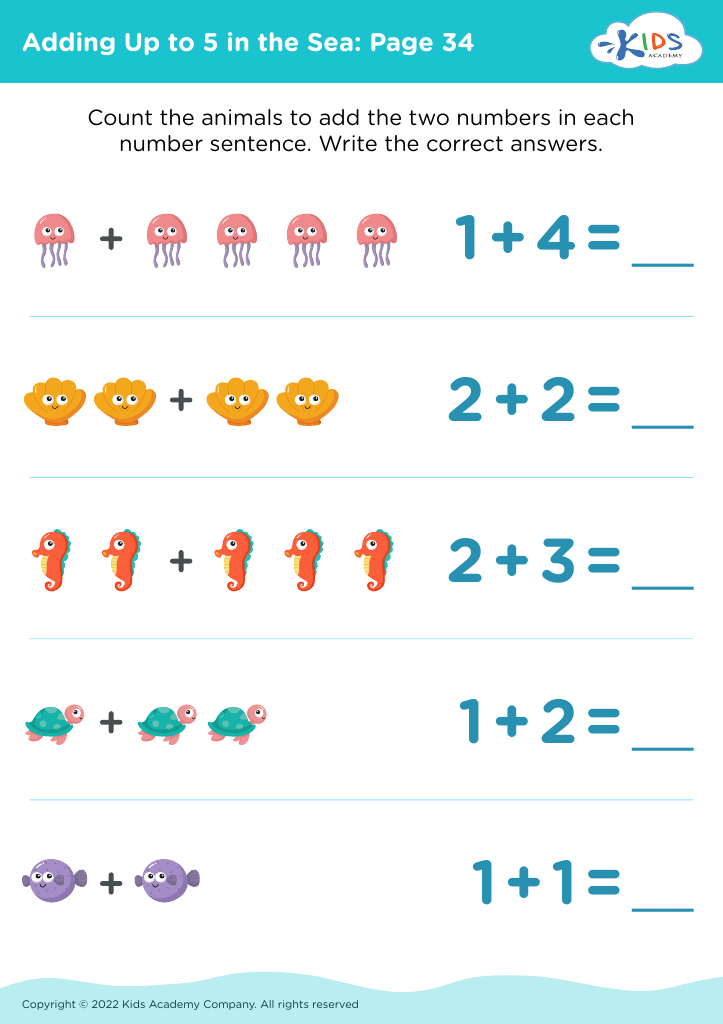
    Adding Up to 5 in the Sea: Page 34
    Adding Up to 5 in the Sea: Page 34
    Adding Up to 5 in the Sea: Page 34
    Worksheet
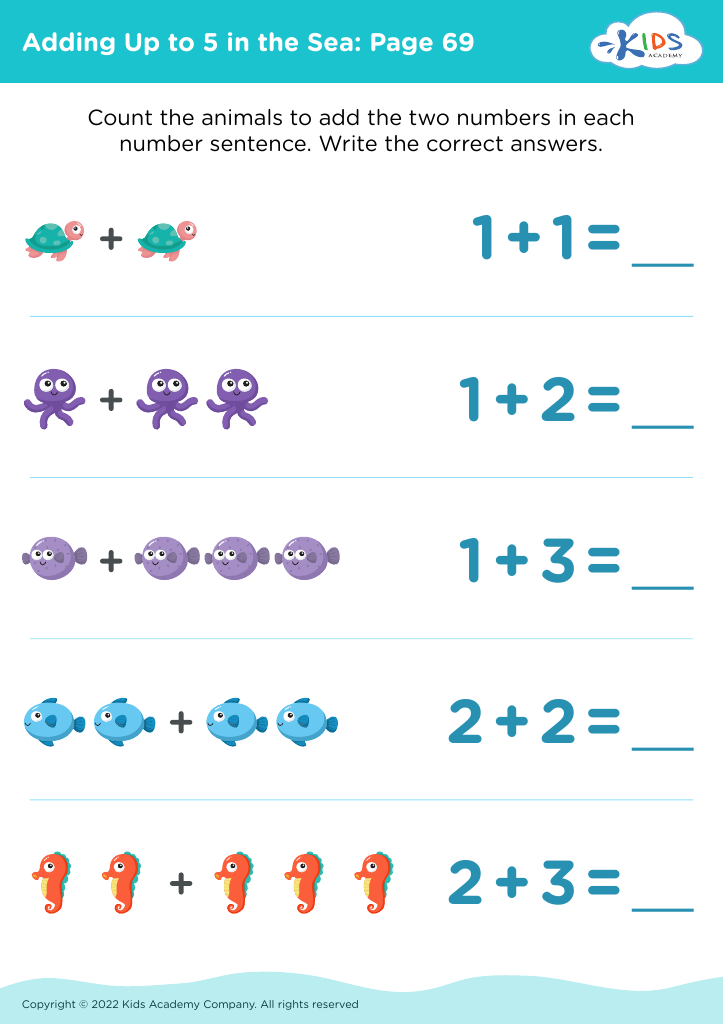
    Adding Up to 5 in the Sea: Page 69
    Adding Up to 5 in the Sea: Page 69
    Adding Up to 5 in the Sea: Page 69
    Worksheet
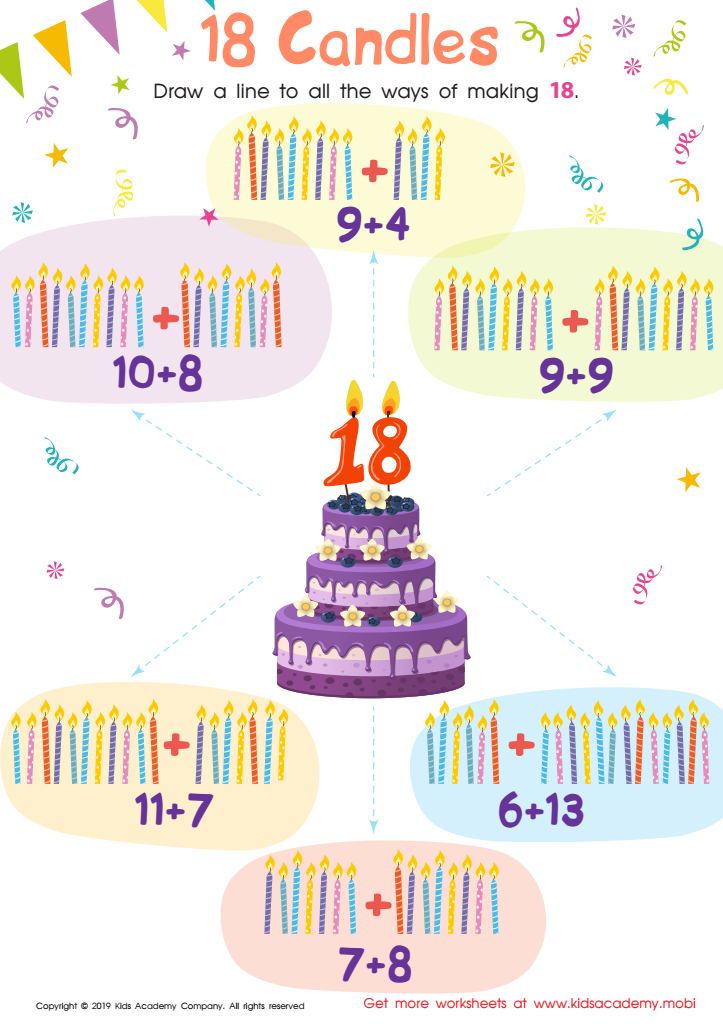
    18 Candles Worksheet
    18 Candles Worksheet

    18 Candles Worksheet

    This worksheet is great for introducing your students to addition and subtraction. Help your kids solve the simple equations on it and draw a line from the birthday cake with 18 on it to all the solutions. Practice like this will prepare them to tackle more complex math problems.
    18 Candles Worksheet
    Worksheet
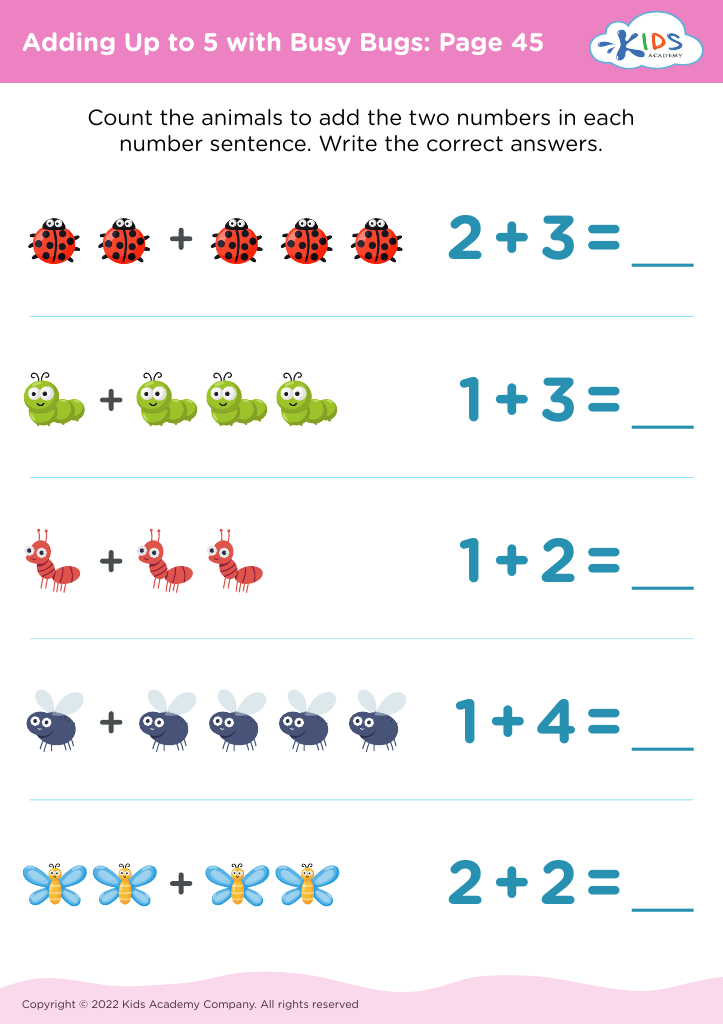
    Adding Up to 5 with Busy Bugs: Page 45
    Adding Up to 5 with Busy Bugs: Page 45
    Adding Up to 5 with Busy Bugs: Page 45
    Worksheet
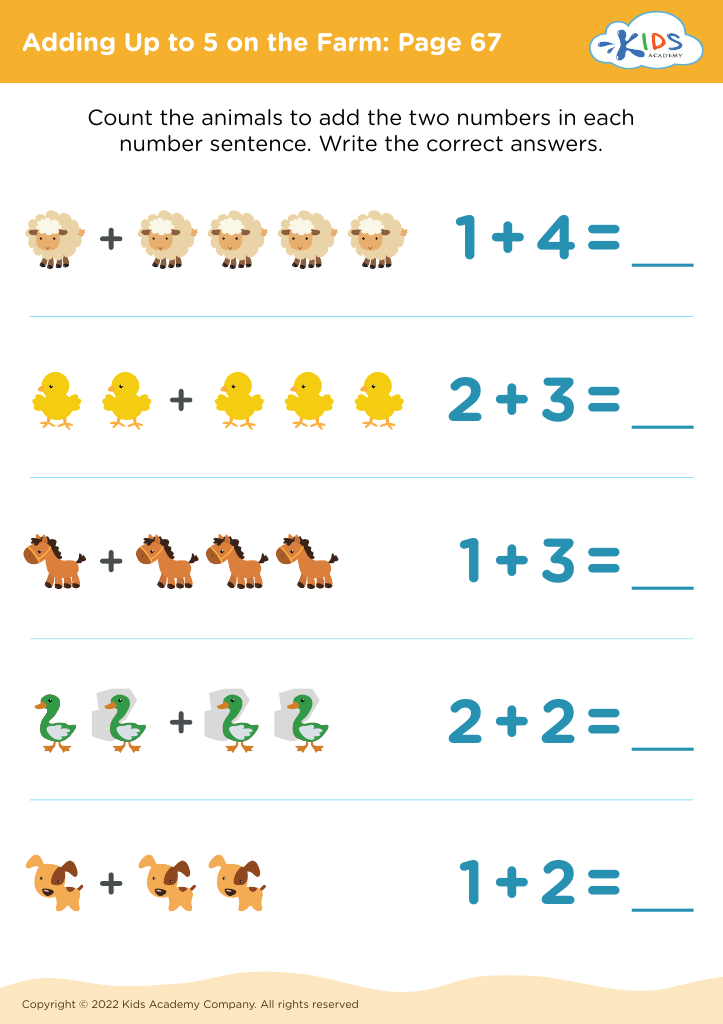
    Adding Up to 5 on the Farm: Page 67
    Adding Up to 5 on the Farm: Page 67
    Adding Up to 5 on the Farm: Page 67
    Worksheet
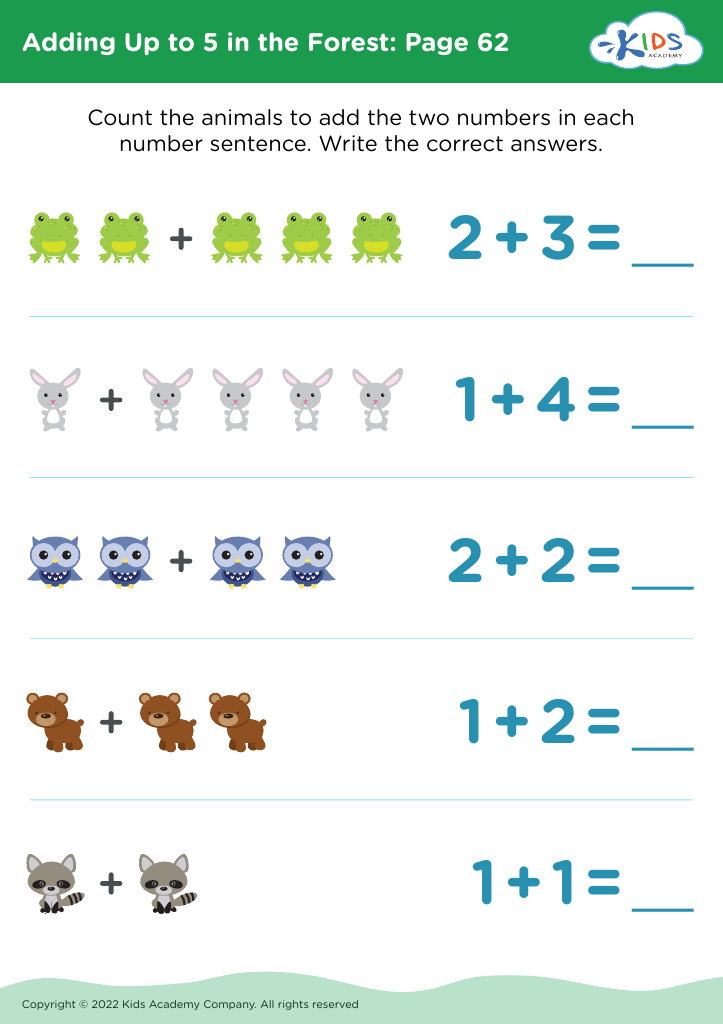
    Adding Up to 5 in the Forest: Page 62
    Adding Up to 5 in the Forest: Page 62
    Adding Up to 5 in the Forest: Page 62
    Worksheet
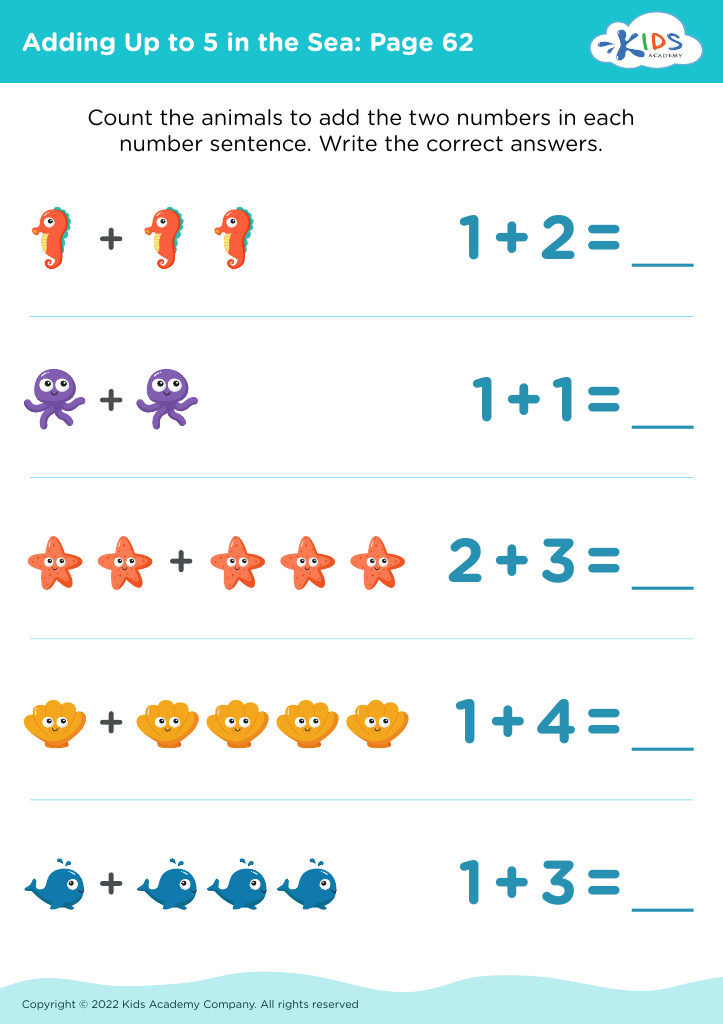
    Adding Up to 5 in the Sea: Page 62
    Adding Up to 5 in the Sea: Page 62
    Adding Up to 5 in the Sea: Page 62
    Worksheet
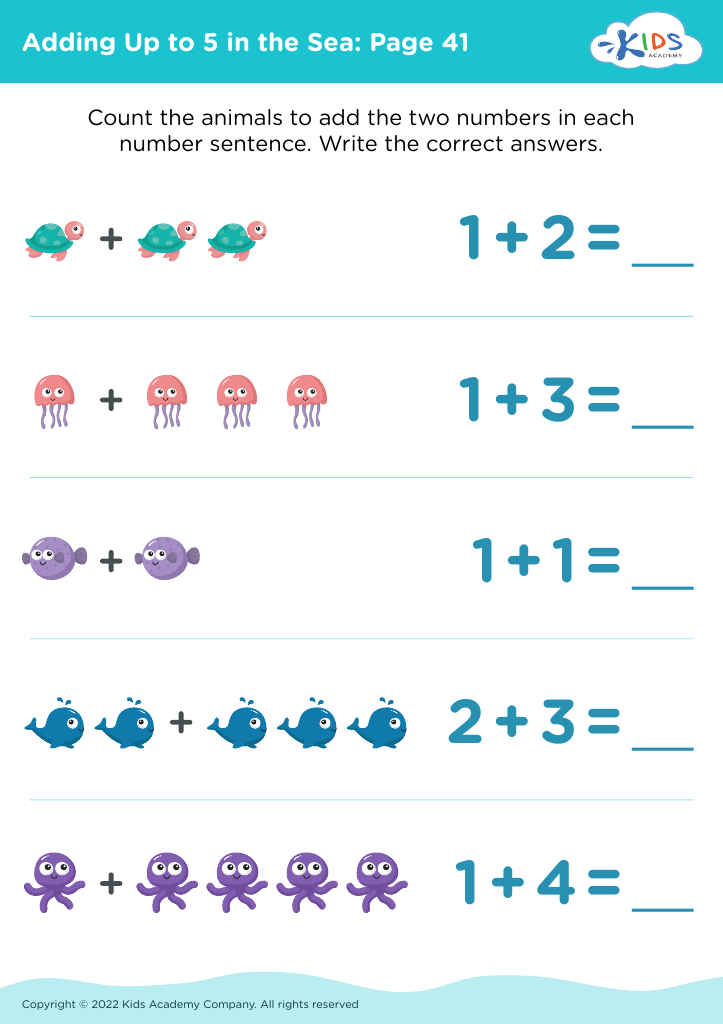
    Adding Up to 5 in the Sea: Page 41
    Adding Up to 5 in the Sea: Page 41
    Adding Up to 5 in the Sea: Page 41
    Worksheet
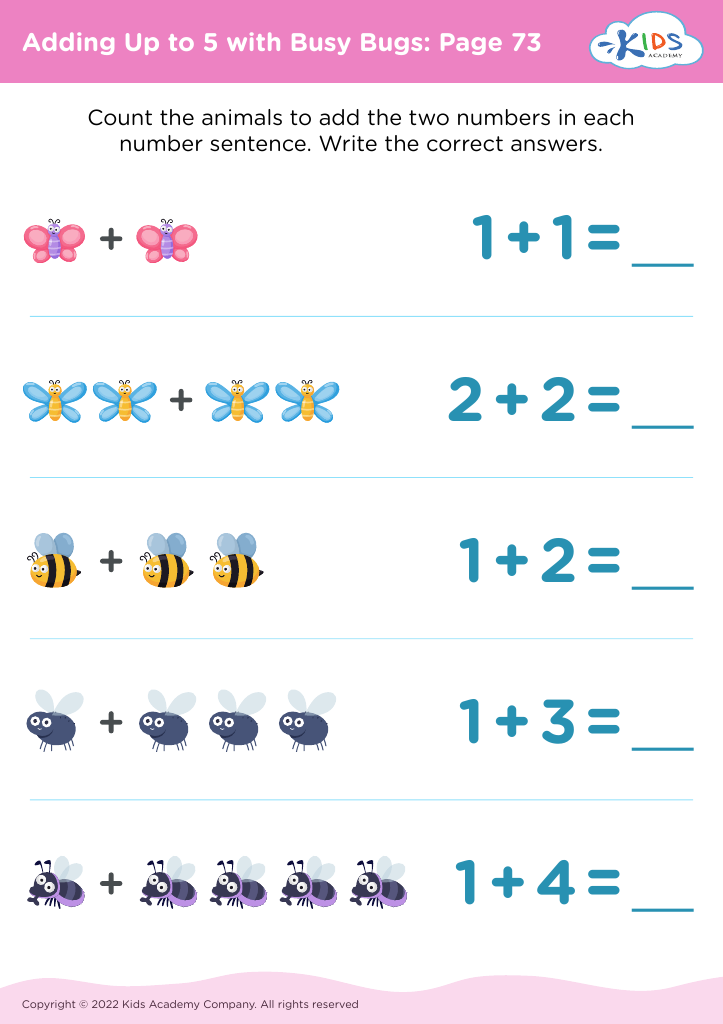
    Adding Up to 5 with Busy Bugs: Page 73
    Adding Up to 5 with Busy Bugs: Page 73
    Adding Up to 5 with Busy Bugs: Page 73
    Worksheet
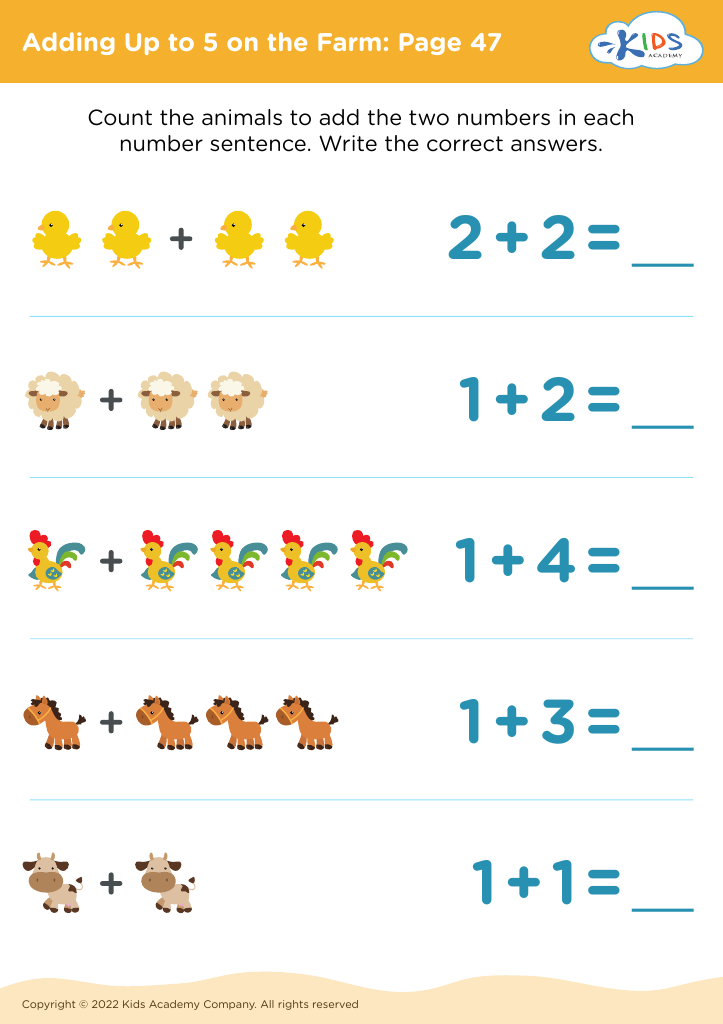
    Adding Up to 5 on the Farm: Page 47
    Adding Up to 5 on the Farm: Page 47
    Adding Up to 5 on the Farm: Page 47
    Worksheet
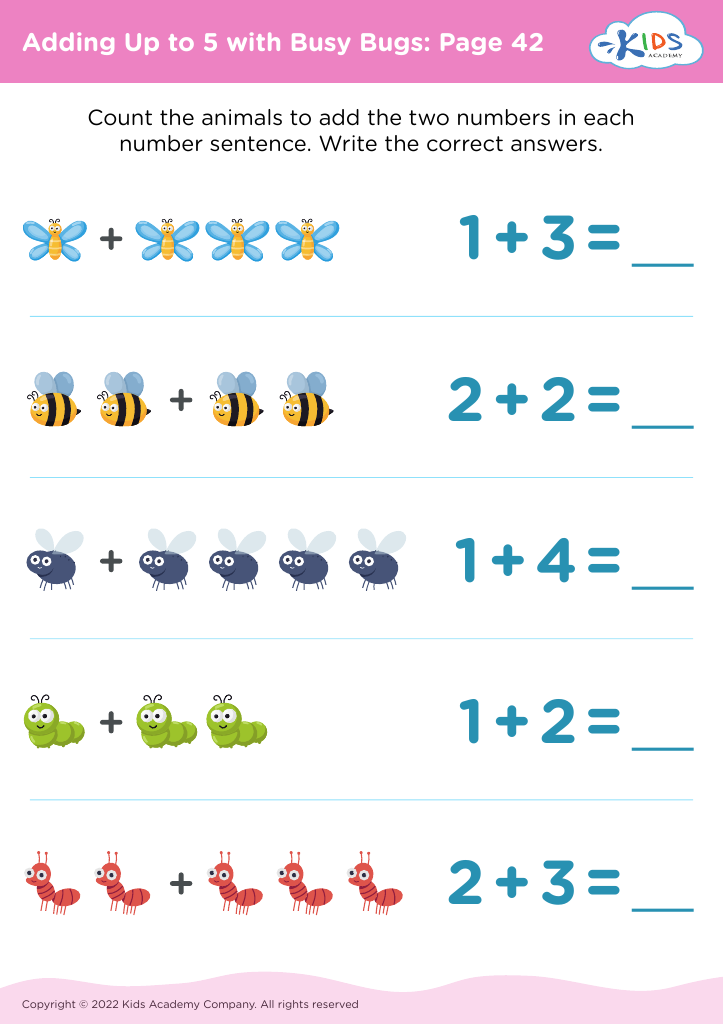
    Adding Up to 5 with Busy Bugs: Page 42
    Adding Up to 5 with Busy Bugs: Page 42
    Adding Up to 5 with Busy Bugs: Page 42
    Worksheet
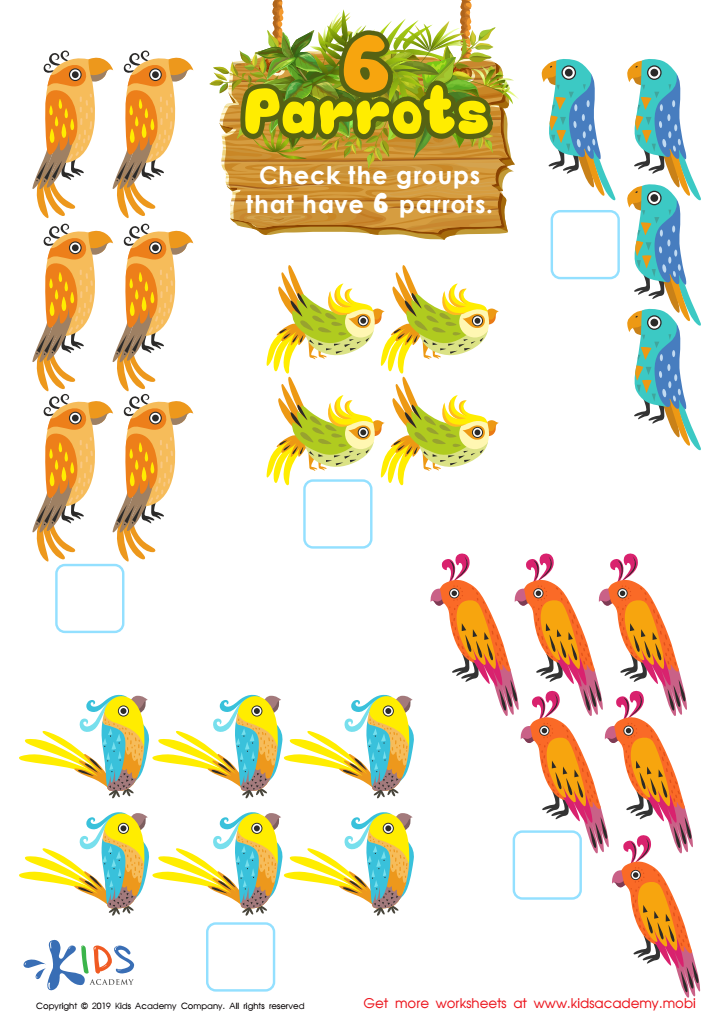
    6 Parrots Worksheet
    6 Parrots Worksheet
    6 Parrots Worksheet

    Love parrots? Here's a free worksheet to help your children practice counting to six with colorful parrot representations! Kids will adore counting the parrots and checking off groups of six - and it won't even feel like math! Just a fun way to make some new and exciting friends.
    6 Parrots Worksheet
    Worksheet
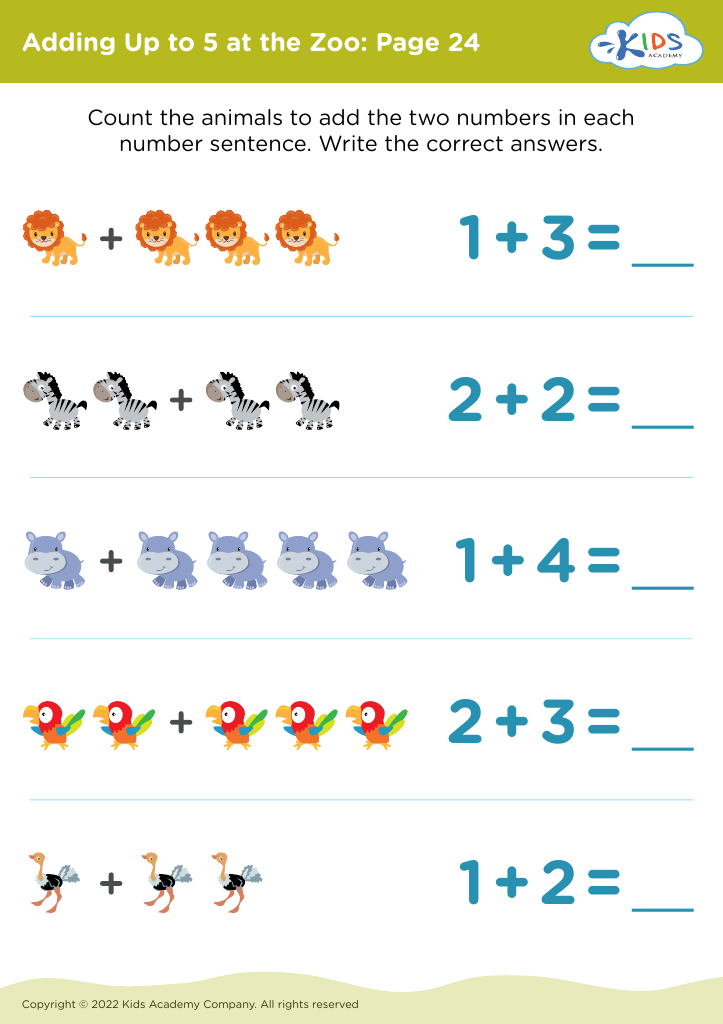
    Adding Up to 5 at the Zoo: Page 24
    Adding Up to 5 at the Zoo: Page 24
    Adding Up to 5 at the Zoo: Page 24
    Worksheet
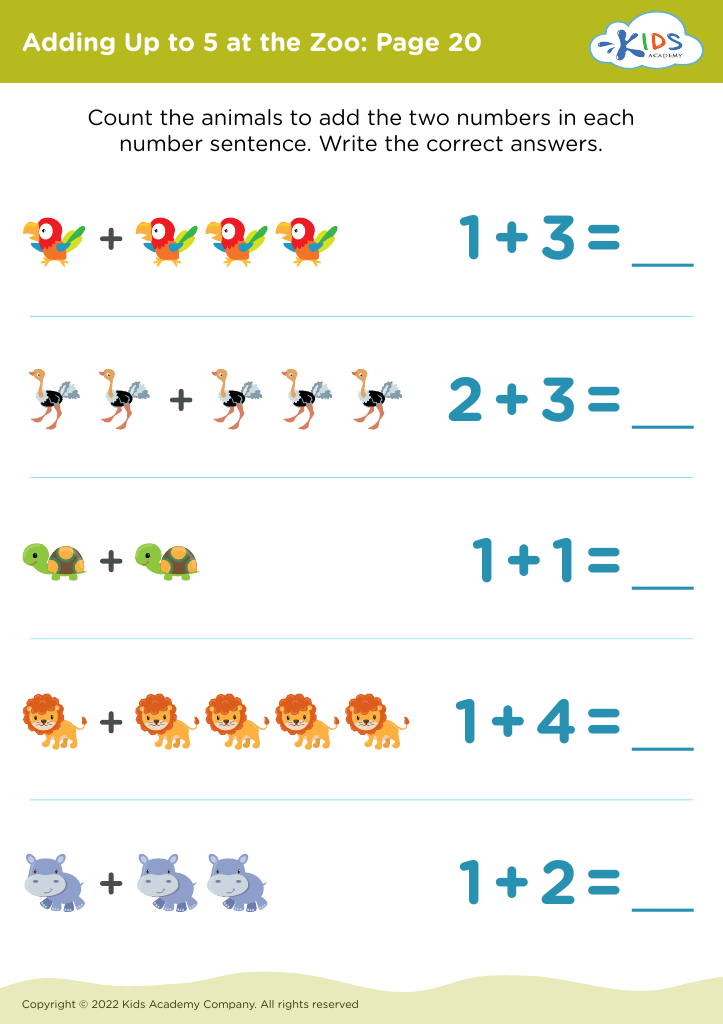
    Adding Up to 5 at the Zoo: Page 20
    Adding Up to 5 at the Zoo: Page 20
    Adding Up to 5 at the Zoo: Page 20
    Worksheet


    Fine motor skills refer to the coordination of small muscles, particularly those in the hands and fingers, which are crucial for a child's overall development and daily functioning. Between ages 3 to 6, children's fine motor skills are rapidly developing, making this period vital for honing these abilities.

    Fine motor skills enable children to perform essential tasks such as writing, drawing, buttoning clothes, and cutting with scissors—activities fundamental to independence and self-esteem. Improved fine motor skills also facilitate academic success, as children with strong dexterity can handle classroom tasks more effectively, reducing frustration and enhancing learning. Additionally, engaging in activities that improve fine motor skills can boost cognitive development by requiring concentration, patience, and problem-solving.

    Parents and teachers should care about fine motor skills because they lay the groundwork for future academic and life skills. Activities such as playdough manipulation, beading, and puzzles promote these skills, merging fun with practicality. Encouraging such practices creates a supportive environment where children can develop the dexterity needed for everyday tasks and academic success. By fostering fine motor development early on, adults help children achieve greater competence and confidence as they grow.