
Improves concentration Addition Worksheets for Ages 3-6
8 filtered results
Difficulty Level
Grade
Age
-
From - To
Subject
Activity
Standards
Discover our "Improves Concentration Addition Worksheets" specially designed for children ages 3-6! These engaging worksheets help young learners develop essential math skills while enhancing their focus and concentration. Featuring vibrant illustrations and fun exercises, they make learning addition an enjoyable experience. Our carefully crafted activities encourage kids to practice counting, recognize numbers, and understand basic addition concepts. These resources are perfect for parents and educators aiming to foster a love for learning in a playful and supportive environment. Help your child gain confidence in their math abilities while improving their attention span with our delightful addition worksheets today!
Favorites
With answer key
Interactive
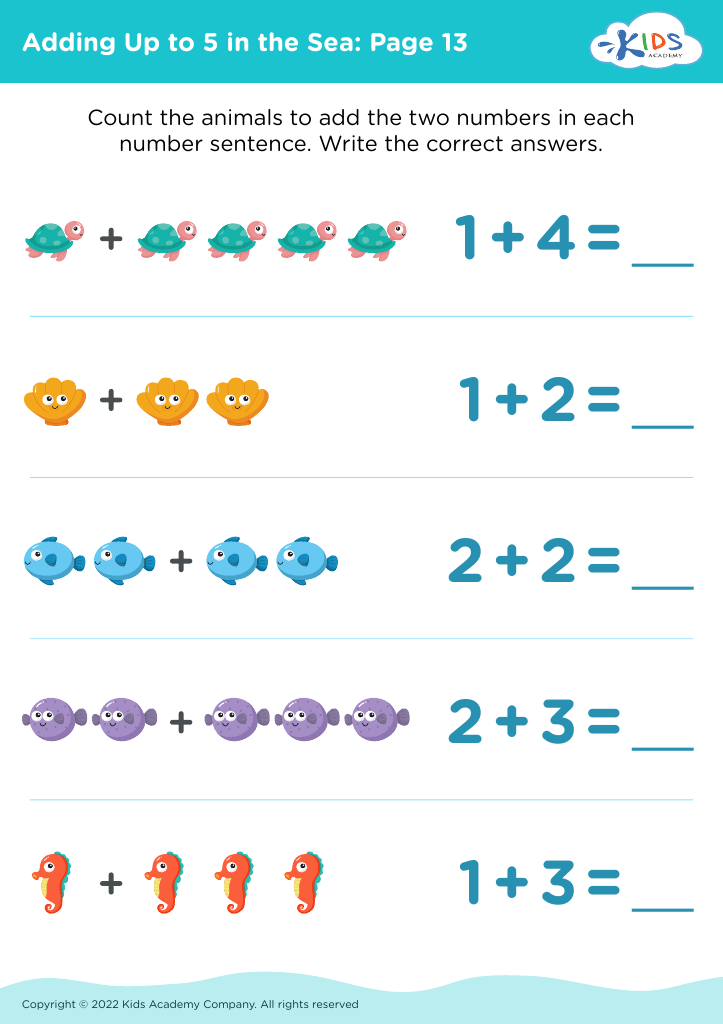
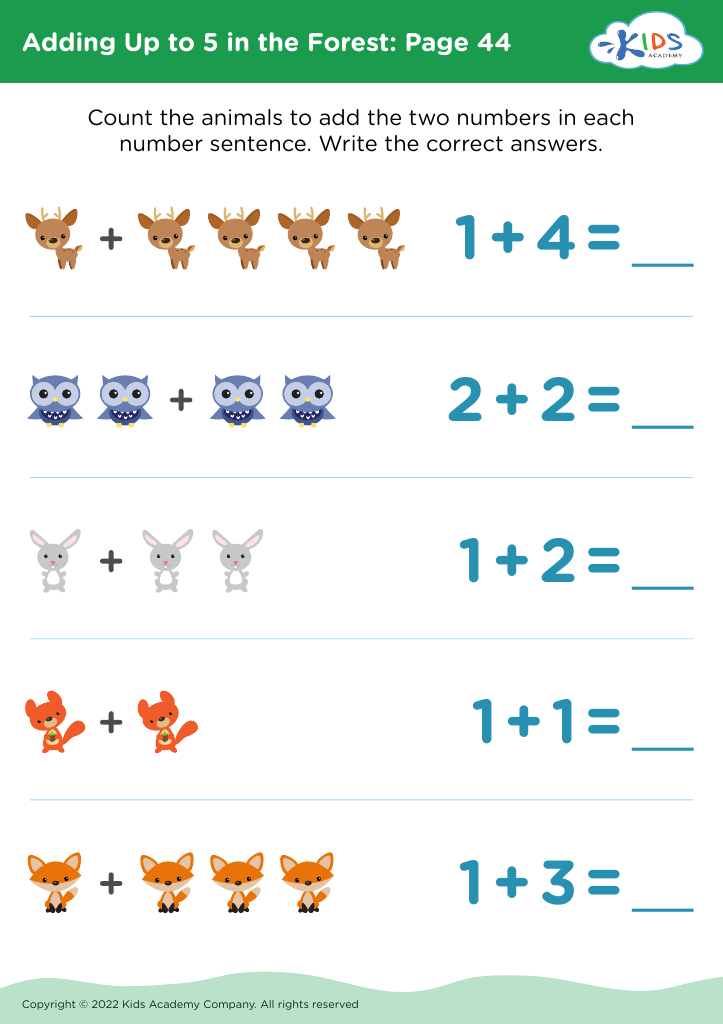
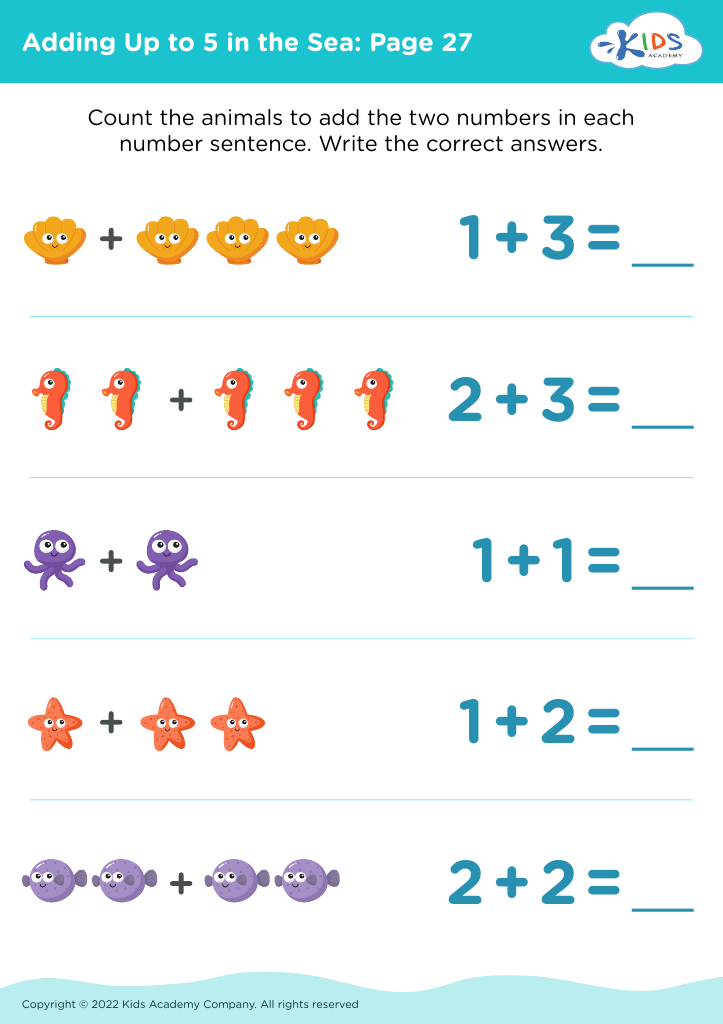
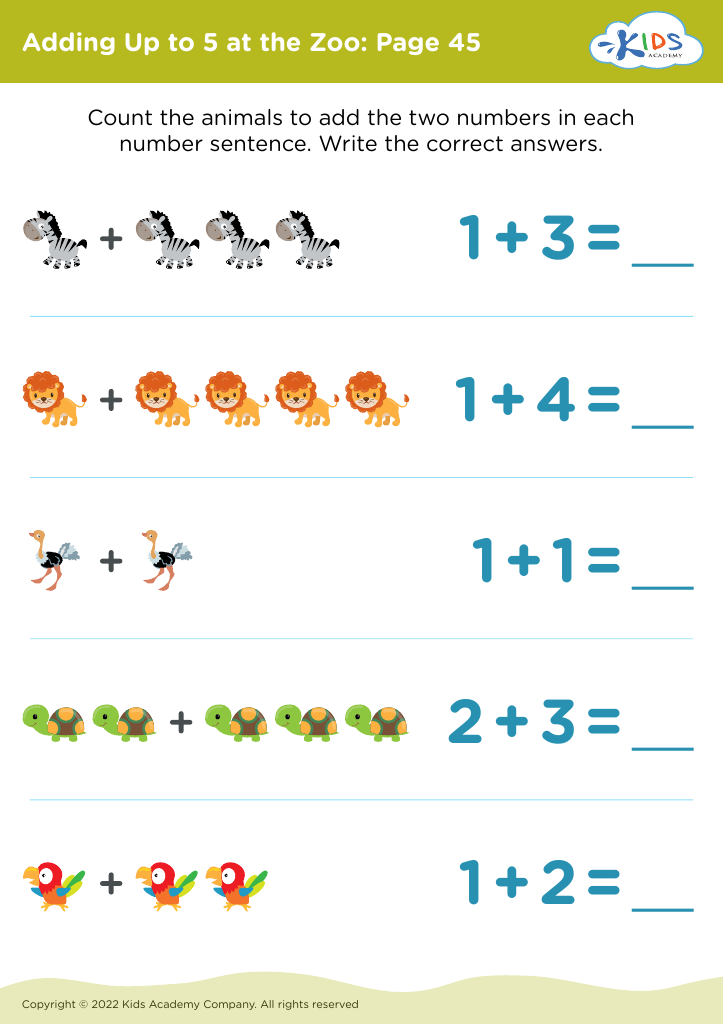
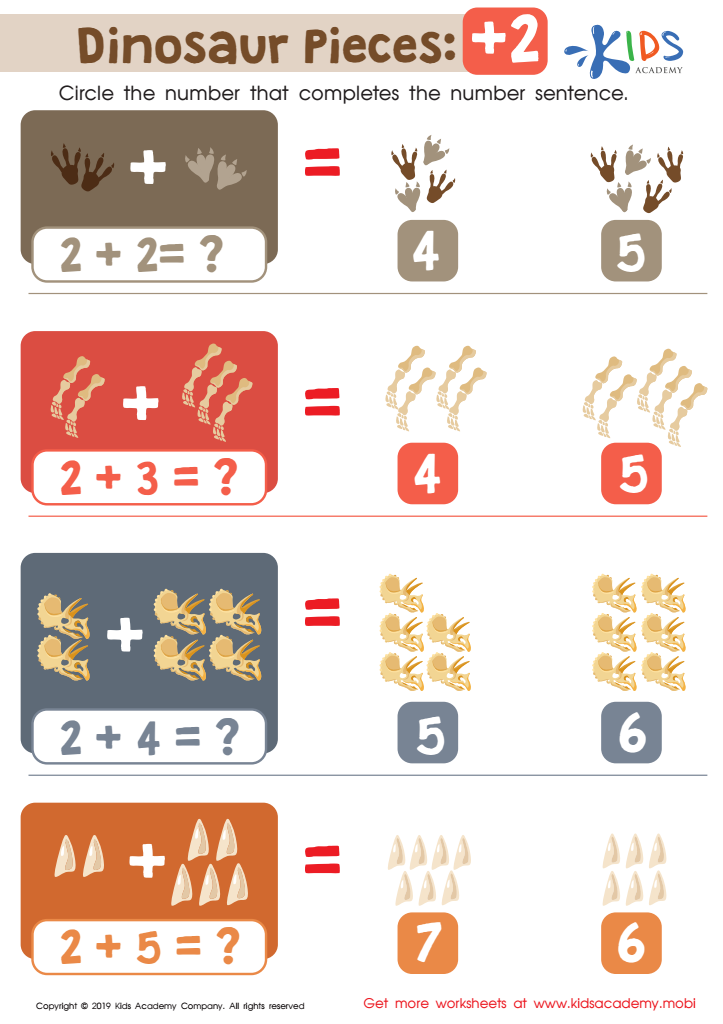
Dinosaur Pieces: +2 Worksheet
Kids love dinosaurs! See if your kids can solve these three equations featuring the mysterious creatures. Download the PDF and have them circle the number that completes each equation. Dinosaurs are extinct, not seen for thousands of years, but they can still help kids work on their math skills!
 Assign to My Students
Dinosaur Pieces: +2 Worksheet
Worksheet
Join Kids Academy for Free
Who is primarily going to use this learning content?








Improving concentration through fun addition activities is crucial for children aged 3 to 6 for several reasons. First and foremost, developing concentration skills at an early age lays the foundation for effective learning throughout a child's educational journey. During these formative years, children's cognitive abilities are highly malleable, making it the perfect time to enhance their focus and attention spans.
Incorporating simple addition exercises helps children engage with numbers while promoting critical thinking and problem-solving skills. When parents or teachers introduce these activities in a playful manner—such as using toys, games, or stories—the child becomes more interested, transforming learning into a delightful experience.
Additionally, strong concentration skills lead to improved academic performance as children progress through their education. The ability to focus on tasks is essential for mastery in subjects beyond math, including reading and science. Beyond academics, concentration also fosters self-discipline and perseverance, traits valuable in all walks of life.
By investing time into enhancing concentration through addition topics, parents and teachers not only support the children’s early math skills but also equip them with lifelong learning abilities and confidence, ultimately playing a pivotal role in their overall development.








