Improving concentration Addition Worksheets for Ages 3-6
14 filtered results
-
From - To
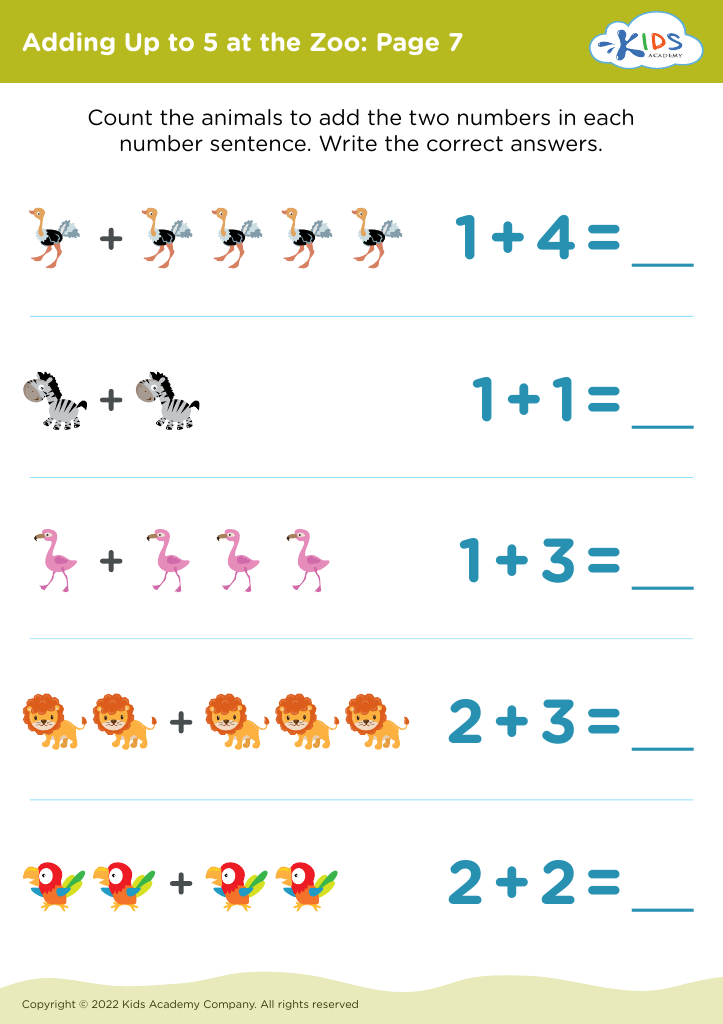
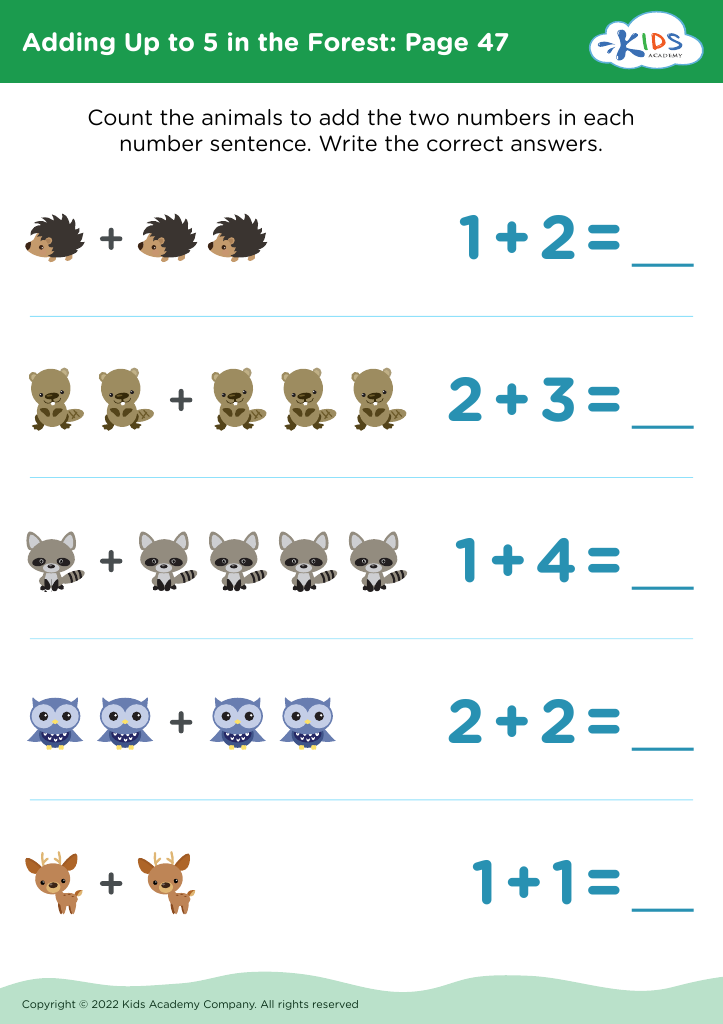
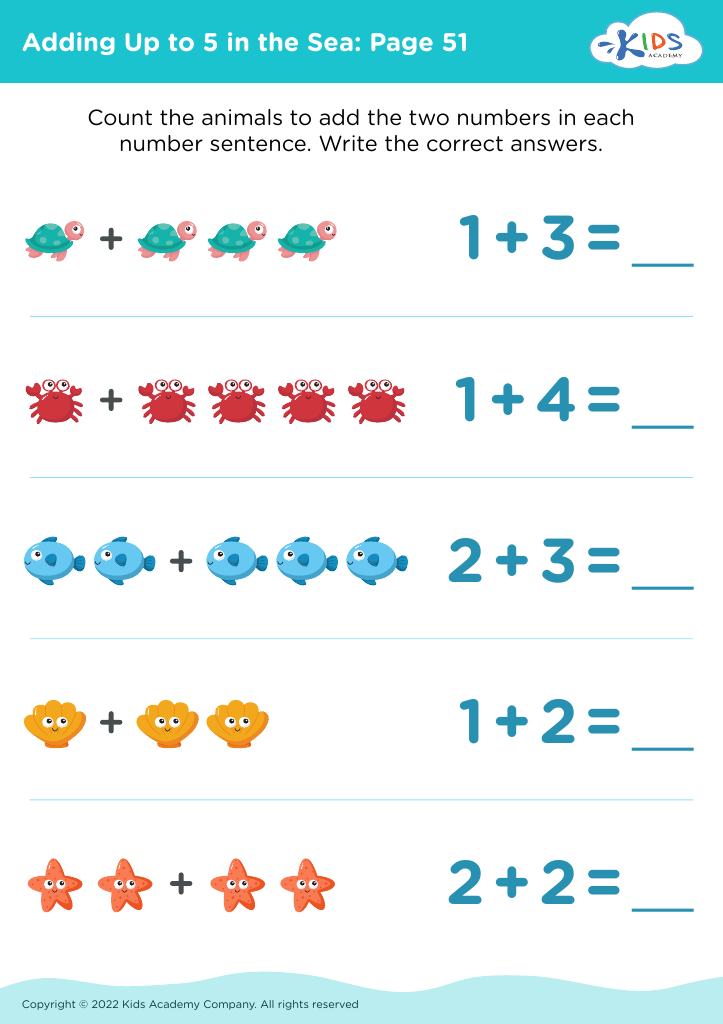
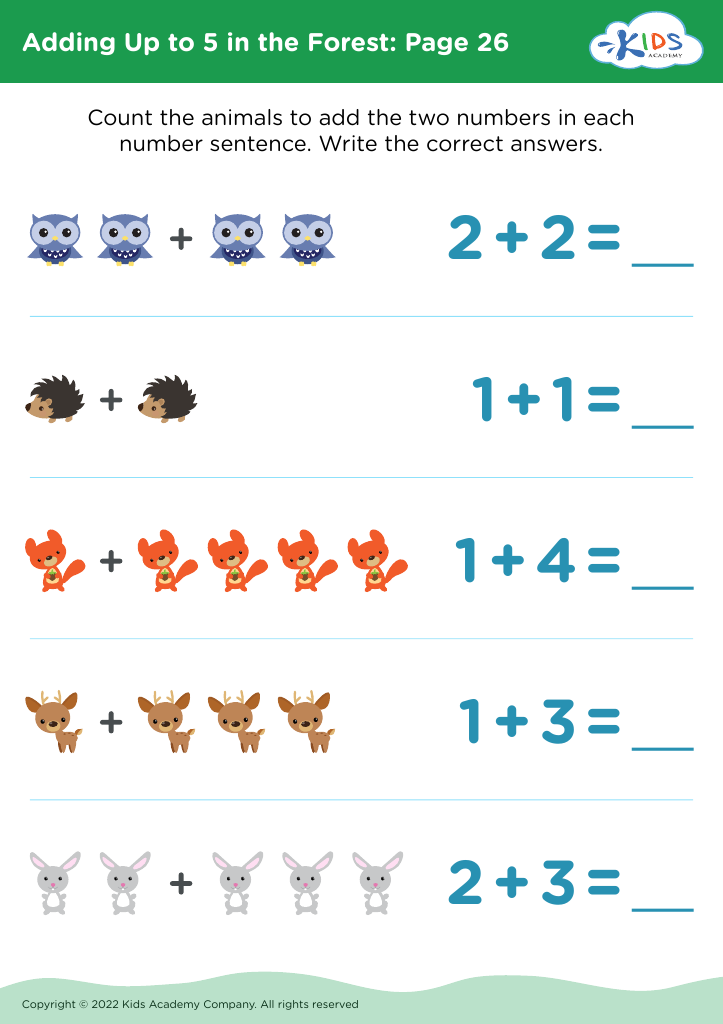
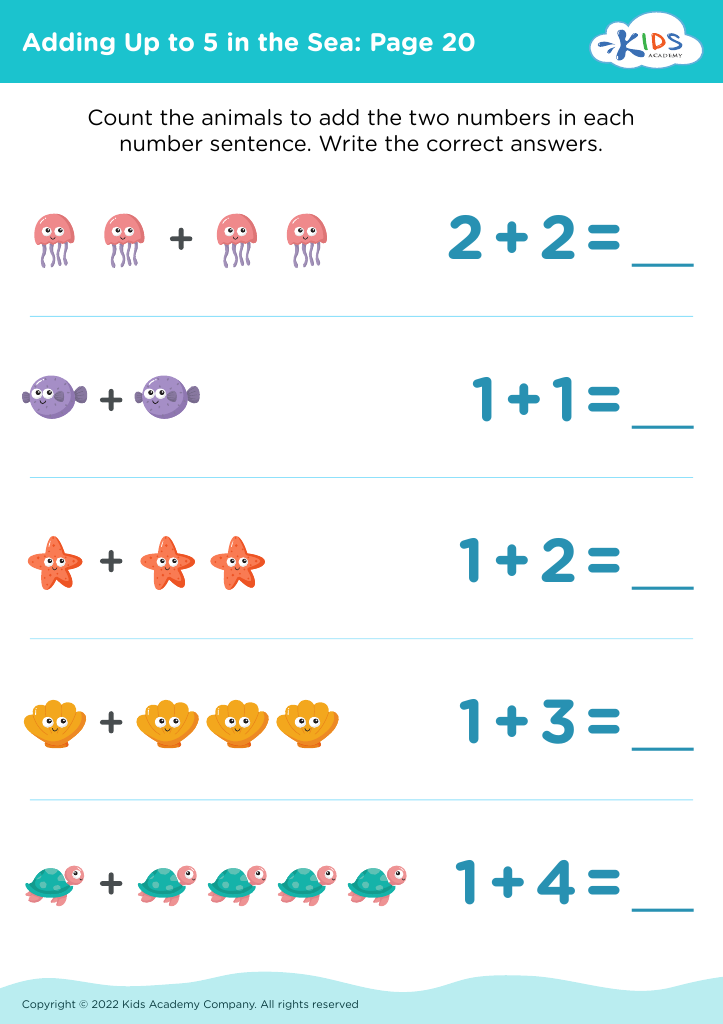
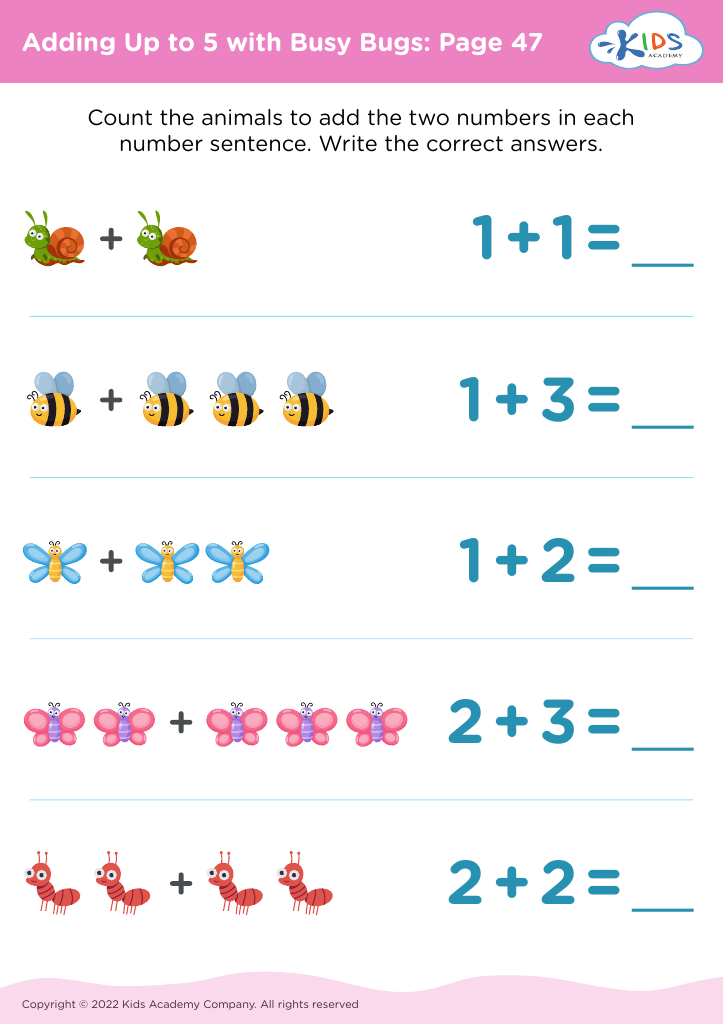
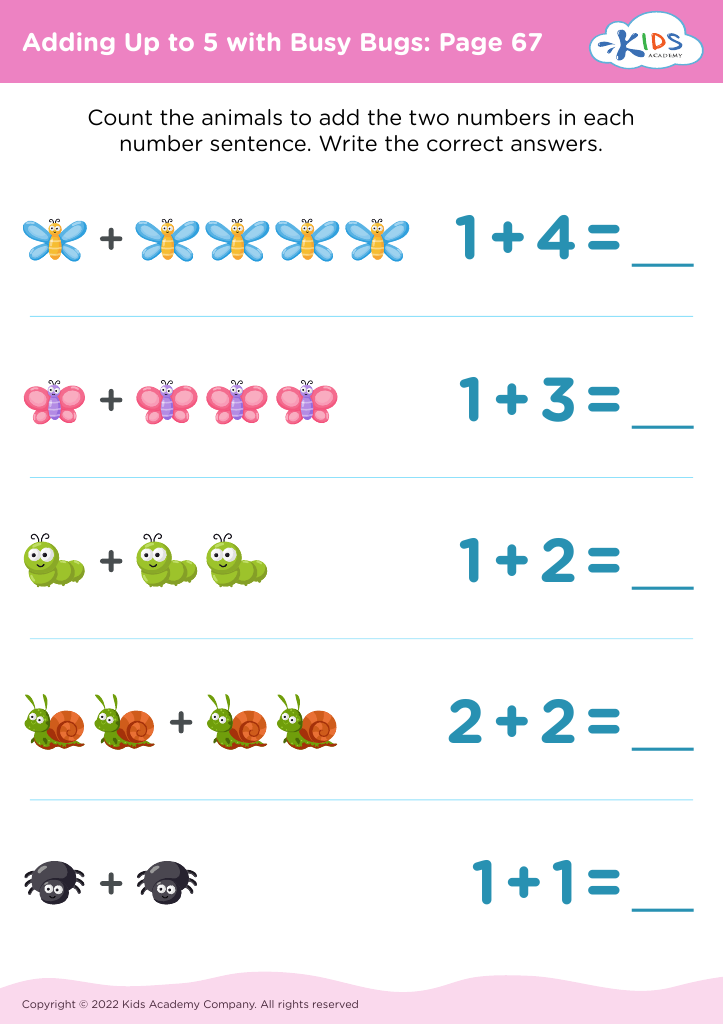
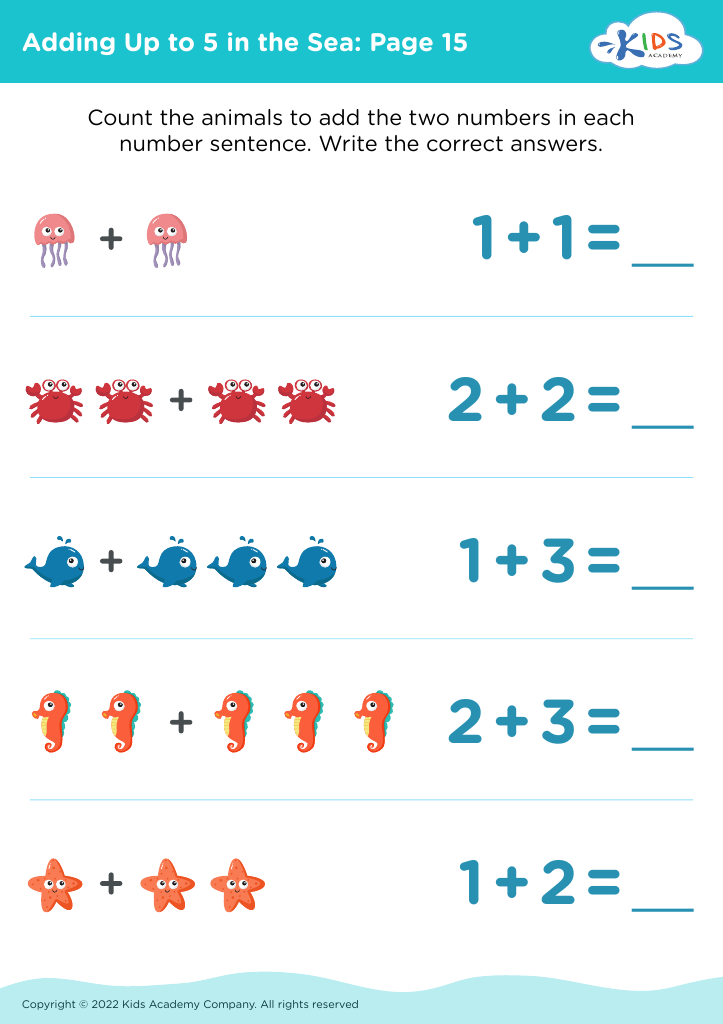
Enhance your child's learning experience with our "Improving Concentration Addition Worksheets" designed specifically for ages 3 to 6. These engaging and interactive worksheets are crafted to help young learners focus while developing their addition skills. Incorporating fun and relatable themes, the worksheets seamlessly blend play with education, making math practice enjoyable. By working through these focused exercises, children will not only strengthen their addition abilities but also sharpen their concentration and problem-solving skills. Ideal for both classroom and home environments, these resources empower parents and educators to support early mathematical development in a playful, enriching way. Enjoy healthier learning habits today!
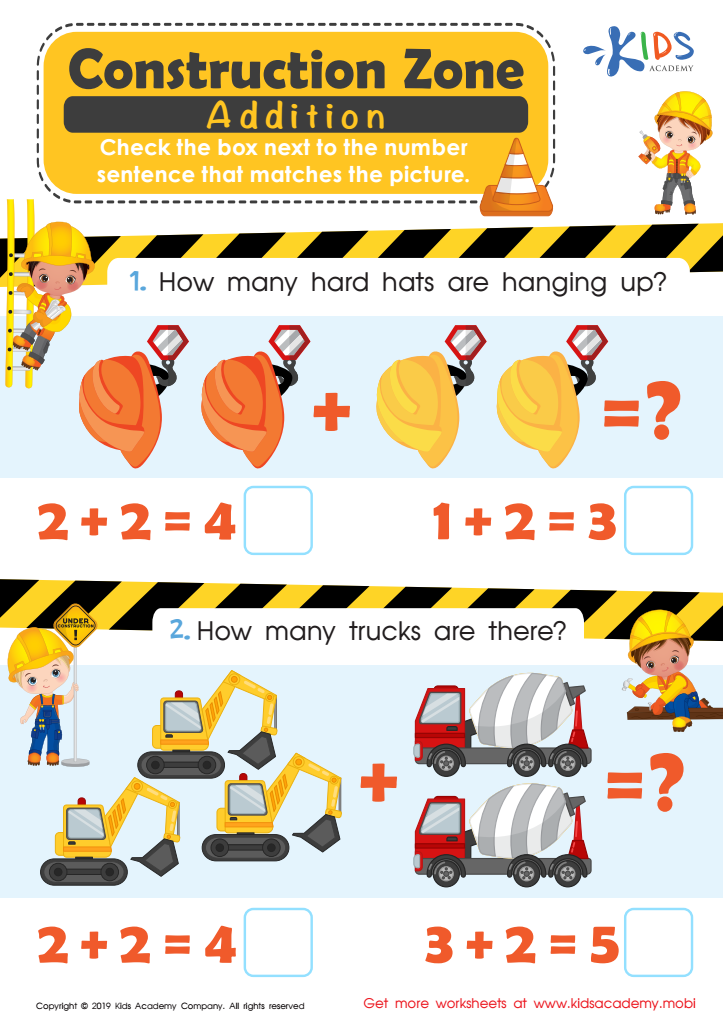
Construction Zone Addition Worksheet
 Assign to My Students
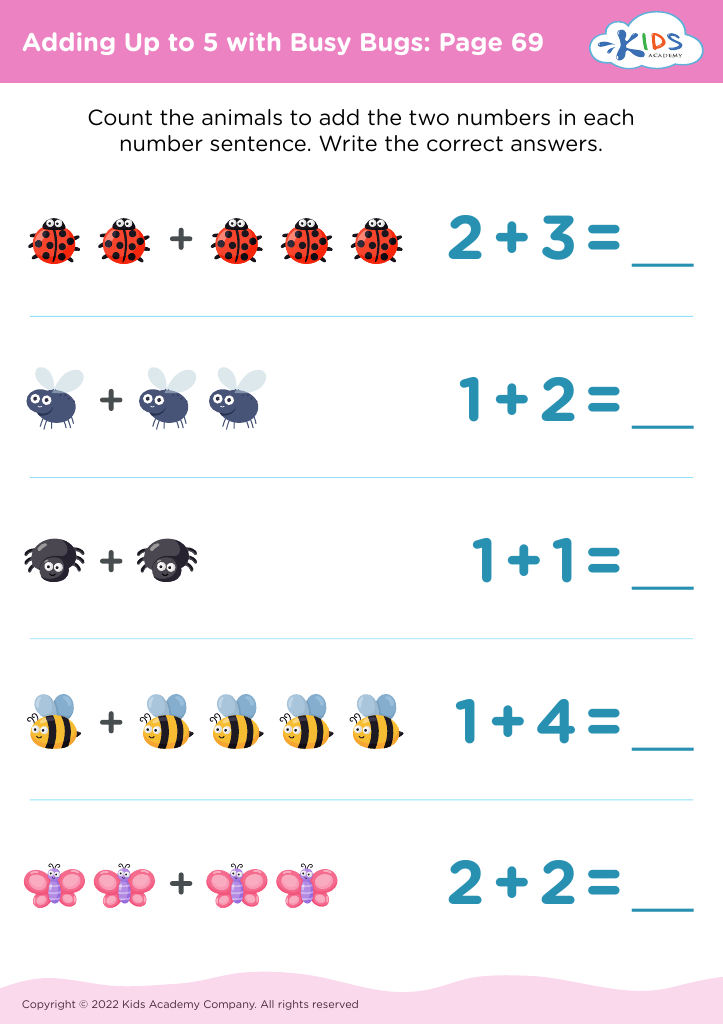
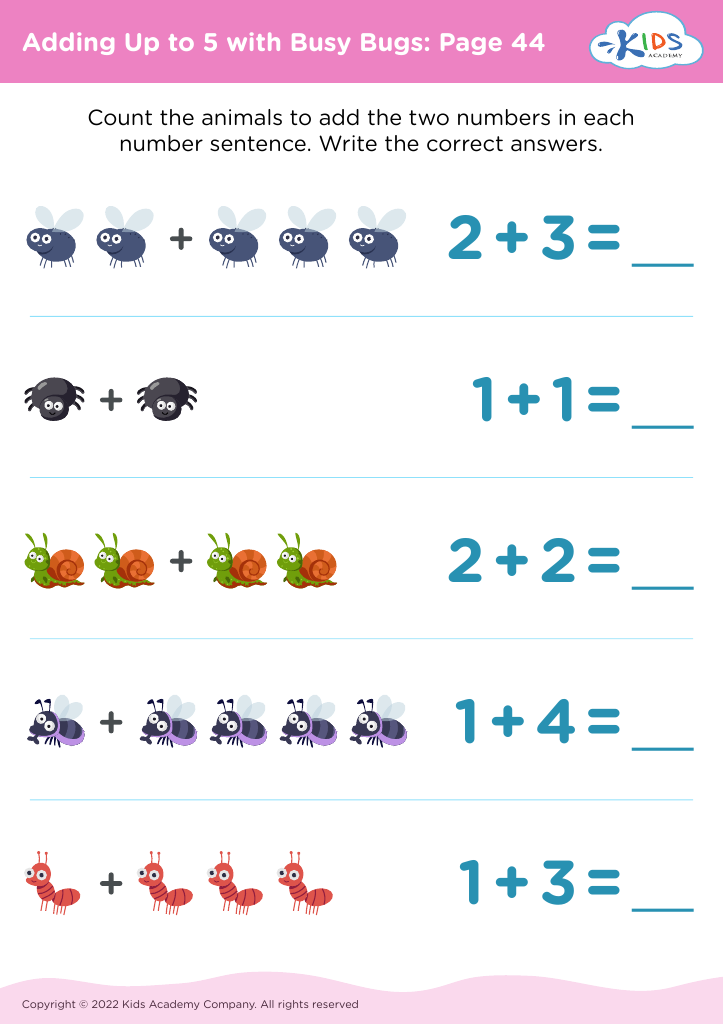








Improving concentration in young children aged 3-6 is crucial for their cognitive and social development. At this stage, children are rapidly acquiring new skills, and strong concentration abilities play a vital role in their ability to learn and thrive. Parents and teachers should prioritize enhancing concentration to facilitate better learning outcomes and prepare children for future academic challenges.
Concentration skills are integral to various aspects of learning, including problem-solving, critical thinking, and retention of information. By fostering these skills, adults can help children become more attentive during lessons, improving their understanding of basic concepts like numbers and letters.
Moreover, improved concentration contributes to emotional regulation. Children who can focus are less prone to frustration and more capable of following instructions, which supports positive interactions with peers and adults. Implementing activities that promote focus, such as interactive games, storytelling, or simple math activities, not only makes learning enjoyable but effectively engages children in learning processes.
Ultimately, investing time and resources into improving concentration can lay the foundation for lifelong learning habits, promoting academic success and creativity while nurturing better interpersonal relationships among young learners. Engaging children in challenges tailored to their development helps them flourish, making it a critical aspect of early education.








