Math problem-solving Addition Worksheets for Ages 3-6
4 filtered results
-
From - To
Discover our engaging Math Problem-Solving Addition Worksheets designed specifically for children ages 3-6. These worksheets provide a fun and interactive way for young learners to master essential addition skills. Each activity encourages critical thinking and helps children explore basic math concepts through colorful illustrations and relatable scenarios. With a focus on problem-solving, children will practice their addition skills while developing a strong foundation for future mathematical understanding. Perfect for parents and educators seeking to make math enjoyable, our worksheets are easy to use and cater to various learning styles. Start your child’s math journey today with our exciting addition resources!
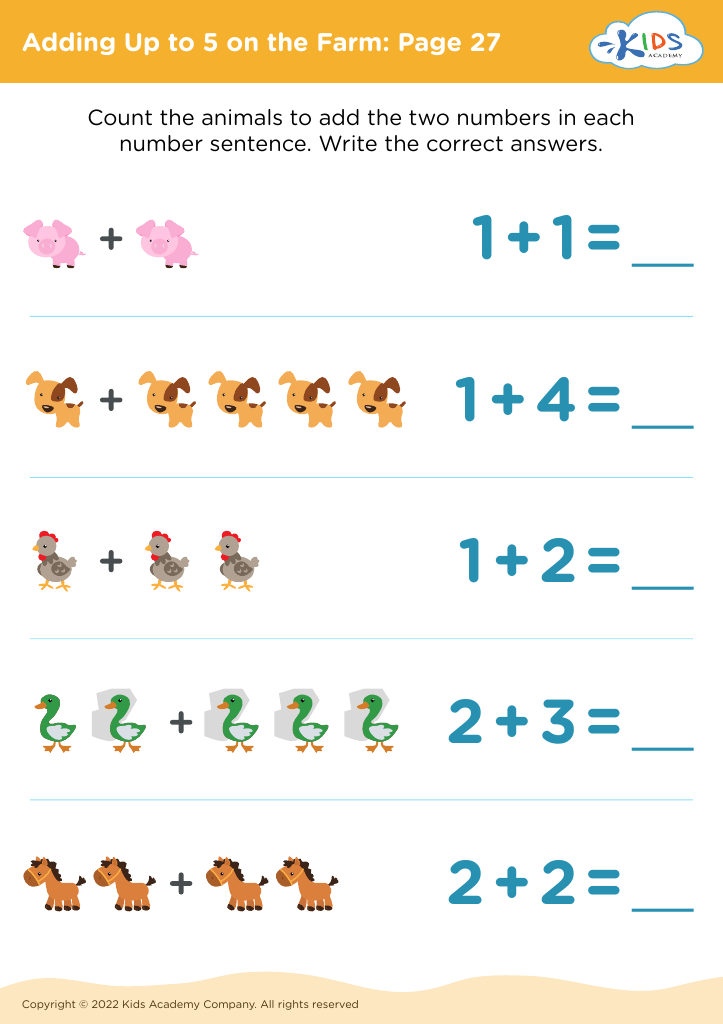
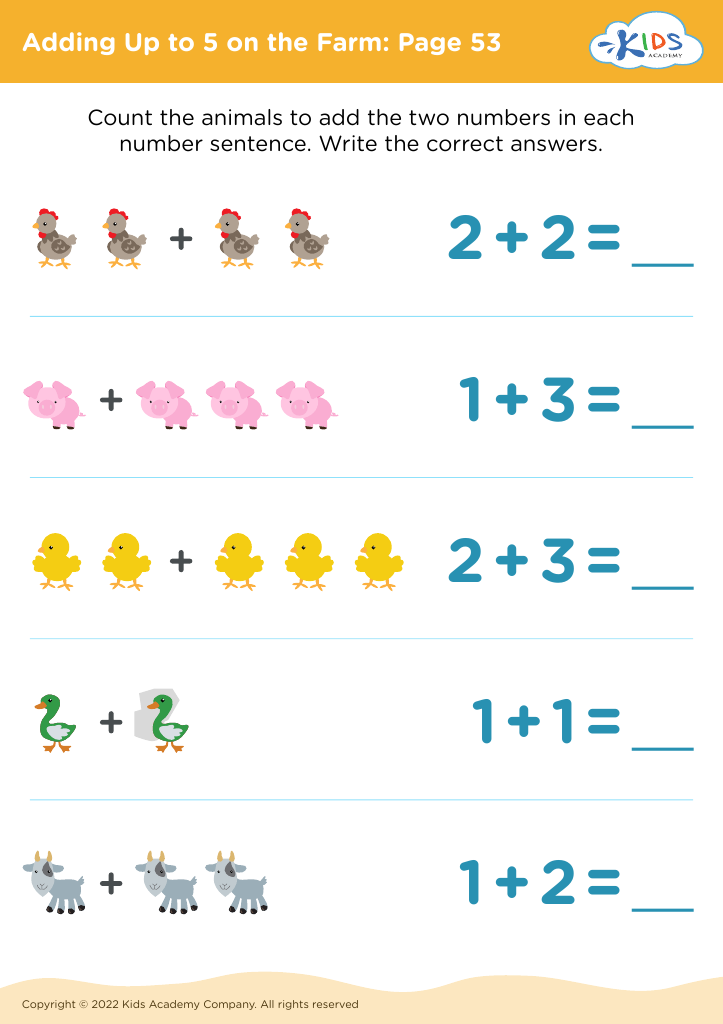
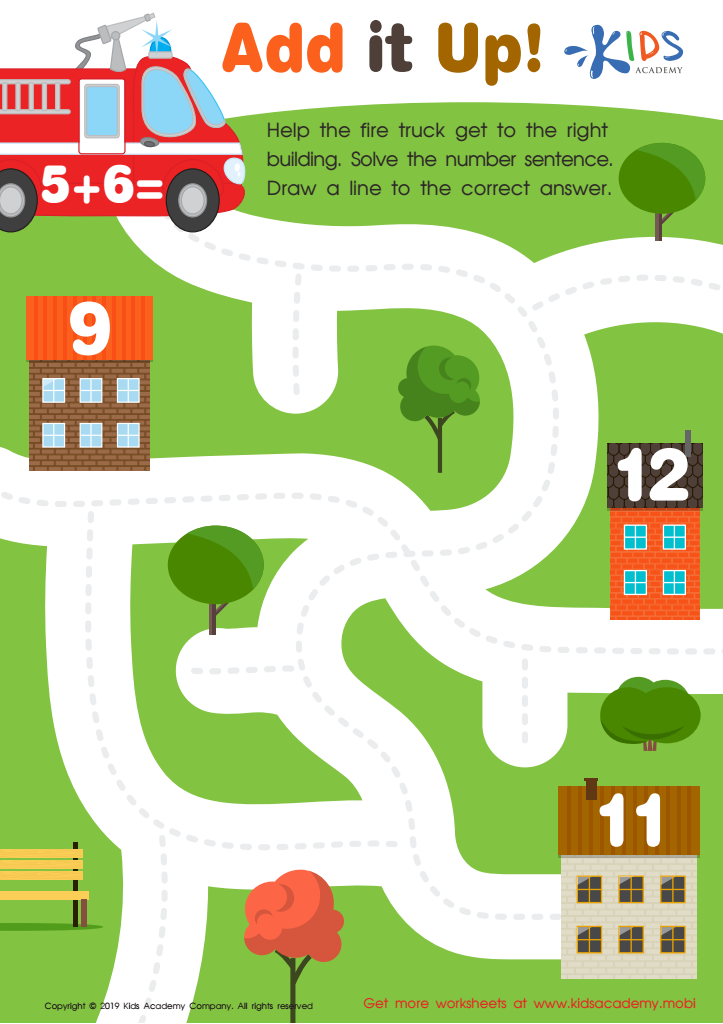
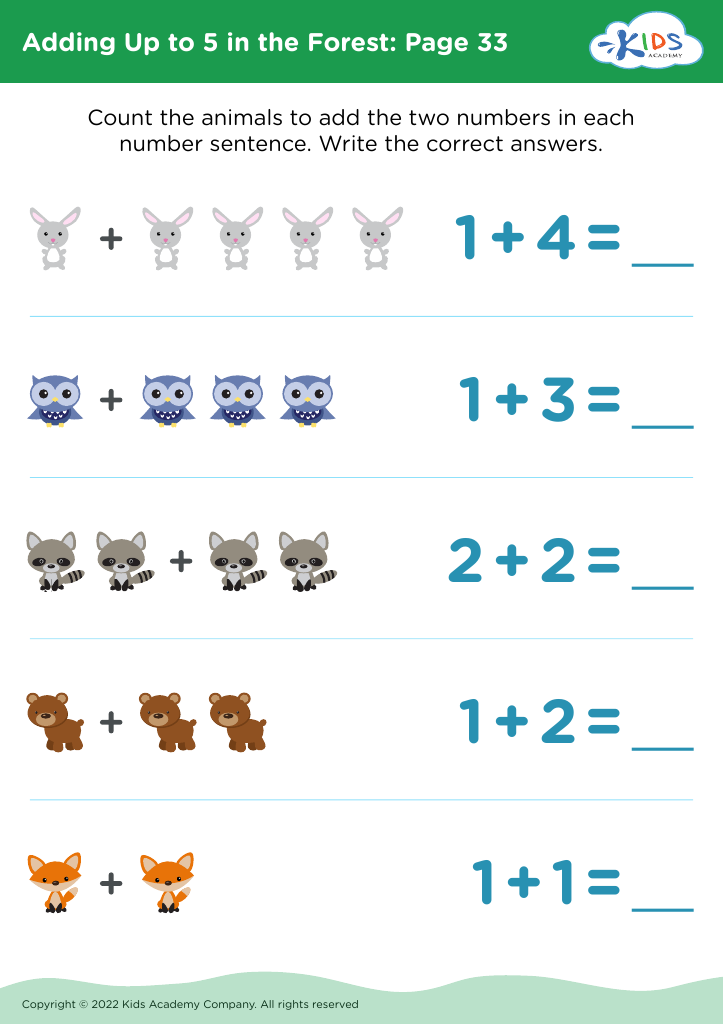
Add it Up Worksheet
 Assign to My Students








Parents and teachers should prioritize math problem-solving, particularly addition, for children ages 3-6 as it lays the foundational skills for future learning. Early math experiences foster critical thinking and logical reasoning abilities. When children engage in addition, they learn to recognize numbers, develop counting skills, and understand relationships between quantities.
Furthermore, math problem-solving enhances cognitive abilities, promoting attention, memory, and problem-solving skills. These cognitive developments are crucial for overall academic success. Introducing addition through playful and relatable contexts engages young learners, making math a fun part of their everyday experiences.
Involving parents and teachers in this process also strengthens the child’s confidence and motivation. When caregivers actively participate in learning, they help demonstrate that math is a valuable skill outside of the classroom. This collaborative approach promotes a positive attitude toward learning and helps children adapt more easily to formal education settings.
Additionally, strong arithmetic skills are linked to a higher likelihood of success in later grades. By fostering early math abilities, parents and teachers can help prepare children for future academic challenges, ultimately setting the stage for lifelong learning and a positive relationship with mathematics.








