Numeracy development Addition Worksheets for Ages 3-6
3 filtered results
-
From - To
Discover engaging numeracy development addition worksheets designed specifically for children ages 3-6! Our interactive resources foster early math skills through fun, age-appropriate activities. Each worksheet encourages young learners to develop a strong foundation in addition, using colorful images and playful themes to capture their attention. As kids practice counting and simple equations, they build confidence and enhance their problem-solving abilities. These worksheets promote not only mathematical understanding but also fine motor skills through tracing and coloring exercises. Perfect for classroom settings or home learning, our addition worksheets are an invaluable tool in nurturing your child’s love for math from an early age!
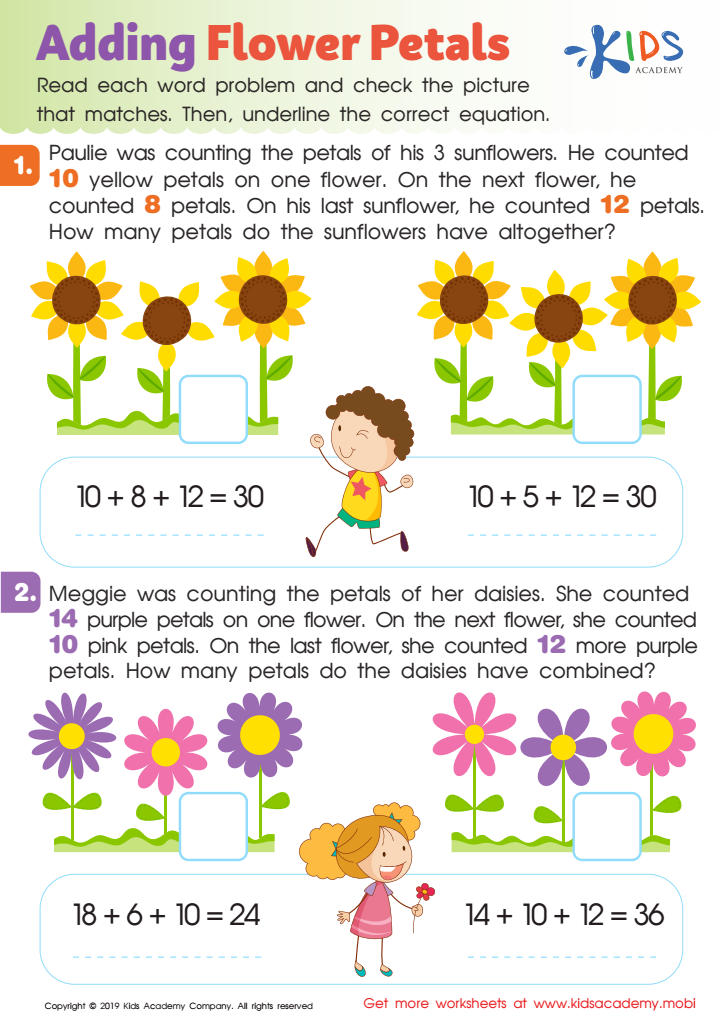
Adding Flower Petals Worksheet
 Assign to My Students
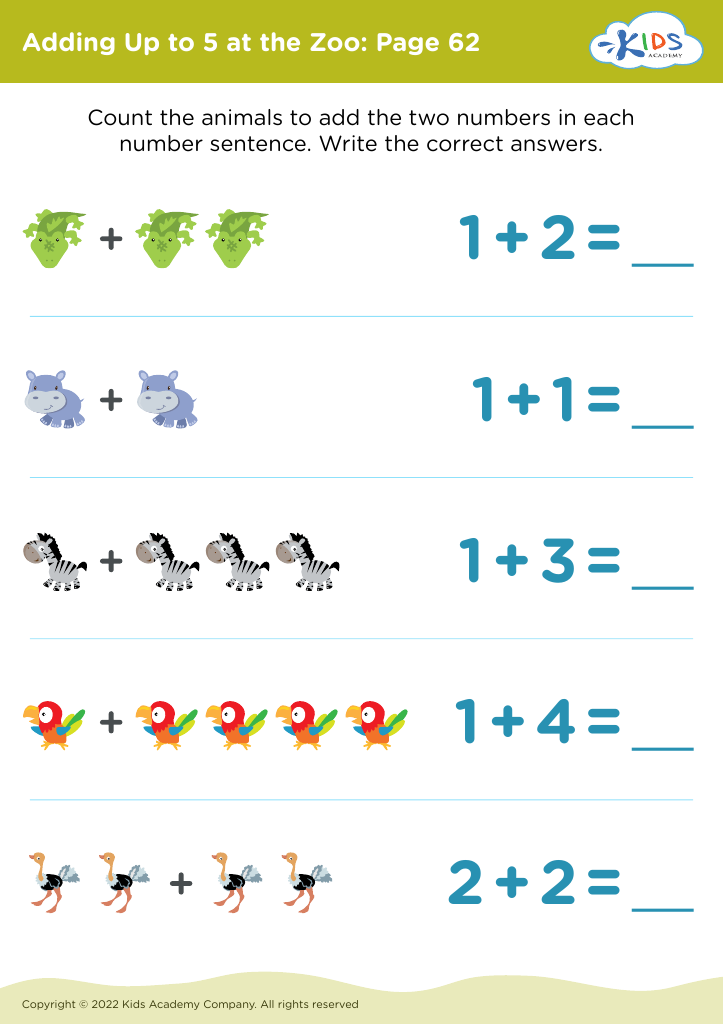
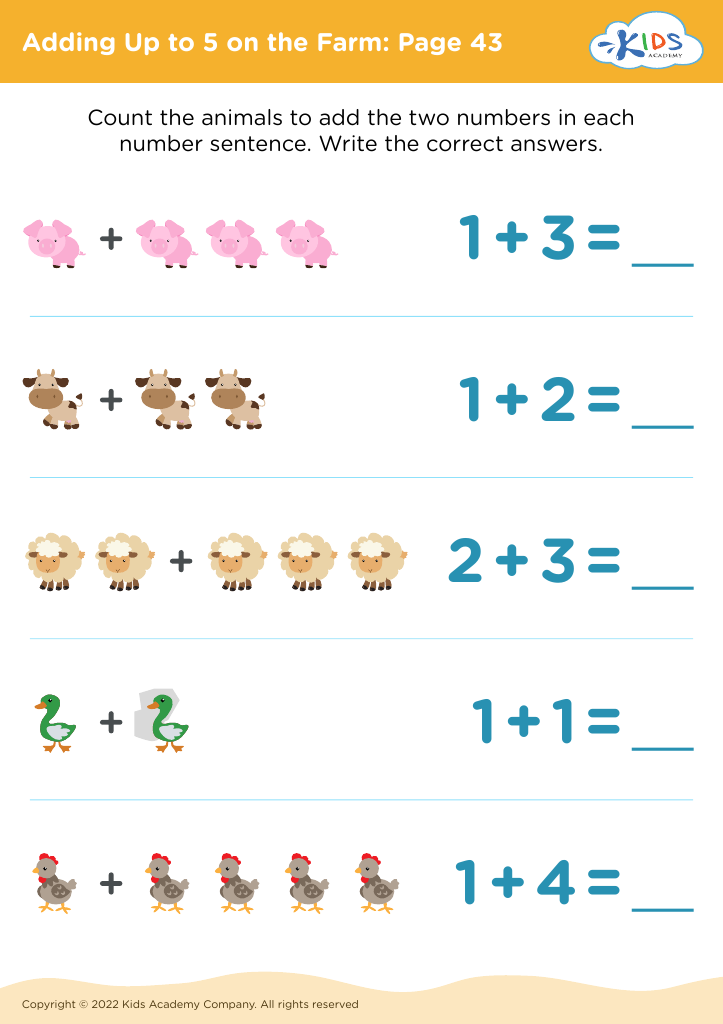








Numeracy development, particularly in addition, is a crucial foundation for children aged 3-6 as it sets the stage for lifelong mathematical understanding and skills. Early experiences with addition help children to develop critical thinking, problem-solving abilities, and logical reasoning. At this age, children are naturally curious and engaged in play-based learning, making it an ideal time to introduce mathematical concepts in a fun and interactive way.
Parents and teachers should care about this development because early numeracy skills significantly impact future academic performance. Children who struggle with basic addition often encounter challenges in higher-level math as they progress through school. In addition, understanding numbers and basic arithmetic fosters confidence and enthusiasm for learning.
Moreover, exploring addition helps children make sense of the world around them. Whether counting objects, sharing snacks, or playing games, children practice addition in everyday situations, reinforcing their learning in a tangible way.
Creating a supportive environment that encourages exploration, mindfulness, and reinforcement of addition skills enables children to grasp these concepts more readily. Such nurturing can contribute to a robust framework for their future education, allowing them to become not just competent mathematicians, but also confident learners in all areas.








