Problem-solving abilities Addition Worksheets for Ages 3-6
18 filtered results
-
From - To
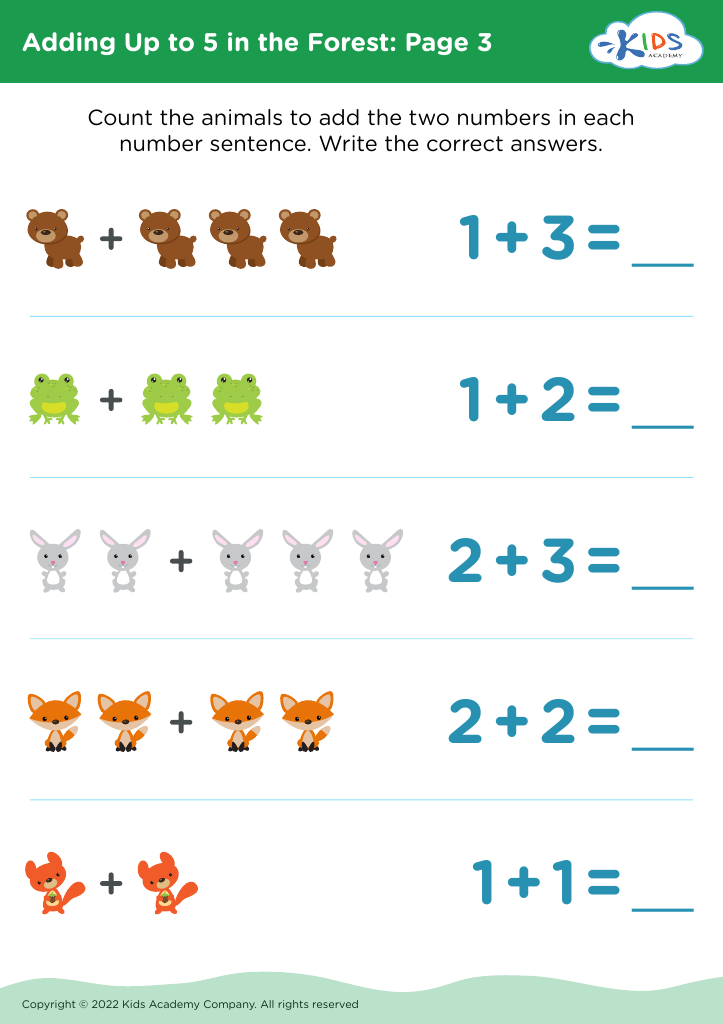
Unlock your child's math potential with our Problem-solving Abilities Addition Worksheets designed specifically for ages 3-6. These engaging and interactive worksheets promote critical thinking and analytical skills while making learning fun and enjoyable. Featuring colorful illustrations and age-appropriate addition problems, your little ones will develop their problem-solving abilities as they work through various challenges. Our worksheets encourage cognitive development and enhance number recognition, ensuring a solid foundation in early math skills. Perfect for parents and educators, these printables can be used at home or in the classroom. Start fostering a love for math today with our unique addition worksheets!
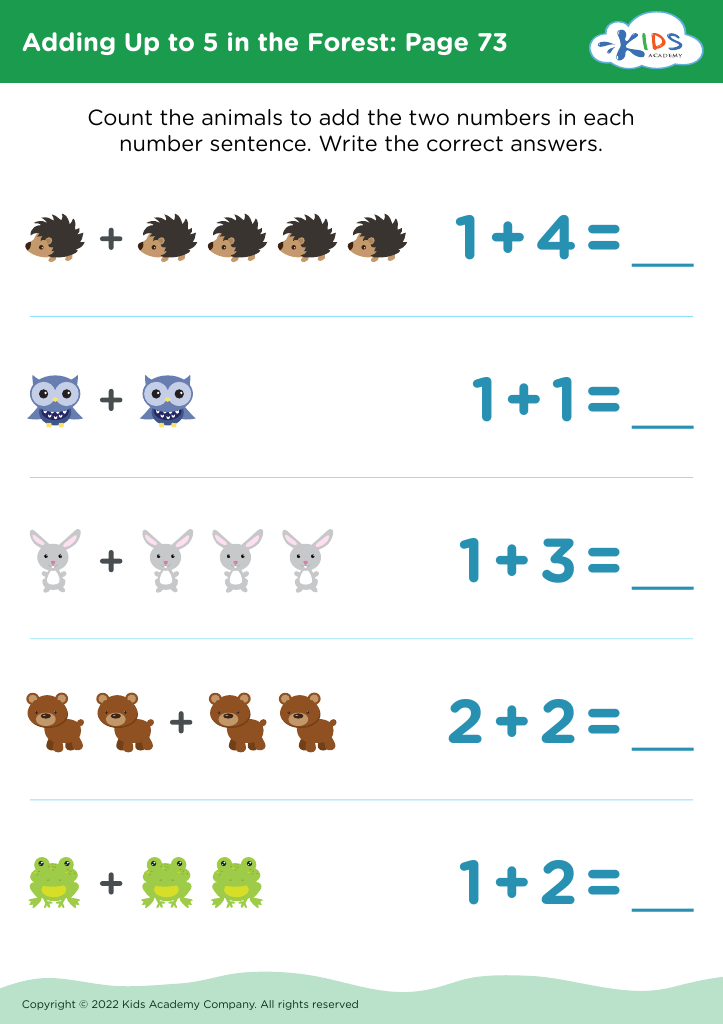
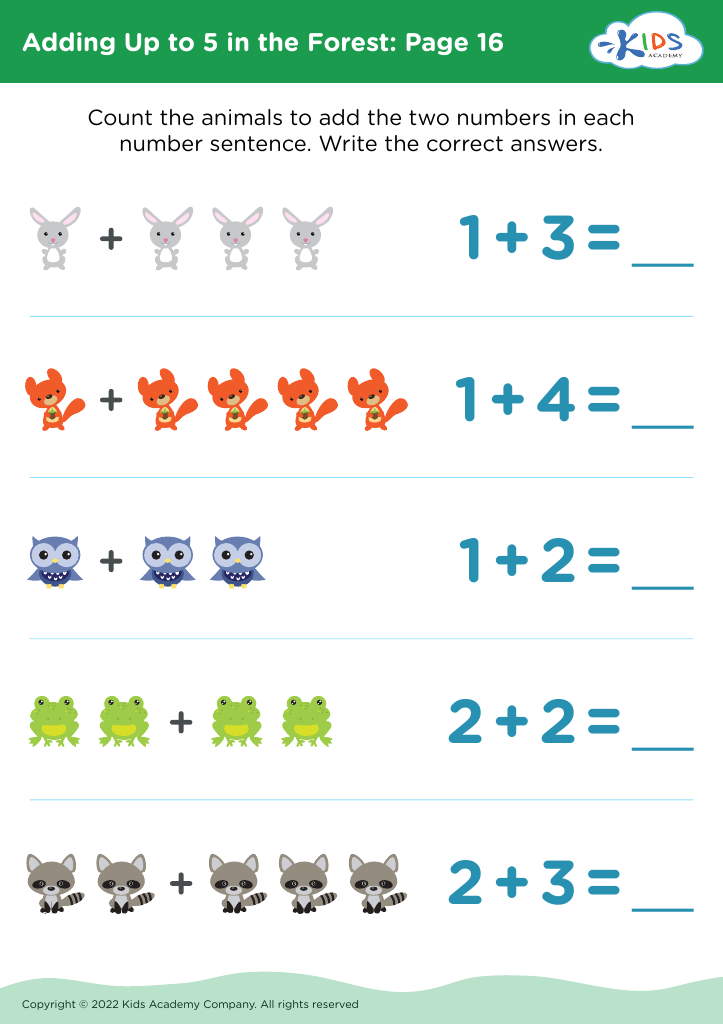
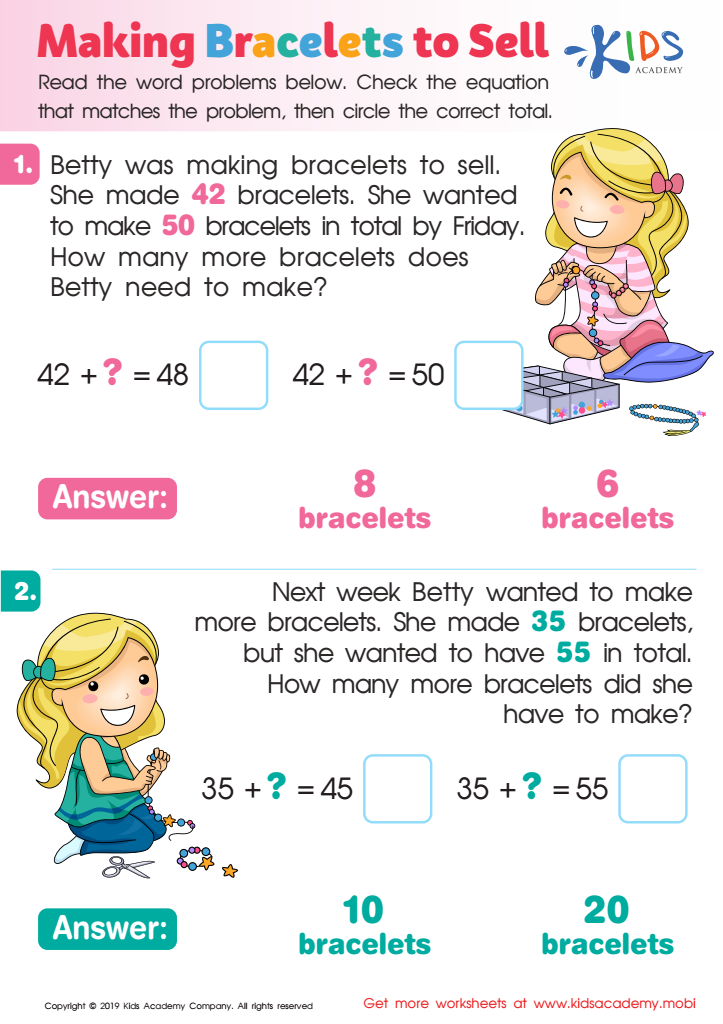
Making Bracelets to Sell Worksheet
 Assign to My Students
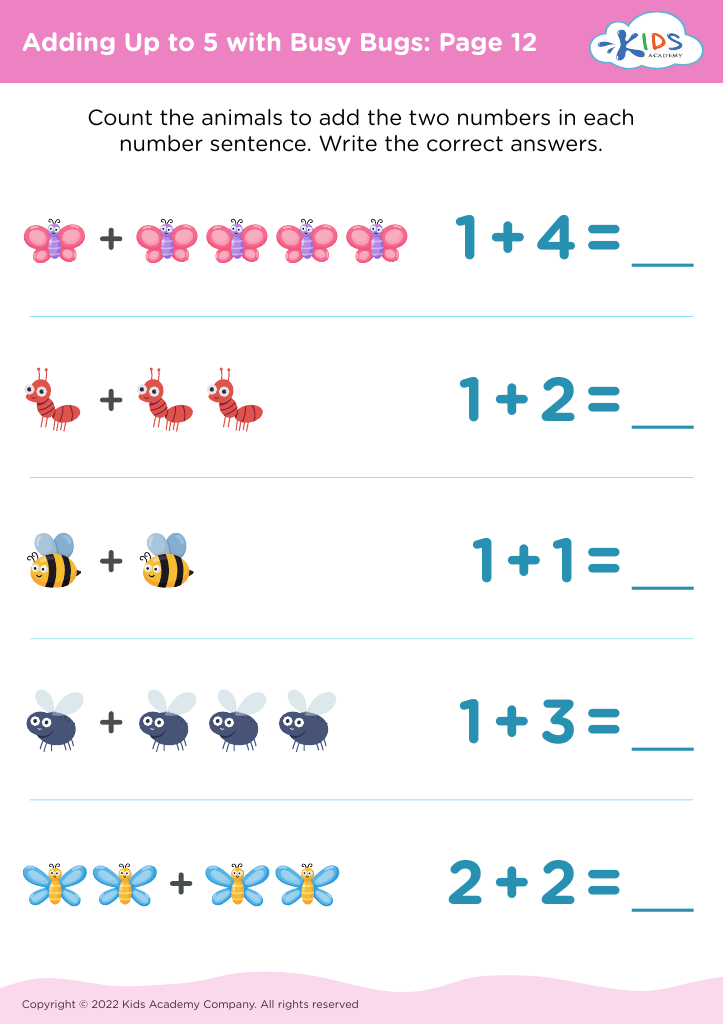
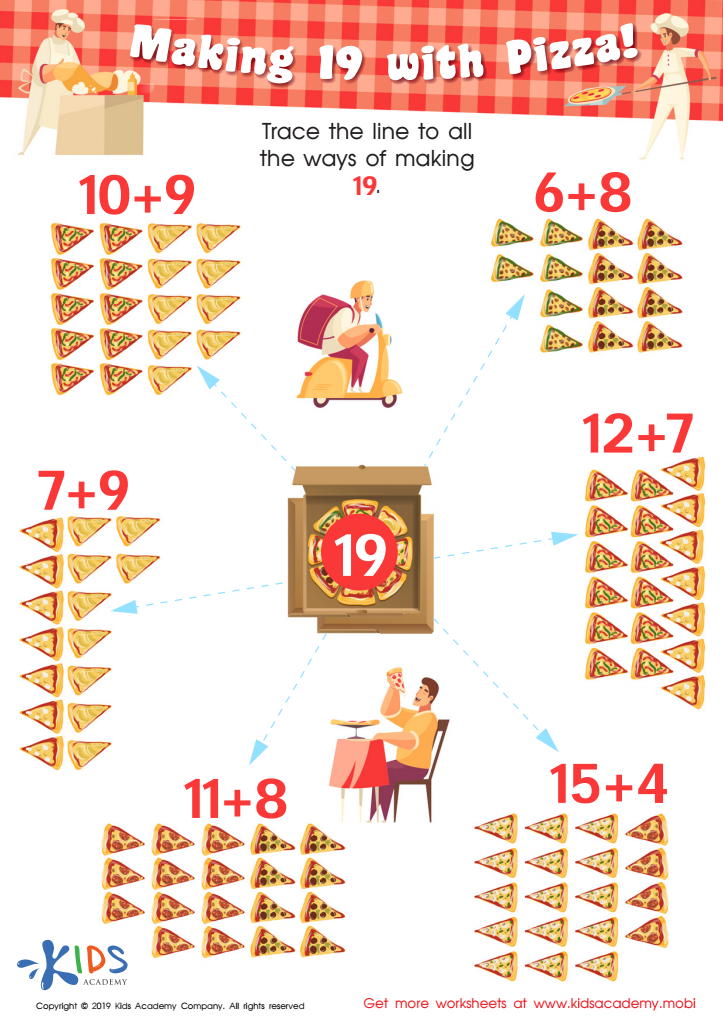
Making 19 with Pizza! Worksheet
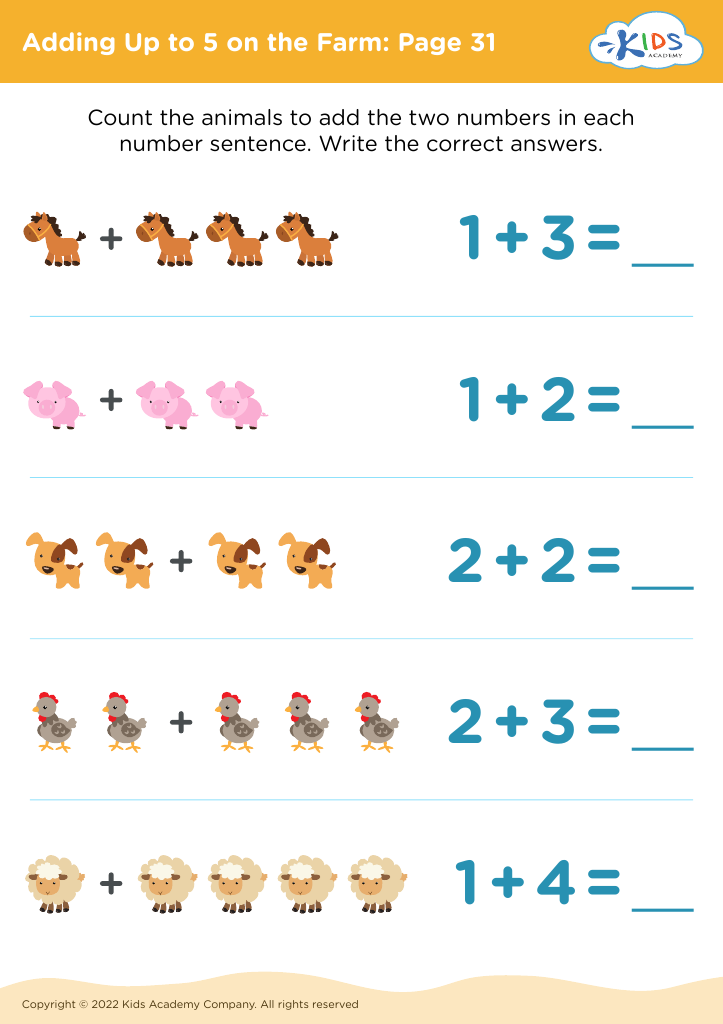
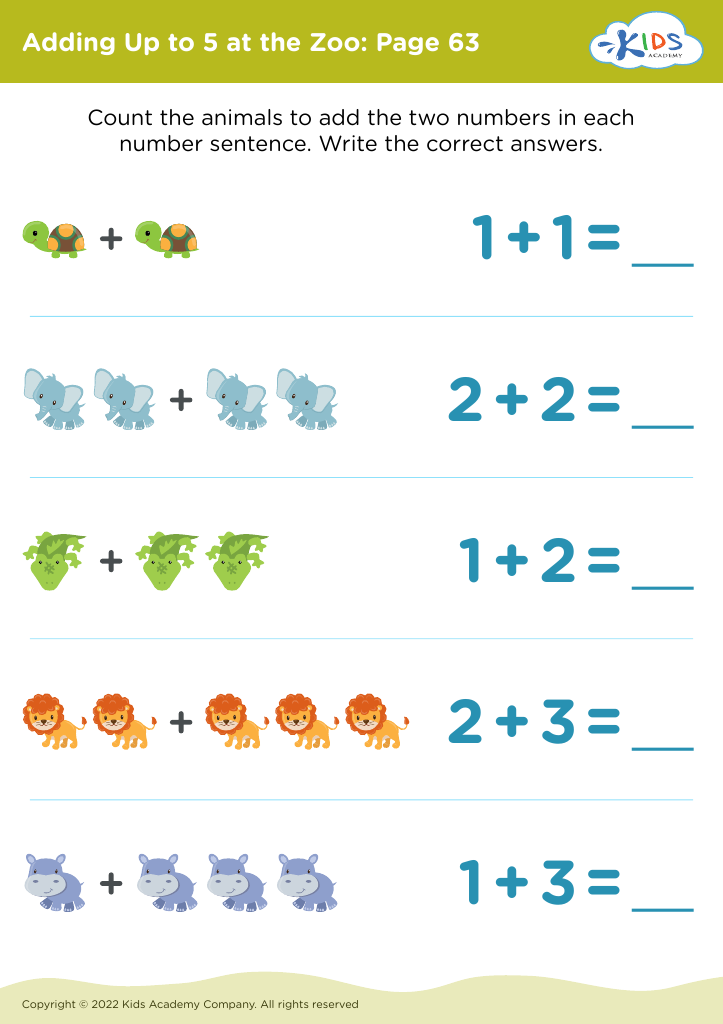
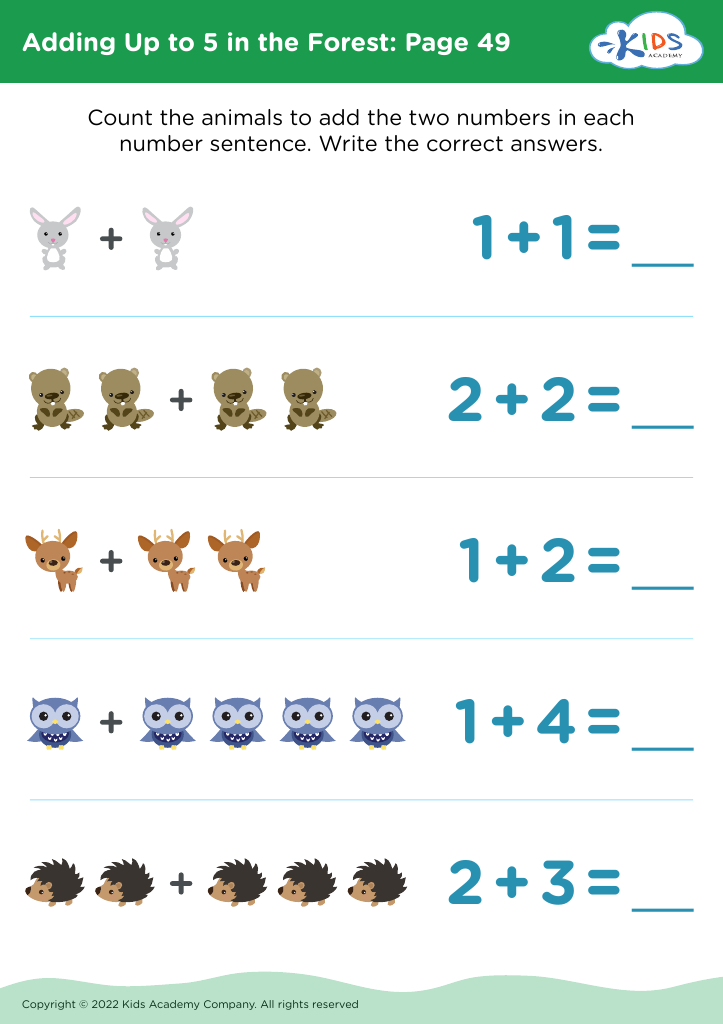

Adding at the Hospital Worksheet
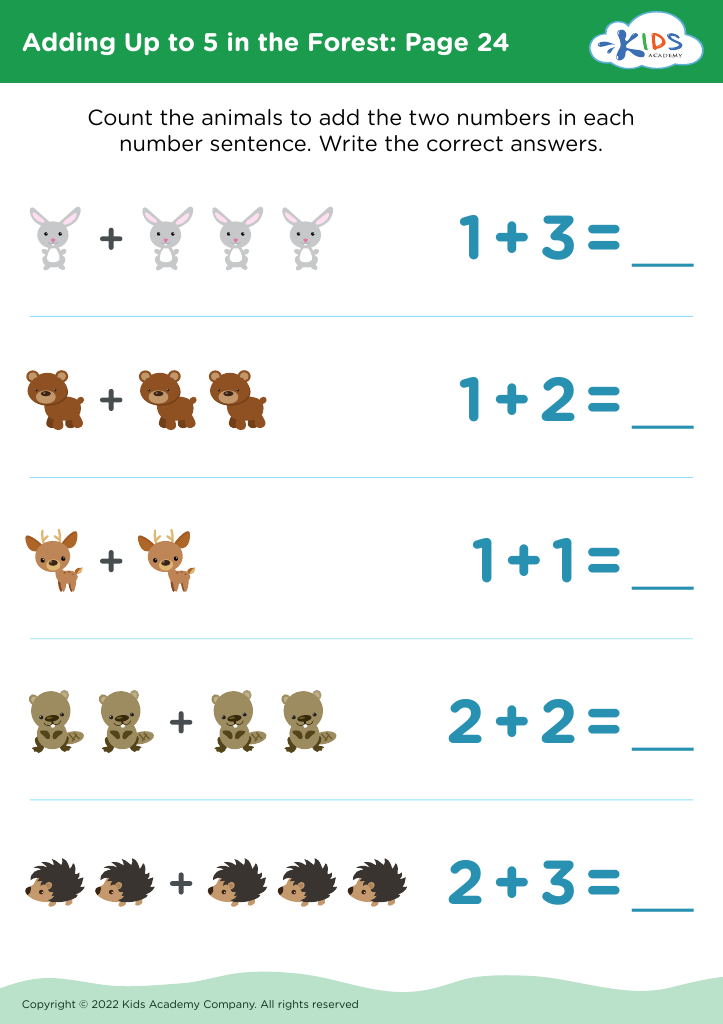
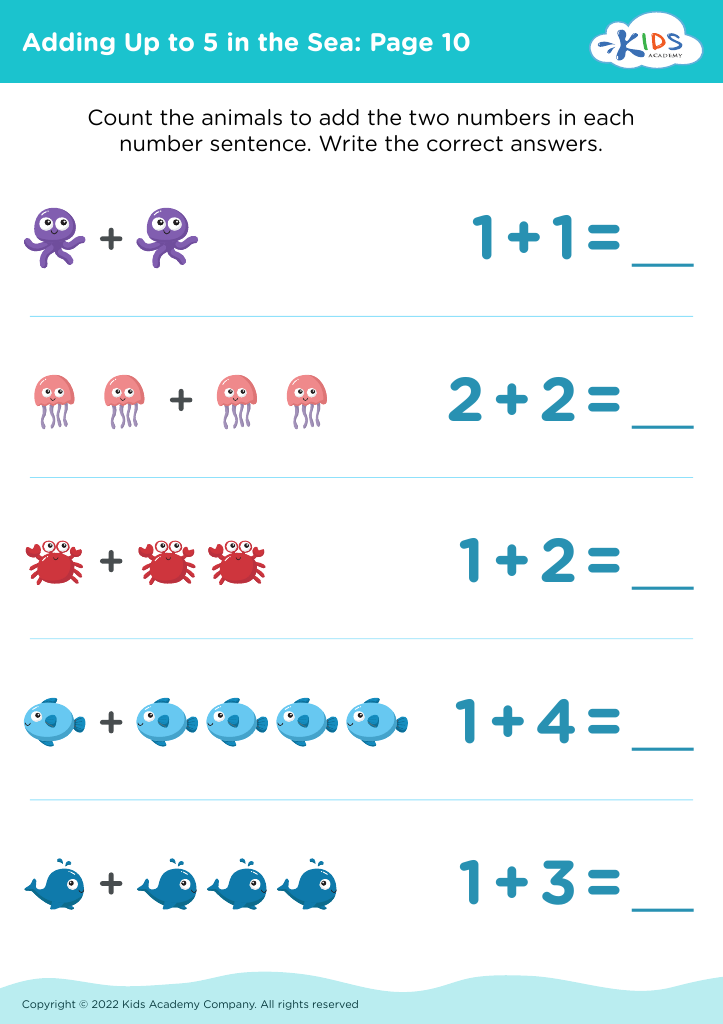
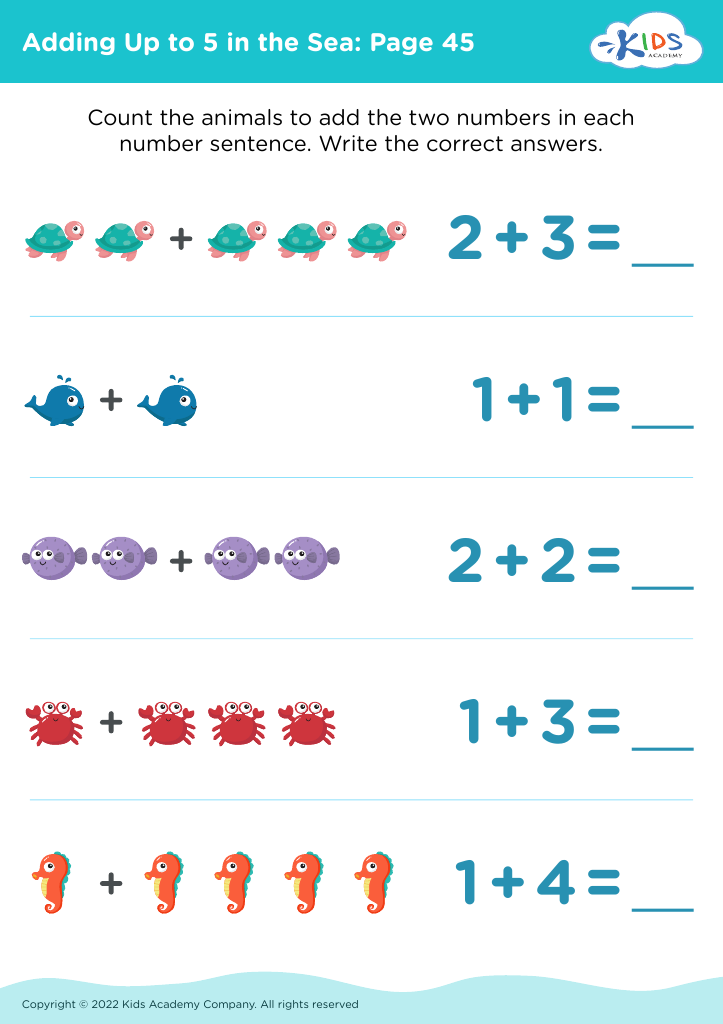
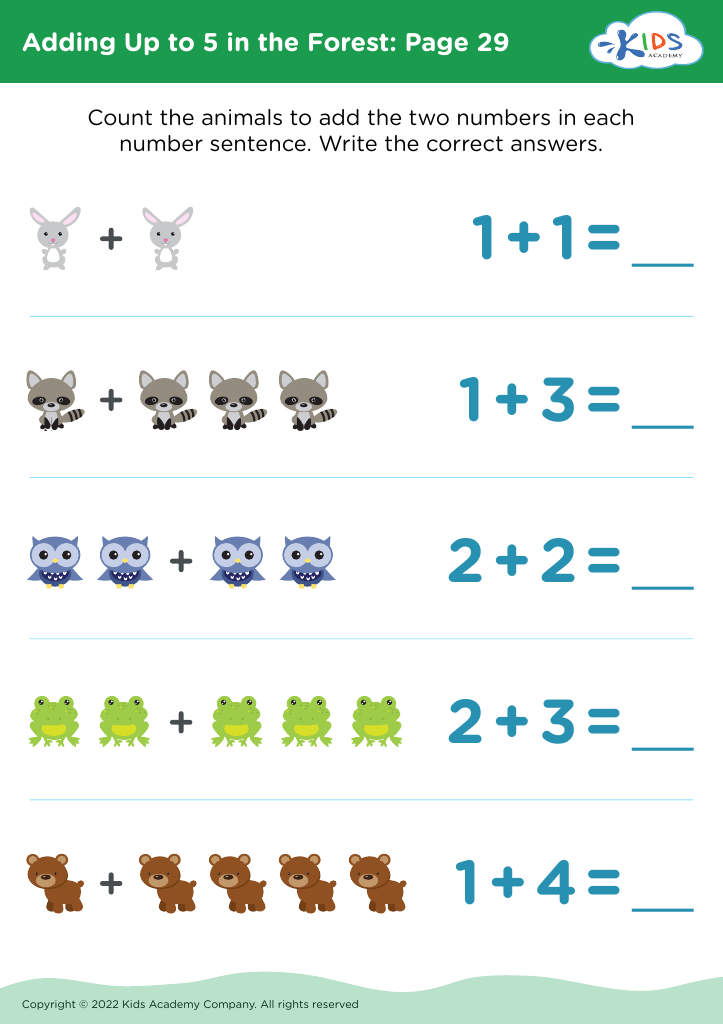
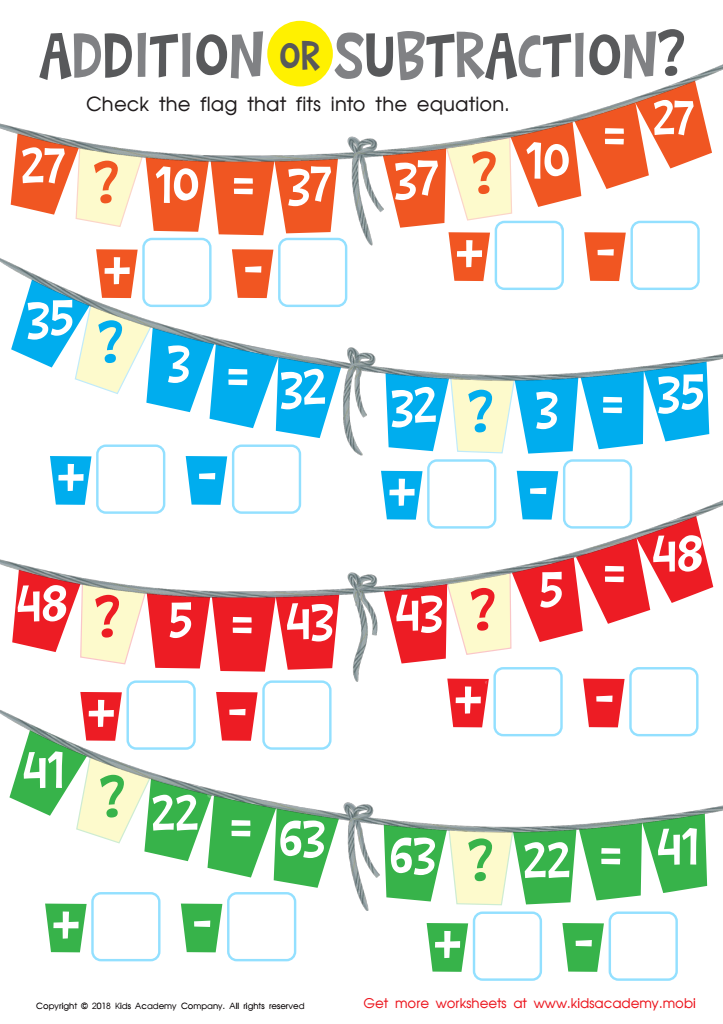
Addition or Subtraction? Worksheet
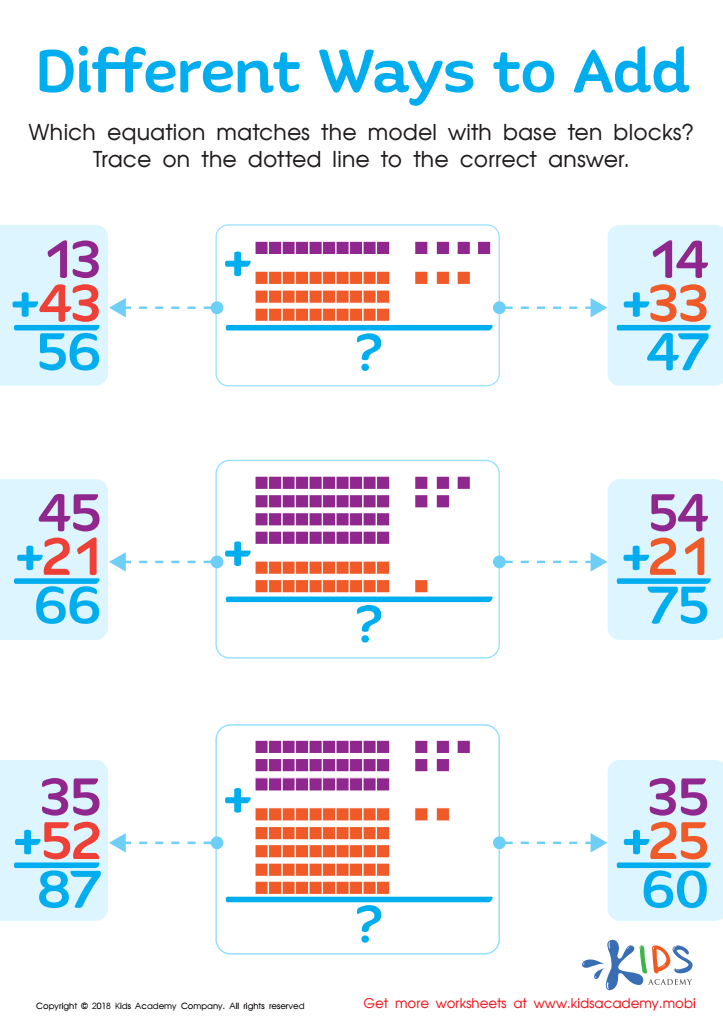
Different Ways to Add Worksheet
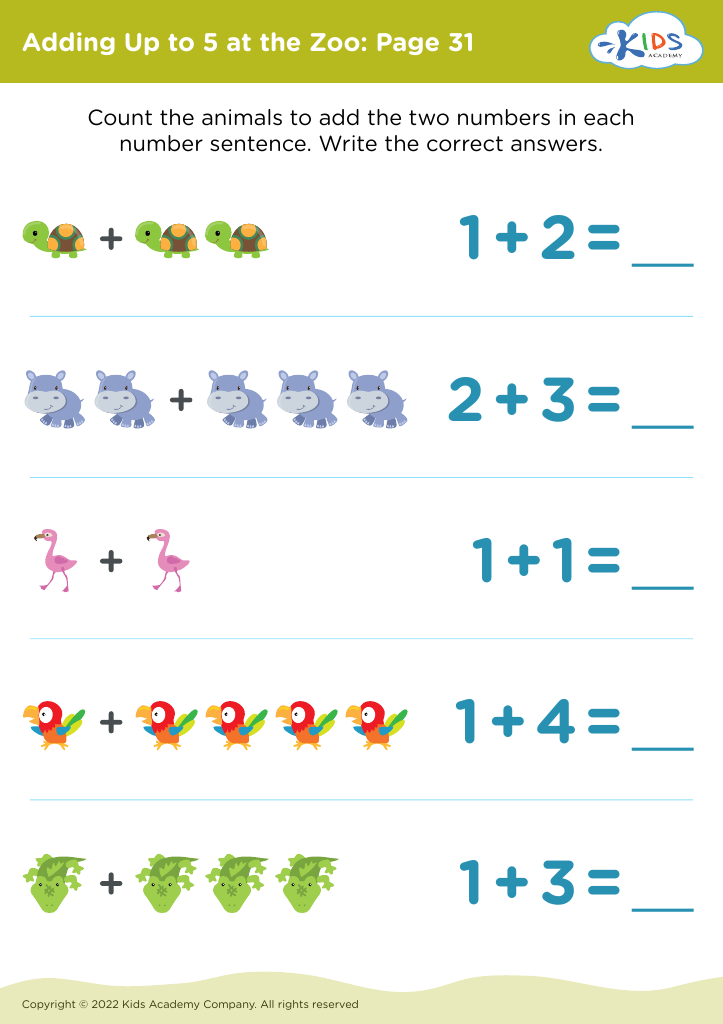
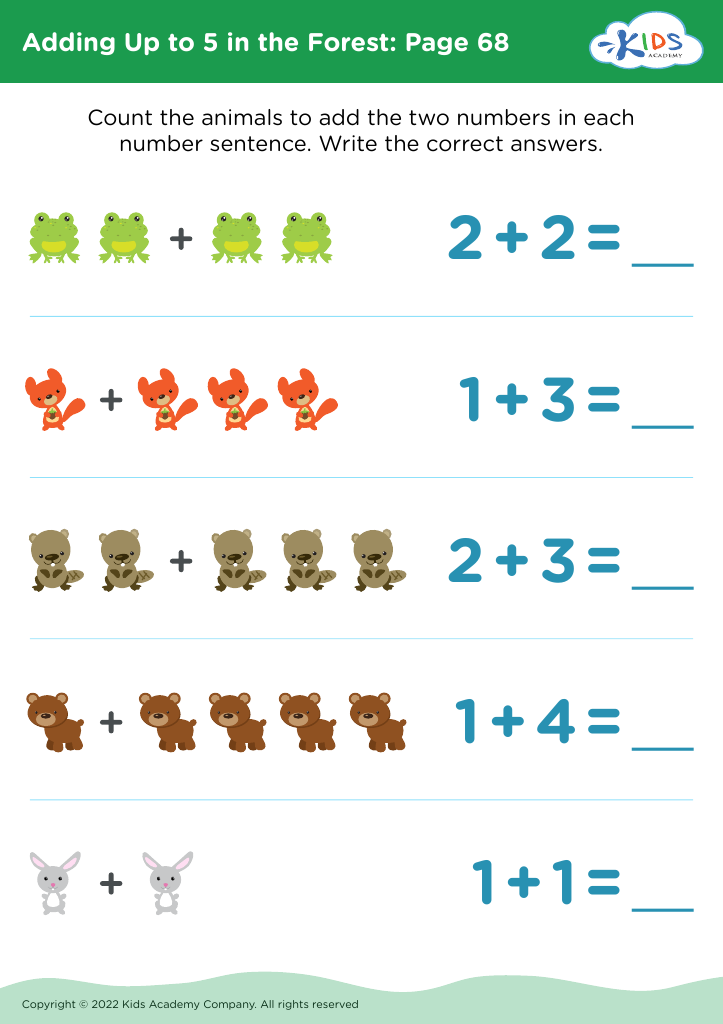







Parents and teachers should prioritize problem-solving abilities in addition for children ages 3-6 because these skills lay the foundation for critical thinking, resilience, and overall cognitive development. At this age, children are naturally curious, and fostering their capacity to solve problems in mathematical contexts helps them make sense of the world around them.
Addition provides a concrete way for young learners to experience the concept of combining quantities, allowing for hands-on exploration through play, visuals, and real-life scenarios. By engaging in these activities, children enhance not only their mathematical understanding but also their ability to approach challenges logically and creatively.
Furthermore, strong problem-solving skills improve children's confidence, encouraging them to tackle new learning opportunities and persevere through difficulties. It nurtures an “I can do it” mentality, which is crucial for lifelong learning.
Additionally, collaborative activities involving addition promote social skills, as children learn to communicate their thought processes, share strategies with peers, and work together towards a solution. This holistic approach to early education positions children for success not just in mathematics, but across all subjects, making it imperative for parents and educators to actively engage and support the development of these problem-solving abilities.








