Understanding numerical values Addition Worksheets for Ages 3-6
4 filtered results
-
From - To
Understanding Numerical Values Addition Worksheets are designed for children aged 3-6 to build essential early math skills. These engaging, printable worksheets help kids grasp the concept of numerical values and simple addition through fun, interactive activities. Each worksheet uses colorful visuals and relatable examples to keep young learners interested and excited about math. Perfect for preschoolers and kindergarteners, these exercises support the development of critical thinking, problem-solving, and number recognition skills. Let your child discover the joy of learning math with our comprehensive collection tailored to foster a strong foundation in addition.
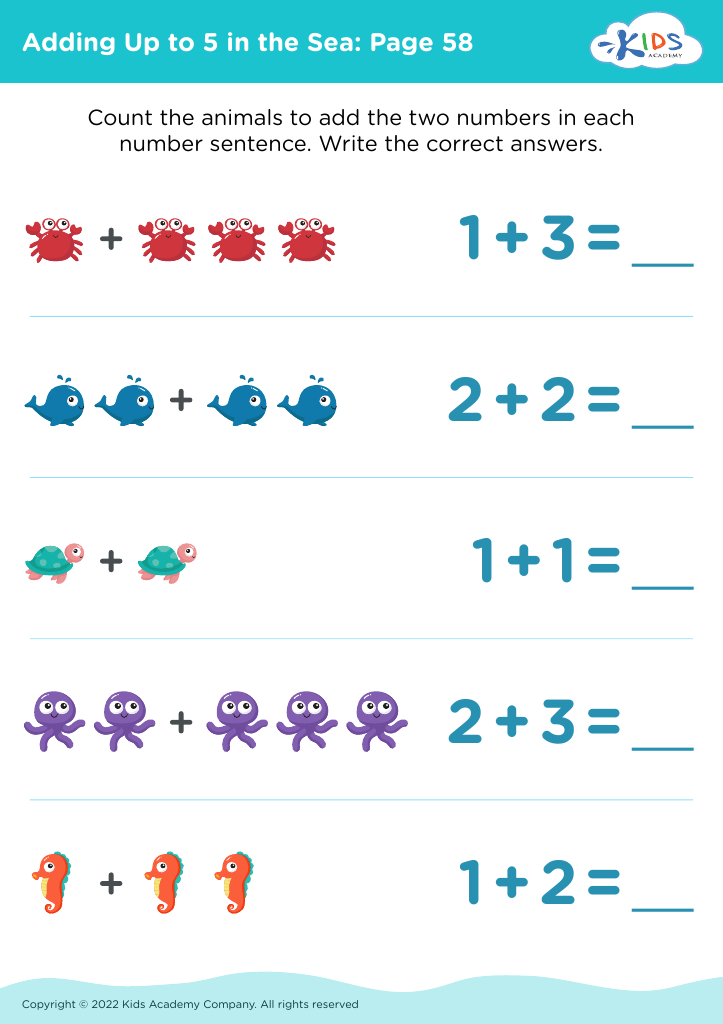
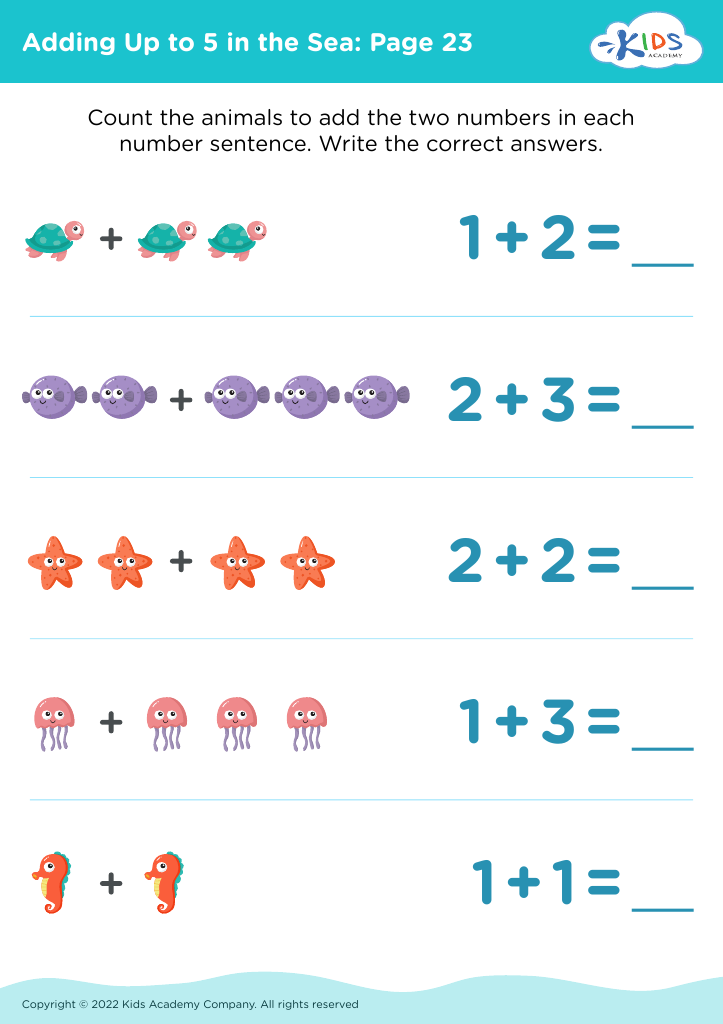
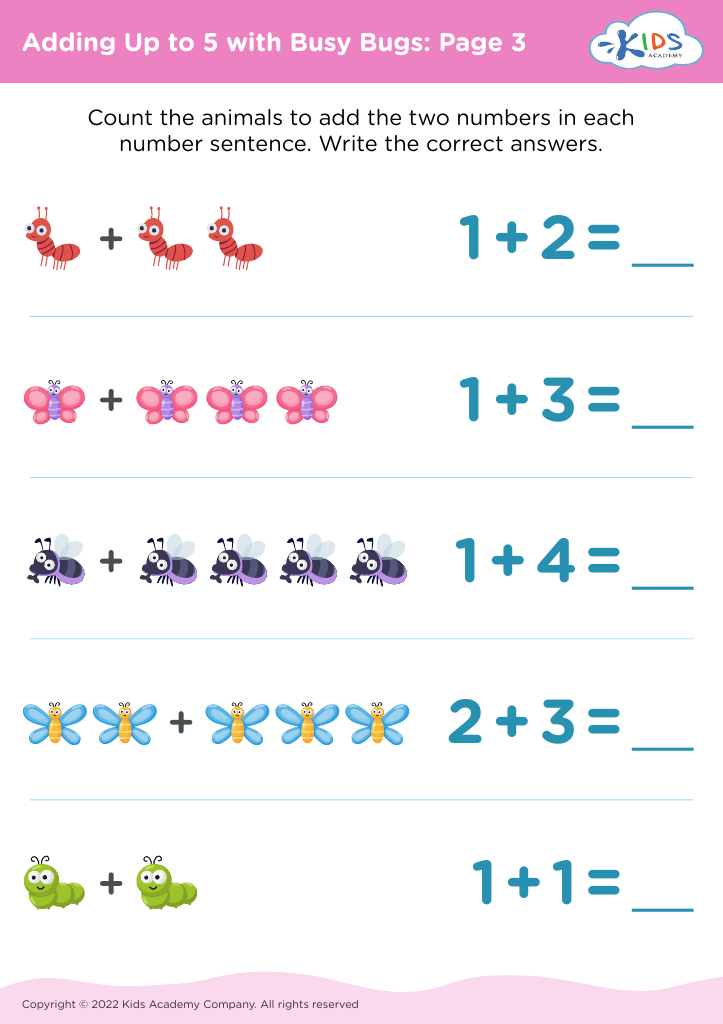
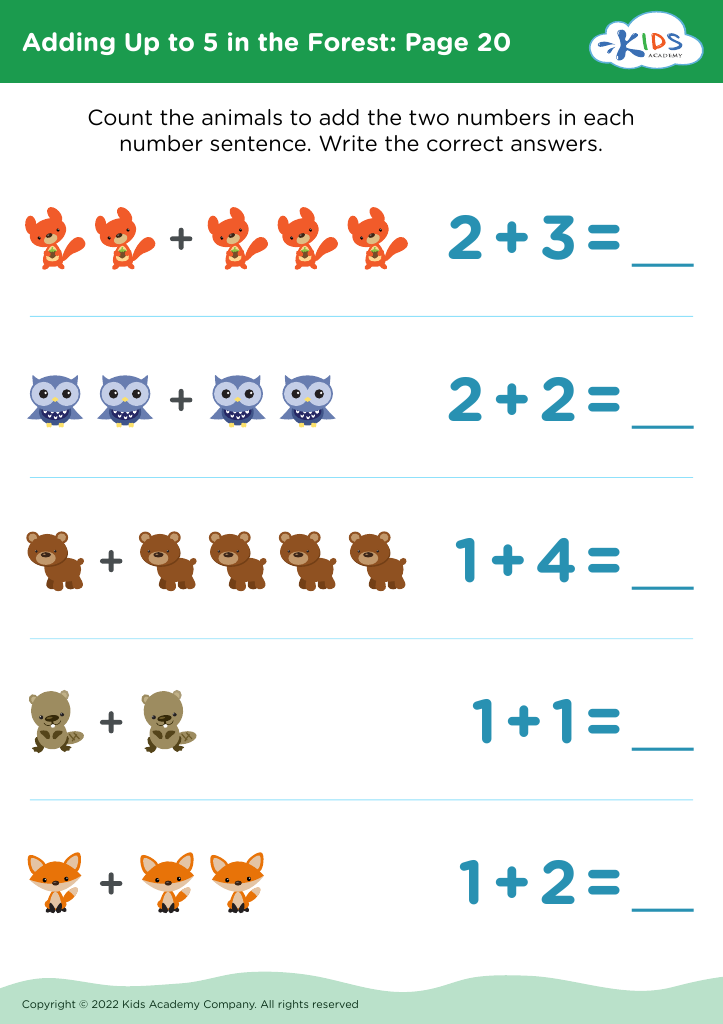








Understanding numerical values and addition in early childhood sets the foundation for a child's future mathematical learning and overall cognitive development. For ages 3-6, these skills are crucial as they mark the beginning stages of numeracy—a core competency required throughout life for problem-solving, logical reasoning, and daily tasks.
Early exposure to numbers and addition promotes critical thinking. When children understand that adding objects increases the quantity, they start to comprehend the concept of change and its effects in their environment. This is fundamental in developing their ability to make sense of the world around them.
Parents and teachers play a critical role in this developmental stage by creating engaging, age-appropriate learning experiences. Simple activities like counting toys or adding pieces of fruit during snack time can make learning feel natural and fun. Such activities also build confidence, setting children up for success in school and beyond.
Moreover, these early math skills are interlinked with language development, spatial reasoning, and the ability to follow multi-step directions. By prioritizing numerical understanding and addition, parents and teachers indirectly support overall academic achievement and cognitive skills essential for lifelong learning.
Thus, investing time in teaching young children the basics of numbers and addition translates to more profound skills that influence their broader educational journey and everyday life interactions.








