Visual comprehension Addition Worksheets for Ages 3-6
7 filtered results
-
From - To
Boost your child's math skills with our engaging Visual Comprehension Addition Worksheets, designed for children ages 3-6. These worksheets provide colorful images and interactive exercises that make learning addition fun and effective. By connecting visual cues to numerical values, young learners enhance their understanding of basic math concepts and develop critical thinking skills. Perfect for home or classroom use, our resources cater to various learning styles and help children build confidence in their abilities. Discover how playful visuals can transform math learning into an enjoyable experience with our carefully crafted worksheets that foster both comprehension and excitement in young minds!
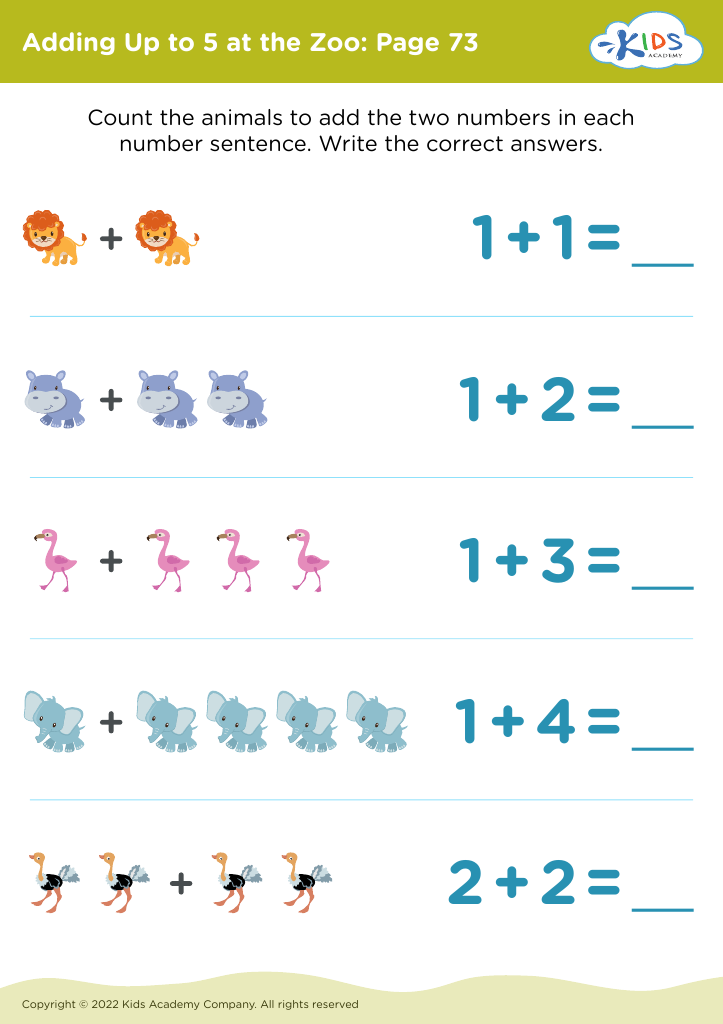
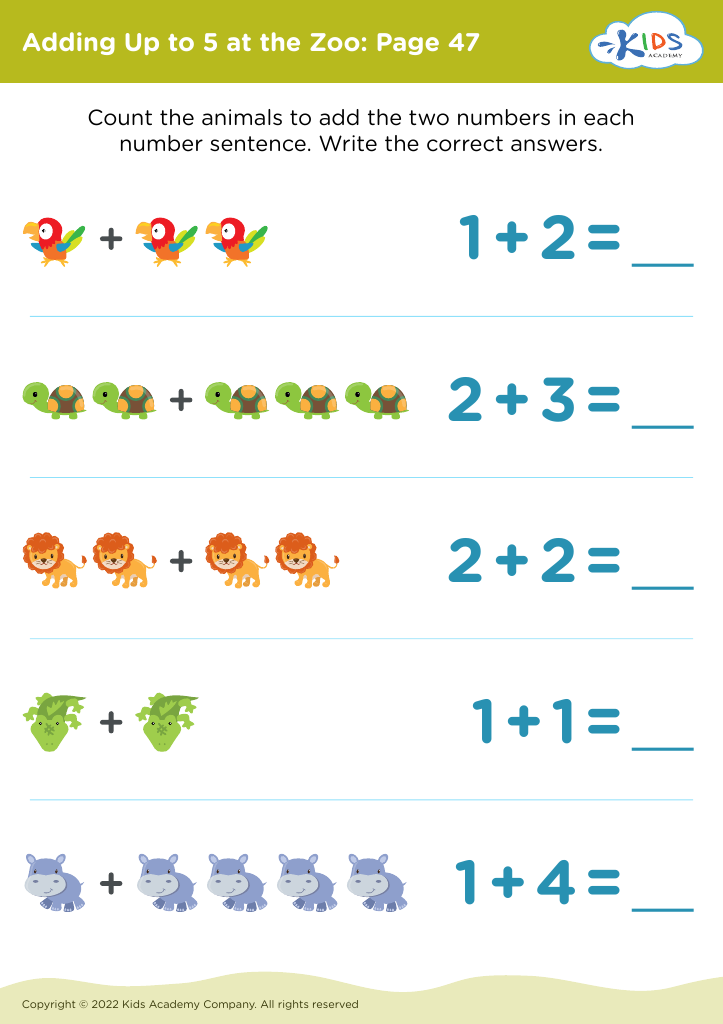
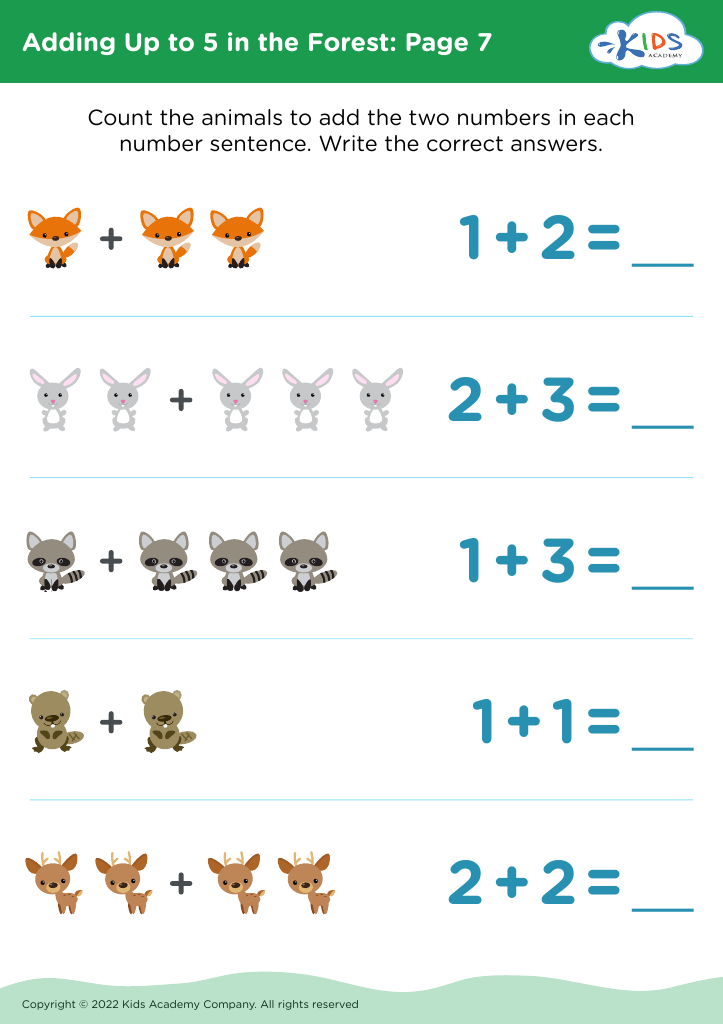
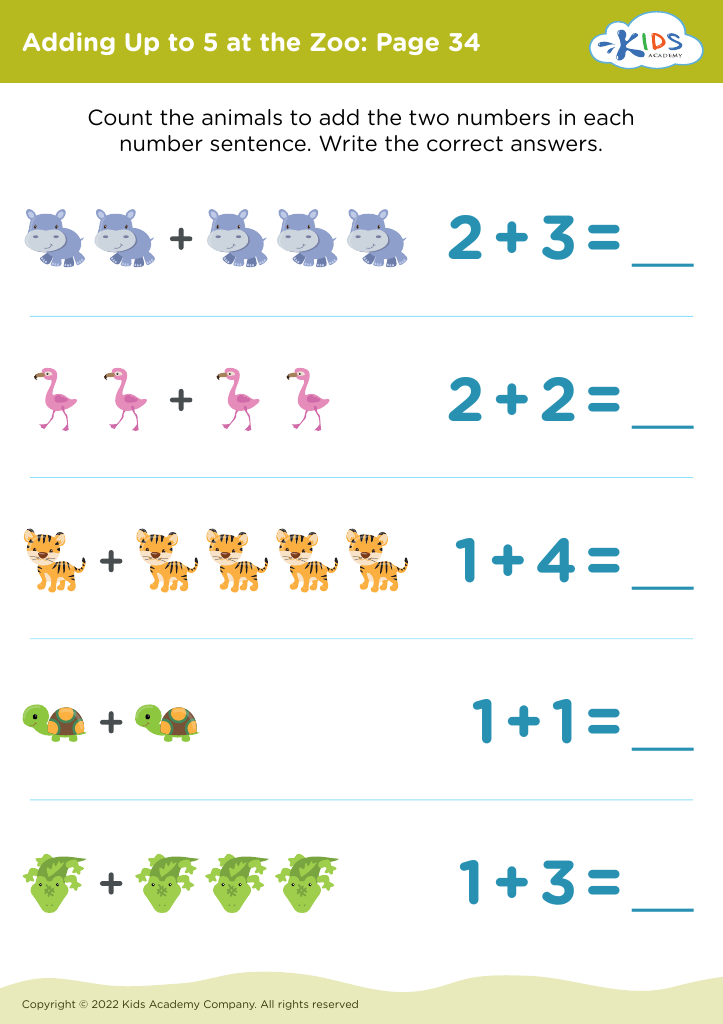
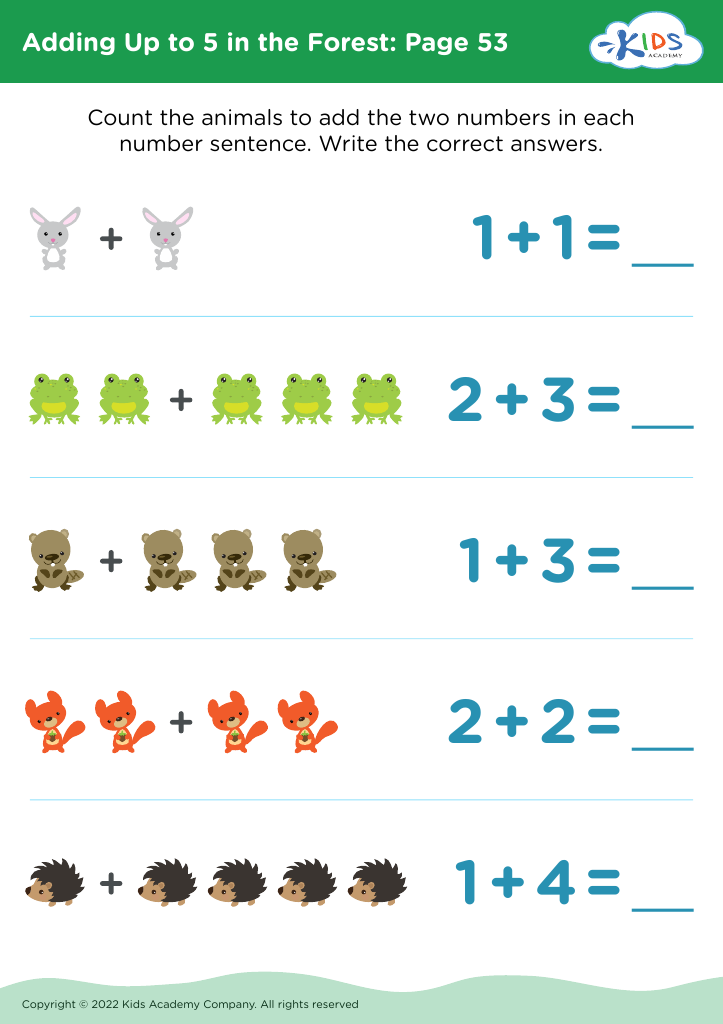
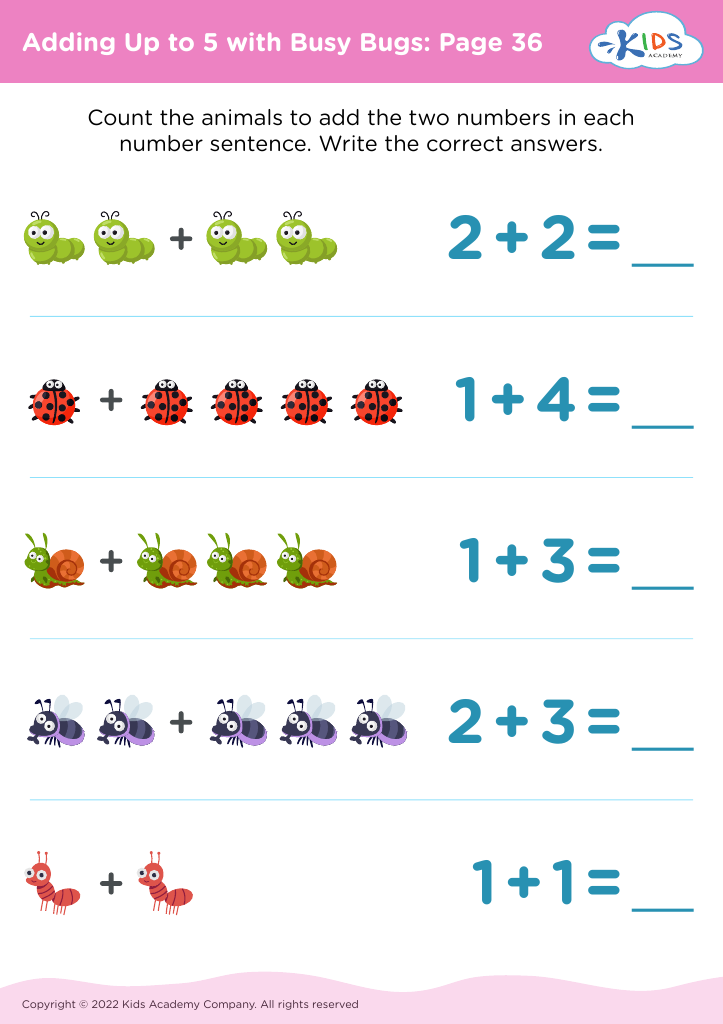
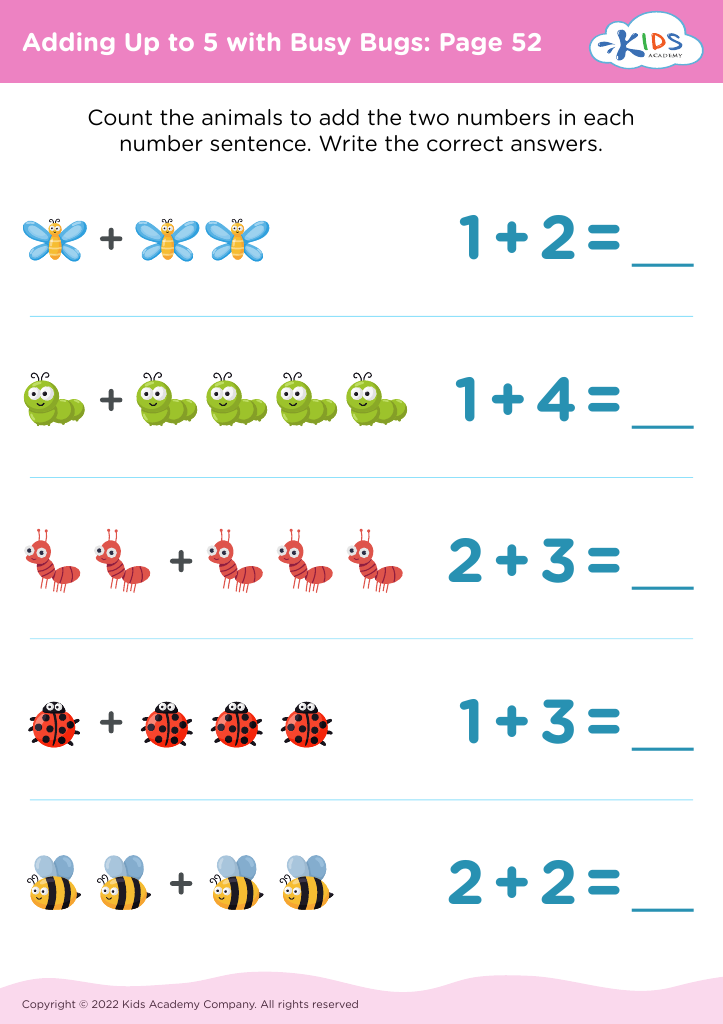








Visual comprehension addition is a crucial skill for children ages 3-6 as it lays the foundation for their mathematical understanding and overall cognitive development. At this early stage, children learn best through visual stimulation, making visual comprehension an effective way to introduce the concept of addition.
Parents and teachers should care about this because developing strong visual comprehension skills helps children recognize patterns, shapes, and quantities. This skill fosters critical thinking and problem-solving abilities, which are essential not just in math but in everyday life situations. Moreover, visual comprehension addition incorporates hands-on and interactive activities, making learning engaging and enjoyable. This can ignite a love for learning and build confidence as children succeed in understanding and solving addition problems.
Additionally, the ability to visualize addition supports the transition to abstract math concepts in the future. When children can see and manipulate objects, they form stronger mental models of what addition represents, thus paving the way for more complex operations later on. Engaging young learners in visual comprehension activities encourages a fun and sustainable path to achieving numeracy skills essential for lifelong learning and academic success. By prioritizing this skill, caregivers set children on a strong trajectory for future educational endeavors.








