Visual learning enhancement Addition Worksheets for Ages 3-6
4 filtered results
-
From - To
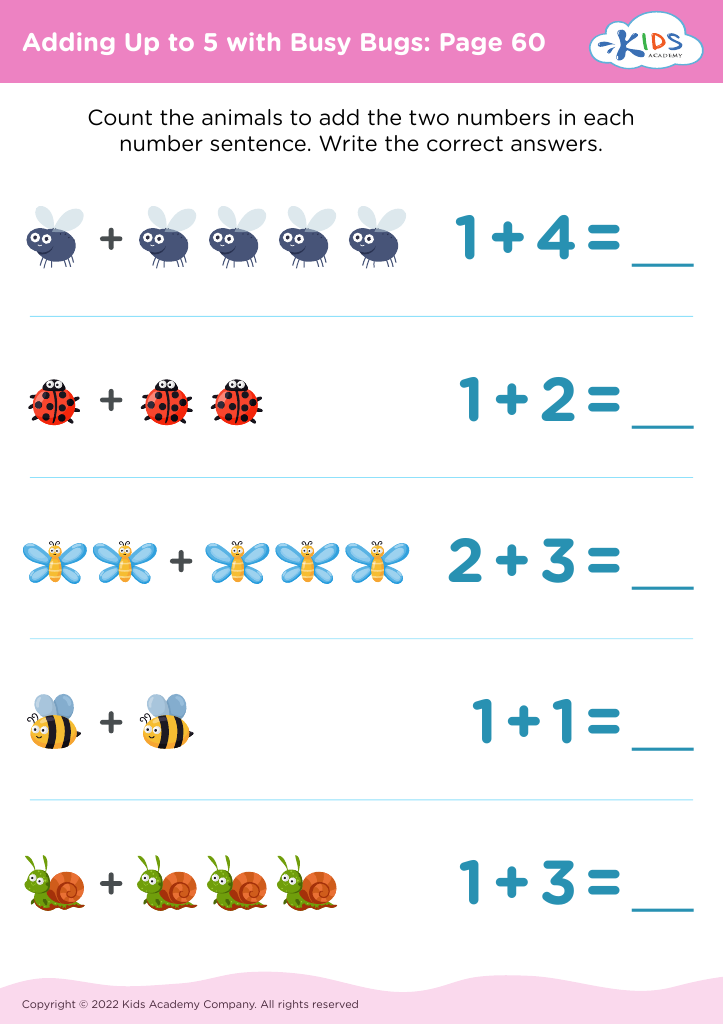
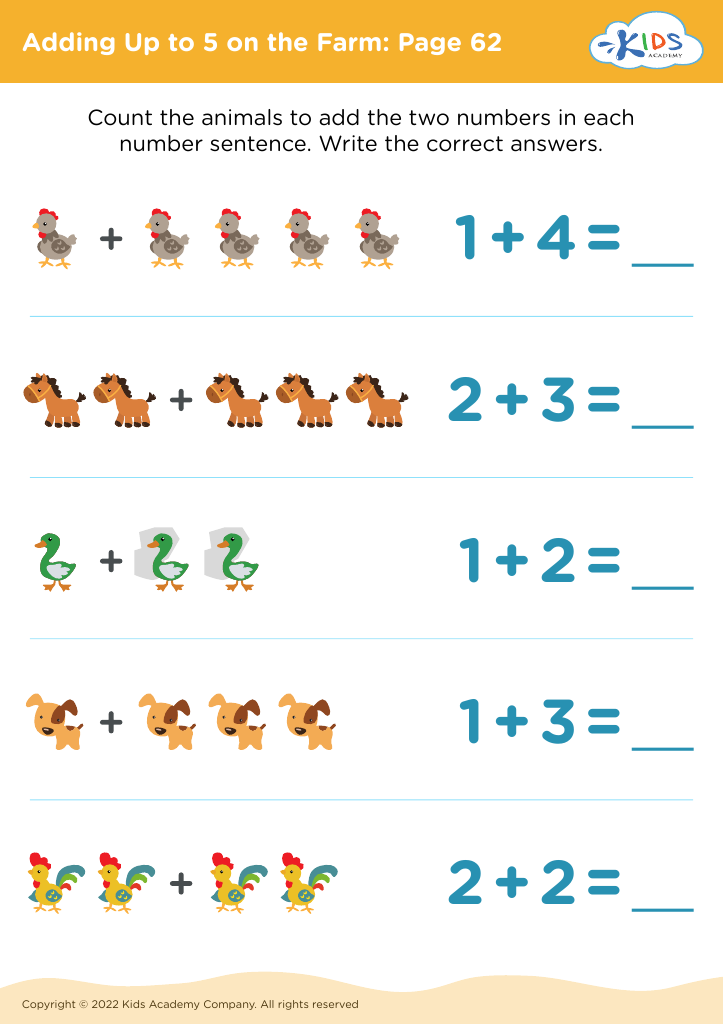
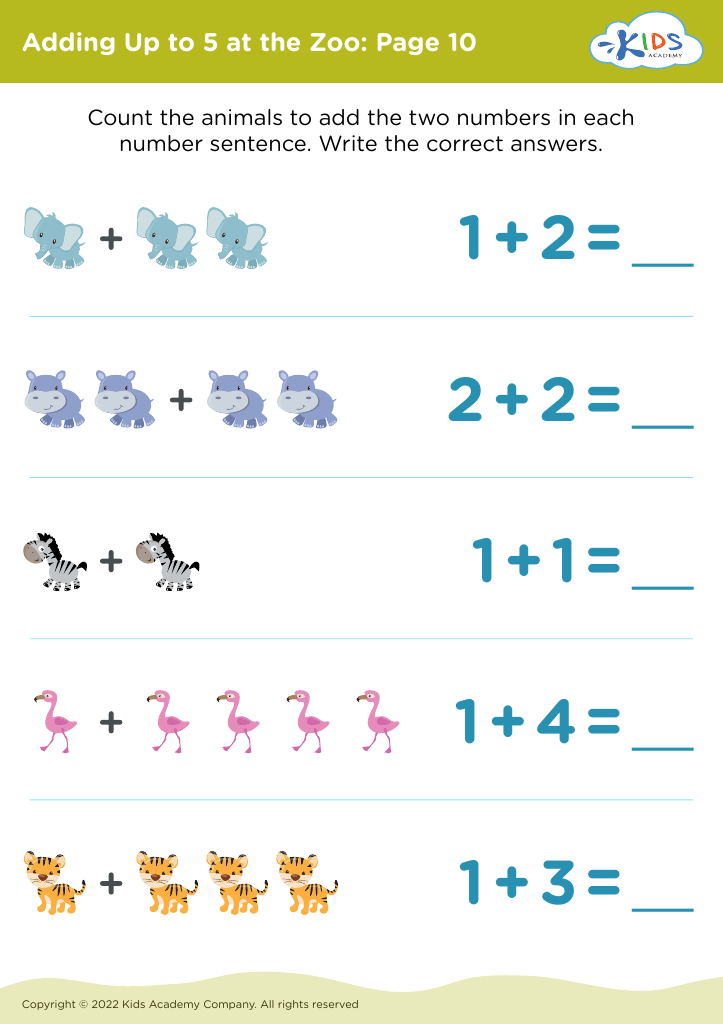
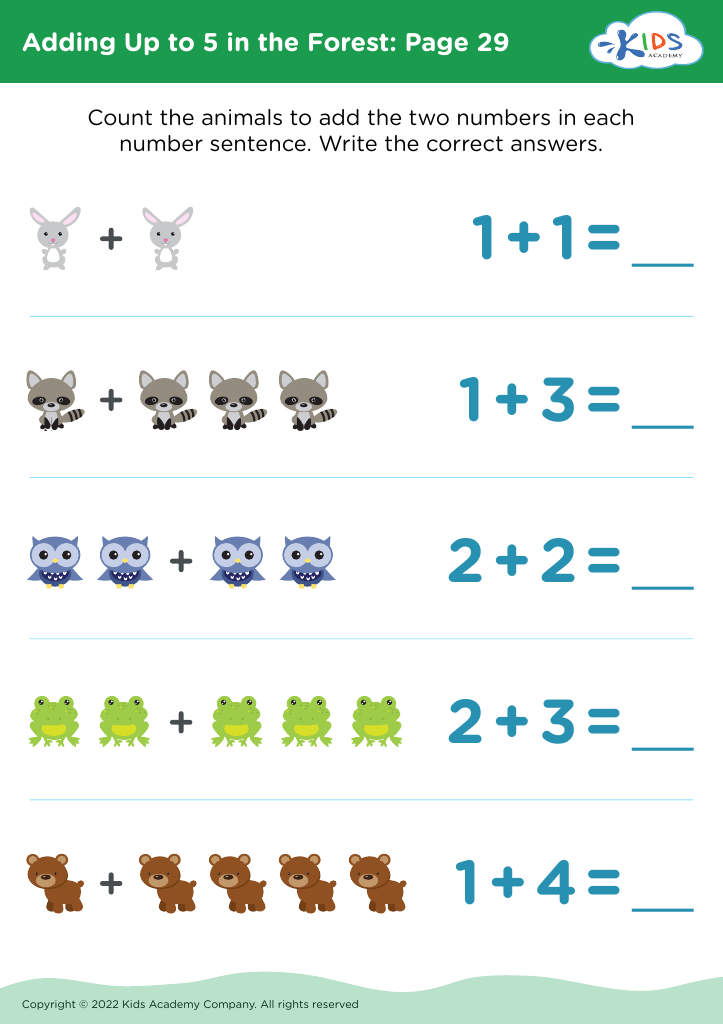
Boost your child's math skills with our engaging Visual Learning Enhancement Addition Worksheets for ages 3-6! Perfectly designed to make learning fun, these worksheets combine vibrant visuals with hands-on activities. Each sheet features colorful illustrations and interactive exercises that help young minds grasp the basics of addition effortlessly. Our worksheets cater to different learning styles, ensuring children stay interested and motivated. Ideal for both classroom use and at-home practice, they create a solid foundation for future math success. Foster a love for learning and enhance addition skills with our delightful and educational worksheets today!







.jpg)
Visual learning plays a crucial role in the cognitive development of children aged 3-6, a formative period often referred to as the early childhood stage. At this age, children’s brains are highly receptive to stimuli that help shape their understanding of the world around them. The use of visual learning techniques in addition instruction can significantly enhance young learners' grasp of mathematical concepts.
Visual aids, such as colorful counting blocks, number lines, and picture-based addition exercises, provide concrete, easy-to-understand representations of abstract concepts. These aids make the addition more tangible and relatable for young minds, fostering a deeper comprehension than abstract numerals alone might achieve. For example, when children count objects they can see and touch, such as apples or toys, they create mental associations that enhance memory retention and recall abilities.
Moreover, visual learning engages multiple senses and learning styles, catering to visual, tactile, and kinesthetic learners. It maintains children’s interest and attention, making the learning process more enjoyable and less intimidating. By incorporating visual elements into addition practice, parents and teachers can connect learning with play, reinforcing positive attitudes towards math.
In sum, visual learning enhancements in early mathematical education provide a robust foundation for higher-level mathematical skills, promoting a more inclusive, effective, and engaging learning environment for young children.








