Money recognition Coins Worksheets for Ages 3-6
5 filtered results
-
From - To
Discover our engaging Money Recognition Coins Worksheets designed specifically for children ages 3-6! These worksheets provide a fun and interactive way to help young learners identify and understand different coins and their values. With colorful illustrations and easy-to-follow activities, kids will develop essential money management skills while enjoying themselves. Perfect for home or classroom use, our resources are aligned with early learning standards, ensuring a comprehensive learning experience. Foster your child's confidence in handling money and enhance their cognitive skills with our thoughtfully crafted worksheets, making financial literacy achievable and entertaining! Download yours today to start the money learning adventures!
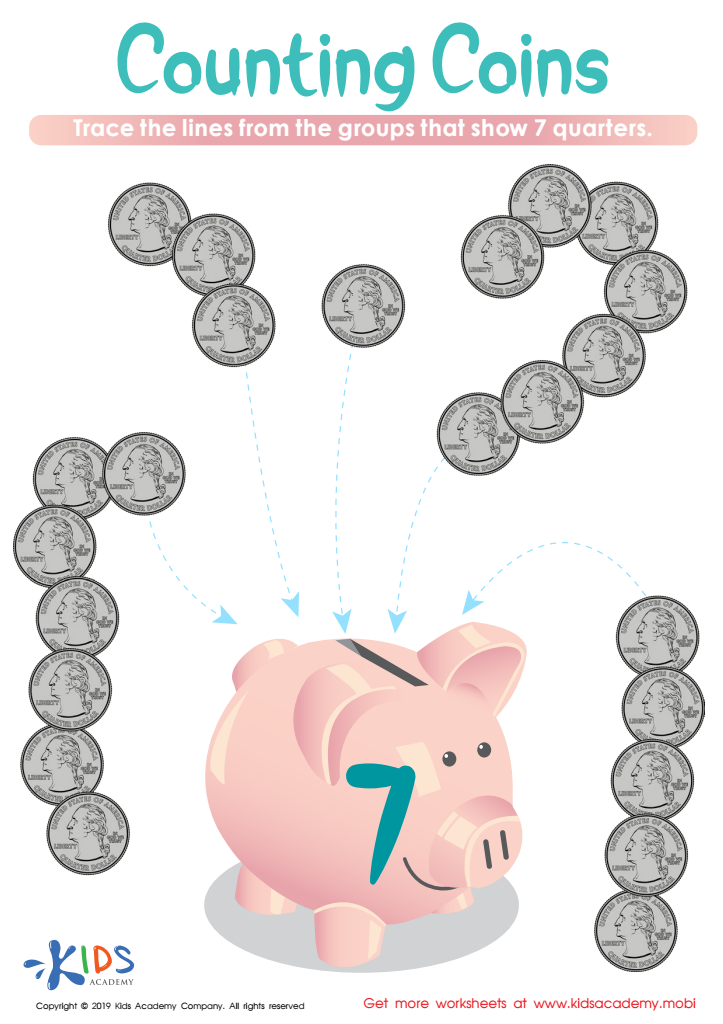
Counting Coins Worksheet
 Assign to My Students
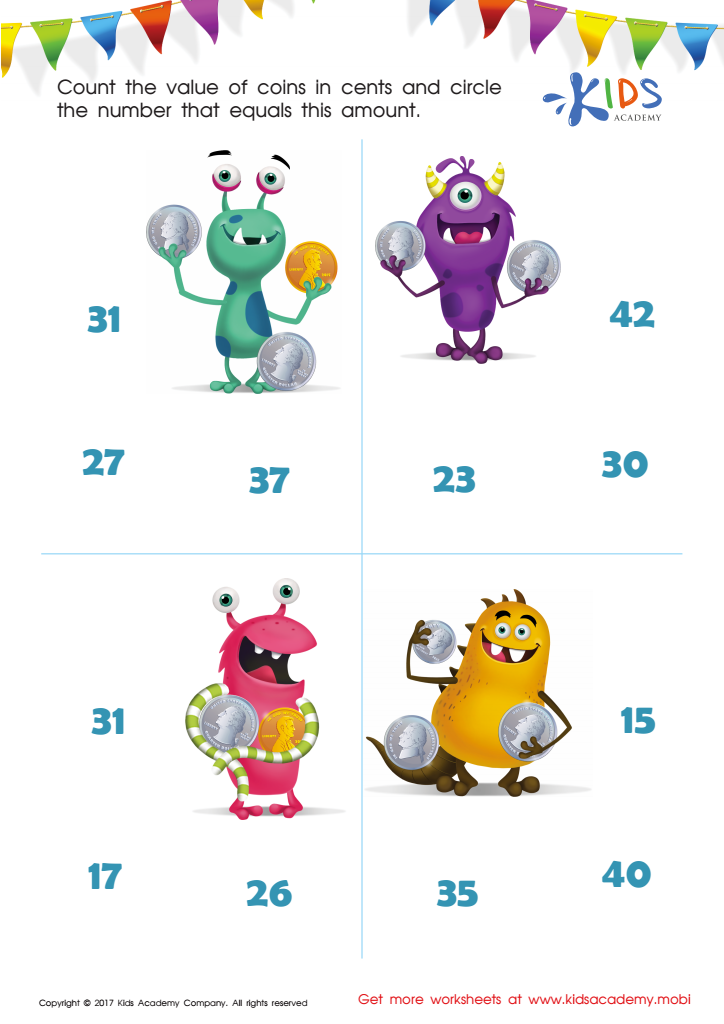
How Many Coins Money Worksheet
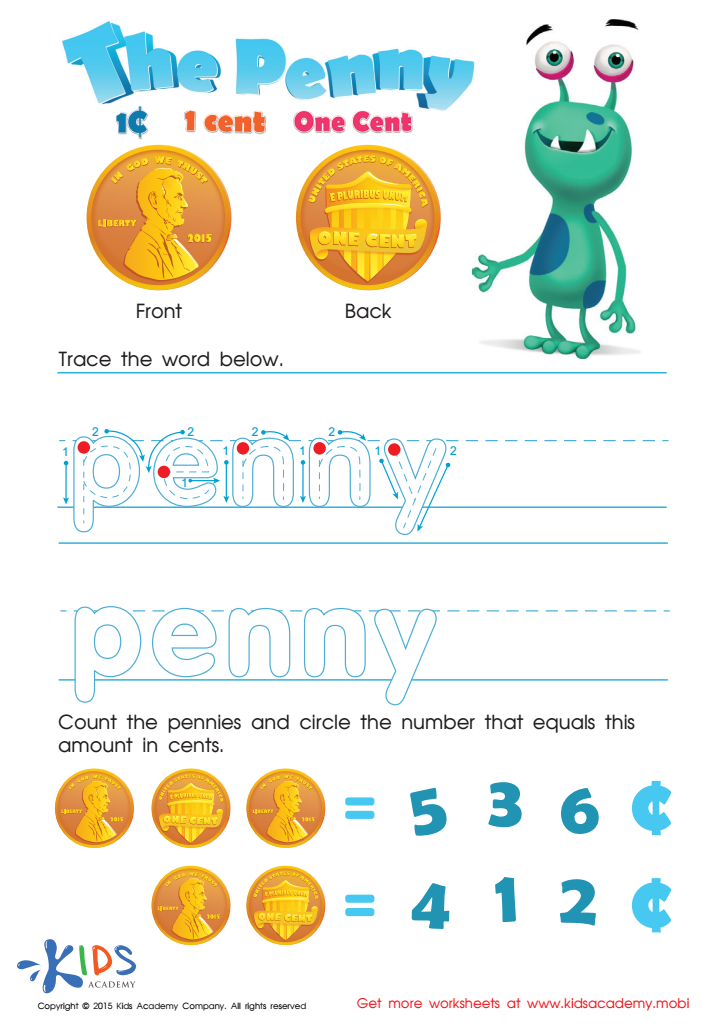
One Cent or the Penny Money Worksheet
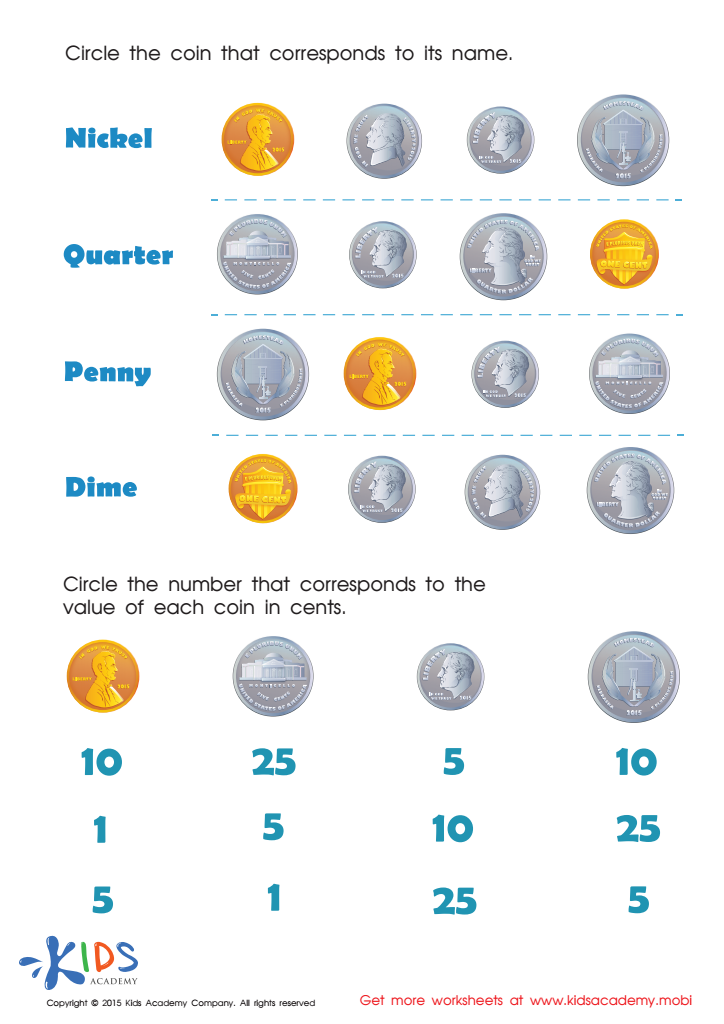
Coin Names and Values Money Worksheet
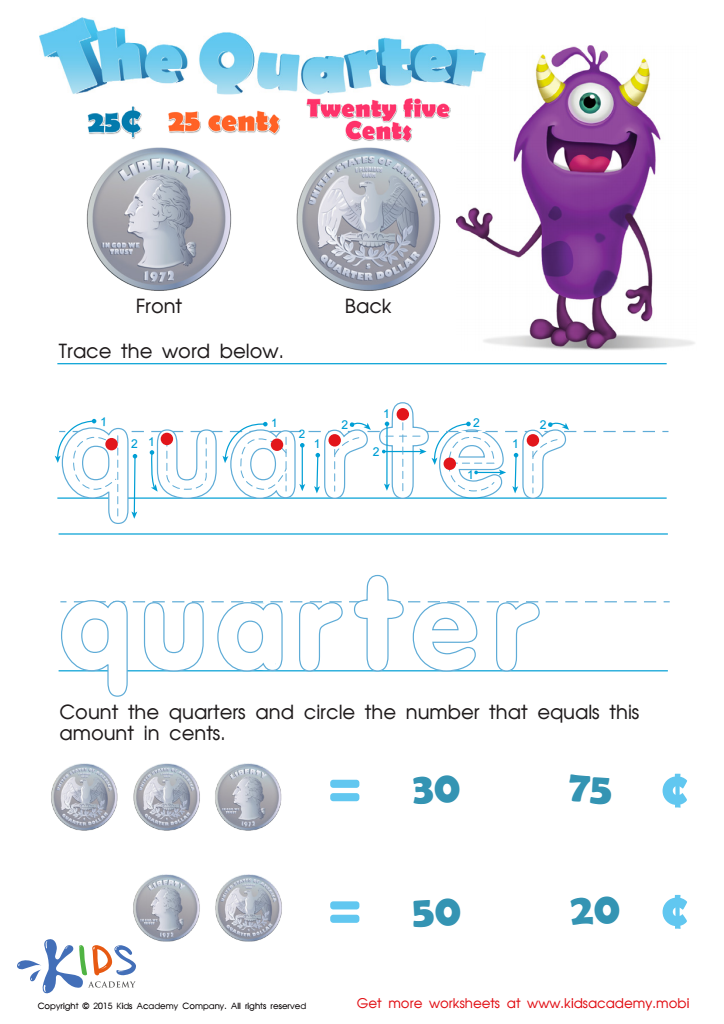
Twenty Five Cents or the Quarter Money Worksheet








Money recognition, specifically understanding coins, is a foundational skill for children aged 3-6 that plays a crucial role in their early development. First and foremost, recognizing coins introduces young learners to the concept of currency and its significance in daily life. It helps children grasp basic mathematical concepts like counting, addition, and subtraction through practical activities involving money.
Furthermore, money recognition fosters critical thinking and problem-solving skills. Engaging with coins allows children to participate in meaningful real-world experiences, such as shopping simulations or pretend play, which enhances their social development and encourages independent decision-making.
Moreover, understanding coins builds financial literacy from an early age. As children learn the differences between various denominations, they begin to appreciate the value of money and the importance of saving and spending wisely. This early foundation can lead to healthier financial habits as they grow.
For parents and teachers, introducing money recognition creates opportunities for interactive learning and bonding through fun games and activities. By prioritizing this skill, caregivers contribute to children’s confidence in handling money, preparing them for a future where financial skills will be essential. Overall, teaching money recognition shapes responsible, financially savvy future citizens.








