Basic geometry knowledge Geometry Worksheets for Ages 3-6
3 filtered results
-
From - To
Boost your child's early math skills with our "Basic Geometry Knowledge Geometry Worksheets for Ages 3-6." These engaging and colorful worksheets are designed to introduce young learners to essential geometry concepts like shapes, sizes, and patterns. Perfect for preschoolers and kindergarteners, our activities promote critical thinking and spatial awareness through fun, hands-on exercises. From identifying basic shapes like circles and squares to understanding spatial relationships, our worksheets make learning geometry exciting and accessible. Ideal for both classroom and home use, enhance your child's foundational math skills with these expertly crafted learning tools.
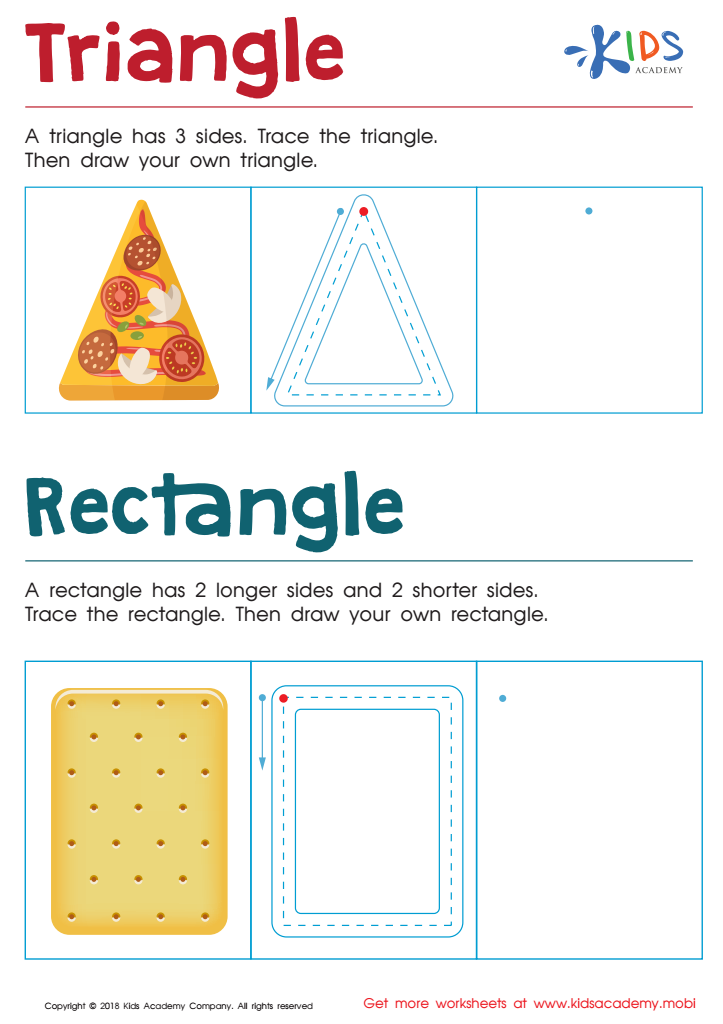
Triangle Rectangle Worksheet
 Assign to My Students











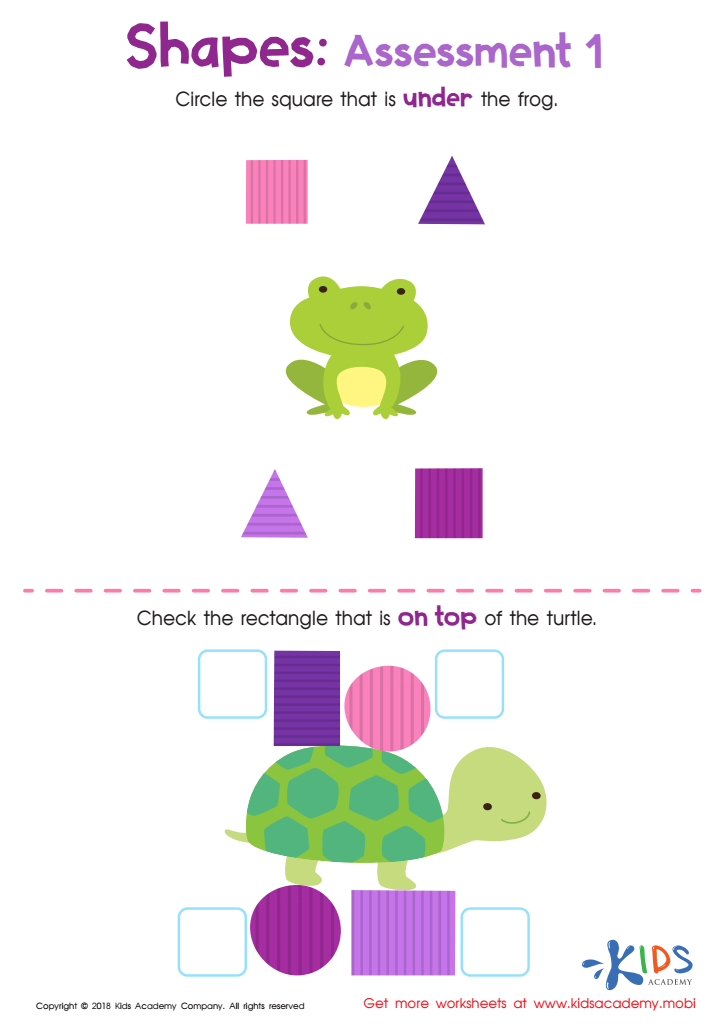
Geometry – Assessment 1 Worksheet
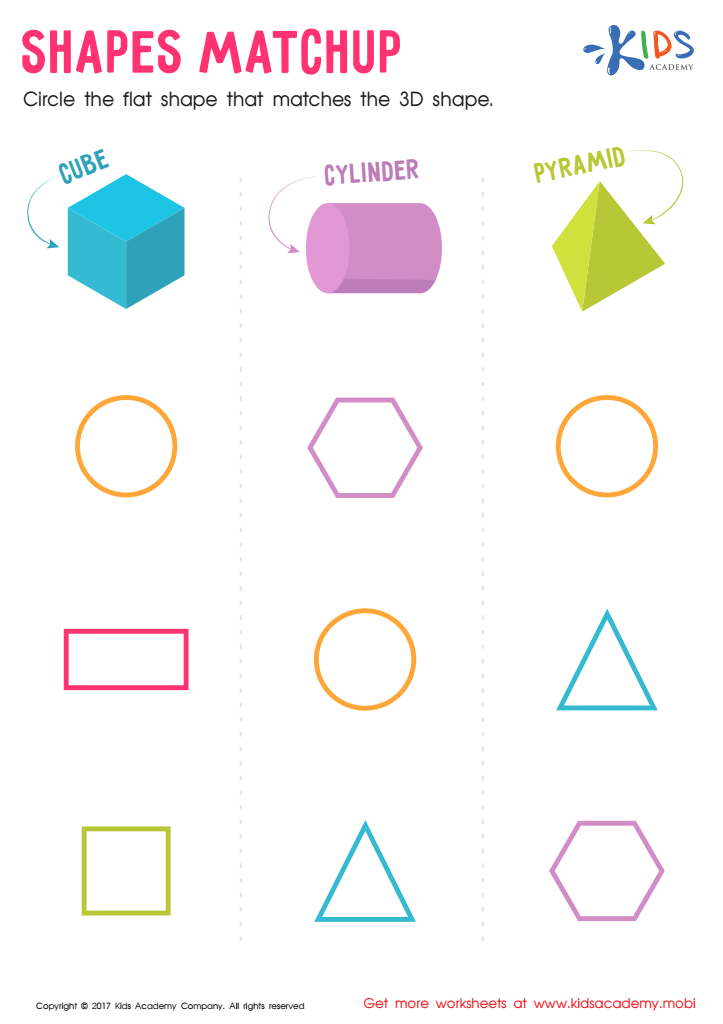
Shapes Matchup Worksheet








Basic geometry knowledge is essential for young children, as it sets a strong foundation for both their cognitive and academic development. For children ages 3-6, recognizing shapes, sizes, and spatial relationships enhances their critical thinking and problem-solving skills. When children learn to identify and compare geometric shapes, such as circles, squares, and triangles, they begin to develop their visual perception and reasoning abilities.
Incorporating geometry in early education also builds early math skills, which are crucial for understanding more advanced mathematical concepts later on. Counting sides and corners, spotting patterns, and arranging objects in space can all make mathematical learning more tangible and enjoyable.
Moreover, geometry aligns closely with daily activities and play, making it a natural and engaging part of a child's world. Teachers and parents can enhance their educational experiences through puzzles, building blocks, drawing activities, and even outdoor exploration, reinforcing these concepts in a fun and interactive way.
Furthermore, mastering basic geometry supports language development as children learn new vocabulary related to shapes and space. This comprehensive approach to learning aids in the holistic development of children, ultimately preparing them for future academic success. Therefore, prioritizing basic geometry knowledge is beneficial for fostering young minds.








