Spatial reasoning Geometry Worksheets for Ages 3-6
4 filtered results
-
From - To
Introduce your child to the world of shapes and space with our Spatial Reasoning Geometry Worksheets for ages 3-6. These engaging worksheets are designed to boost fine motor skills, spatial awareness, and critical thinking. Kids will enjoy fun activities like tracing, matching, and sorting shapes, improving their understanding of geometry concepts. Perfect for home or classroom use, our worksheets make learning interactive and enjoyable. Help your little one build a strong foundation in math while having fun. Explore our collection and watch your child's confidence in geometry grow!
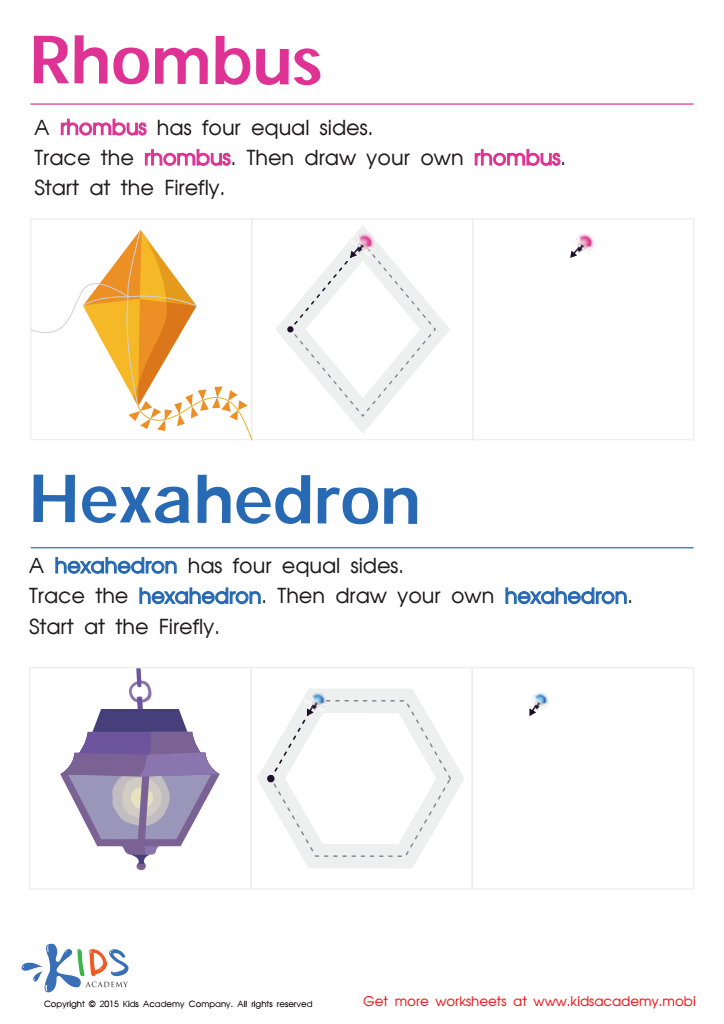
Draw a Rhombus And a Hexahedron Printable
 Assign to My Students











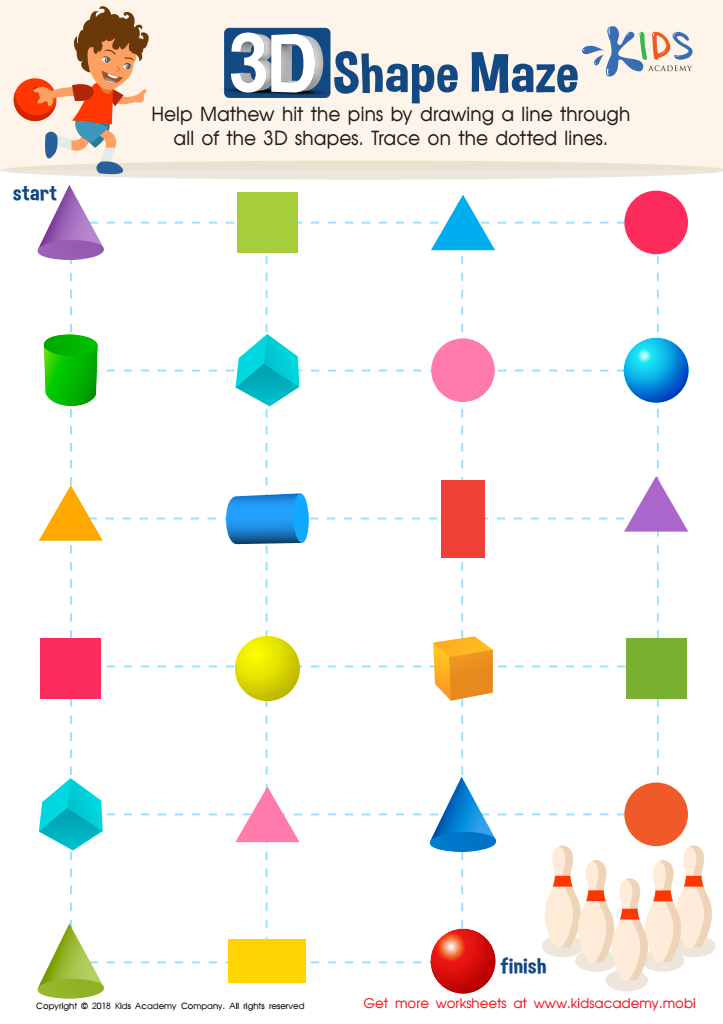
Shapes Maze Geometry Worksheet
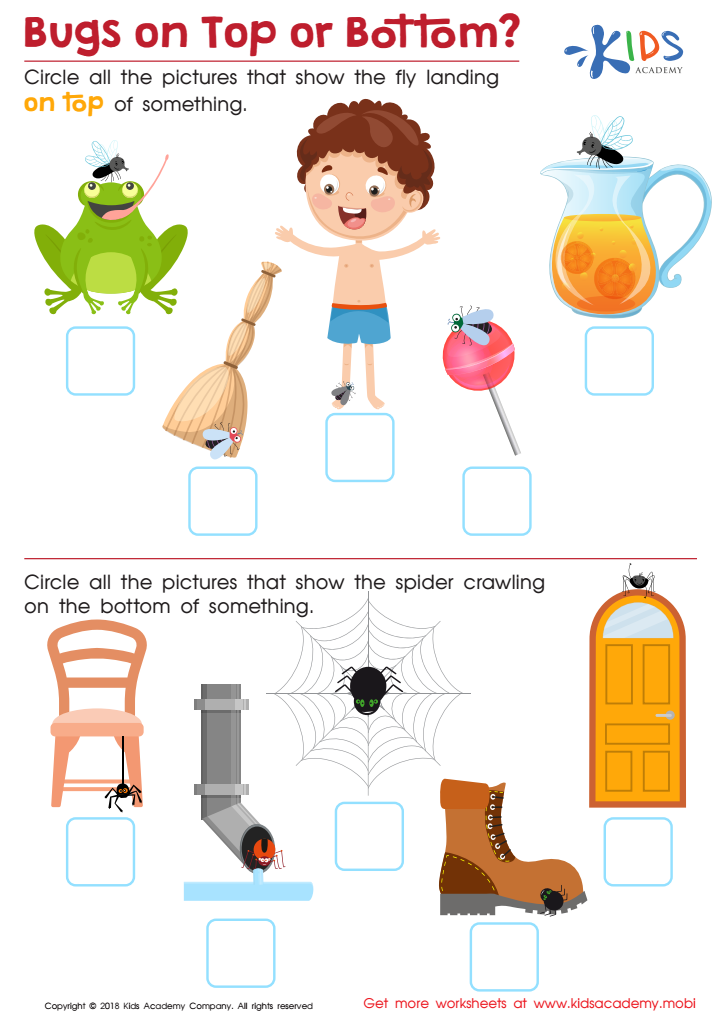
Bugs on Top or Bottom? Worksheet
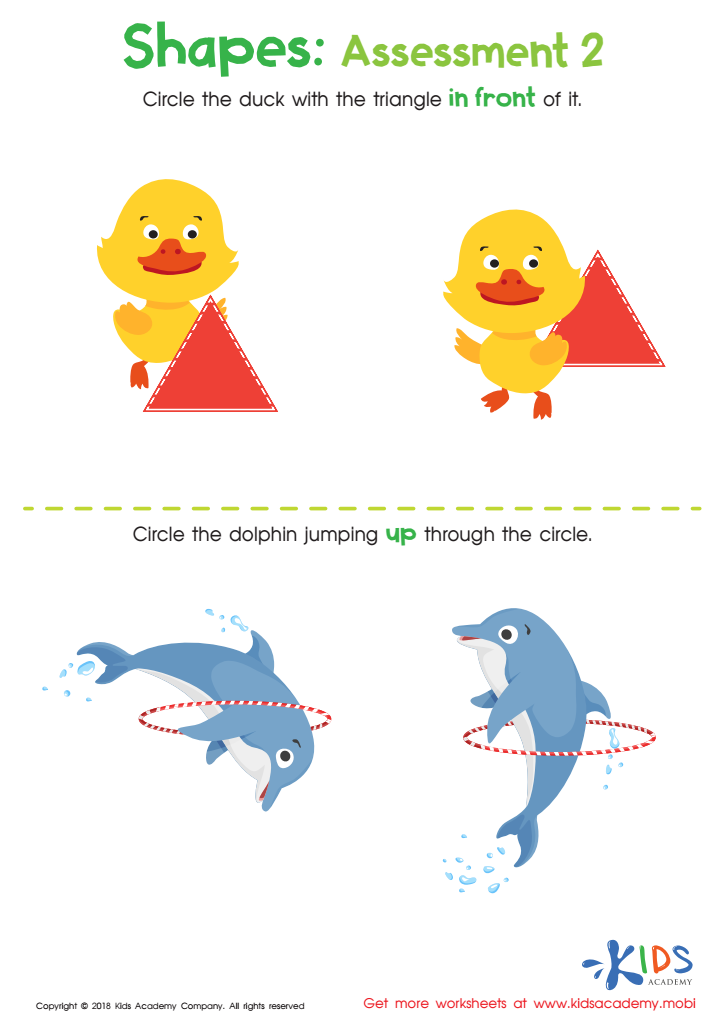
Geometry – Assessment 2 Worksheet








Spatial reasoning and geometry are fundamental components of early childhood education that form the basis for mathematical understanding and critical thinking. For ages 3-6, engaging with spatial reasoning and geometry helps children make sense of the world around them. This foundational skill allows young learners to recognize shapes, understand relationships between objects, and improve their problem-solving abilities.
Parents and teachers should prioritize spatial reasoning because it contributes significantly to cognitive development. Early exposure to concepts such as shape, size, distance, and direction enhances a child’s ability to navigate space and comprehend their physical environment. This type of thinking is not only crucial for mathematics but also translates into other areas like science, art, and everyday life activities, such as following directions or organizing space.
Engaging in spatial activities, such as building blocks, puzzles, and drawing, helps children develop fine motor skills and eye-hand coordination. It also encourages creativity and perseverance, as children learn to visualize and manipulate objects in their minds. This skill set is foundational for academic success in later years, as spatial reasoning has been linked to higher achievement in STEM (Science, Technology, Engineering, Mathematics) subjects.
Therefore, by integrating spatial reasoning and geometry into early learning experiences, parents and teachers lay a crucial foundation that supports overall intellectual growth and prepares children for future academic and life challenges.








