Basic Counting Numbers Worksheets for Ages 3-6
3 filtered results
-
From - To
Discover our engaging Basic Counting Numbers Worksheets designed for children ages 3-6! These interactive resources promote early math skills by helping young learners understand and practice counting. With colorful illustrations and fun activities, children will enjoy mastering the foundations of number recognition and one-to-one correspondence. Our worksheets are perfect for homeschooling or classroom use, allowing kids to reinforce their counting abilities at their own pace. Designed by educators, these worksheets ensure that learning is not only effective but also enjoyable. Start your child’s mathematical journey today with our captivating printable worksheets that make counting fun!
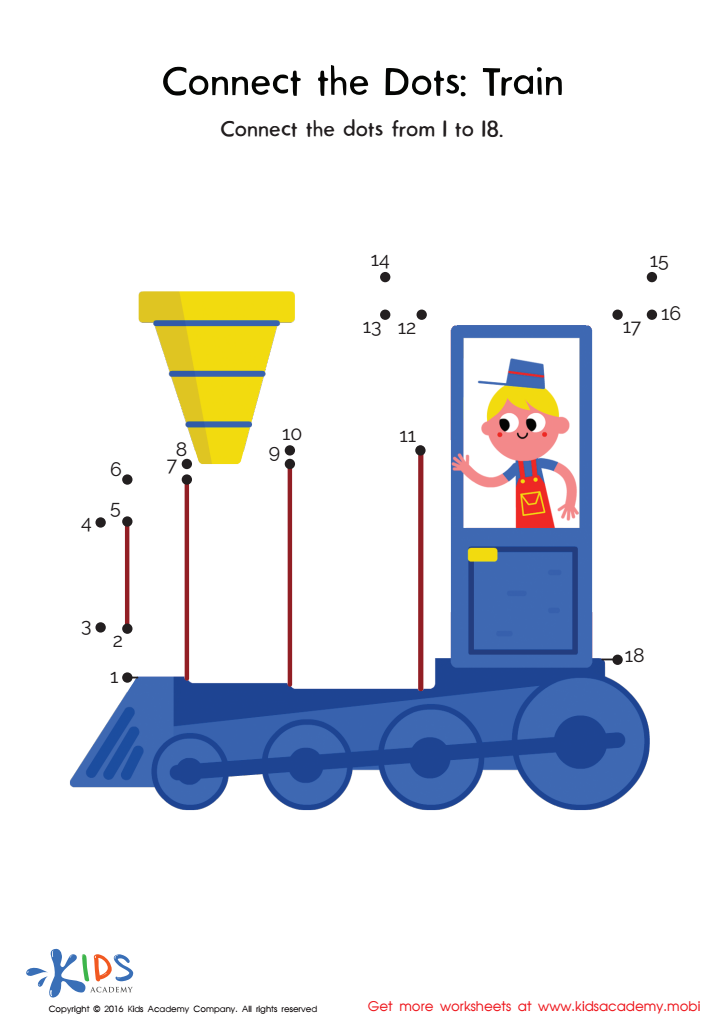
 Assign to My Students
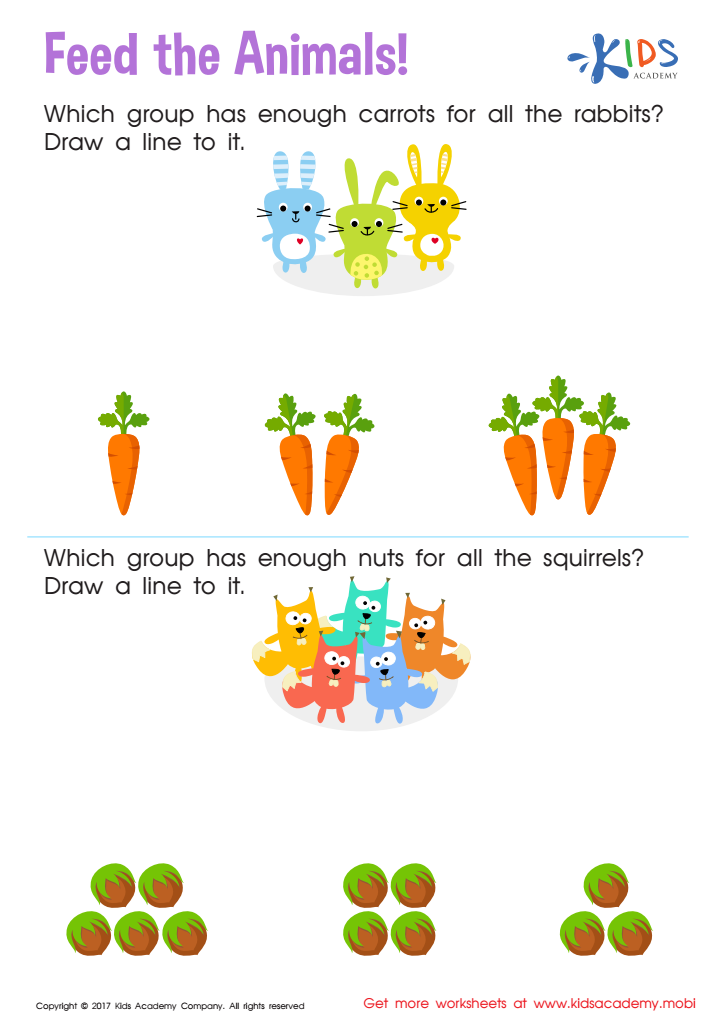
Count and Match: Feed the Animals Worksheet
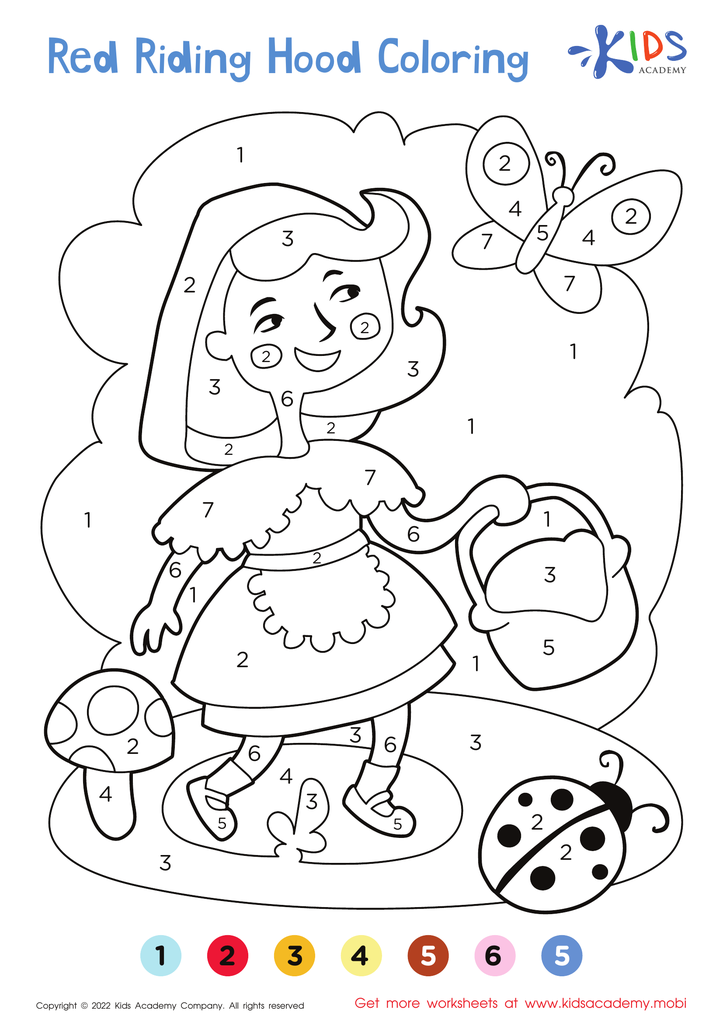
Little Red Riding Hood – Coloring by Numbers







Basic counting numbers, often referred to as cardinal numbers, are fundamental building blocks in early childhood education. For children ages 3-6, mastering these concepts paves the way for future math skills and critical thinking. When parents or teachers emphasize counting, they help children develop essential cognitive skills, such as problem-solving and logical thinking.
Counting aids in the understanding of quantity and relationships; for instance, recognizing that "three" is more than "two." Furthermore, engaging with basic counting allows children to refine their language skills as they learn to articulate numbers and associate them with objects.
Early counting experiences promote numeracy, encouraging children to explore patterns and sequences, which are vital for understanding more complex mathematical concepts later. Moreover, these activities can be seamlessly integrated into play, making learning enjoyable and engaging.
By caring about and fostering an environment rich in counting and numerical recognition, parents and teachers not only contribute to a child’s immediate academic readiness but also lay a strong foundation for a lifelong appreciation and understanding of math. Investing time in basic counting can yield significant long-term benefits in a child's education and confidence in their abilities.








