Mental math practice Numbers Worksheets for Ages 3-6
4 filtered results
-
From - To
Our "Mental Math Practice Numbers Worksheets for Ages 3-6" offer a fun and engaging way to introduce young learners to the basics of math. Designed to enhance counting skills, number recognition, and simple arithmetic, these worksheets provide an enjoyable approach to mental math that keeps children motivated. Each activity is tailored to the developmental stage of early learners, making concepts easy to grasp while boosting confidence. Perfect for both classroom settings and home practice, these printables help build a strong math foundation, preparing kids for future academic success. Unlock your child's potential today with our expertly crafted resources!
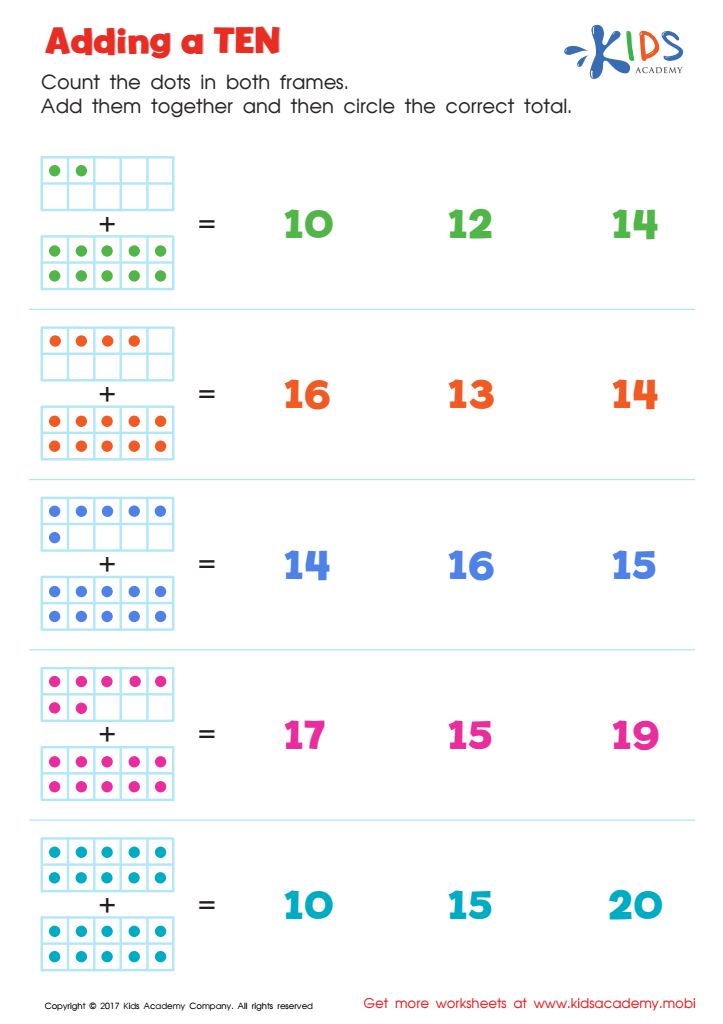
Adding a Ten Worksheet
 Assign to My Students
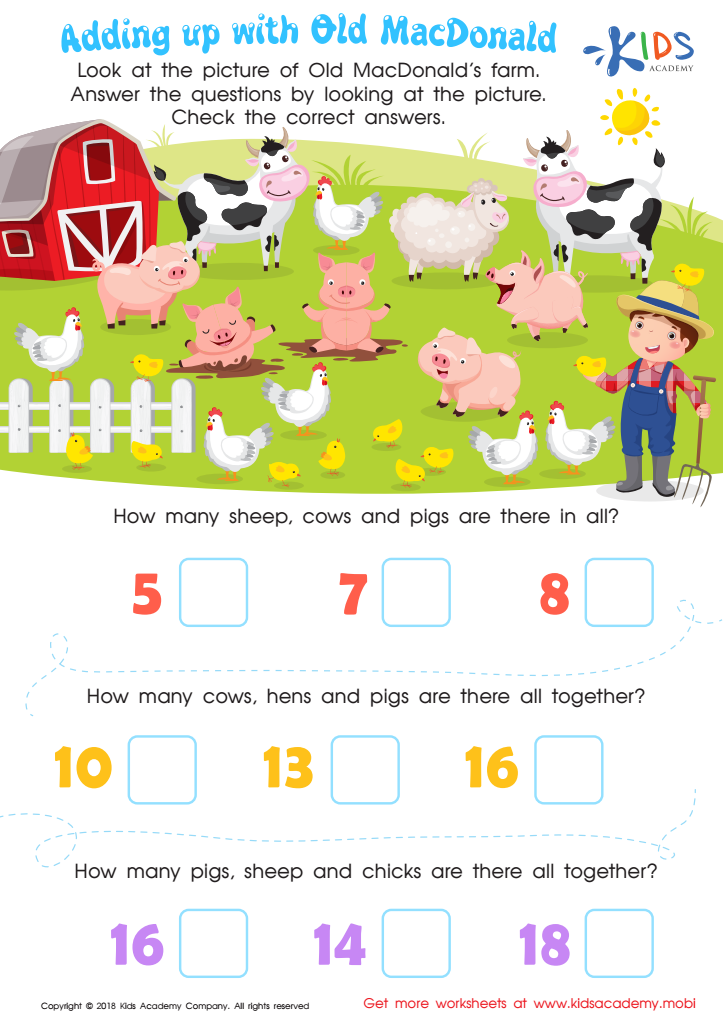
Adding Up with Old MacDonald Worksheet
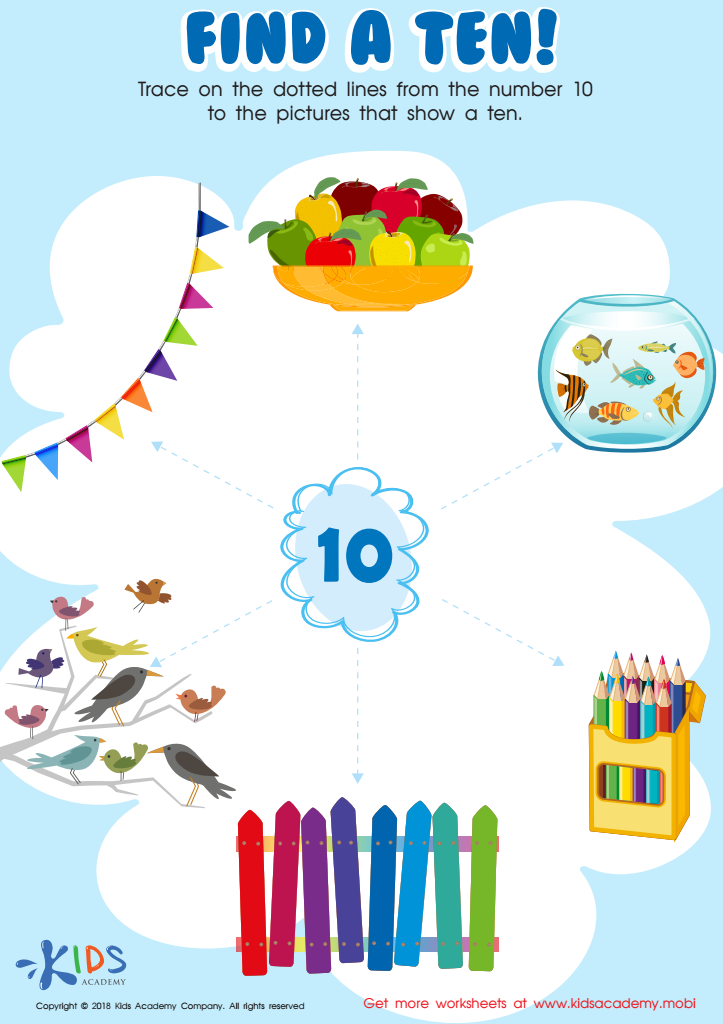
Kindergarten Math Worksheet: Find a Ten
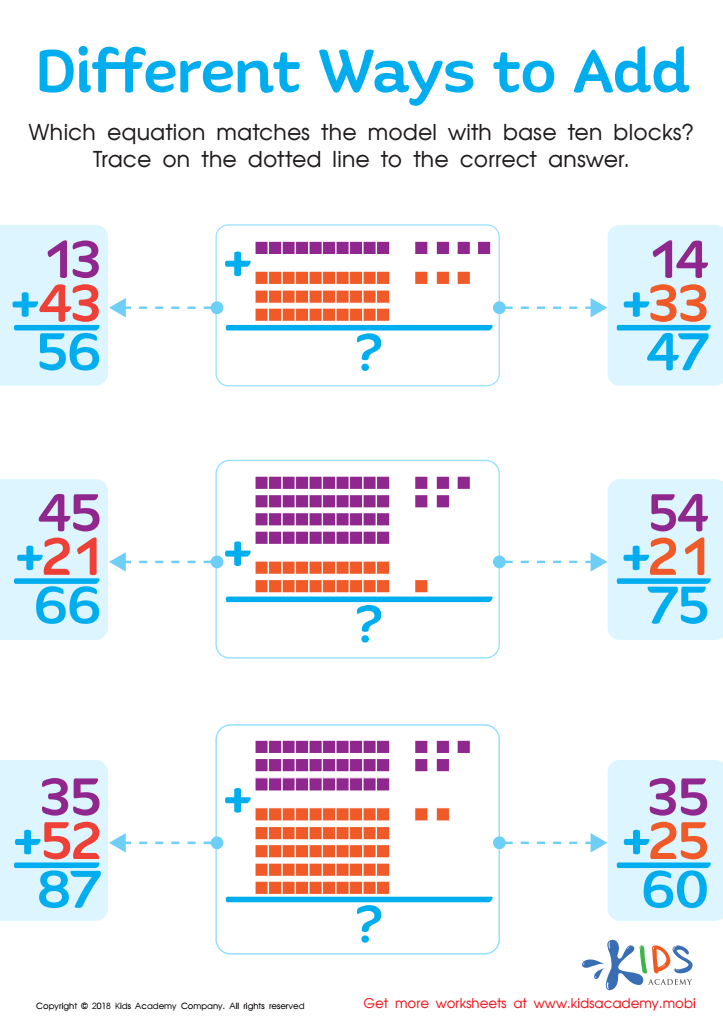
Different Ways to Add Worksheet








Parents and teachers should emphasize mental math practice for children ages 3-6 because it lays a critical foundation for their future learning and cognitive development. At this formative stage, children's brains are exceptionally receptive to new information and skills. When young learners engage in mental math activities, it enhances their number sense, which is the intuitive understanding of numbers and their relationships. This foundational skill is crucial for more advanced mathematical concepts that they will encounter in later grades.
By practicing mental math, children develop problem-solving abilities and logical thinking. These activities encourage them to rely on their cognitive resources rather than external tools, fostering a sense of independence and confidence. Additionally, mental math exercises can improve working memory, attention span, and processing speed. These cognitive benefits extend beyond mathematics, positively impacting reading comprehension, verbal reasoning, and general intelligence.
Moreover, mental math can be introduced in a playful and engaging manner, making learning feel like an enjoyable game rather than a chore. This positive early experience with math can cultivate a lifelong interest and positive attitude towards the subject. Therefore, parents and teachers should consider incorporating mental math into daily routines to support holistic cognitive and educational growth in young children.








