Number writing Numbers Worksheets for Ages 3-6
3 filtered results
-
From - To
Discover our engaging Number Writing Worksheets designed specifically for children ages 3-6. These brightly colored, interactive worksheets provide a fun learning experience that helps young learners master number formation and counting skills. With a variety of activities, including tracing, filling in numbers, and visual aids, children will enhance their fine motor skills while gaining confidence in their numerical abilities. Ideal for both classroom and home use, our resources support early math development in a playful way. Explore our collection today and watch your child’s number writing proficiency soar! Perfect for parents and educators seeking effective and enjoyable learning tools.
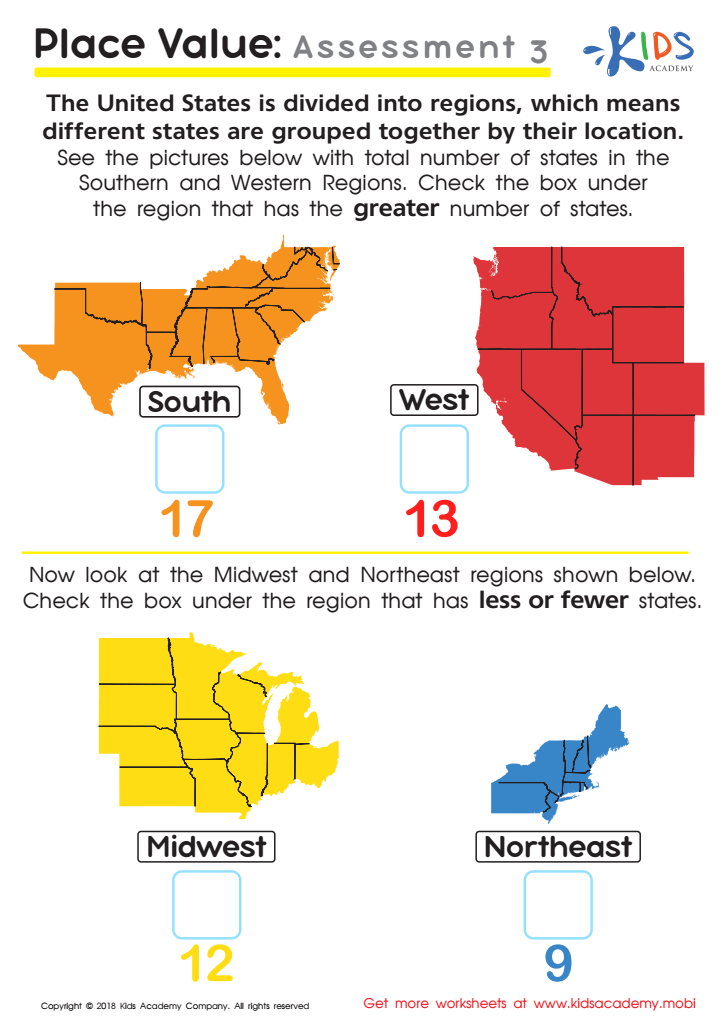
Place Value: Assessment 3 Worksheet
 Assign to My Students
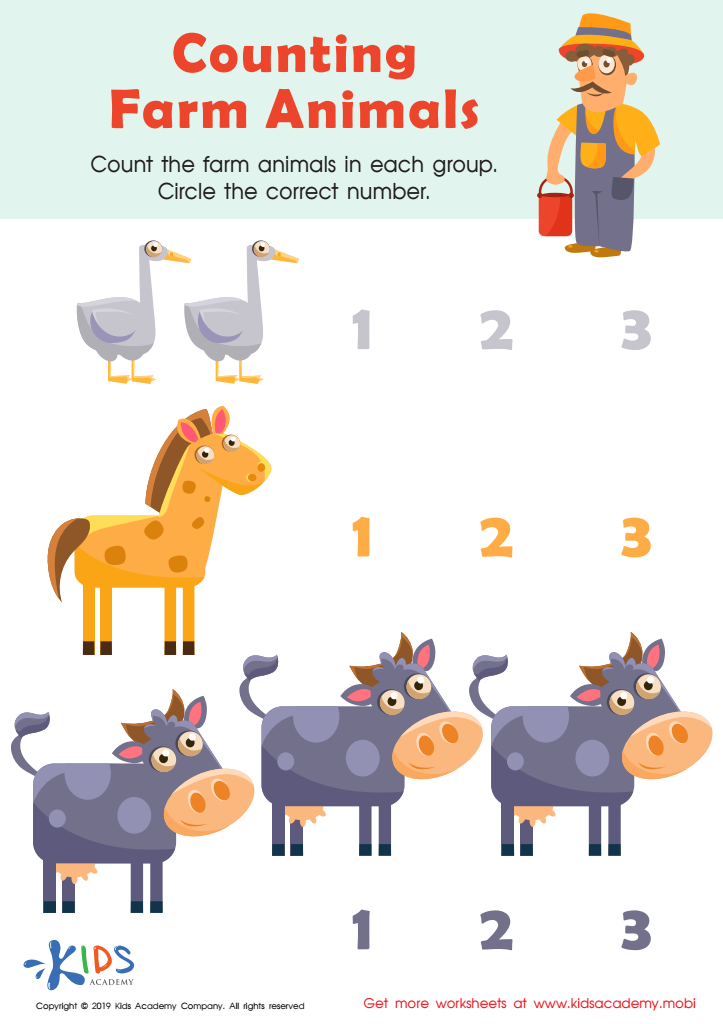
Counting Farm Animals Worksheet
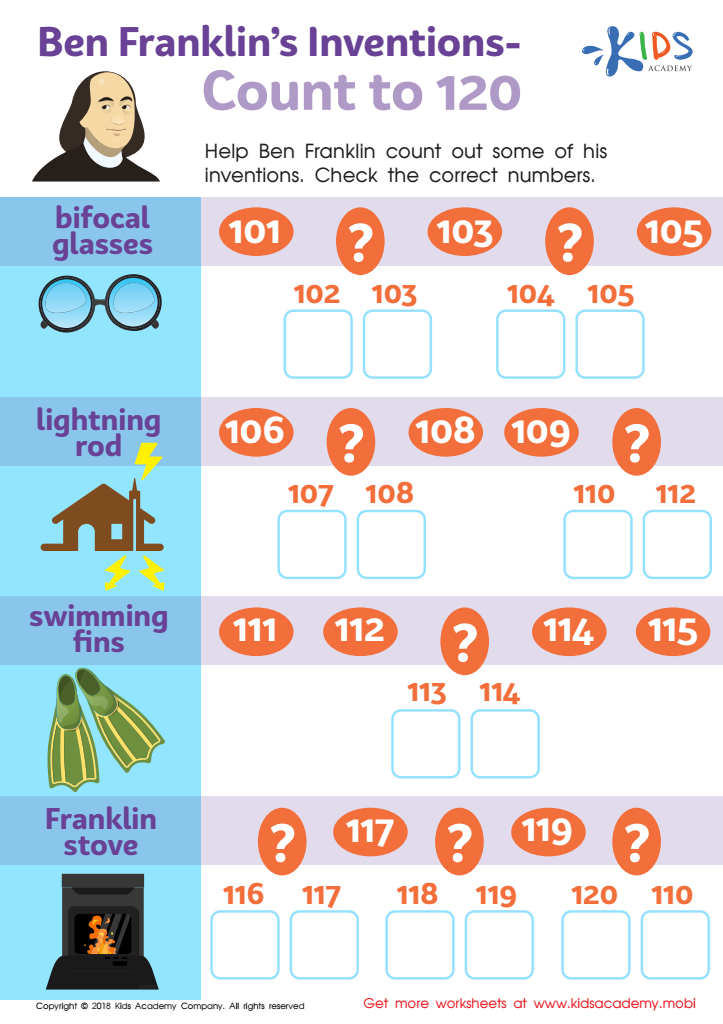
Ben Franklin’s Inventions – Count to 120 Worksheet








Number writing is a foundational skill that plays a crucial role in the early development of mathematical literacy for children aged 3-6. Parents and teachers should care about this skill because it fosters a child's understanding of numeracy concepts, reinforcing their ability to recognize and differentiate between numbers.
Writing numbers helps cultivate fine motor skills, coordination, and control, which are essential for overall writing proficiency. Engaging children in number writing activities enhances cognitive development, allowing them to connect symbols with quantities and develop critical thinking.
Additionally, learning to write numbers builds confidence. As children master this skill, they feel a sense of accomplishment and motivation to explore more complex mathematical ideas. It also encourages a positive attitude towards math, laying the groundwork for future academic success.
Moreover, incorporating fun and interactive number writing exercises in both home and school environments fosters collaborative learning and valuable bonding experiences. By emphasizing the importance of number writing early on, parents and teachers create a supportive learning atmosphere, setting the stage for a lifetime of curiosity, problem-solving, and resilience in mathematics. Thus, the importance of number writing should not be underestimated in the holistic development of young learners.








