Recognizing Patterns Numbers Worksheets for Ages 3-6
3 filtered results
-
From - To
Unlock your child's mathematical potential with our expertly designed "Recognizing Patterns Numbers Worksheets for Ages 3-6." These captivating worksheets enhance early mathematical skills through engaging activities that help children identify, extend, and create patterns. Ideal for preschoolers and kindergarteners, this resource fosters critical thinking and problem-solving abilities, laying a solid foundation for future math success. Delight in watching your child discover the beauty and logic of numbers while they develop their cognitive skills and confidence. Perfect for homeschool or classroom settings, our worksheets turn learning into an adventure, making math both fun and fundamental.
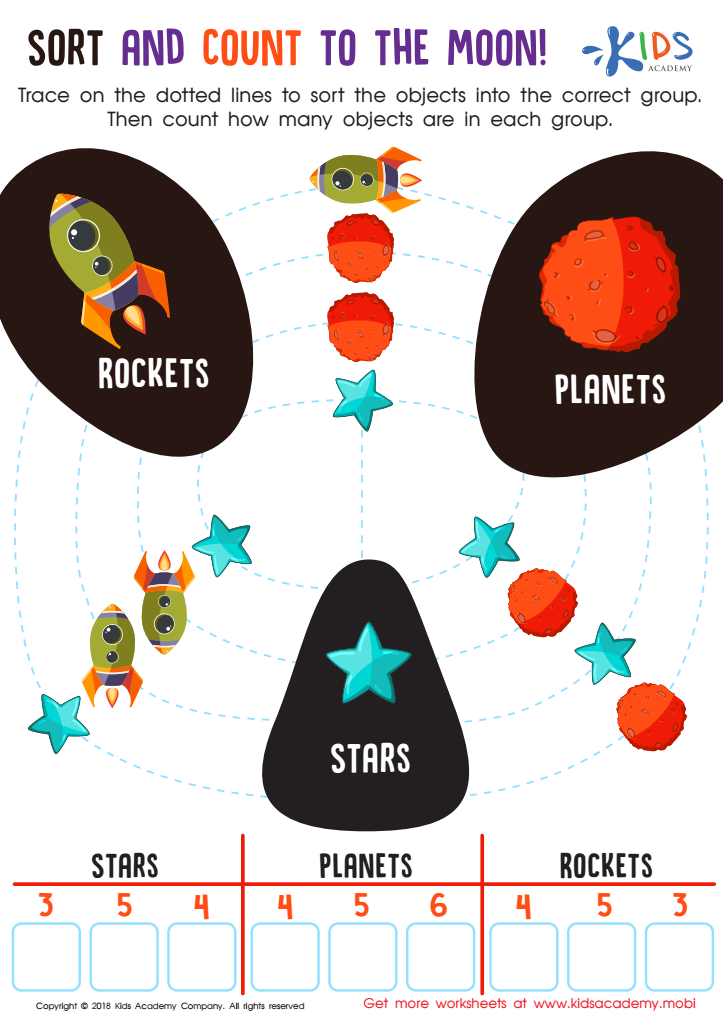
Sort and Count to the Moon Worksheet
 Assign to My Students
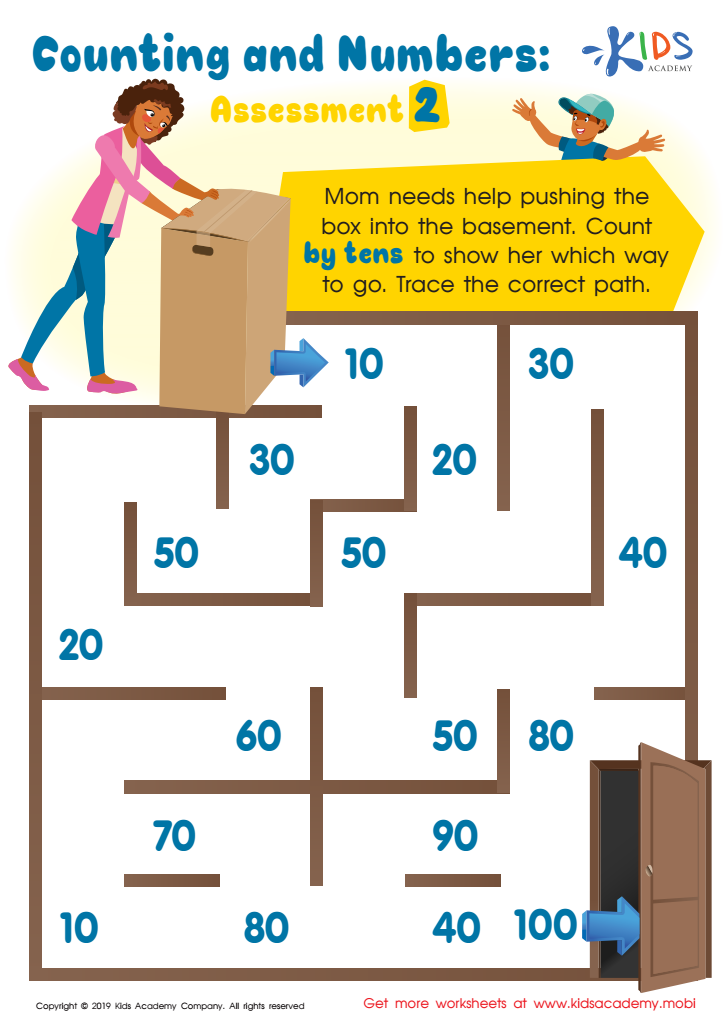
Counting and Numbers: Assessment 2 Worksheet
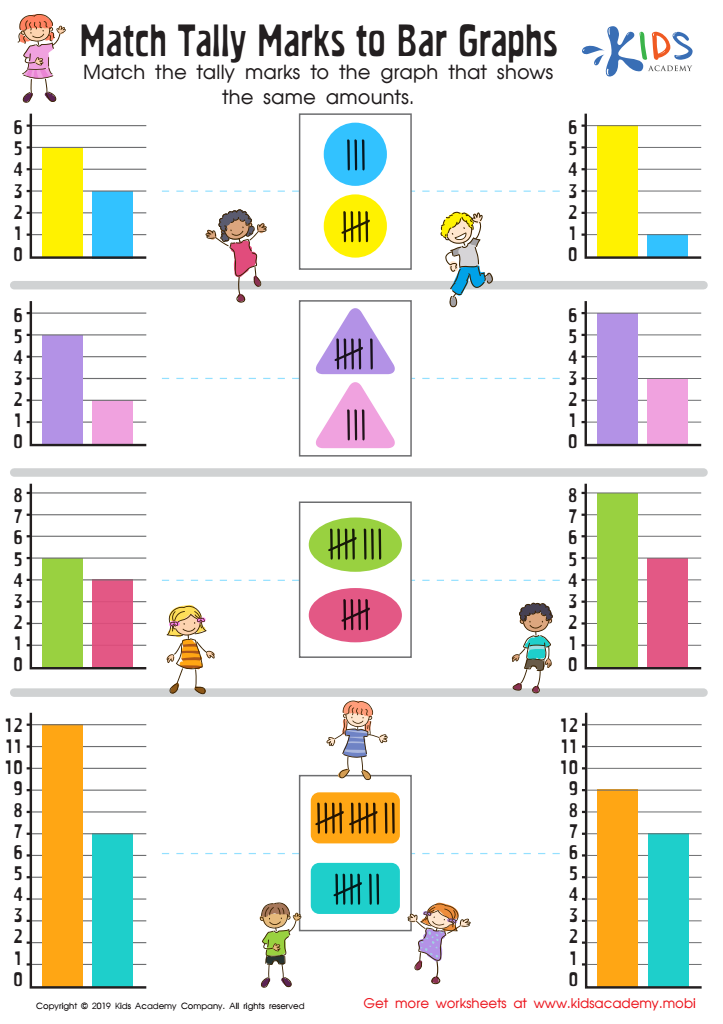
Match Tally Marks to Bar Graphs Worksheet







Recognizing patterns in numbers is a crucial foundational skill for young children aged 3-6, playing a significant role in their early cognitive development and future academic success. Patterns help children understand and predict regularities in their environment, fostering critical thinking and problem-solving abilities.
When children recognize numeric patterns, such as counting by twos or understanding sequences, they cultivate an intuitive grasp of mathematical concepts. This early exposure to patterns lays the groundwork for more complex mathematical operations like addition, subtraction, multiplication, and division. For example, recognizing that 2, 4, 6, 8 follows a pattern helps children understand the fundamentals of even numbers.
Furthermore, pattern recognition enhances children's ability to organize information, make predictions, and develop logical reasoning skills. These abilities aren't limited to math; they are transferrable skills essential for reading, science, and social studies. Pattern recognition also supports memory skills as children learn to anticipate what comes next in a sequence.
Parents and teachers should emphasize pattern recognition activities to nurture an enthusiasm for learning. Incorporating playful and engaging tasks, such as sorting objects, playing with blocks, or interactive counting games, makes learning patterns enjoyable. Cultivating these foundational skills during the formative years of 3-6 will establish a strong mathematical foundation and a lifelong love of learning in children.








