Animal identification Math Worksheets for Ages 3-6 - Page 2
32 filtered results
-
From - To
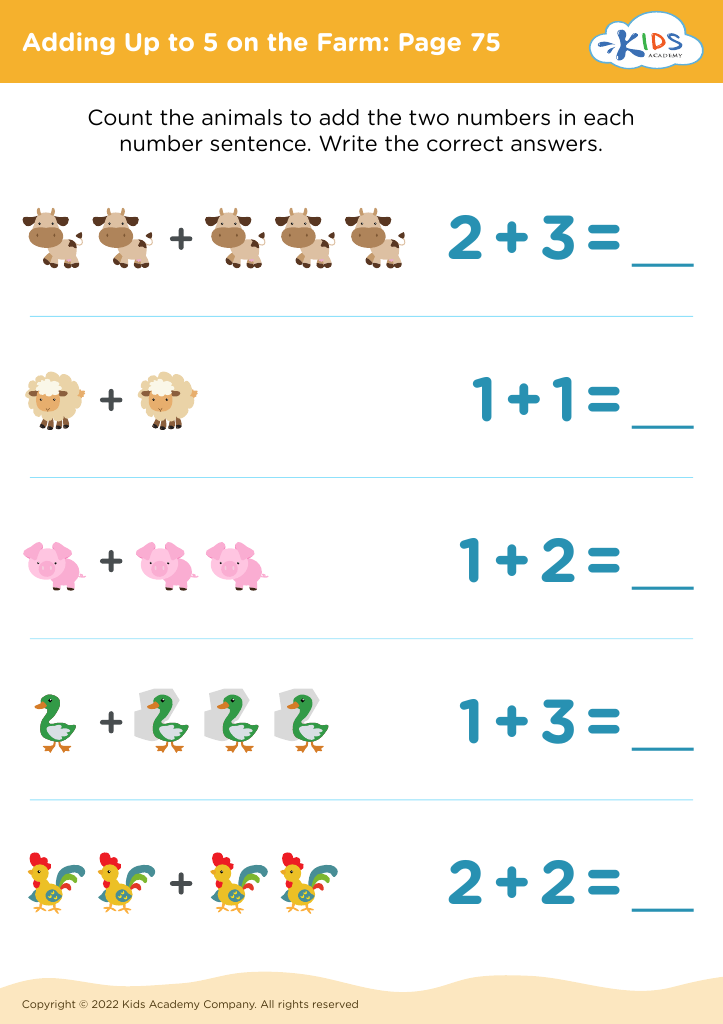
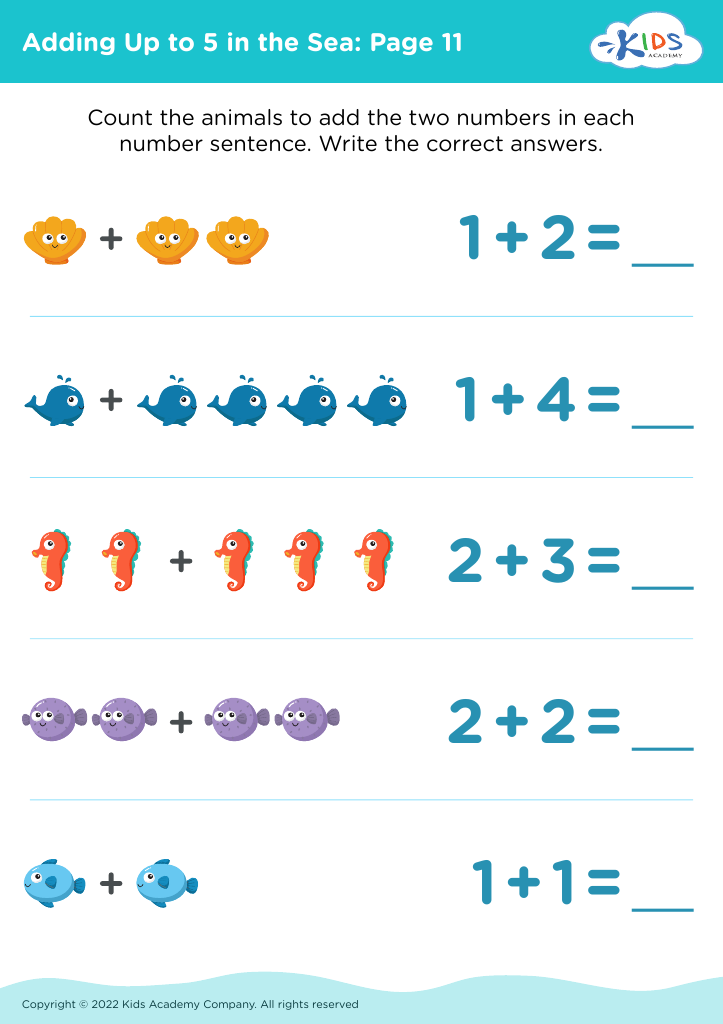
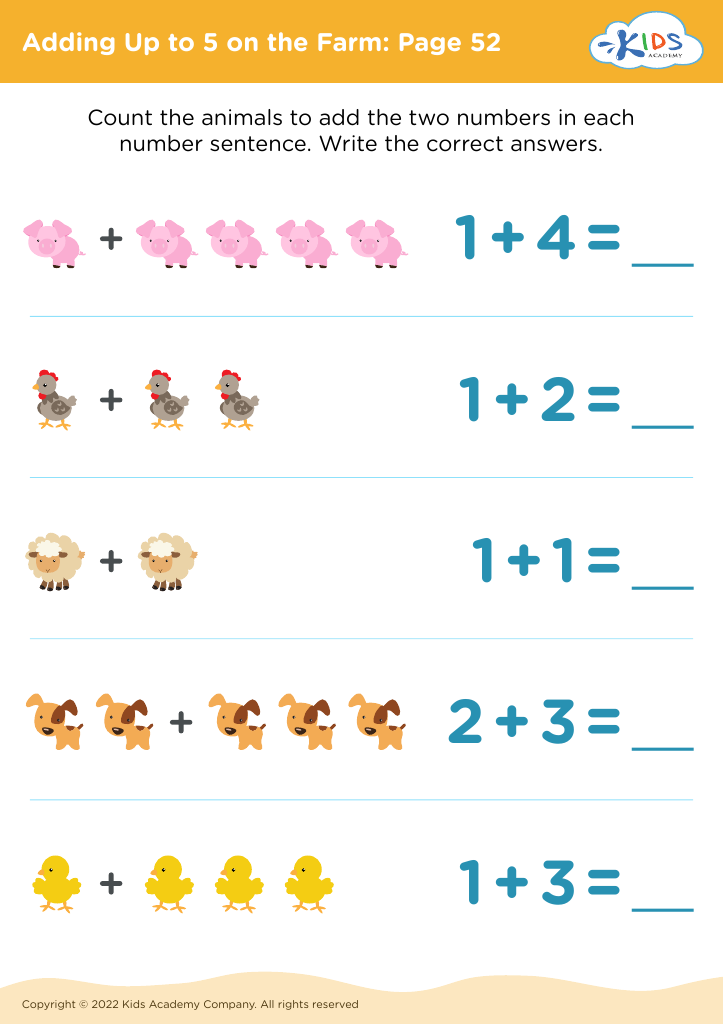
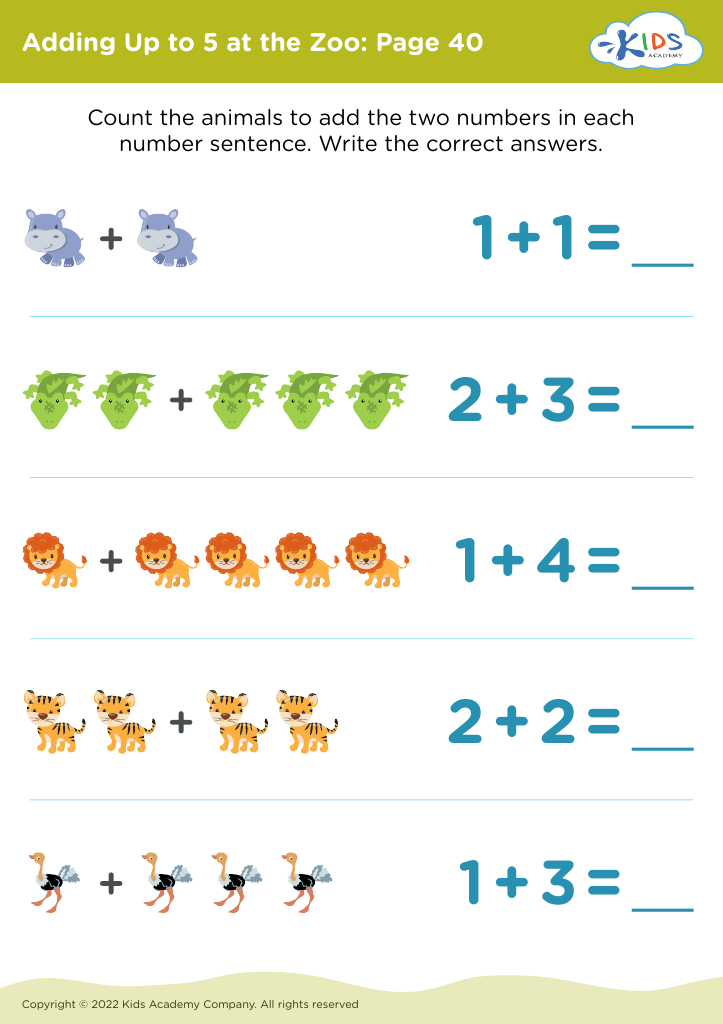
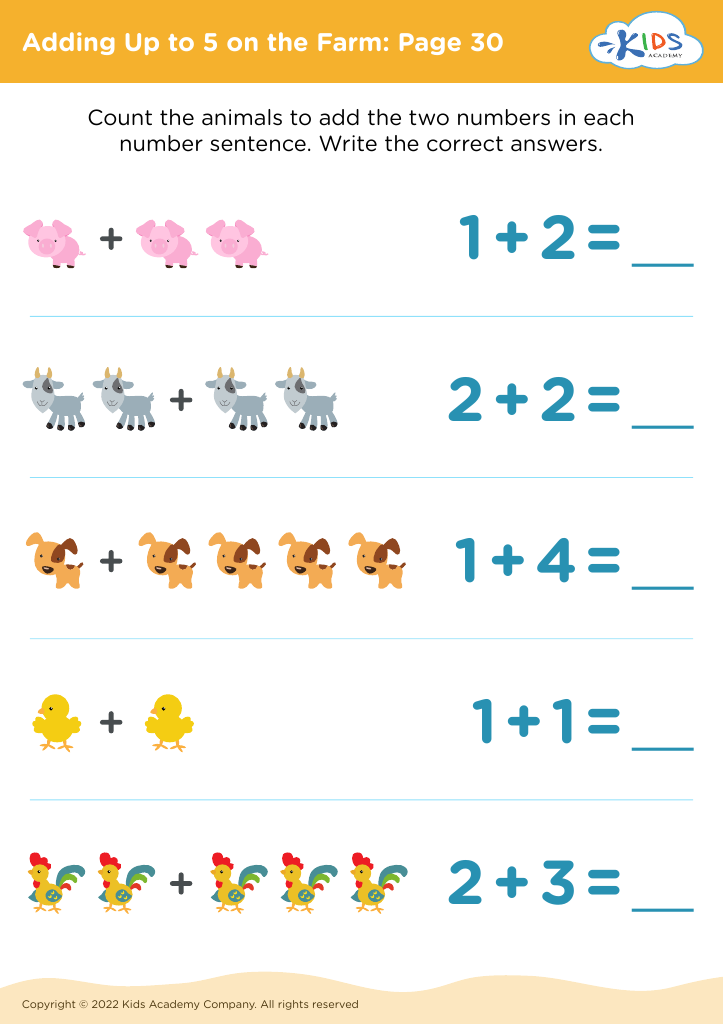
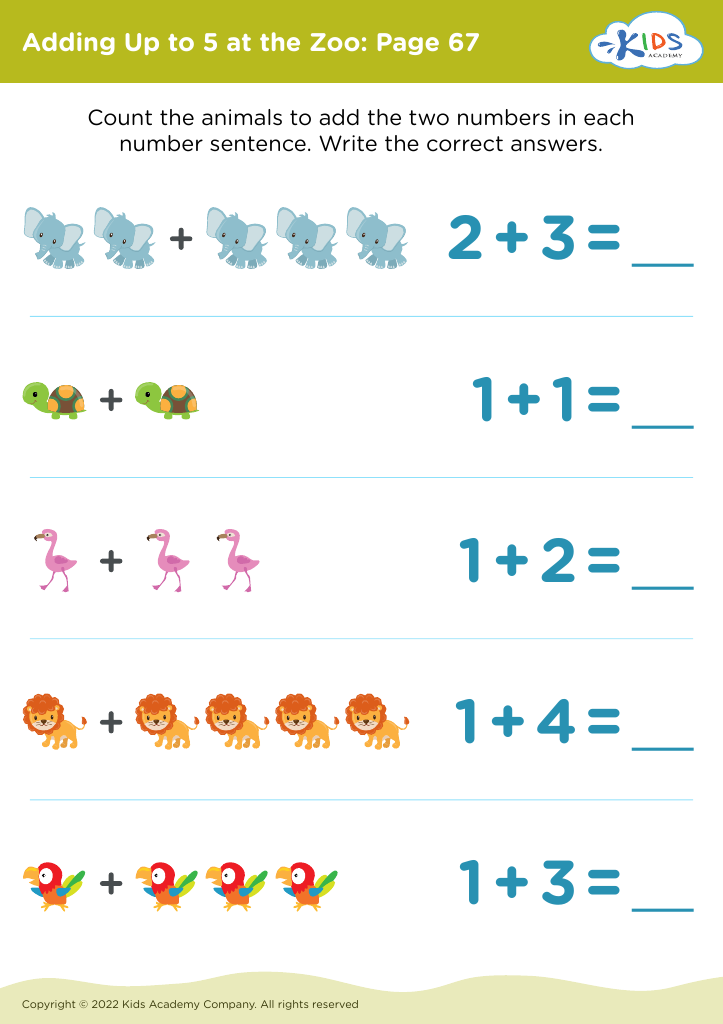
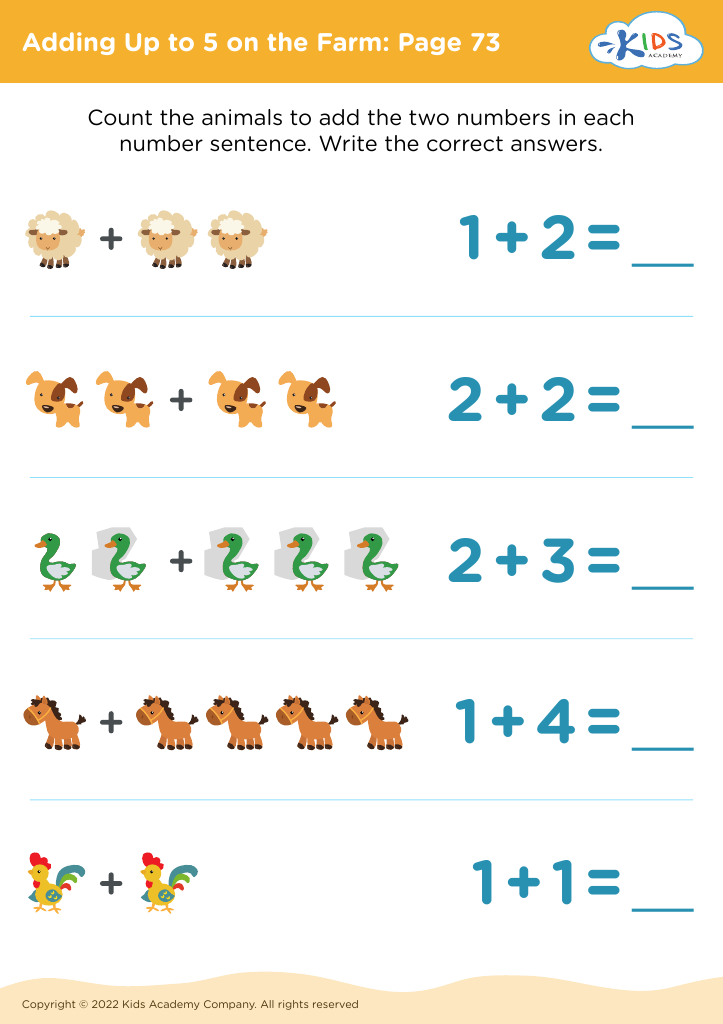
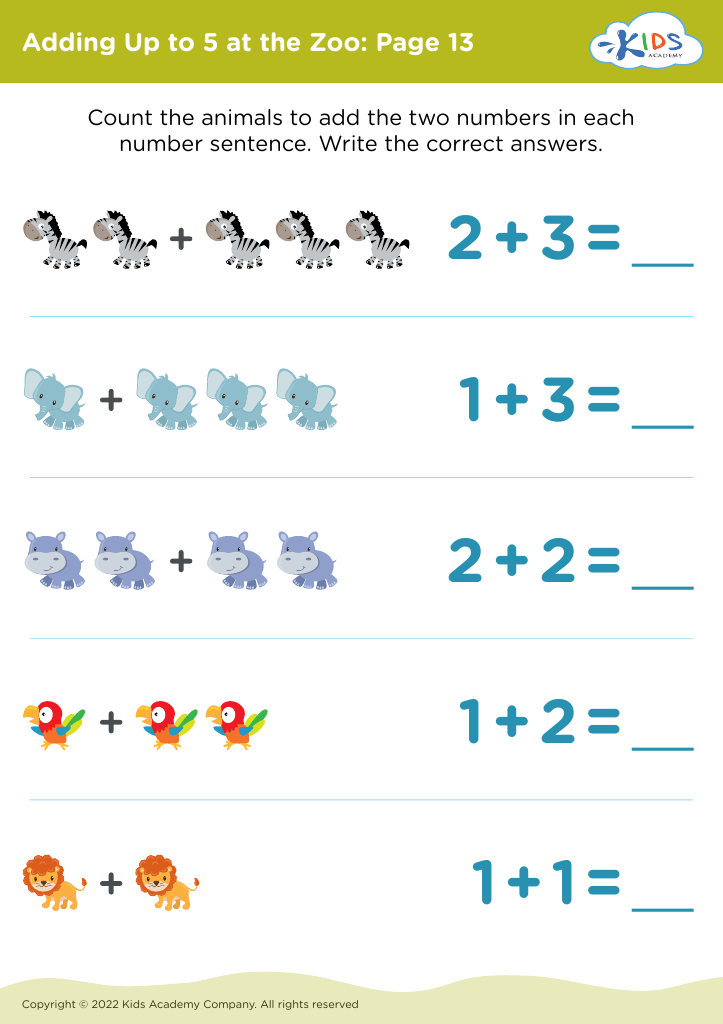








Animal identification math for ages 3-6 is a vital educational tool because it seamlessly integrates cognitive development with engaging content. First, young children are naturally curious about animals, making the subject matter intriguing and relatable. By coupling this interest with math concepts, educators can maintain students' attention and enhance their learning experience.
Recognizing and categorizing animals not only introduce scientific concepts but also build early math skills. For example, activities that involve counting animals, identifying differences between species, or sorting them by various characteristics (such as size or habitat) cultivate foundational number sense, categorization, and logical reasoning skills. These activities lay the groundwork for more complex problem-solving and critical thinking tasks in the future.
Additionally, animal identification aids in teaching patterns, sequencing, and spatial awareness. Understanding patterns—like stripes on a tiger or spots on a leopard—helps children grasp predictive and repetitive sequences, essential skills for math and daily life. Sorting activities can also enhance fine motor skills and coordination, vital for writing and other tasks.
Parents and teachers who integrate animal identification math in their curriculum promote a multidisciplinary approach to learning that can inspire a lifelong interest in both mathematics and natural sciences, thereby nurturing well-rounded, curious individuals.








