
Attention to Detail Math Worksheets for Ages 3-6
8 filtered results
Difficulty Level
Grade
Age
-
From - To
Subject
Activity
Standards
Unlock your child's potential with our Attention to Detail Math Worksheets designed for ages 3-6. These engaging worksheets focus on enhancing observational skills, fine motor precision, and early math concepts through fun activities. Children will enjoy sorting, comparing, and completing vibrant exercises that make learning a delightful experience. By emphasizing attention to detail, these resources help young learners build confidence and develop a strong foundation in math. Perfect for parents and teachers, our printable worksheets are easy to use and can be tailored to fit individual learning needs. Foster a love for learning today and watch your child thrive!
Favorites
With answer key
Interactive
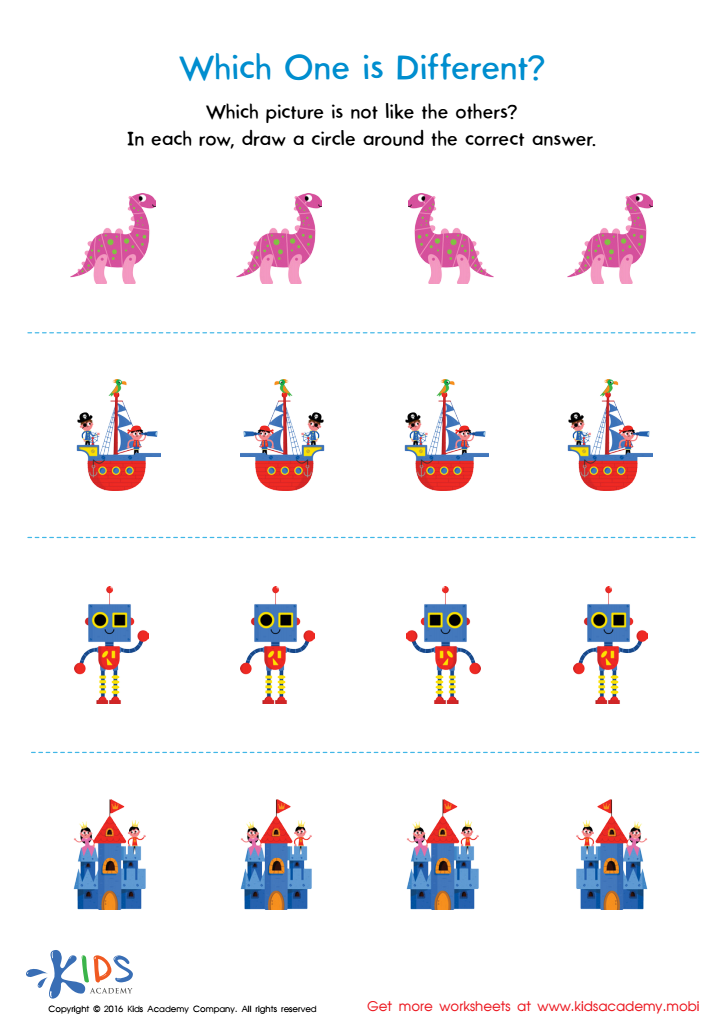
Which One Is Different Worksheet
Preschoolers can hone logical reasoning and critical analysis skills with this "Which one is Different?" worksheet. Kids must look closely and pick out unique attributes of objects and images. It's a skill that can serve them throughout their lifetime.
 Assign to My Students
Which One Is Different Worksheet
Worksheet
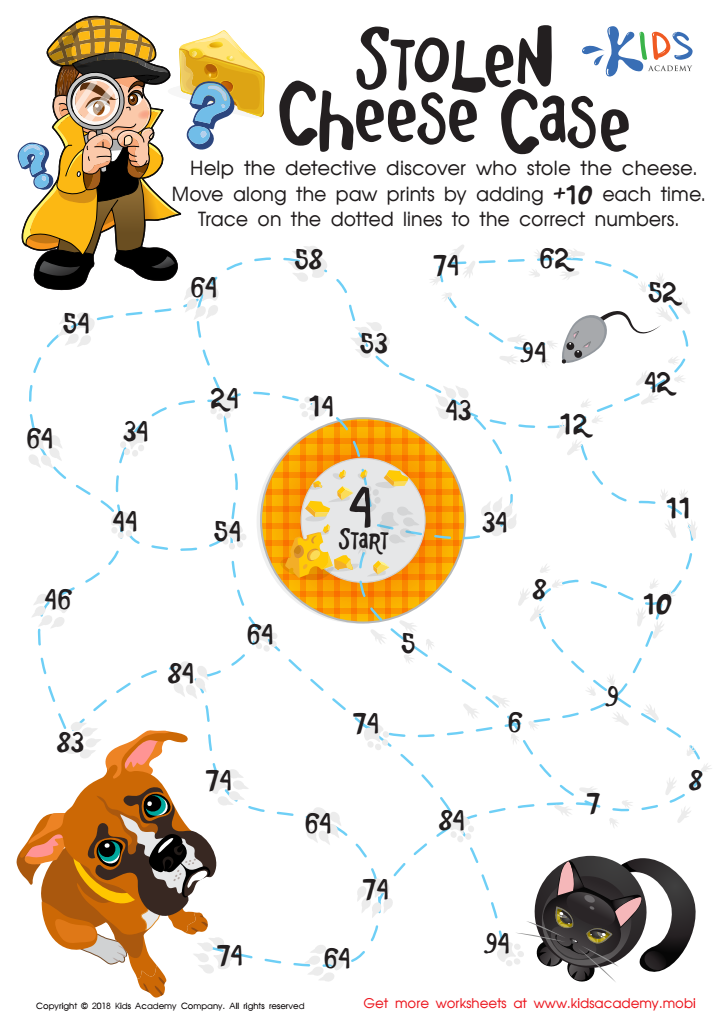
Stolen Cheese Case Maze Worksheet
Someone has stolen the cheese! Can your mathematician detective figure out who it is? Was it the dog, cat or mouse? Have them use traceable lines to skip count by 10 on this free PDF worksheet to solve the case. They'll be having fun and developing their skip-counting strategy at the same time!
Stolen Cheese Case Maze Worksheet
Worksheet
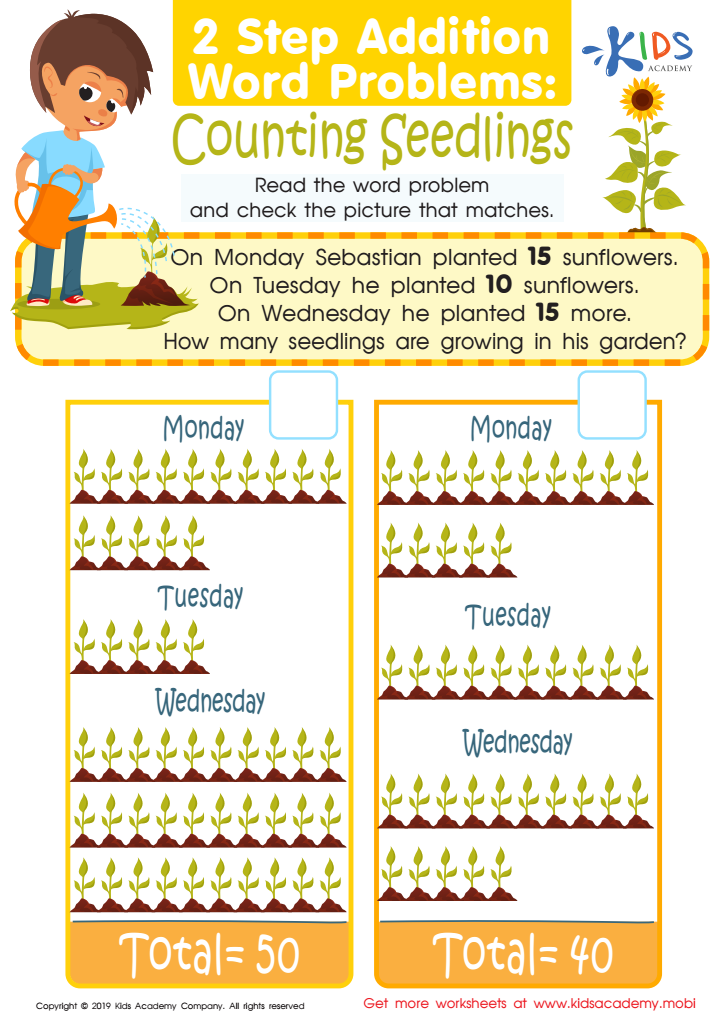
Counting Seedlings Worksheet
Understanding math word problems is key. Multiple steps can prove challenging - this free worksheet provides one-to-one picture representation to help kids solve multi-step addition word problems. Strengthen addition skills by choosing the matching picture to the answer.
Counting Seedlings Worksheet
Worksheet
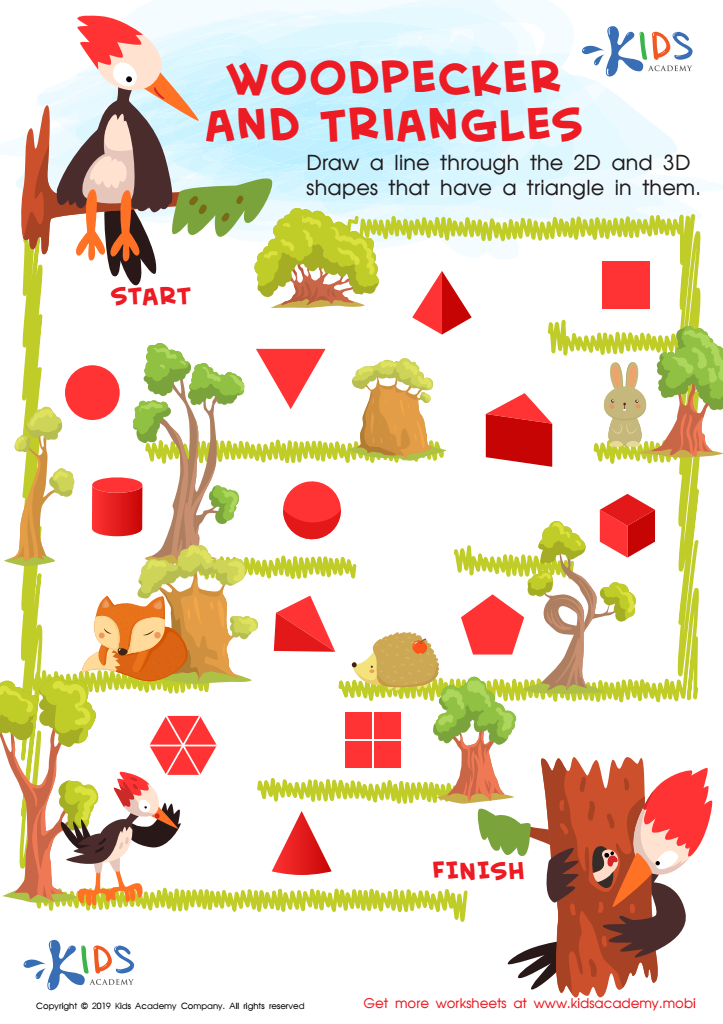
Woodpecker and Triangles Worksheet
Woodpeckers peck wood, and this printout helps kids learn about triangles. Ask your kindergartners to draw a triangle, then draw a line through the shapes that have a triangle in them to help the woodpecker get out of the maze.
Woodpecker and Triangles Worksheet
Worksheet
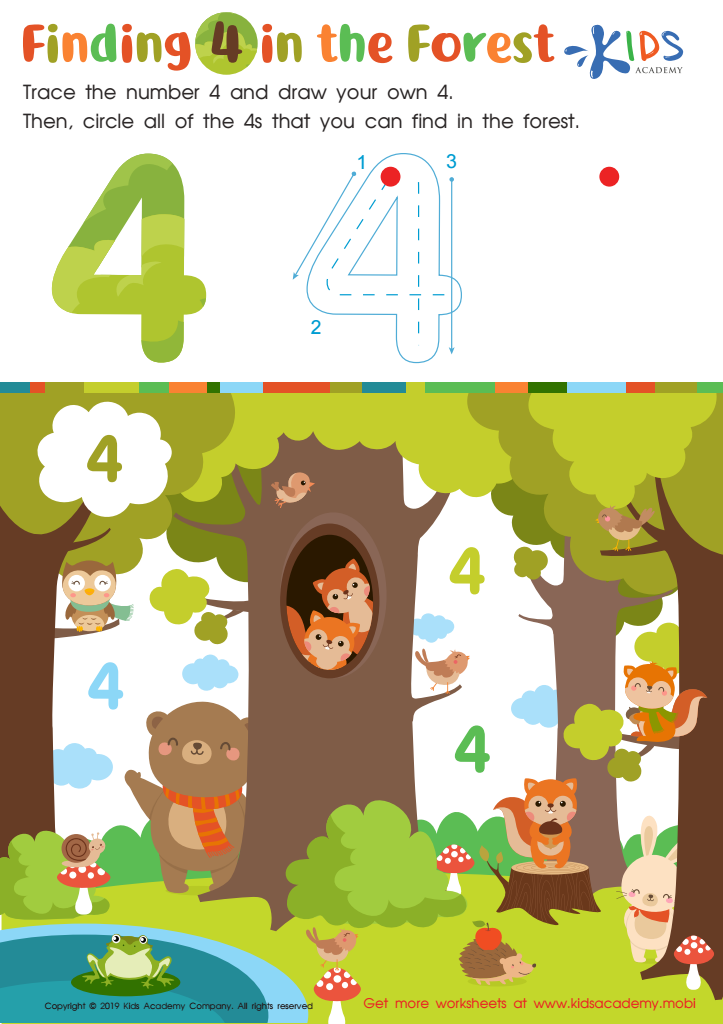
Finding 4 in the Forest Worksheet
Before starting, have your kids count as high as they can. Ask them to identify the setting and point out the 4s. Trace 4 and draw your own. Help your kids circle all the 4s they can find in the forest. How far can they count? How well did they find the hidden 4s?
Finding 4 in the Forest Worksheet
Worksheet
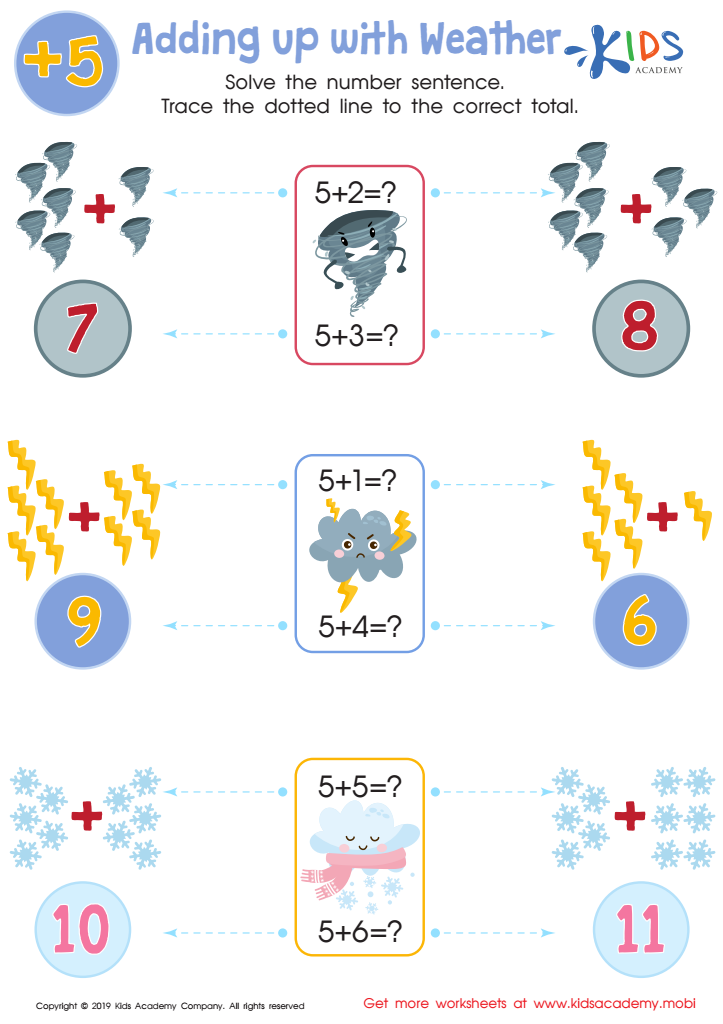
Adding up With Water Worksheet
Ask your kids to name different kinds of weather and what it's like outside now. Then, help them solve the number sentences on the worksheet by tracing the dotted line to the correct total.
Adding up With Water Worksheet
Worksheet
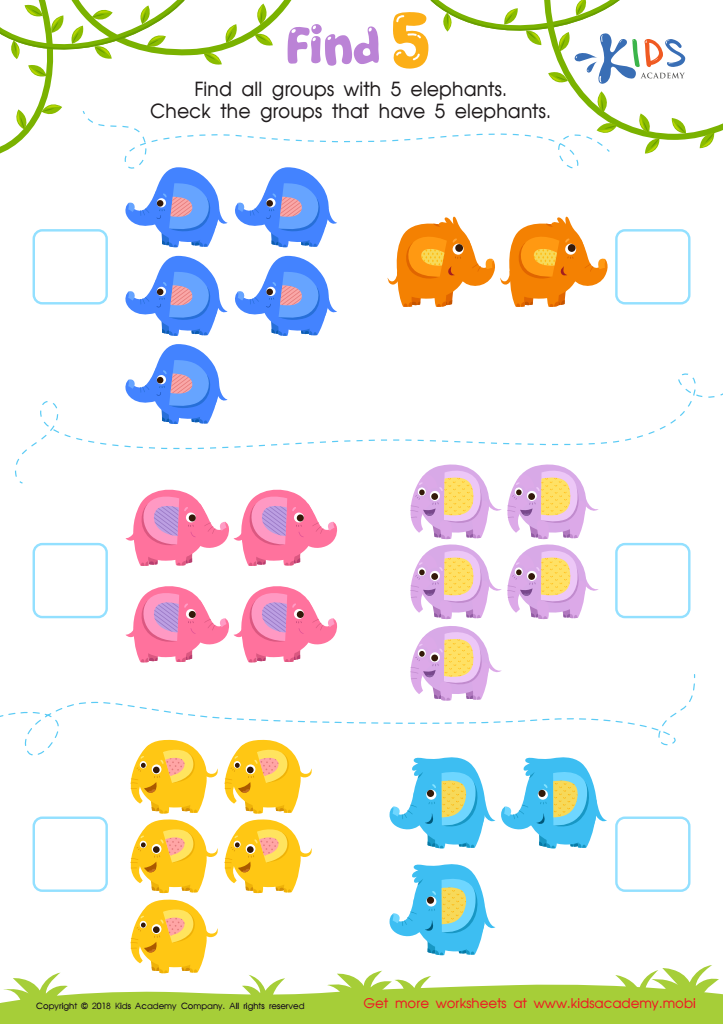
Find 5 Worksheet
Kids will love these cheery elephants that help them discover grouping and counting by fives. It's a great way to start learning addition and multiplication, while also developing fine motor skills. Download the free PDF and let the fun begin.
Find 5 Worksheet
Worksheet
Join Kids Academy for Free
Who is primarily going to use this learning content?







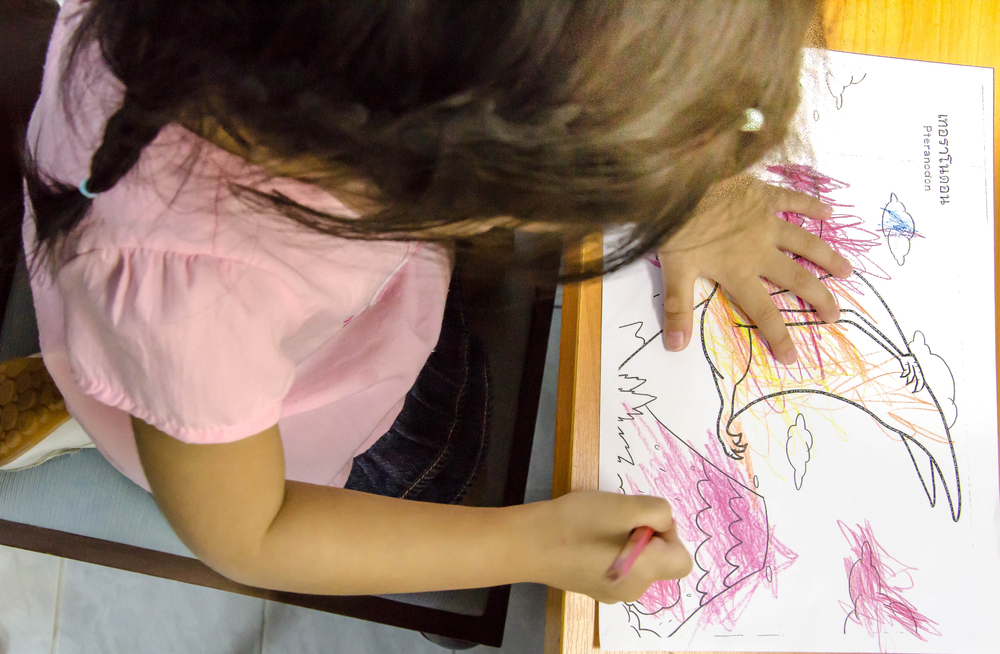
Attention to Detail Math for Ages 3-6 is crucial for developing foundational cognitive skills that enhance a child's overall learning experience. At this young age, children are naturally curious, and engaging them in mathematical activities helps foster a strong sense of numeracy and problem-solving abilities. Through attention to detail exercises, children learn to recognize patterns, understand shapes, and grasp basic math concepts like counting and quantities.
Parents and teachers should care about this because building these skills early lays the groundwork for future academic success. The ability to pay attention to detail encourages children to develop focus, patience, and persistence—traits that are beneficial not just in math, but in all aspects of learning. Engaging in structured math activities also enhances fine motor skills and promotes cognitive development as children learn to analyze and interpret information.
Moreover, fostering an early appreciation for math helps combat math anxiety later in life. By creating a positive learning environment around math, parents and teachers can empower children to feel confident in their abilities. Ultimately, investing in Attention to Detail Math during the ages of 3-6 supports not just academic success, but holistic development, nurturing well-rounded individuals ready to tackle future challenges.








