Basic Arithmetic Math Worksheets for Ages 3-6 - Page 3
51 filtered results
-
From - To
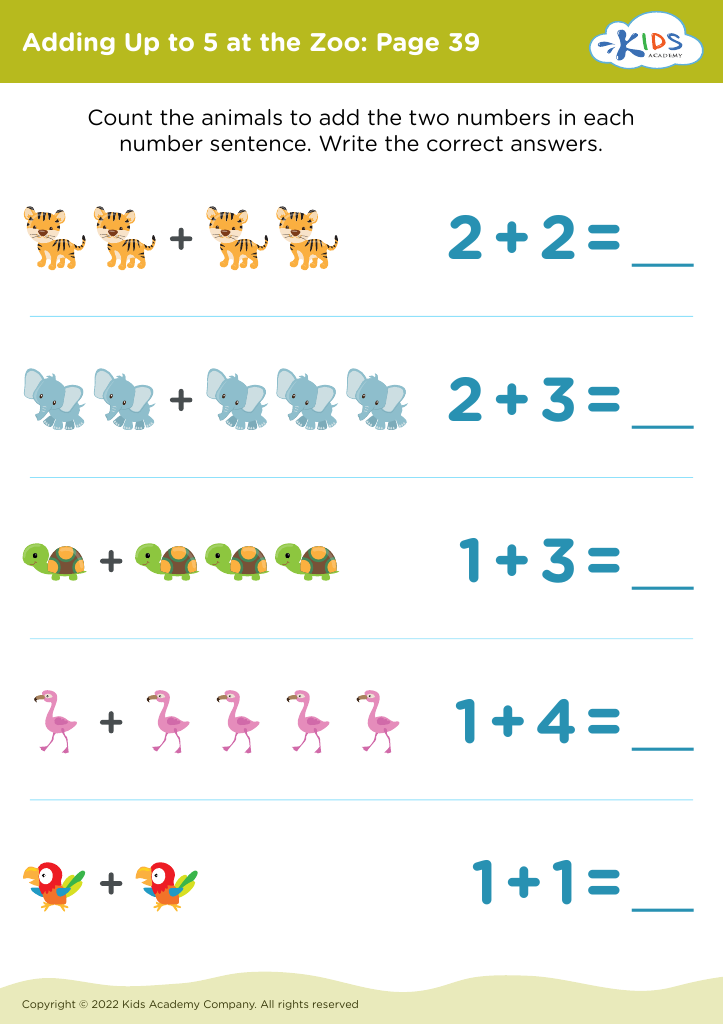
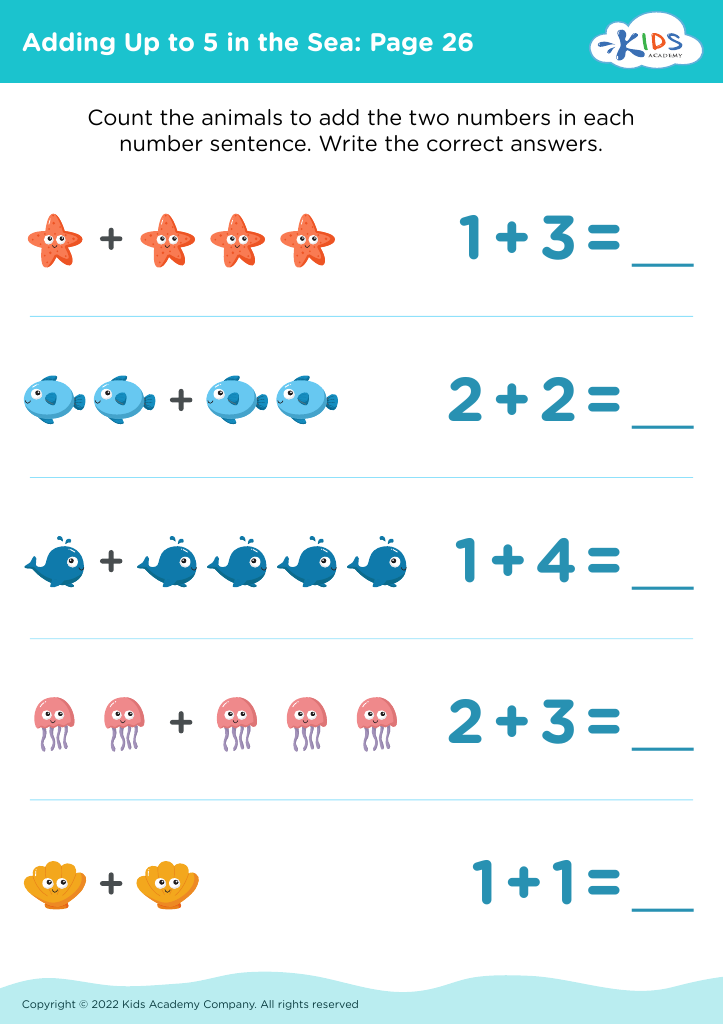
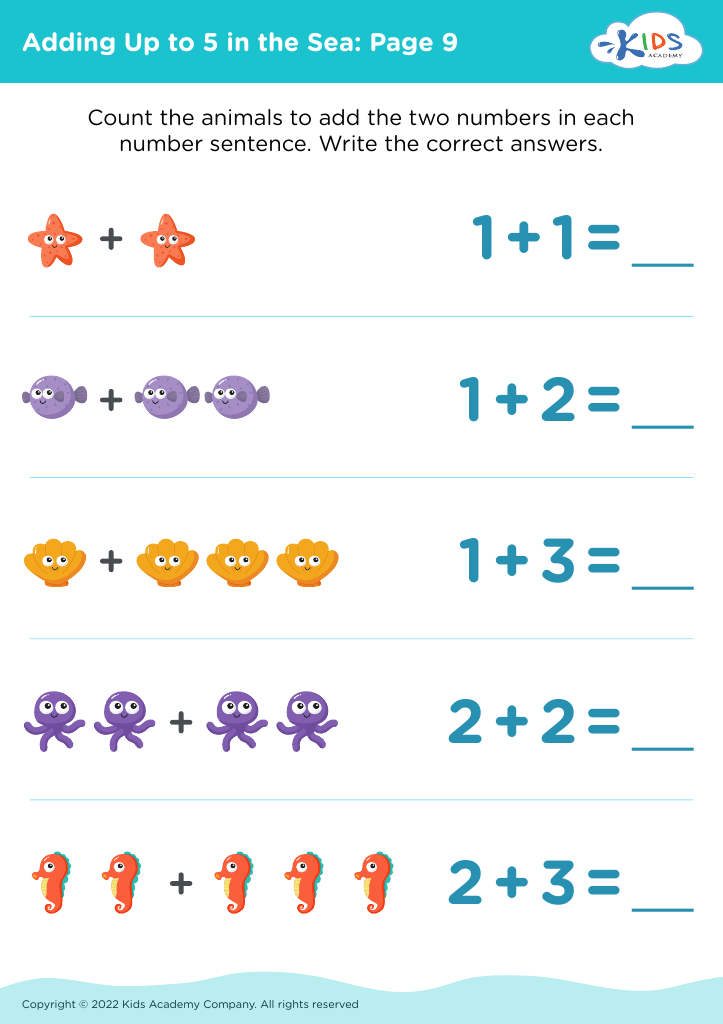








Teaching basic arithmetic to children ages 3-6 lays a crucial foundation for their future learning and overall development. At this stage, children are naturally curious, eager to explore numbers, patterns, and relationships. Understanding basic arithmetic fosters critical thinking and problem-solving skills, which are essential throughout their academic journeys and daily lives.
Incorporating math into early childhood education stimulates cognitive growth by enhancing language skills and encouraging logical reasoning. Children start to understand concepts like quantity, length, and time through engaging activities like counting objects, sorting shapes, and measuring ingredients in cooking. These experiences make math enjoyable and relatable!
Furthermore, early exposure to math can help mitigate future learning difficulties. When children grasp basic arithmetic concepts early on, they are often more confident and capable of tackling more complex mathematics later. This boosts their self-esteem and creates a positive attitude toward learning.
Lastly, involving parents in early math education reinforces these skills at home, creating a comprehensive support system. As a result, both parents and teachers should prioritize basic arithmetic, fostering a love for learning that lasts a lifetime and equipping children with essential skills for their futures.








