Basic geometry Math Worksheets for Ages 3-6
3 filtered results
-
From - To
Discover our engaging Basic Geometry Math Worksheets designed for children ages 3-6! Tailored specifically for young learners, these worksheets introduce foundational geometry concepts, including shapes, sizes, and spatial awareness. Each activity promotes critical thinking and problem-solving skills, making learning fun and interactive. Our colorful and imaginative designs capture children's attention, ensuring an enjoyable educational experience. Ideal for homeschooling or classroom settings, these worksheets help young minds build confidence in their mathematical abilities. Explore our collection today and give your child the tools to grasp basic geometry concepts while having fun! Learning geometry has never been so exciting for early learners!
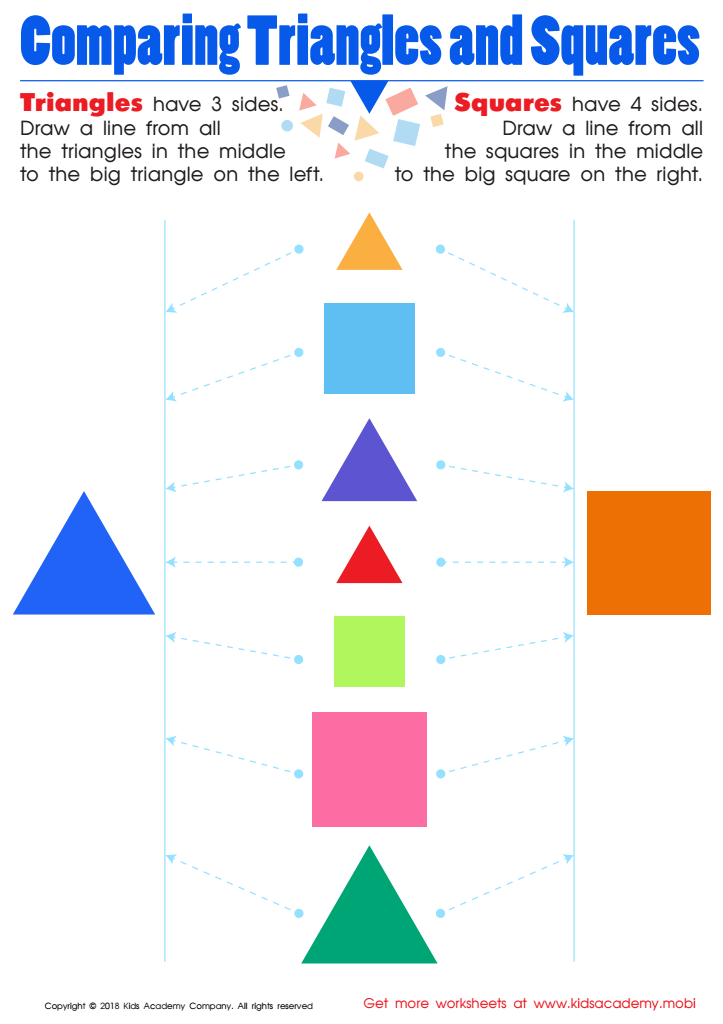
Comparing Triangles Squares Worksheet
 Assign to My Students
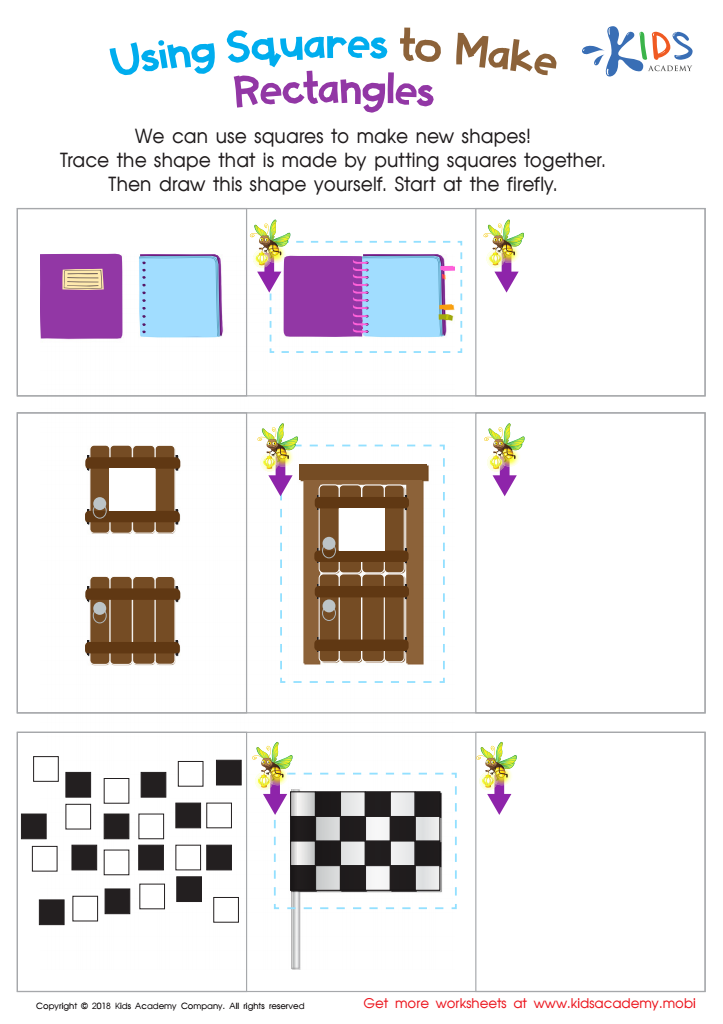
Using Squares to Make Rectangles Worksheet
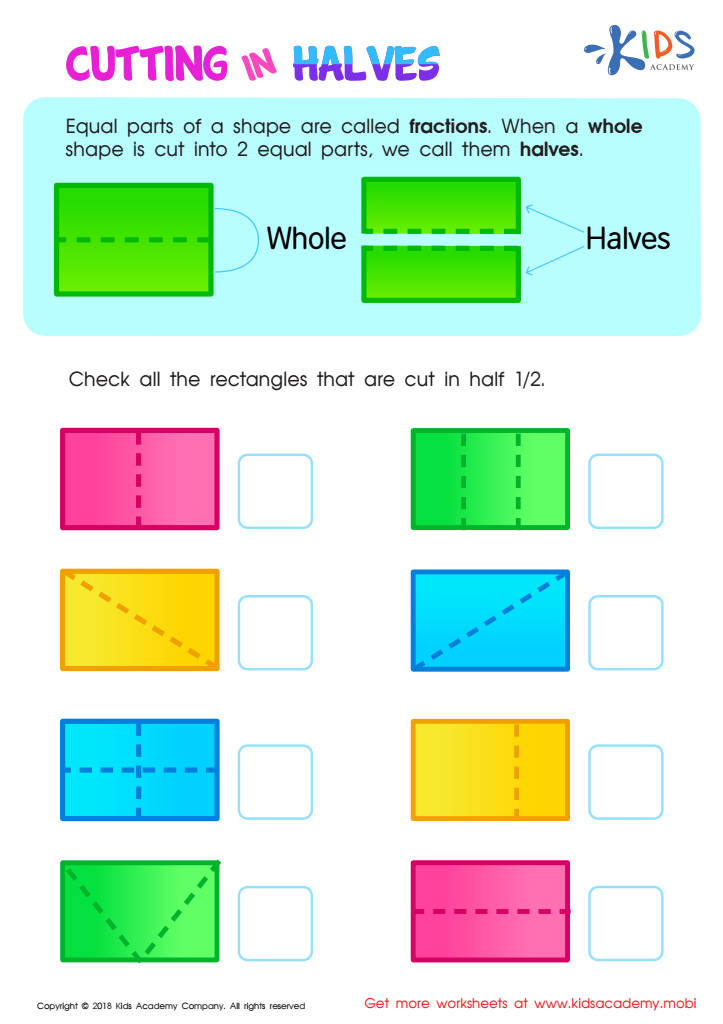
Cutting in Halves Worksheet








Basic geometry is a crucial component of early childhood education, particularly for children aged 3-6. During this formative stage, children are naturally curious about their surroundings and are developing essential cognitive skills. Introducing geometric concepts helps them understand shapes, sizes, and spatial relationships, which are fundamental in their overall development.
Engaging with basic geometry fosters critical thinking and problem-solving skills, as children learn to classify, compare, and manipulate shapes. These activities enhance their ability to recognize patterns and make connections, laying the groundwork for more complex mathematical concepts later on.
Moreover, geometry is a practical life skill; it aids in everyday tasks, from organizing objects to understanding directions. Daily encounters with shapes in the environment can also stimulate observational skills and creativity. By focusing on geometry, parents and teachers can promote a positive attitude toward math, reducing anxiety and building confidence as kids explore mathematical thinking in a fun and interactive way.
In summary, nurturing an early understanding of basic geometry enriches a child’s learning experience, supports cognitive development, and frames a solid foundation for future academic success in mathematics and other disciplines.








