Comparative skills Math Worksheets for Ages 3-6
3 filtered results
-
From - To
Explore our engaging Comparative Skills Math Worksheets designed specifically for ages 3-6! These fun and educational tools help young learners develop essential math skills by comparing sizes, lengths, quantities, and more. With vibrant visuals and interactive exercises, kids can enhance their understanding of basic concepts while building a strong foundation for future math success. Perfect for both classroom and home use, our worksheets make learning enjoyable and effective. Encourage your child's mathematical curiosity and progress with our expertly crafted resources, ensuring they grasp the fundamentals of comparison with ease and confidence. Start their math journey today!
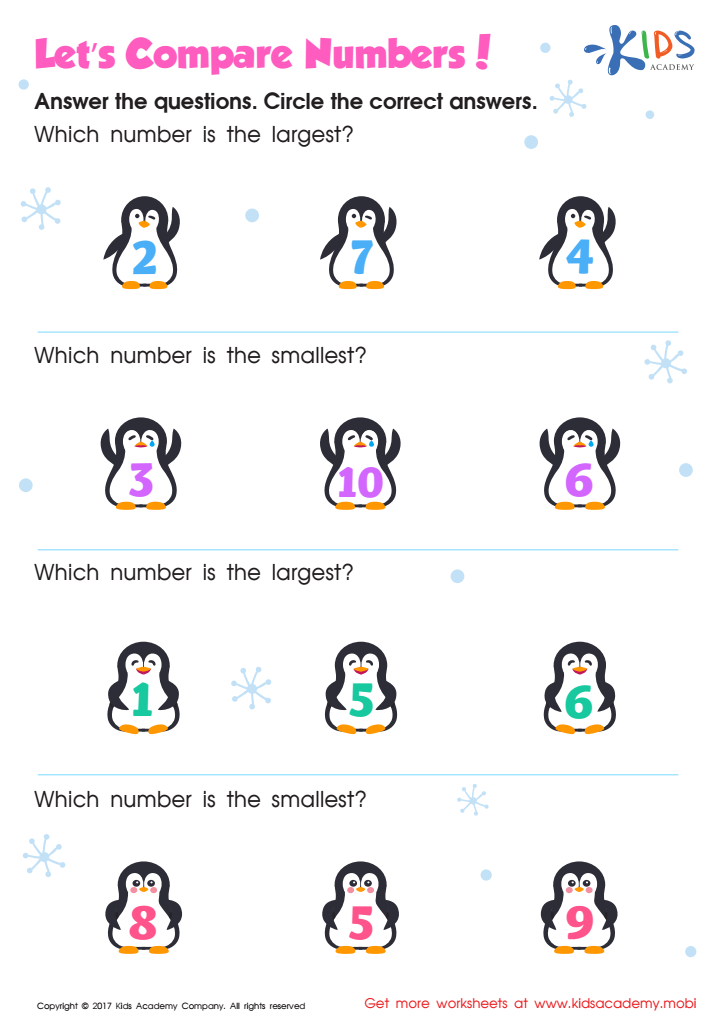
Comparing Numbers 1–10 Worksheet Kindergarten
 Assign to My Students
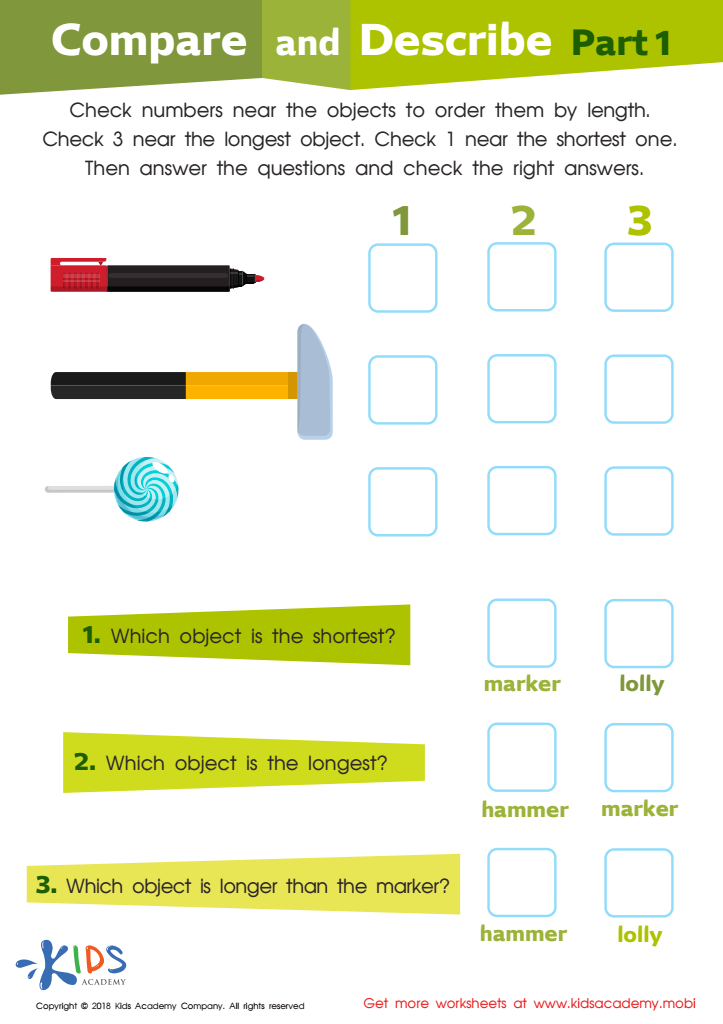
Compare and Describe: Part 1 Worksheet
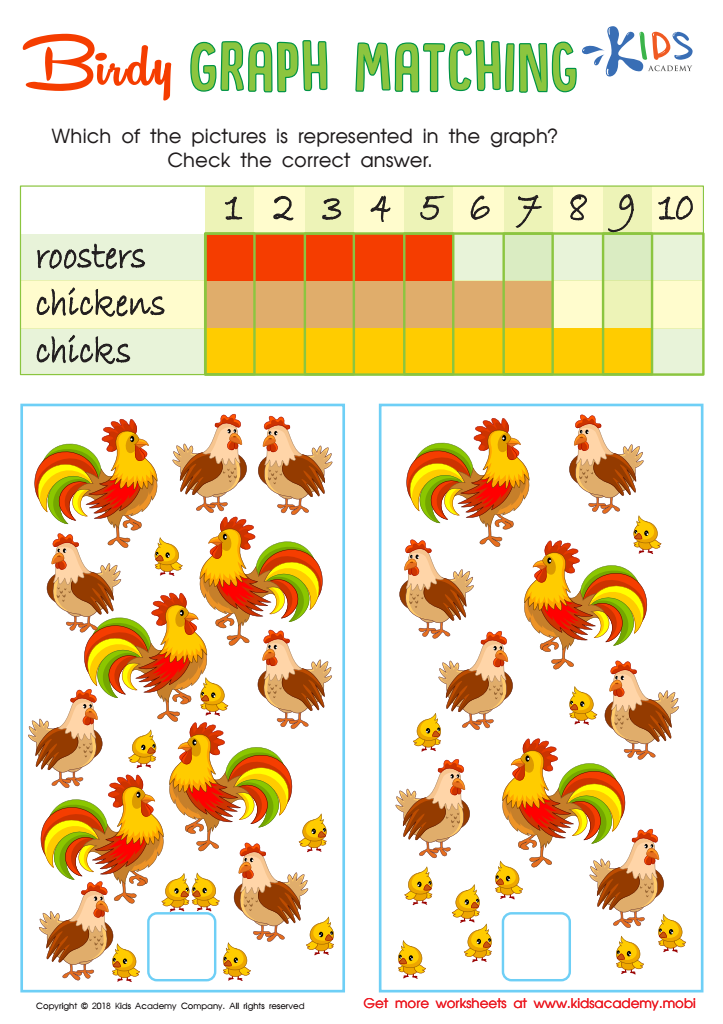
Birdy Graph Matching Worksheet








Comparative skills in math are crucial for children ages 3-6 because they form the foundation for more complex mathematical and logical thinking later in life. At this early stage, children are naturally curious and rapidly developing their cognitive abilities. Introducing them to comparison helps hone skills such as recognizing differences, understanding relationships, and logical reasoning. For instance, activities that involve comparing sizes, quantities, or shapes lay the groundwork for understanding measurements, numbers, and patterns, which are all critical components of elementary and advanced math.
Moreover, engaging young children in comparison tasks enhances their language development and vocabulary, as they learn terms like "bigger," "smaller," "more," and "less." This can bridge into verbal reasoning and expressive skills, important for effective communication.
Socially, children who are exposed to comparative skills tend to develop better problem-solving abilities. They can make decisions based on differing quantities and qualities, which is a skill transferrable to everyday situations and academic disciplines beyond math.
Parents and teachers should care about cultivating these comparative skills early on, as doing so sets a solid educational foundation, aligning with both cognitive and socio-emotional development goals. Early investment yields long-term benefits, equipping children with the tools needed for future educational success and practical decision-making.








