
Enhancing mathematical skills Math Worksheets for Ages 3-6
3 filtered results
Difficulty Level
Grade
Age
-
From - To
Subject
Activity
Standards
Boost your child's numeric prowess with our engaging math worksheets designed for ages 3-6 from Kids Academy. Tailored to enhance young learners' mathematical skills, these innovative printable tools focus on fundamental concepts like counting, shapes, and basic arithmetic. With vibrant images and interactive tasks, our worksheets foster both fun and education, making early math experiences pleasurable and effective. Support your child's developmental milestones and prepare them for future academic success by incorporating our expertly designed resources into their daily learning routine. Transform math into an exciting adventure today with Kids Academy's comprehensive math worksheets!
Favorites
With answer key
Interactive
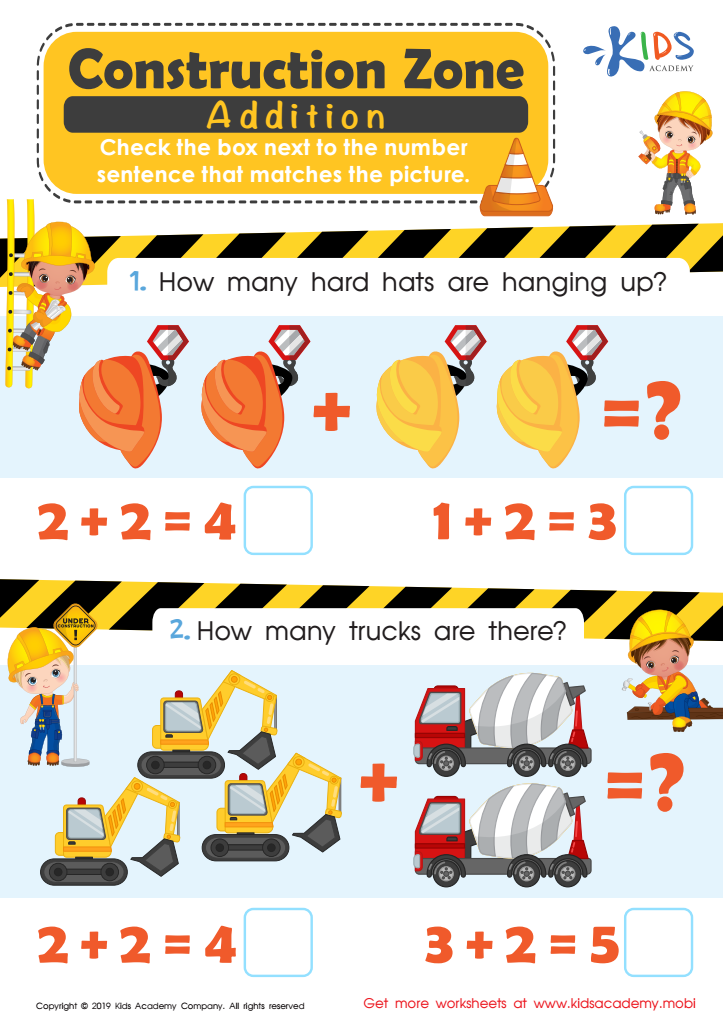
Construction Zone Addition Worksheet
Construction sites are bustling with professionals called construction workers. They use equipment while working, so they must wear protective gear. With kids, look at the pictures and name each object. Then help them check the box next to the number sentence that matches the picture. (80 words)
 Assign to My Students
Construction Zone Addition Worksheet
Worksheet
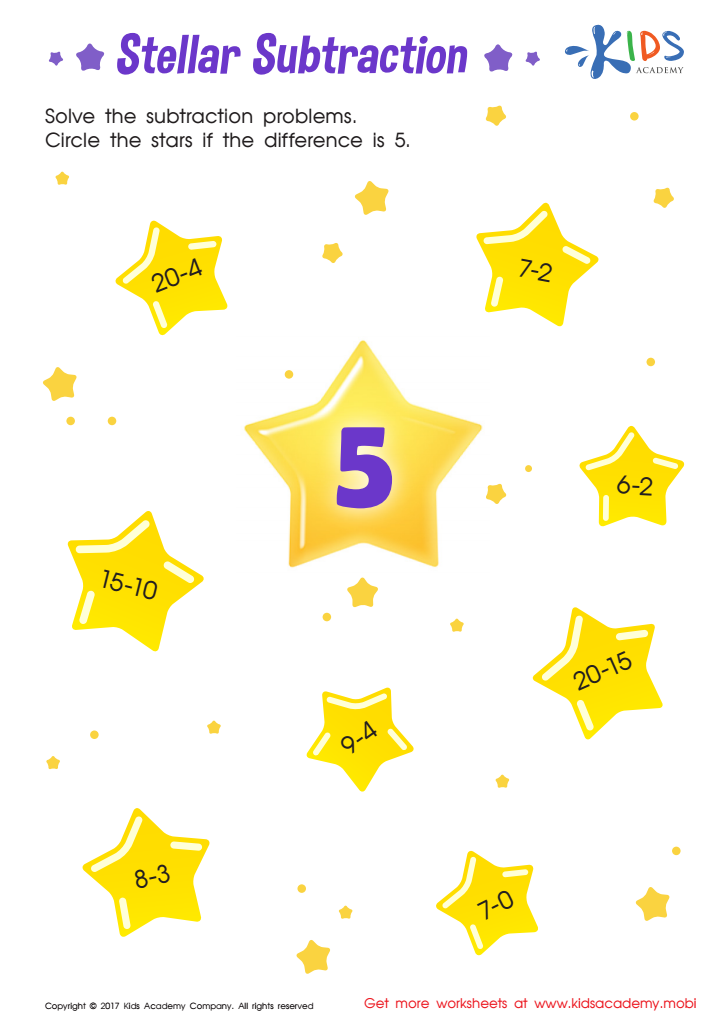
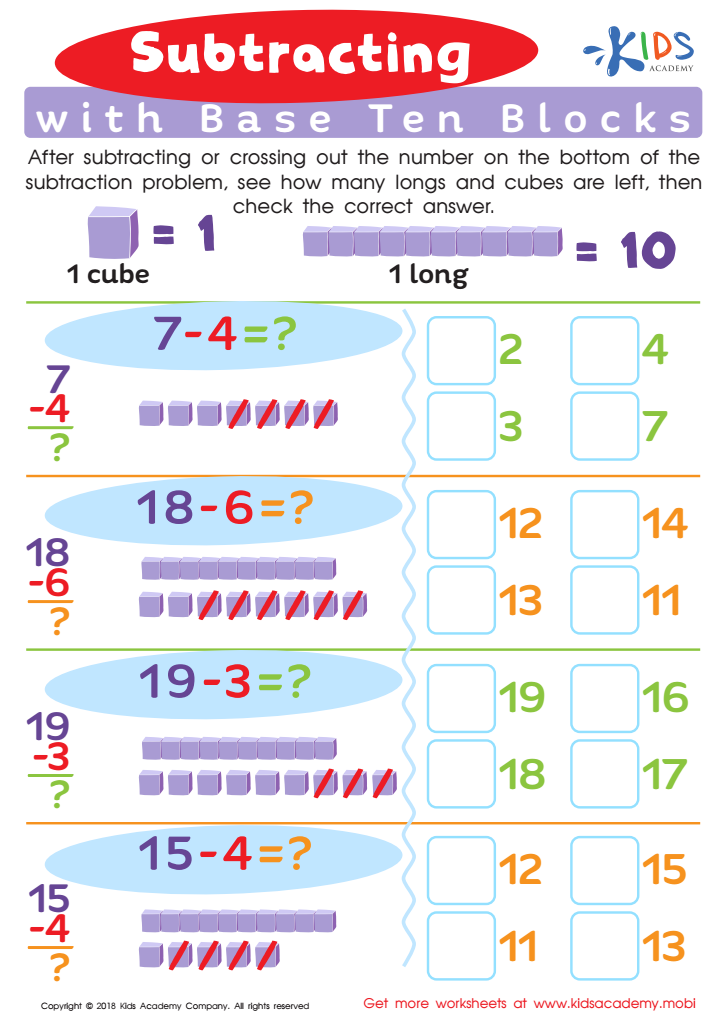
Subtracting With Base 10 Blocks Worksheet
Ask your child to count the cubes then help them check the answer. This problem may seem tricky, but it's just basic math. If they can count, they should have no trouble completing the exercise.
Subtracting With Base 10 Blocks Worksheet
Worksheet
Join Kids Academy for Free
Who is primarily going to use this learning content?








Enhancing mathematical skills in children aged 3-6 is crucial as it lays the foundation for future academic success and everyday problem-solving abilities. During these formative years, young brains are highly receptive and capable of grasping basic mathematical concepts such as counting, pattern recognition, and spatial awareness. Introducing math early fosters a positive attitude toward the subject, reducing math anxiety later in life.
Parents and teachers have a pivotal role in making math enjoyable and relatable. Simple activities like counting objects, recognizing shapes, or playing board games can seamlessly integrate math learning into daily routines. Early math skills are not limited to numbers; they also enhance logical thinking, reasoning, and the ability to make connections between concepts. These cognitive skills are fundamental building blocks for subjects such as science, technology, and engineering, collectively known as STEM fields.
Moreover, math proficiency at an early age is linked to better performance in school and greater opportunities for higher education and careers in STEM-related fields, which are in high demand worldwide. By investing in the mathematical development of children ages 3-6, parents and teachers not only support their intellectual growth but also equip them with essential skills for future success, critical thinking, and lifelong learning.








