Matching numbers Math Worksheets for Ages 3-6
12 filtered results
-
From - To
Introduce early learners to the world of numbers with our expertly crafted "Matching Numbers Math Worksheets" tailored for children aged 3-6. Our engaging and colorful worksheets are designed to develop foundational math skills through fun, interactive exercises. As kids match numbers, they'll enhance their number recognition, counting abilities, and cognitive skills. These worksheets support hands-on learning, making math enjoyable and accessible. Ideal for both classroom and home use, they offer a fantastic way to kickstart your child’s mathematical journey. Discover the joy of learning numbers with our innovative resources today!
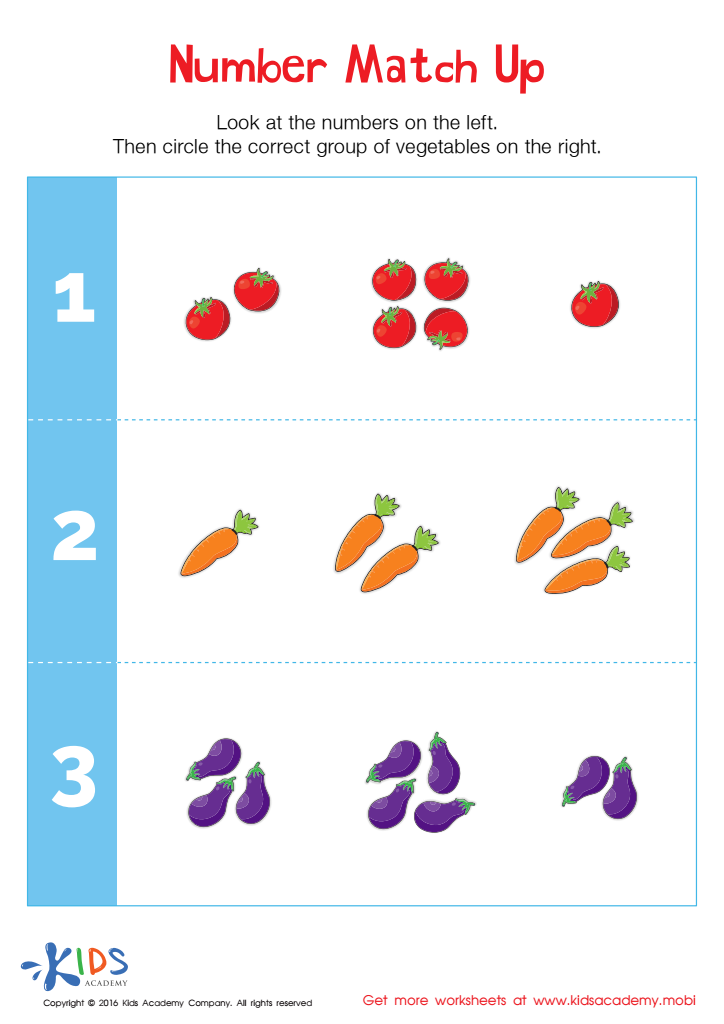
Number Match Up Worksheet
 Assign to My Students
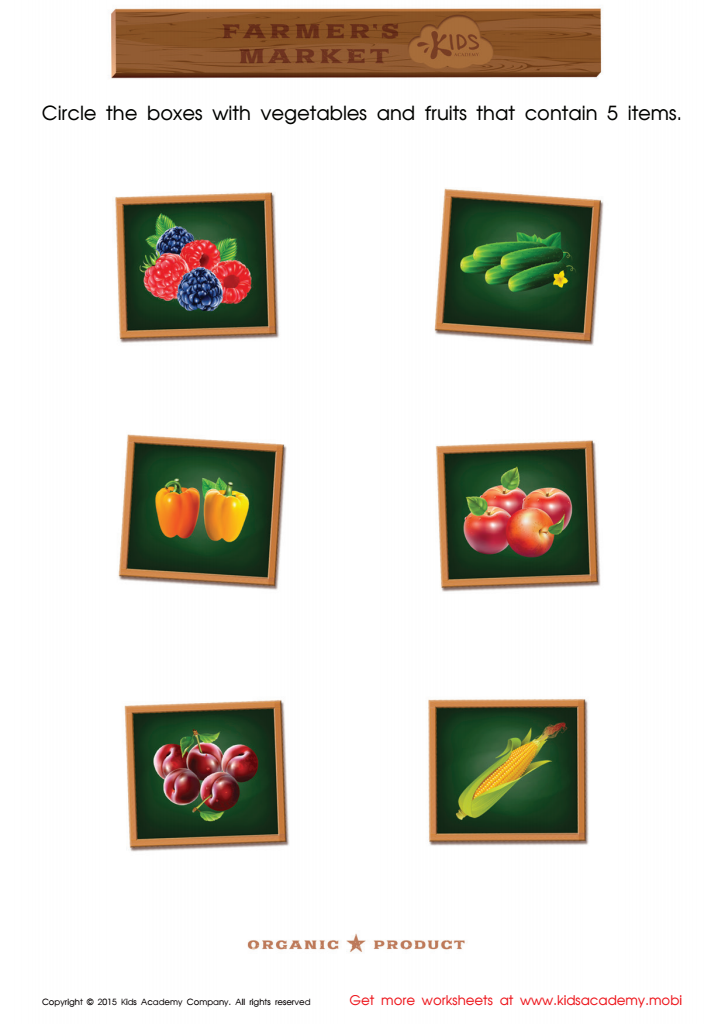
Count and Match Vegetables 1 – 7 Math Worksheet
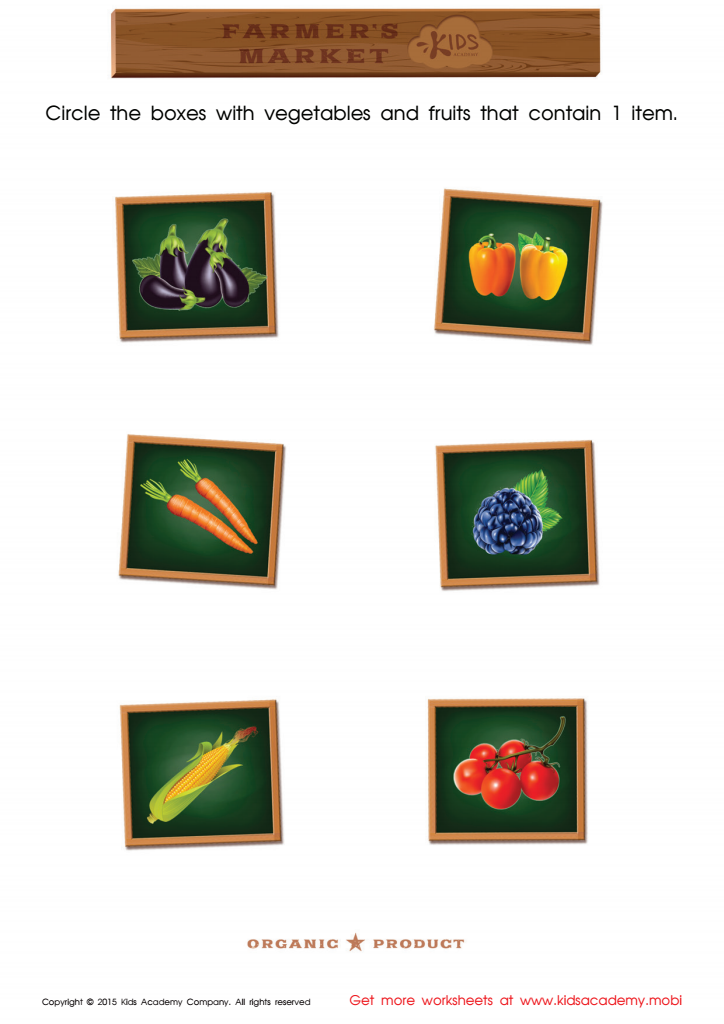
Count and Match Boxes with Vegetables
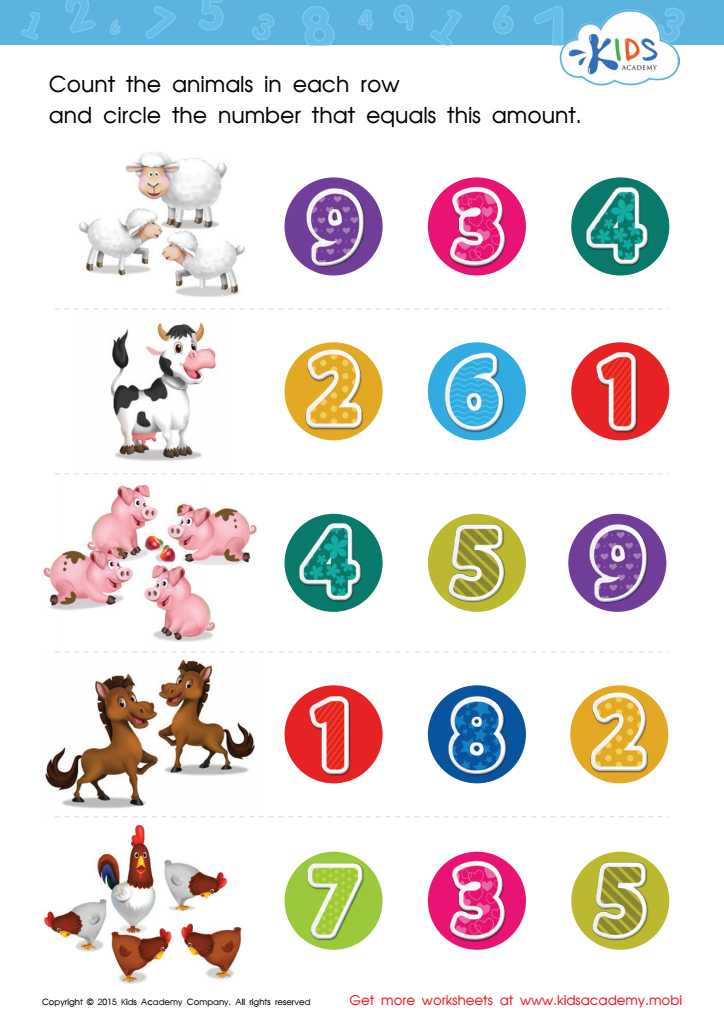
Count and Match 1 – 5 Math Worksheet
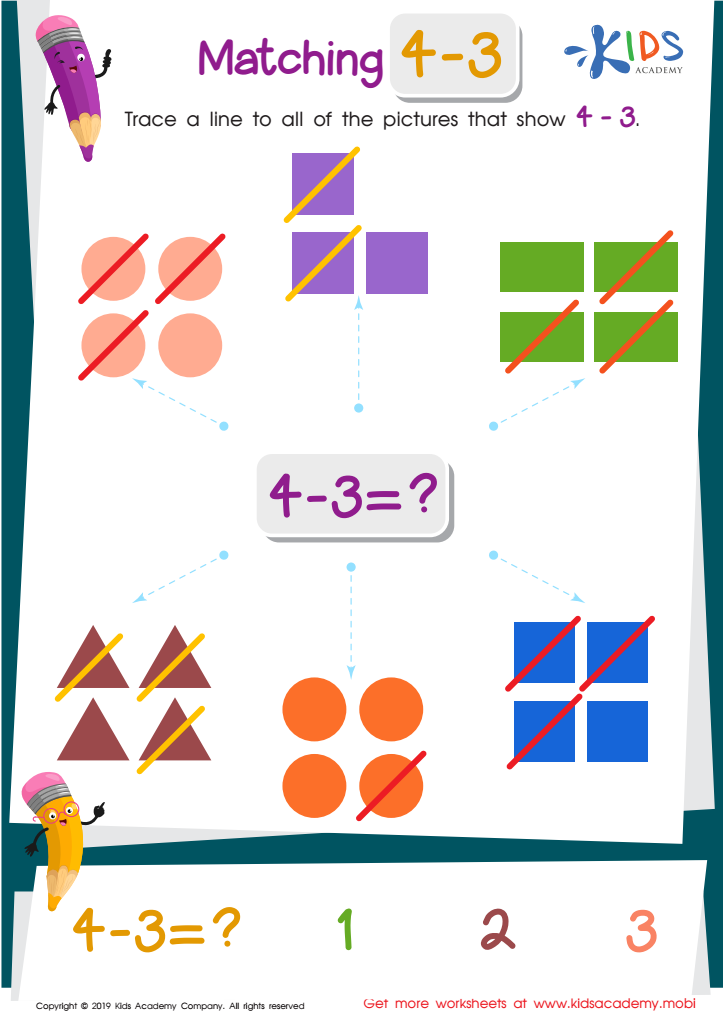
Matching 4 – 3 Worksheet
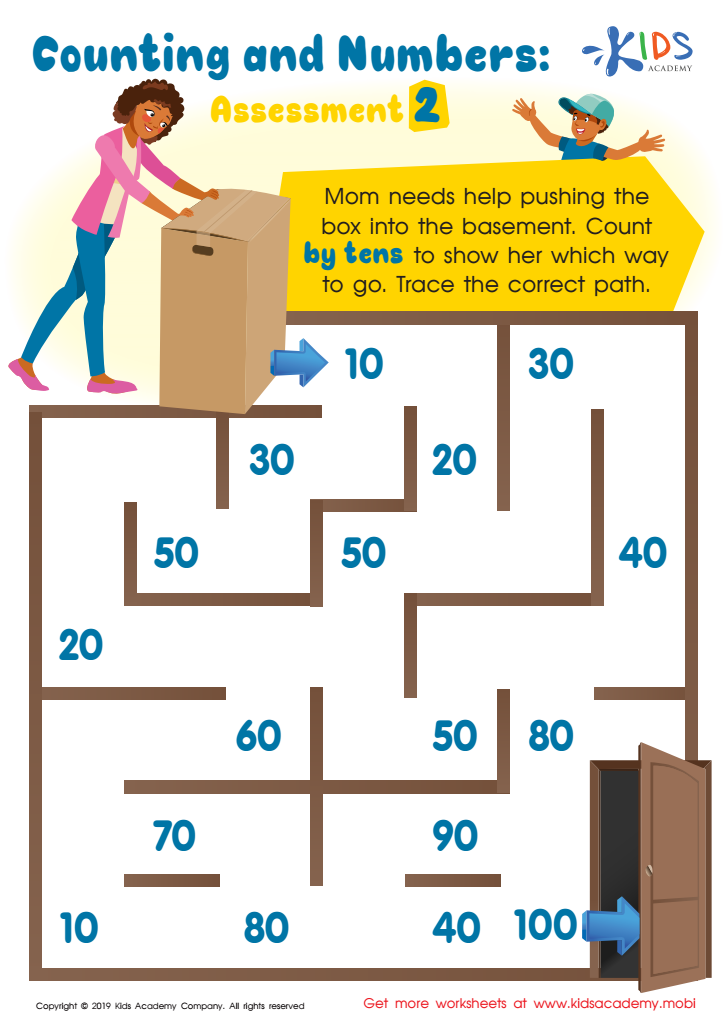
Counting and Numbers: Assessment 2 Worksheet
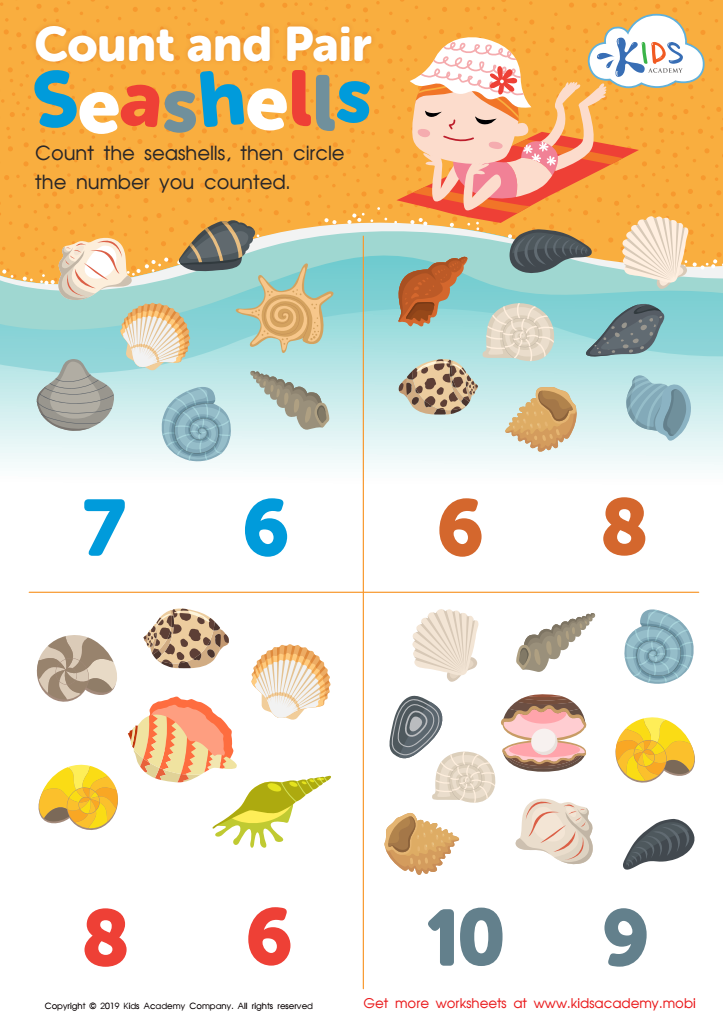
Count and Pair Seashells Worksheet
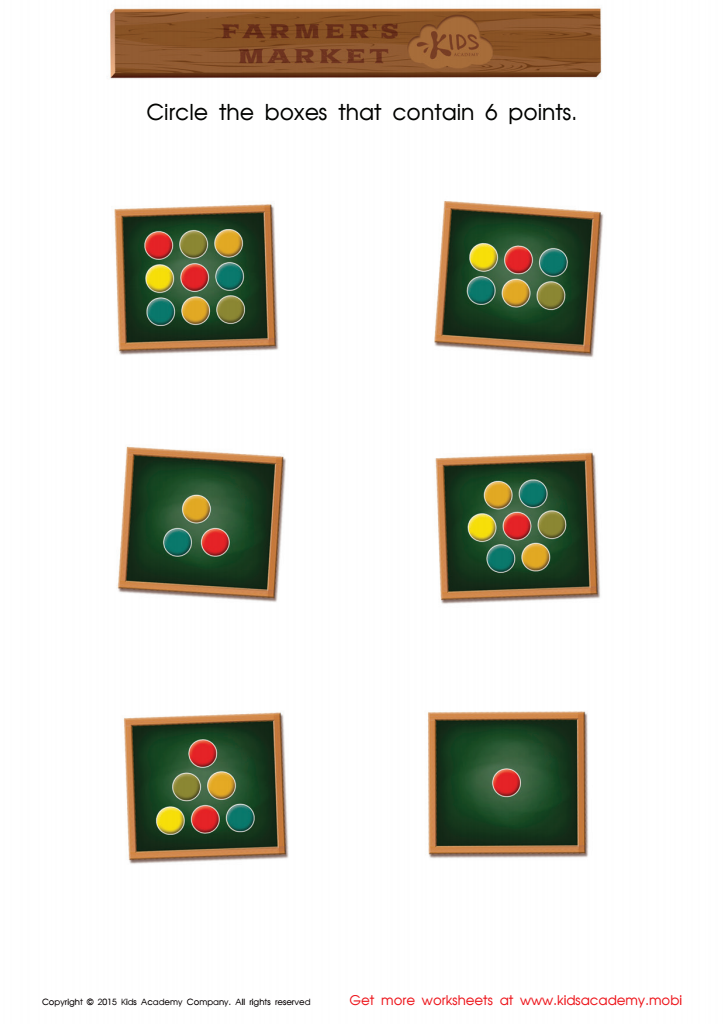
Count and Match Points 6 Math Worksheet
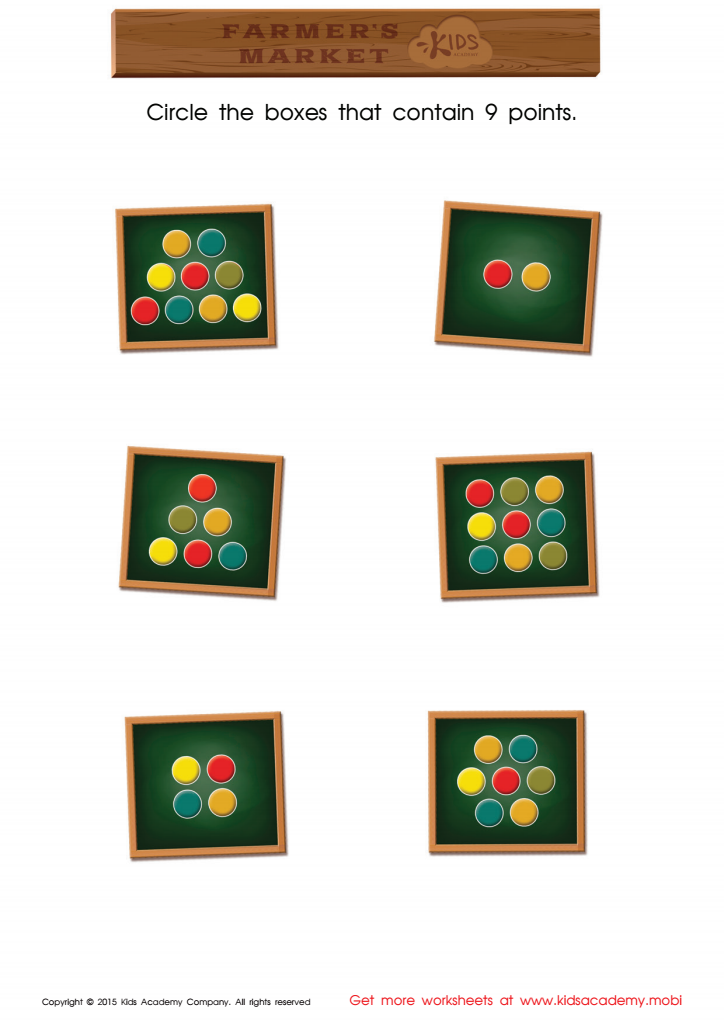
Count and Match Points 9 Math Worksheet
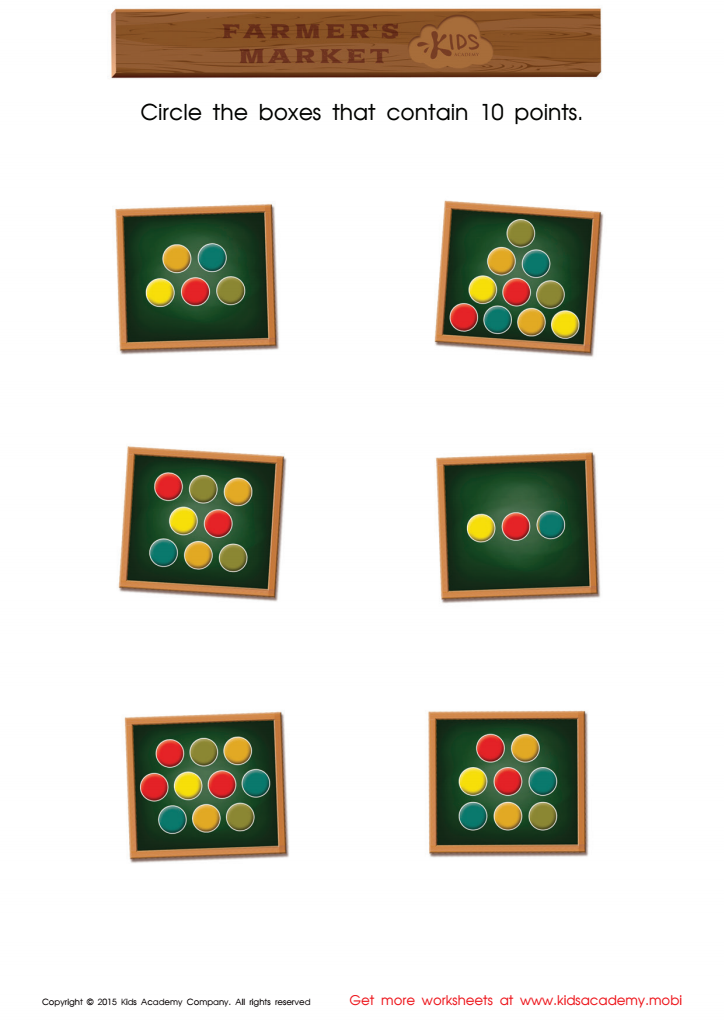
Count and Match Points 10 Math Worksheet
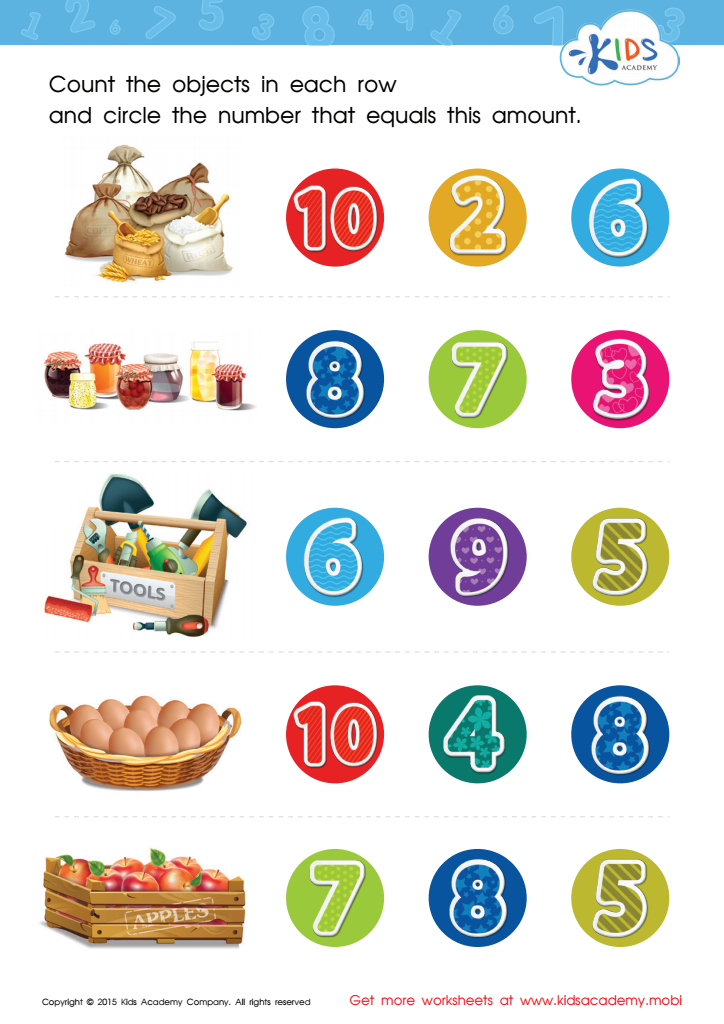
Count and Match 6 – 10 Math Worksheet
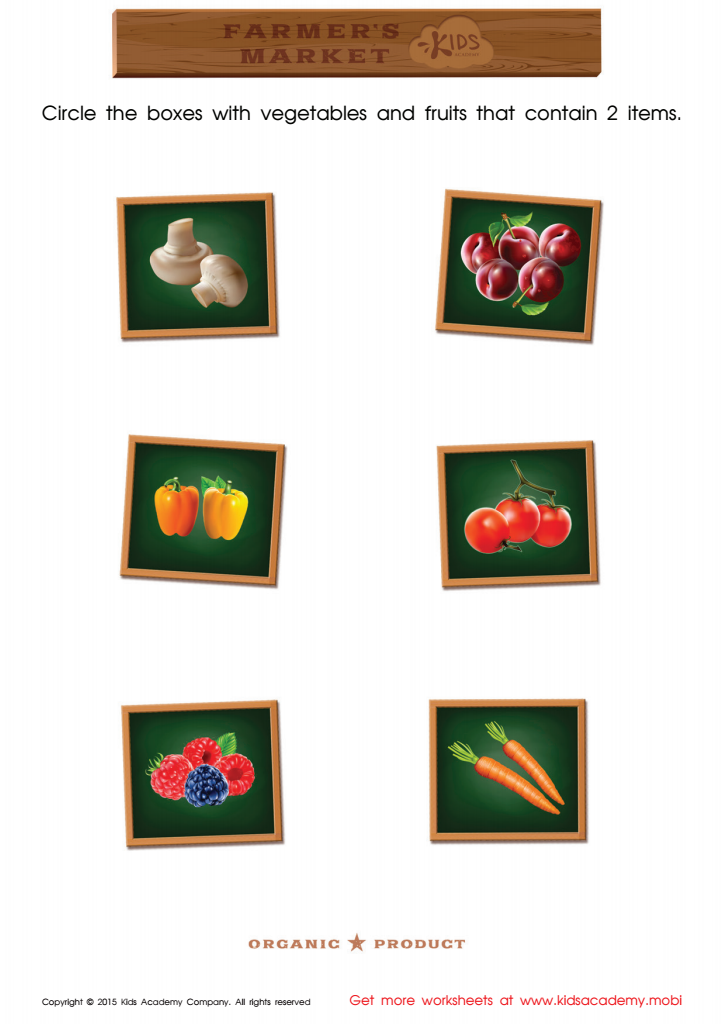
Count and Match Vegetables and Points Math Worksheet



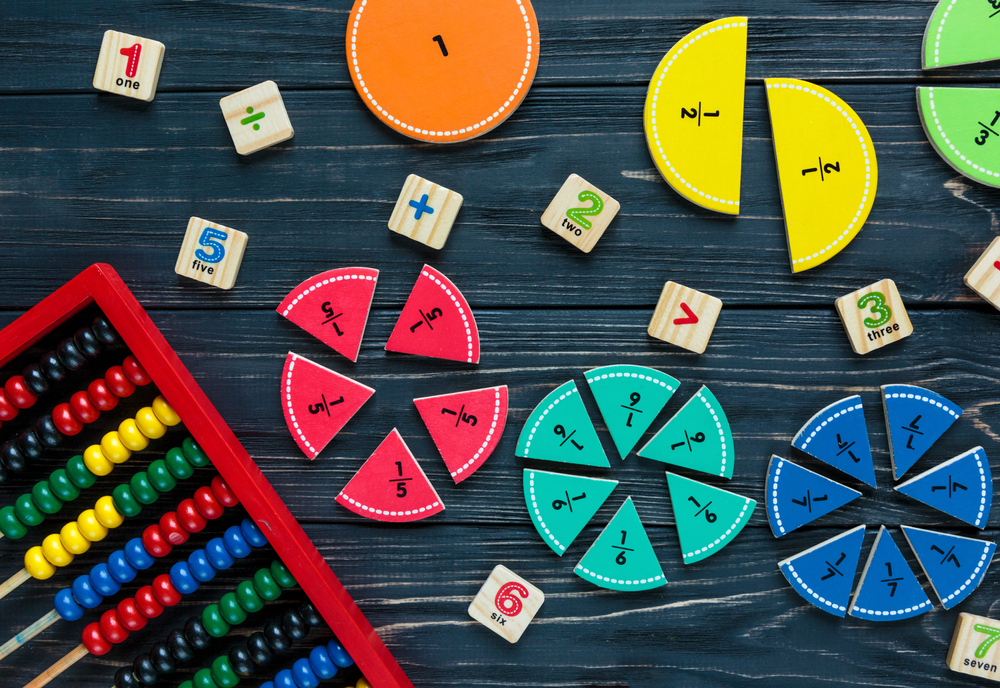



Matching numbers activities are crucial for the cognitive and mathematical development of children aged 3-6 because they lay the foundation for numerical literacy and problem-solving skills. At this developmental stage, children are transitioning from recognizing shapes and patterns to understanding the abstract concept of numbers and their relationships.
Engaging in number-matching activities helps young learners develop critical skills, such as counting, number recognition, and quantifying sets. By matching numbers to quantities or objects, children begin to grasp one-to-one correspondence, which is essential for higher-level math concepts such as addition, subtraction, and multiplication.
Furthermore, these activities enhance fine motor skills and eye-hand coordination, as children often need to draw lines or physically manipulate objects to match numbers. This also fosters concentration, attention to detail, and perseverance—all important for academic success.
For parents and teachers, early exposure to matching numbers can provide insight into a child’s readiness for more complex numerical tasks. It can also build confidence, as children experience the joy of mastering basic mathematical concepts, leading to a positive attitude towards future learning.
In summary, matching numbers math activities are not just about learning numbers; they engender a broader skill set that supports overall cognitive development, making them a crucial part of early childhood education.








