Number identification Math Worksheets for Ages 3-6
8 filtered results
-
From - To
Enhance your child's numerical skills with our Number Identification Math Worksheets, designed for ages 3-6. These meticulously crafted worksheets from Kids Academy engage young learners through fun, interactive exercises that make recognizing and understanding numbers exciting. By incorporating colorful visuals and engaging activities, children will build a strong foundation in number recognition, counting, and sequencing. Our printable resources cater to different learning styles, ensuring every child can progress at their own pace. Empower your preschoolers with essential math skills and watch their confidence soar as they master numbers in an enjoyable and educational way.
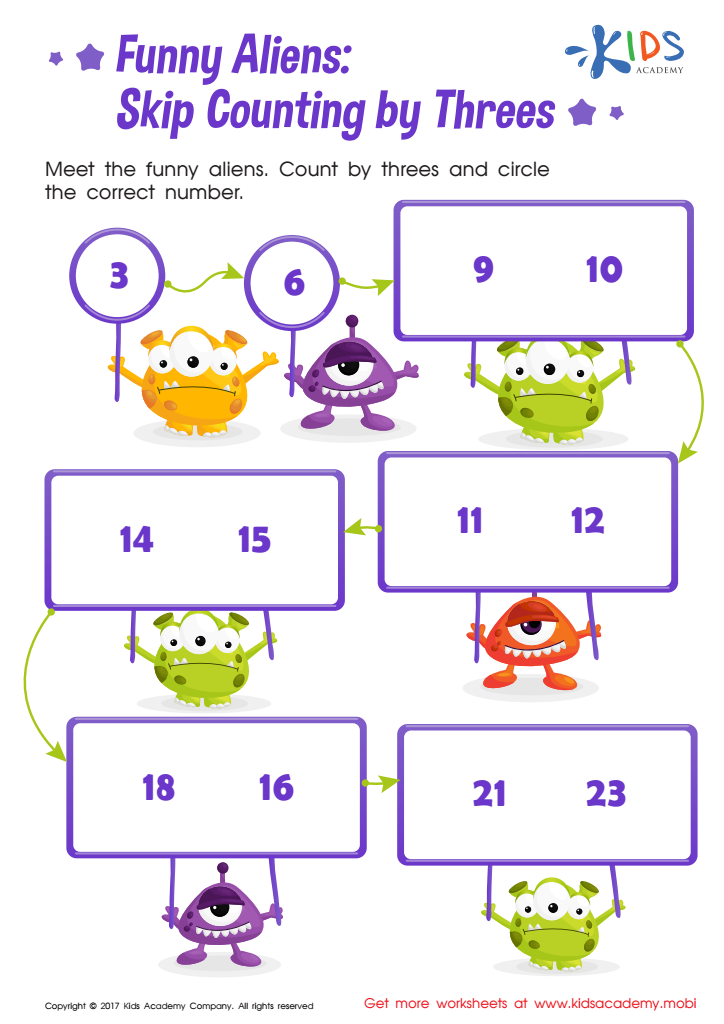
Skip Counting by 3s: Funny Aliens Printable
 Assign to My Students
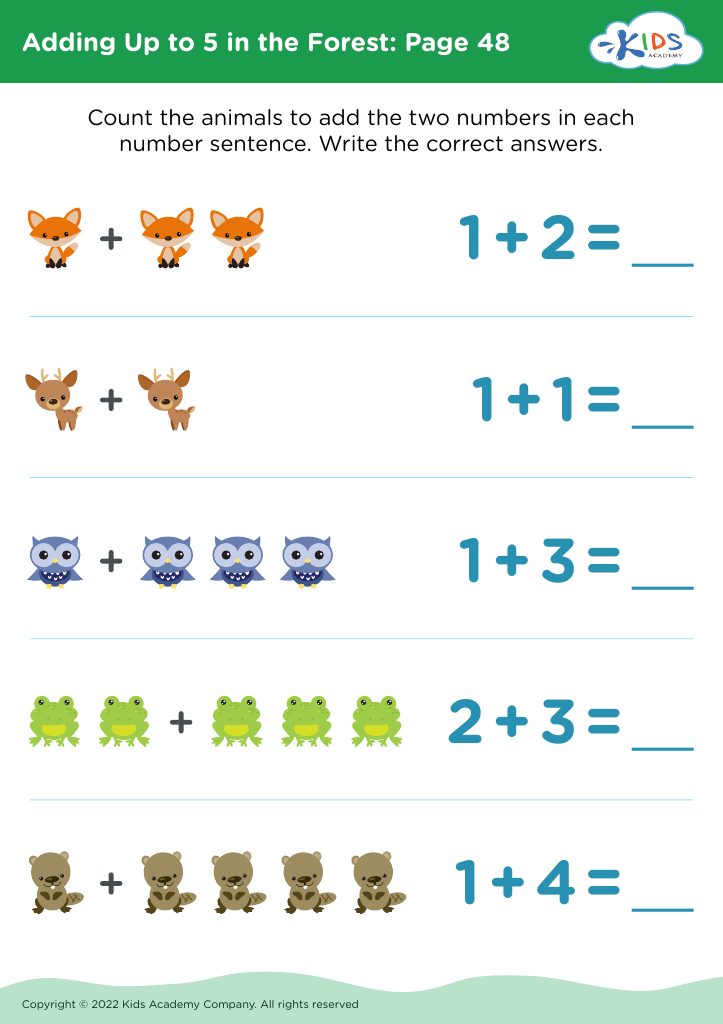
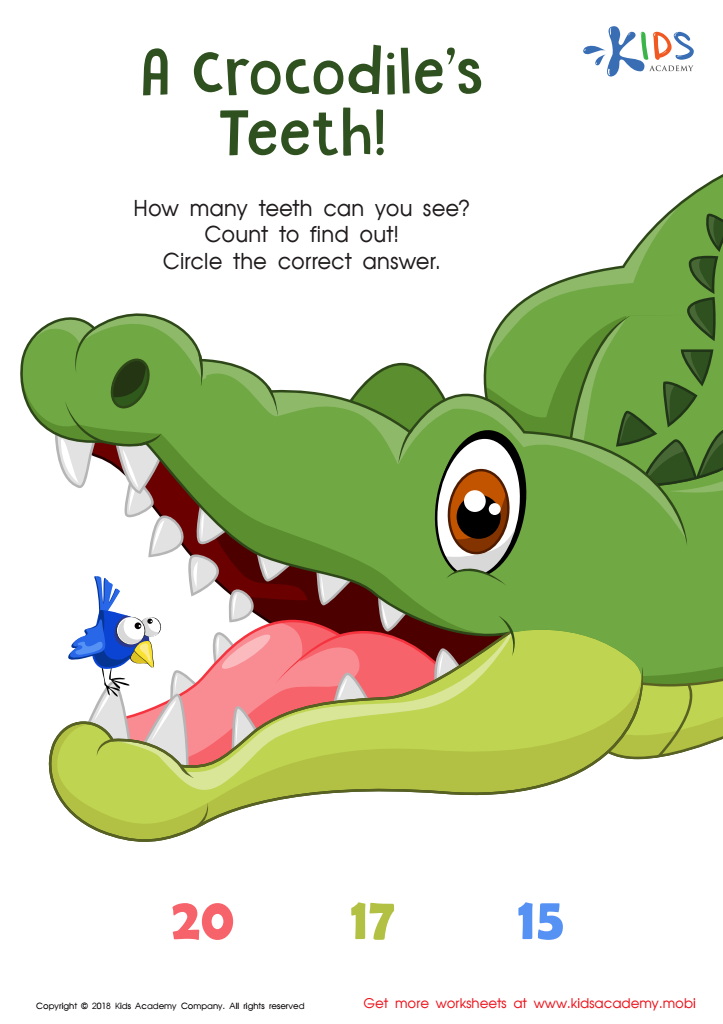
A Crocodile's Teeth Worksheet
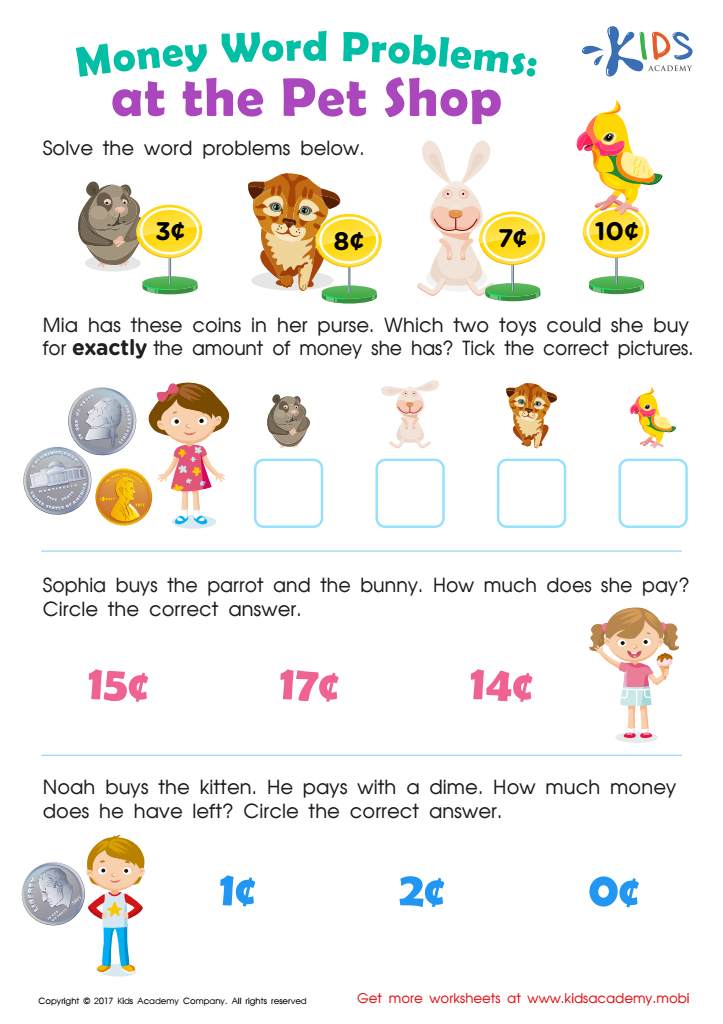
Pet Shop Worksheet
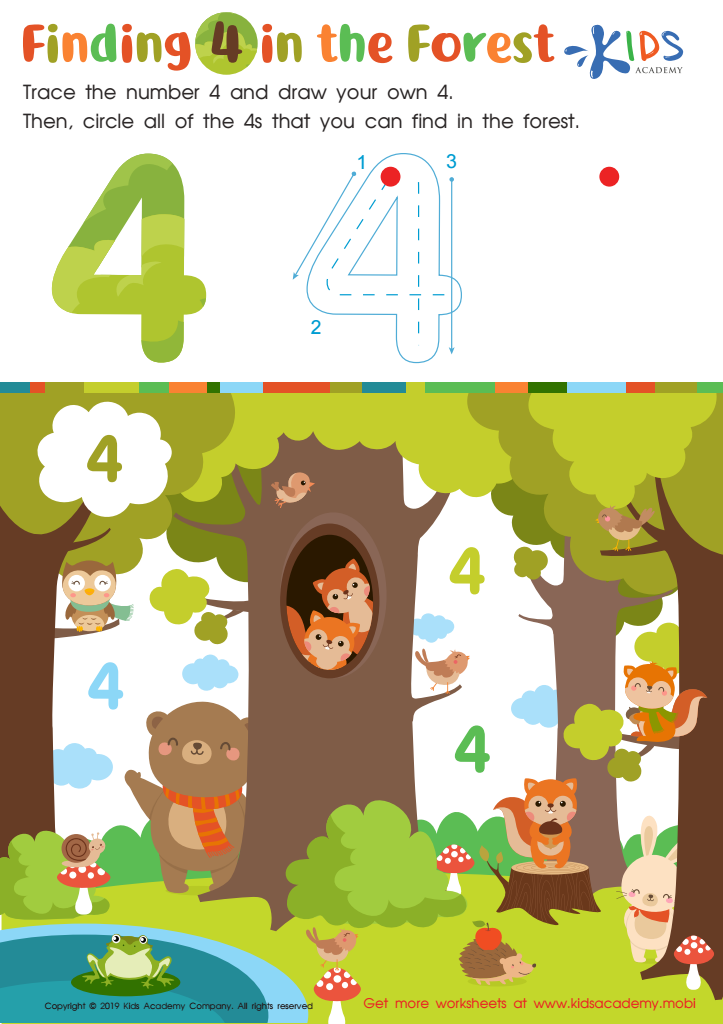
Finding 4 in the Forest Worksheet
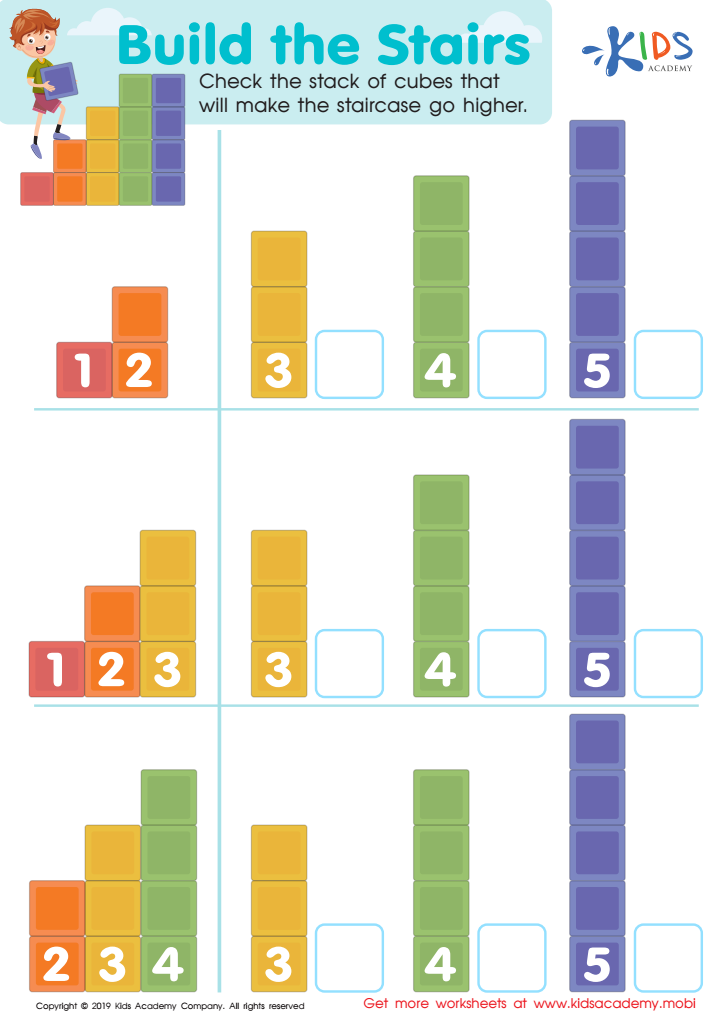
Build the Stairs Worksheet
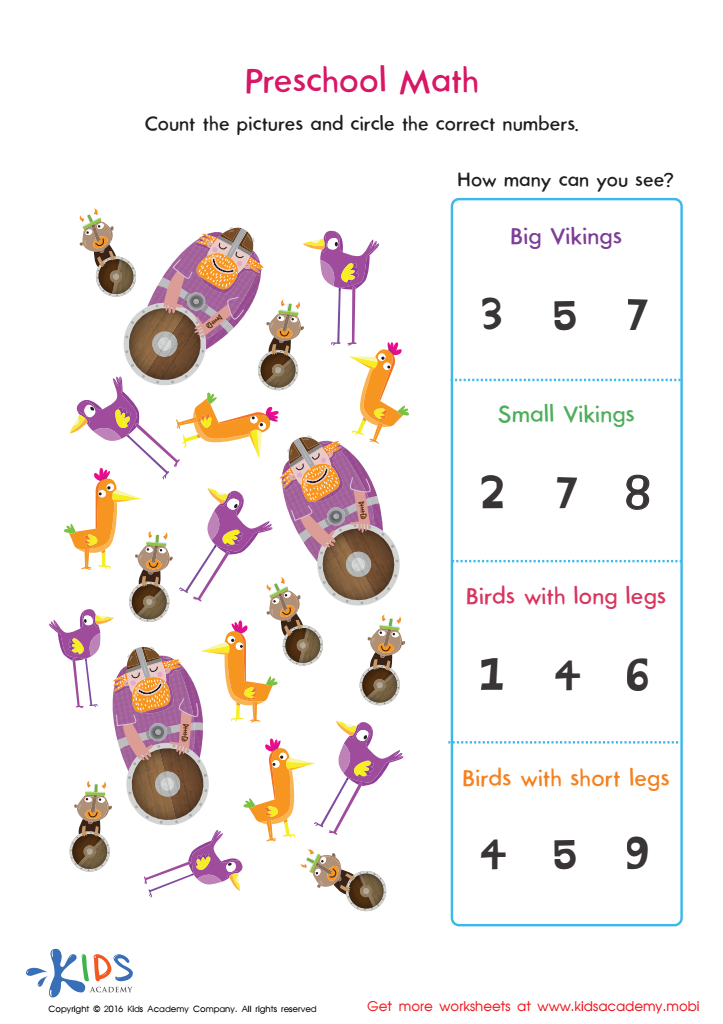
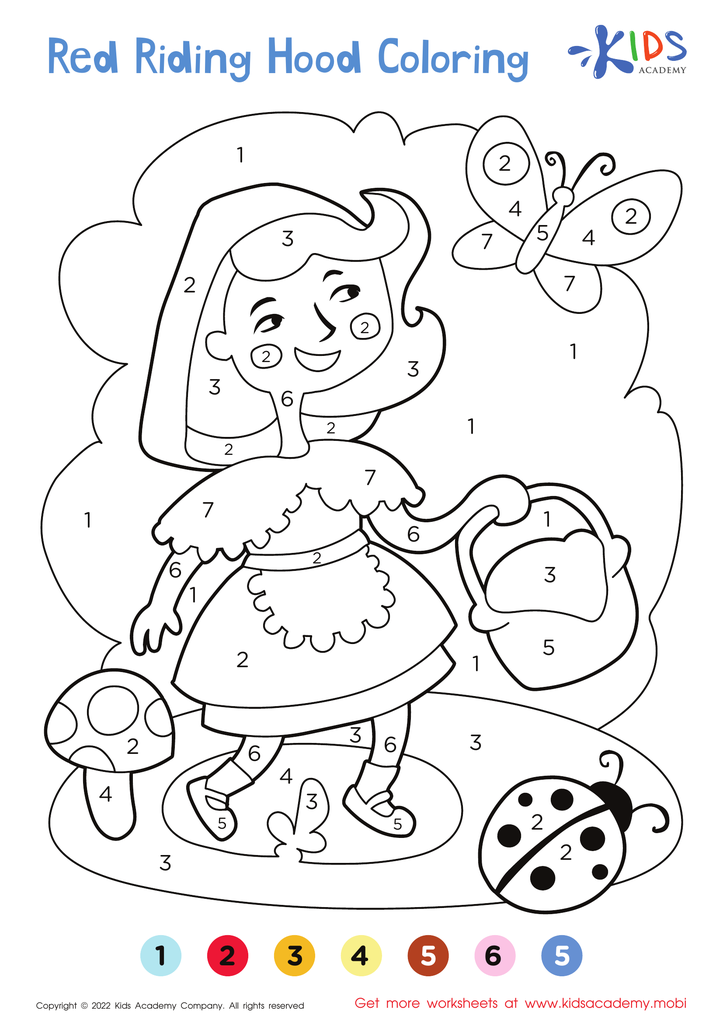
Little Red Riding Hood – Coloring by Numbers




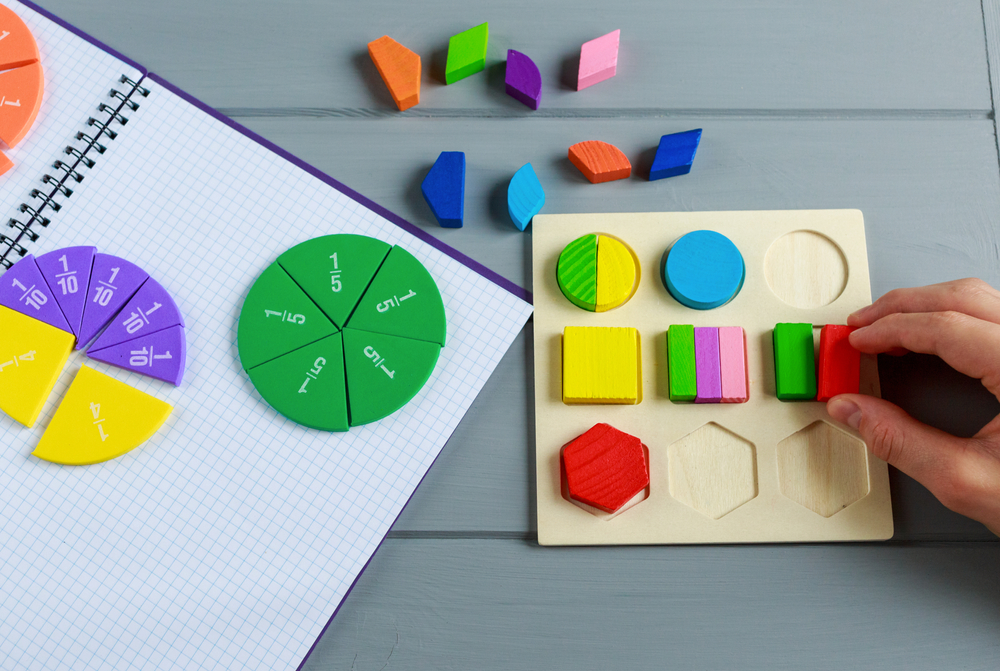
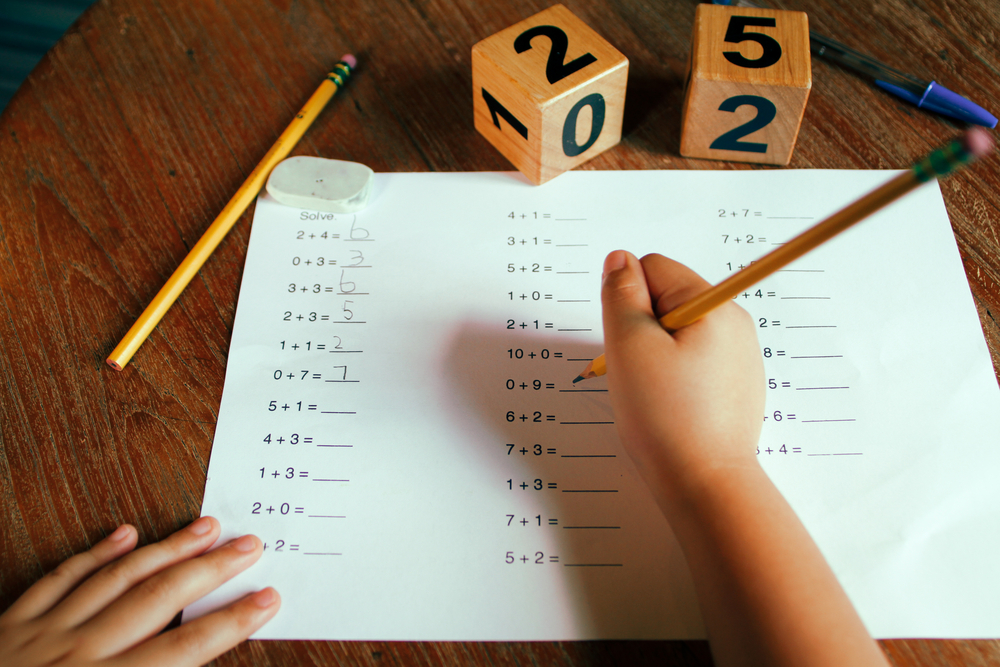


Number identification is a foundational skill for young children, particularly in the crucial developmental window of ages 3-6. This early math skill includes recognizing and naming numbers, both verbally and in written form, which lays the groundwork for future mathematical learning. At this age, children's brains are highly receptive to new knowledge, and introducing number identification can significantly boost cognitive development.
Understanding numbers is essential not only for mathematical reasoning but also for everyday problem-solving. For instance, recognizing numbers aids children in understanding concepts such as counting, telling time, and even following directions. It has a direct impact on their ability to understand other math concepts like addition and subtraction as they grow older.
Moreover, early number identification fosters a sense of confidence in young learners. When children can effortlessly identify numbers, they feel more competent and are more likely to approach math with enthusiasm rather than fear. This positive attitude towards math can have long-lasting effects on their academic journey.
Parents and teachers play critical roles in nurturing this skill. Simple activities, like counting objects during playtime or identifying numbers in storybooks, can make learning both effective and enjoyable. By prioritizing number identification, they help develop a strong numerical foundation, setting the stage for future academic success.








