Recognizing numbers Math Worksheets for Ages 3-6
3 filtered results
-
From - To
Unlock your child’s mathematical potential with our "Recognizing Numbers" math worksheets, designed specifically for ages 3-6. These engaging, printable activities help young learners identify and master numbers through fun and interactive exercises. From matching digits to counting objects, our worksheets create a playful learning environment while reinforcing essential number recognition skills. Perfect for both home and classroom settings, each worksheet promotes cognitive development and boosts confidence in math. Explore our variety of colorful illustrations and easy-to-follow instructions that make learning numbers exciting! Start your little one's journey to mathematical success today with our thoughtfully crafted learning resources.
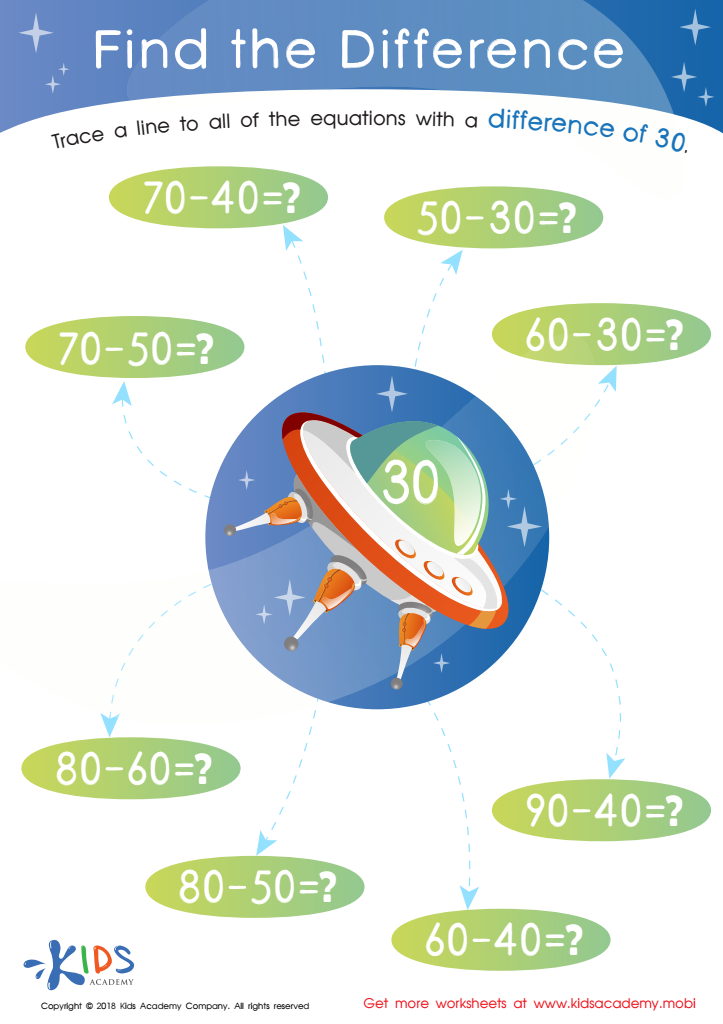
Find The Difference Worksheet
 Assign to My Students
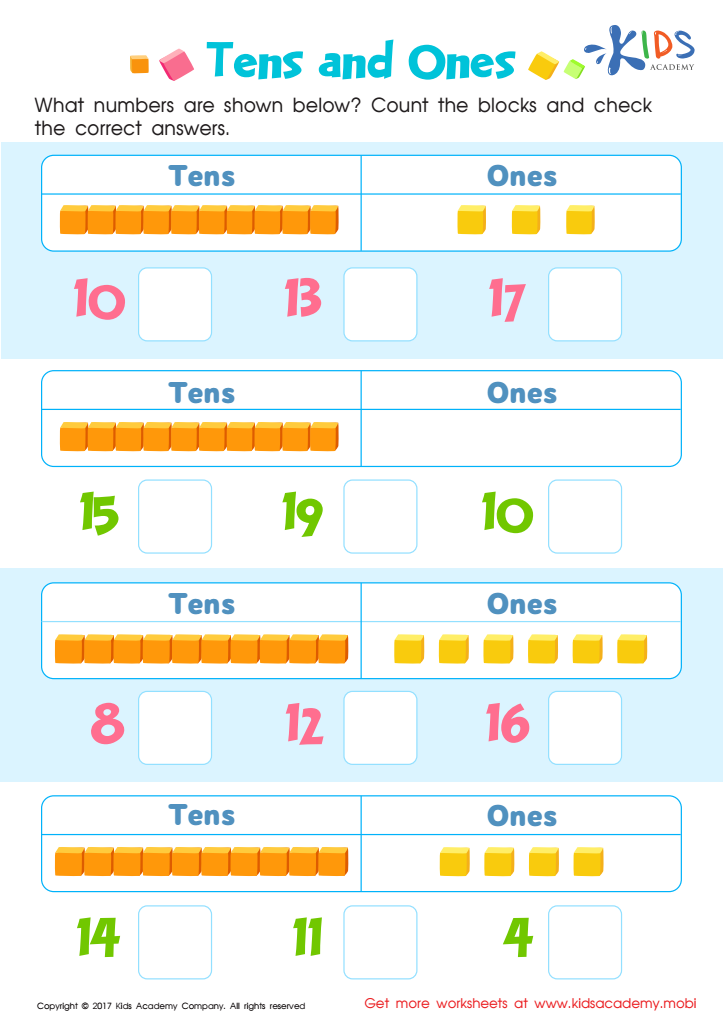
Tens and Ones Worksheet
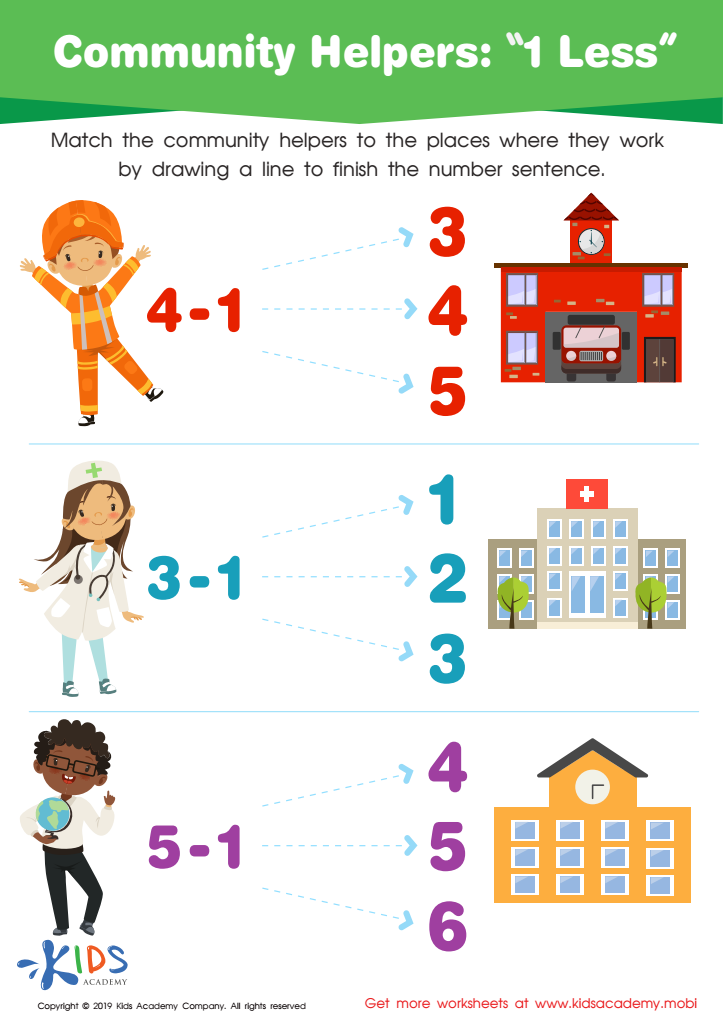
Community Helpers: 1 less Worksheet








Recognizing numbers is a fundamental skill that lays the groundwork for future mathematical learning, making it crucial for parents and teachers of children aged 3 to 6. At this developmental stage, children are naturally curious and eager to explore their environment, which offers an ideal opportunity for introducing mathematical concepts.
Understanding numbers not only helps children with counting but also supports their cognitive development by enhancing memory and attention skills. As children learn to recognize numbers, they begin to make connections between quantity and representation, which fosters problem-solving abilities.
Moreover, early number recognition has been linked to later academic success. By helping children grasp these concepts early on, parents and teachers can cultivate a positive relationship with mathematics, counteracting any anxiety that may develop later in school. Engaging children in fun, interactive activities—such as games and songs—can instill confidence and interest in learning.
Ultimately, prioritizing number recognition equips children with essential life skills far beyond academics. Children will encounter numbers in various contexts as they grow, from playing games to managing money, and a strong foundation in math will empower them in all areas of life. Supporting this early learning journey is vital for their overall development and future achievements.








