Time reading skills Math Worksheets for Ages 3-6
9 filtered results
-
From - To
Enhance your child's understanding of time with our engaging Time Reading Skills Math Worksheets, specifically designed for ages 3-6. These printable worksheets make learning about clocks and time fun and approachable! Through interactive elements, colorful illustrations, and age-appropriate activities, children will learn to recognize numbers, understand clock faces, and master basic time concepts. Perfect for homeschooling or supplementary practice, these worksheets promote essential math skills while fostering independence and confidence in young learners. Explore our collection today and watch your little ones become time-telling experts in no time! Strengthen their foundational math skills with our fun and educational resources.
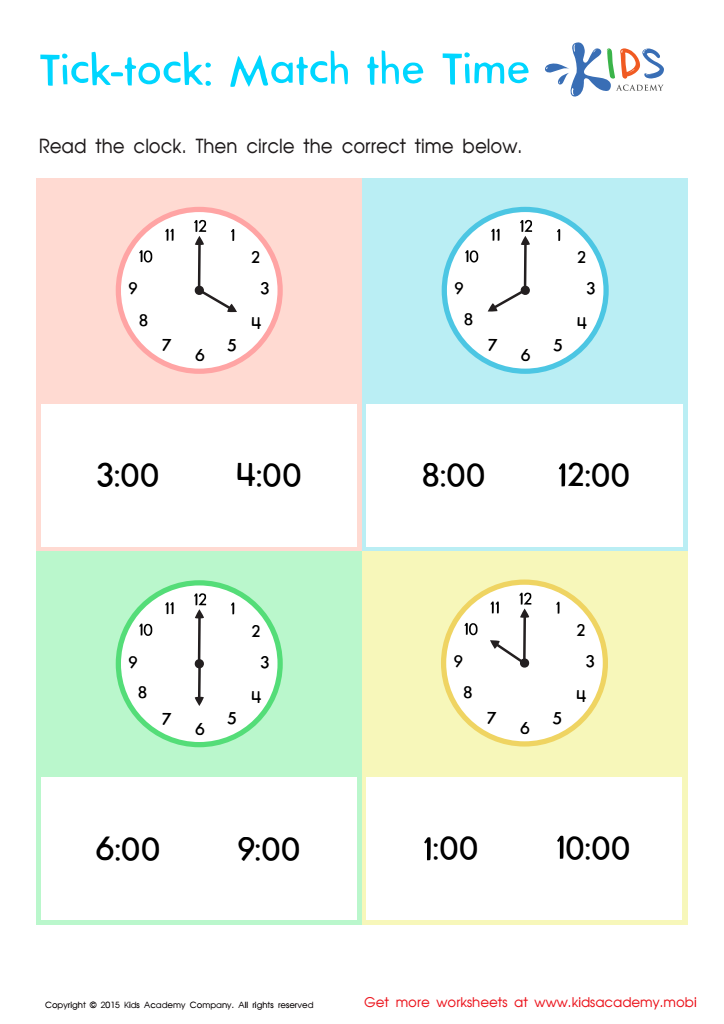
Telling The Time Worksheet: Part 4
 Assign to My Students
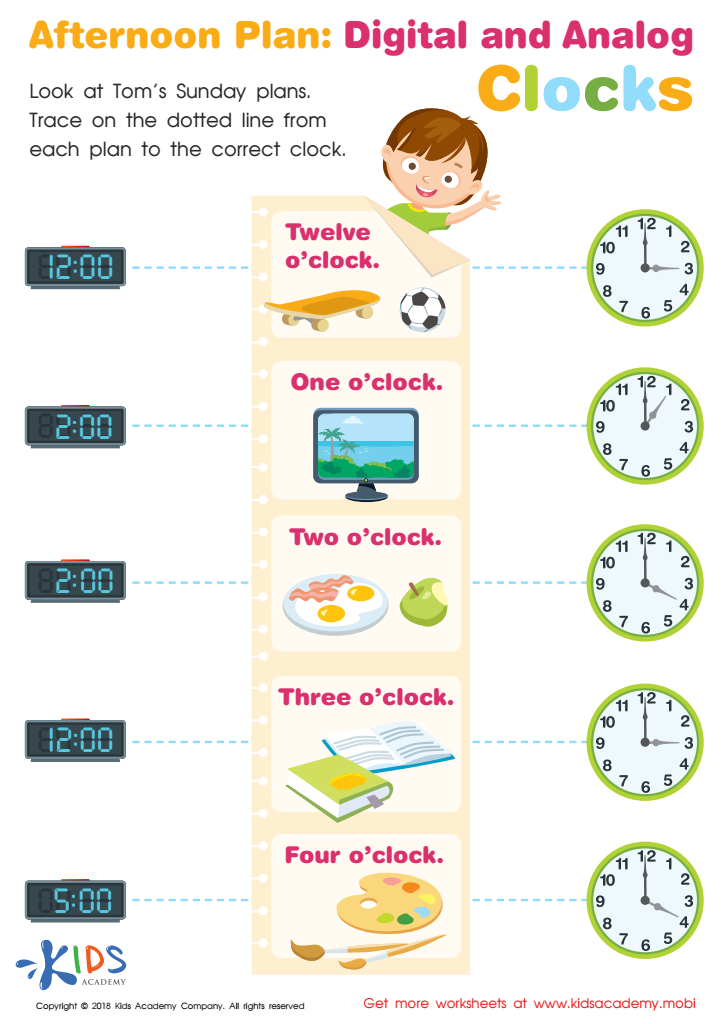
Afternoon Plan: Digital and Analog Clocks Worksheet
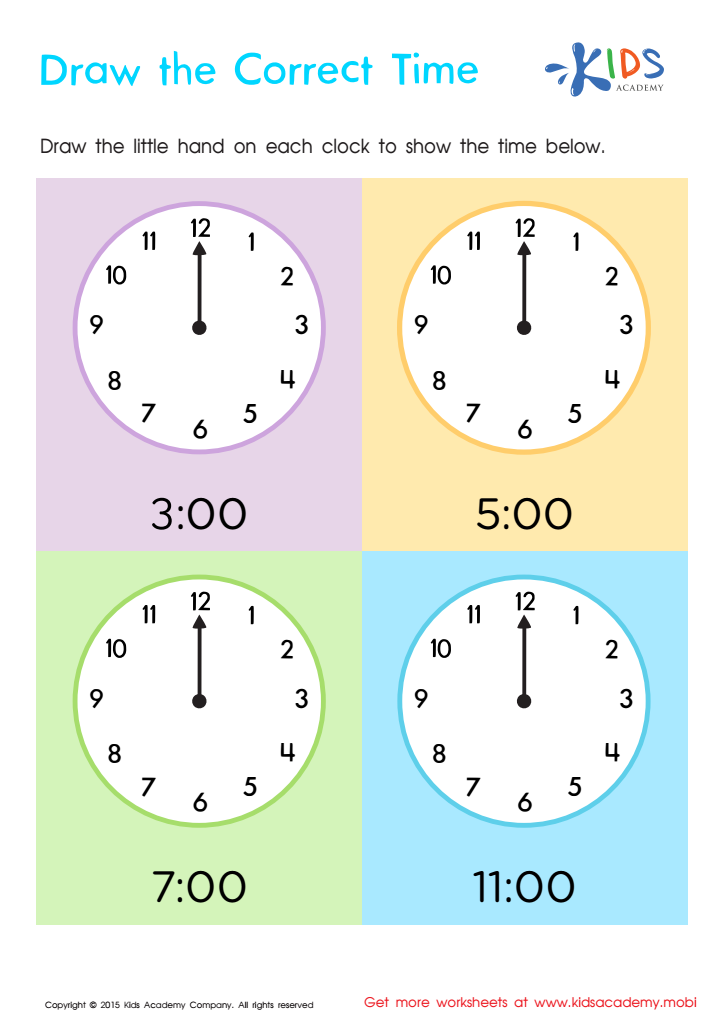
Telling The Time Worksheet: Part 1
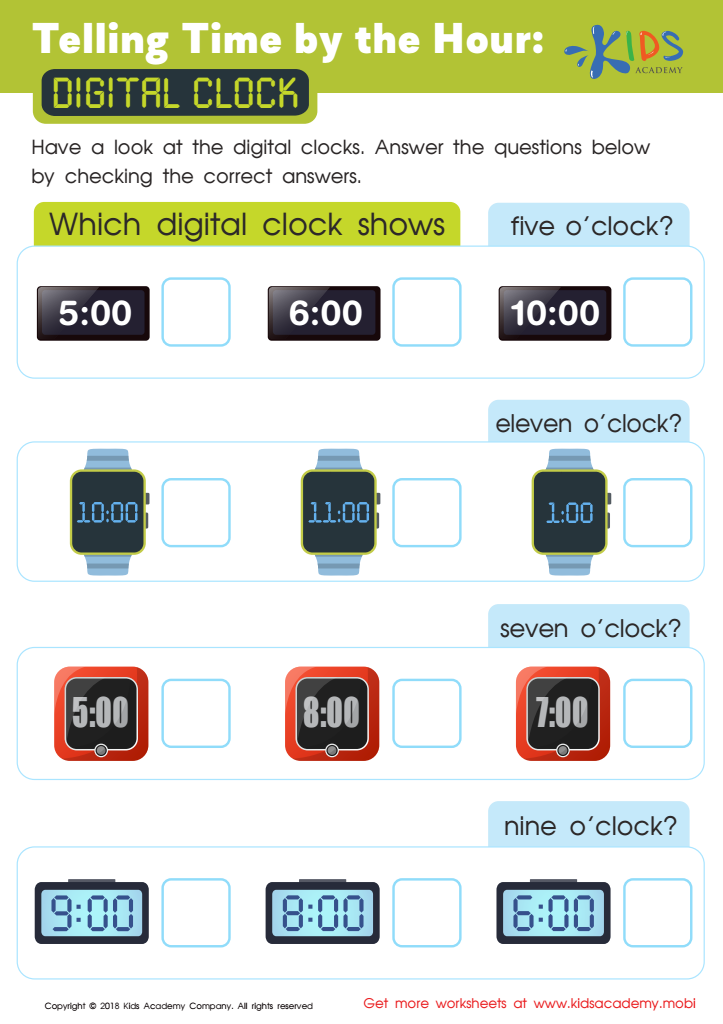
Telling Time by the Hour: Digital Clock Worksheet
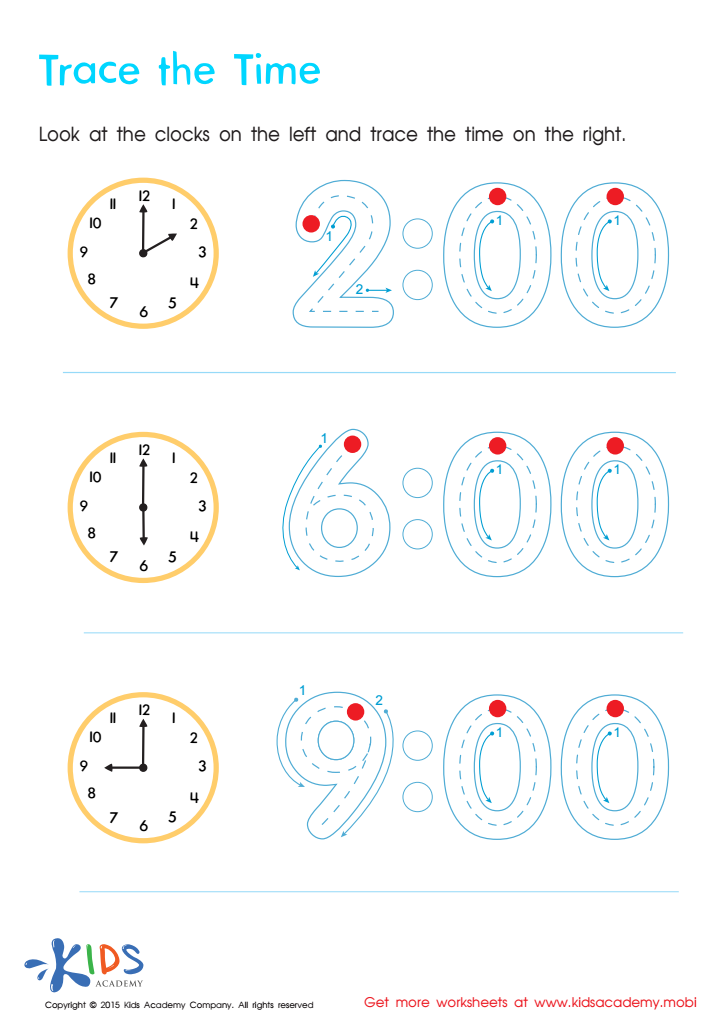
Telling The Time Worksheet: Part 2
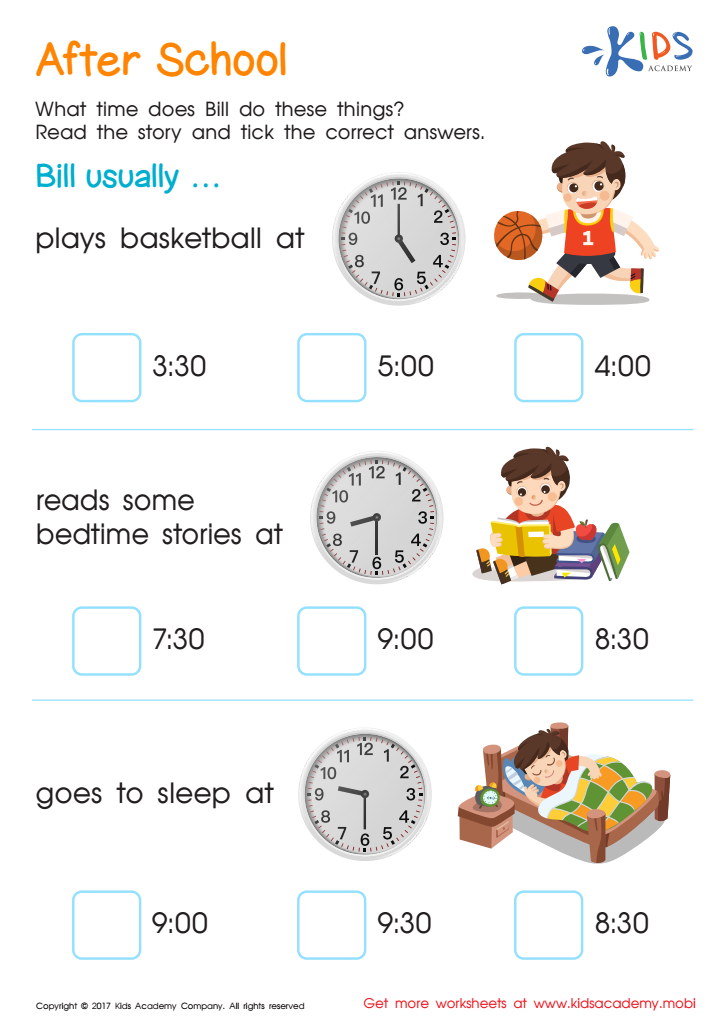
After School Time Printable
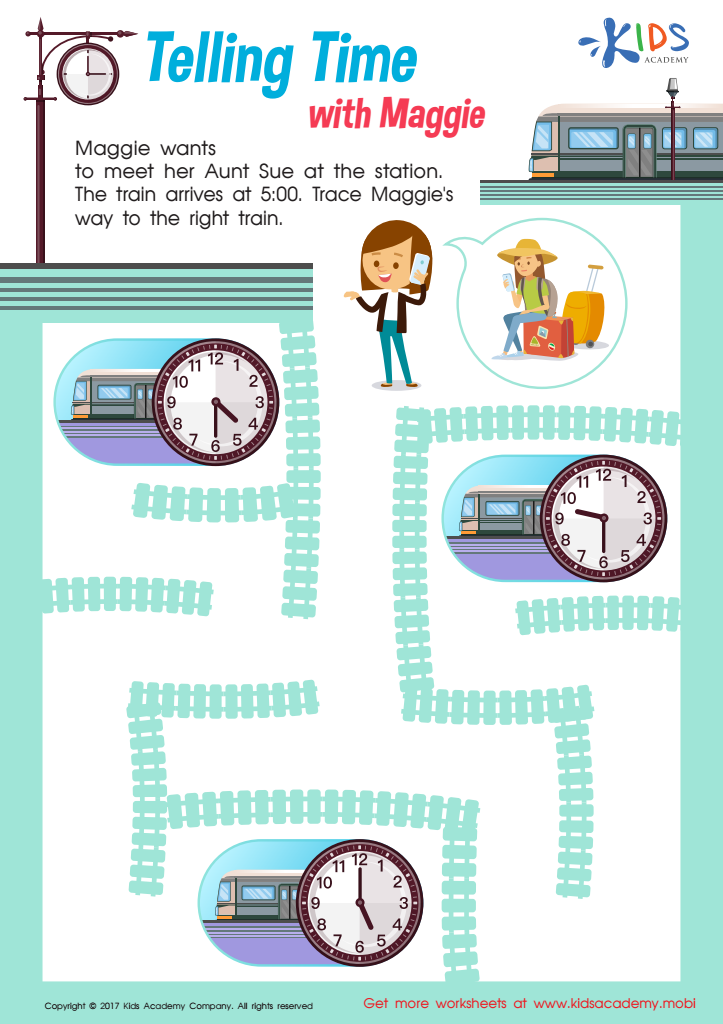
Telling Time With Maggie Time Worksheet
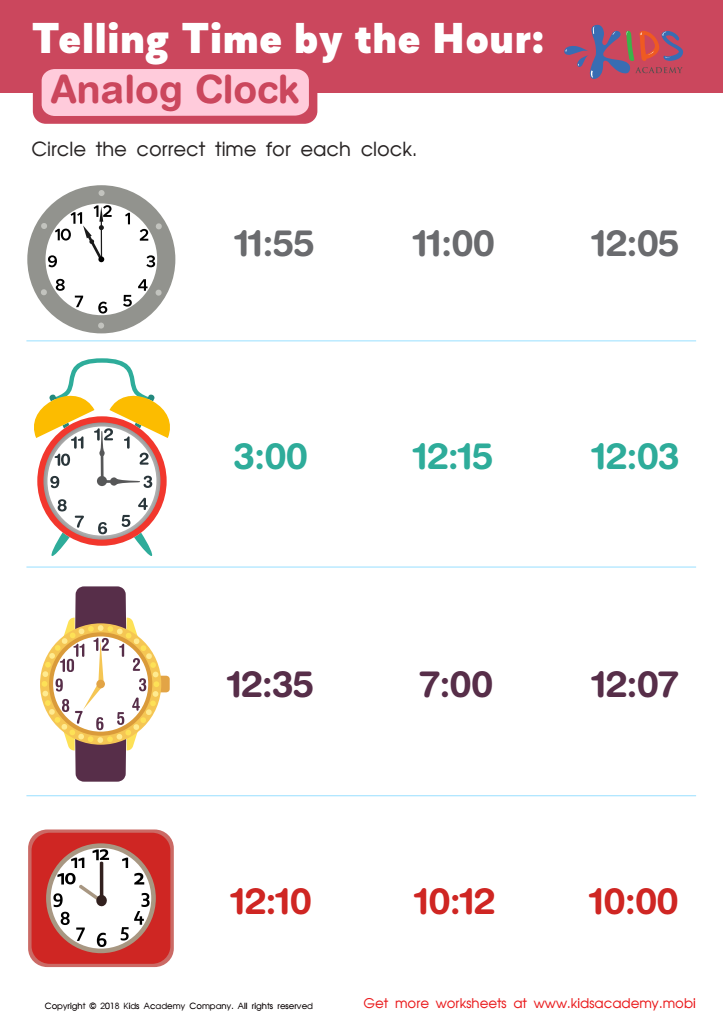
Telling Time by the Hour: Analog Clock Worksheet
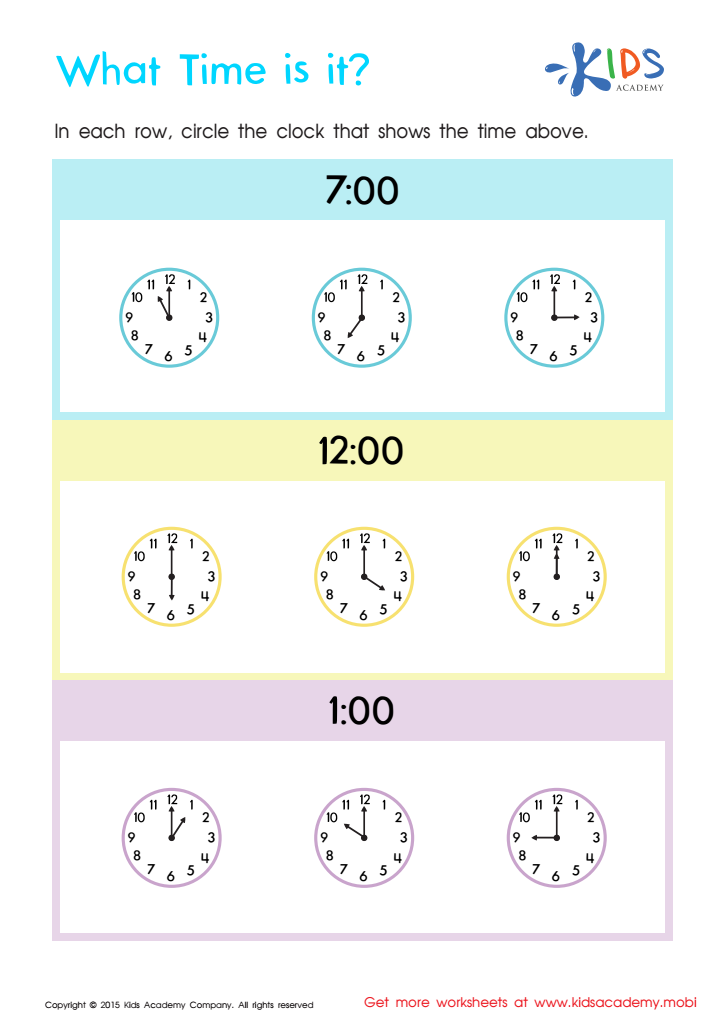
Telling The Time Worksheet: Part 3







Parents and teachers should prioritize time reading skills in math for children ages 3-6 because early foundational skills significantly impact a child's later academic success. Understanding time concepts, such as sequencing through daily routines (morning, afternoon, night) and basic time measurement (hours and minutes), fosters critical thinking and enhances cognitive development.
At this young age, children are naturally curious, and introducing them to time-related vocabulary supports language development and comprehension skills. For instance, using phrases like "When do we eat lunch?" or "It's storytime now!" helps children grasp abstract concepts by associating them with concrete experiences.
Moreover, time reading skills promote essential math abilities like counting, recognizing patterns, and understanding the relationships between numbers and time intervals. By engaging in activities like scheduling fun events, using timers, and playing time-related games, educators and parents can make learning playful and relevant.
Furthermore, these skills prepare kids for future academic endeavors, establishing a base for more complex learning in mathematics and daily life skills. Cultivating an early appreciation and understanding of time not only enhances academic readiness but also encourages responsibility, independence, and the ability to manage their own routines.








