Understanding equations Math Worksheets for Ages 3-6
4 filtered results
-
From - To
Discover our "Understanding Equations Math Worksheets for Ages 3-6" designed to introduce young learners to basic math concepts. These engaging activities help children recognize numbers, learn simple addition and subtraction, and understand the basics of equations in a fun and interactive way. Featuring colorful illustrations and easy-to-follow instructions, our worksheets support the development of critical thinking and problem-solving skills. Perfect for both classroom use and at-home practice, these resources are tailored to keep your preschool and kindergarten students intrigued and excited about math. Explore now and empower your child's mathematical journey!
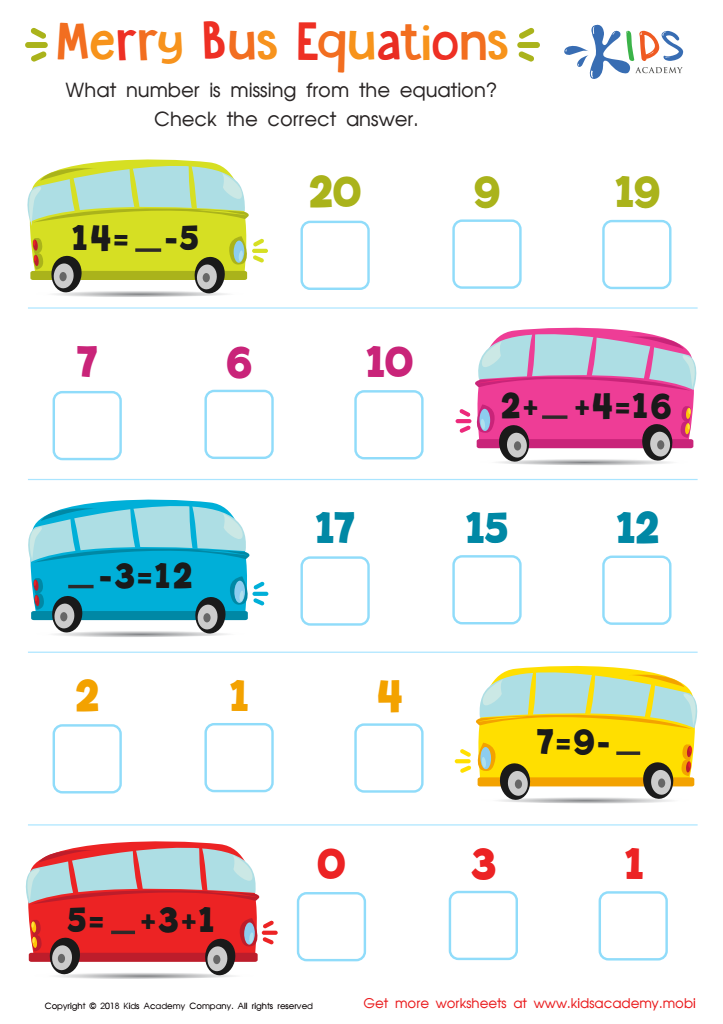
Merry Bus Equations Worksheet
 Assign to My Students
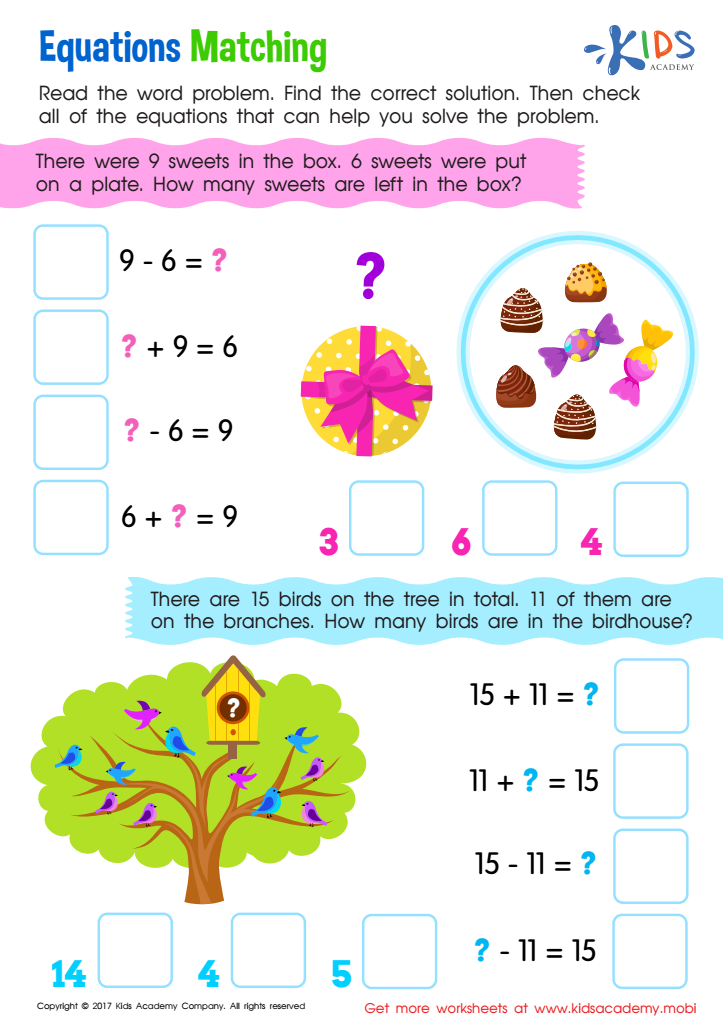
Equations Matching Word Problems Worksheet
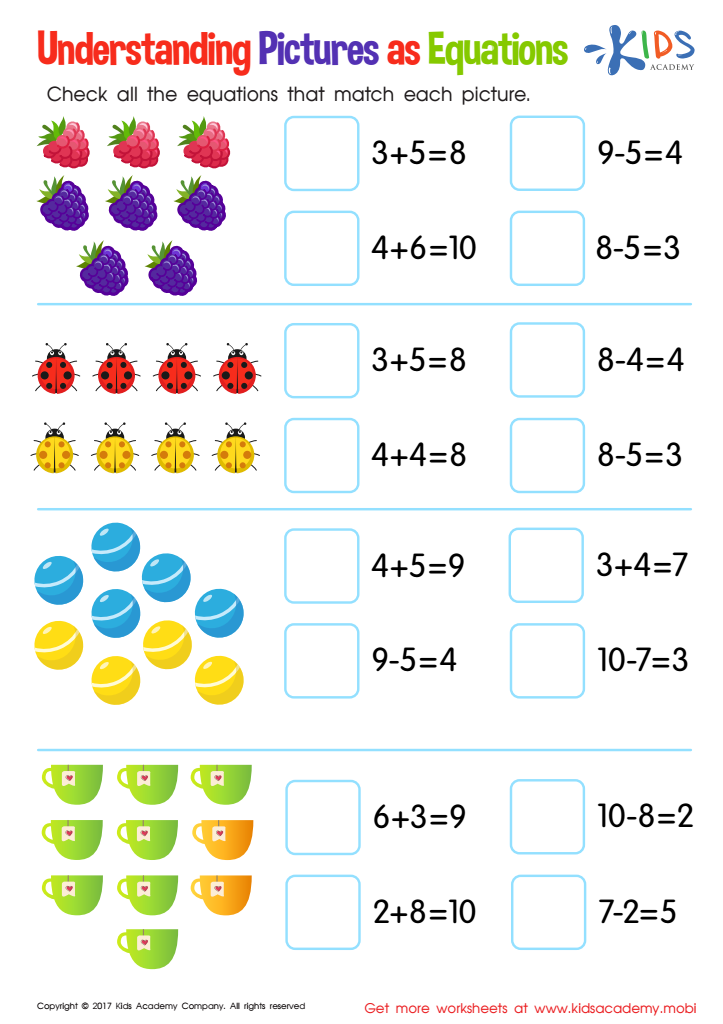
Understanding Pictures as Equations Worksheet
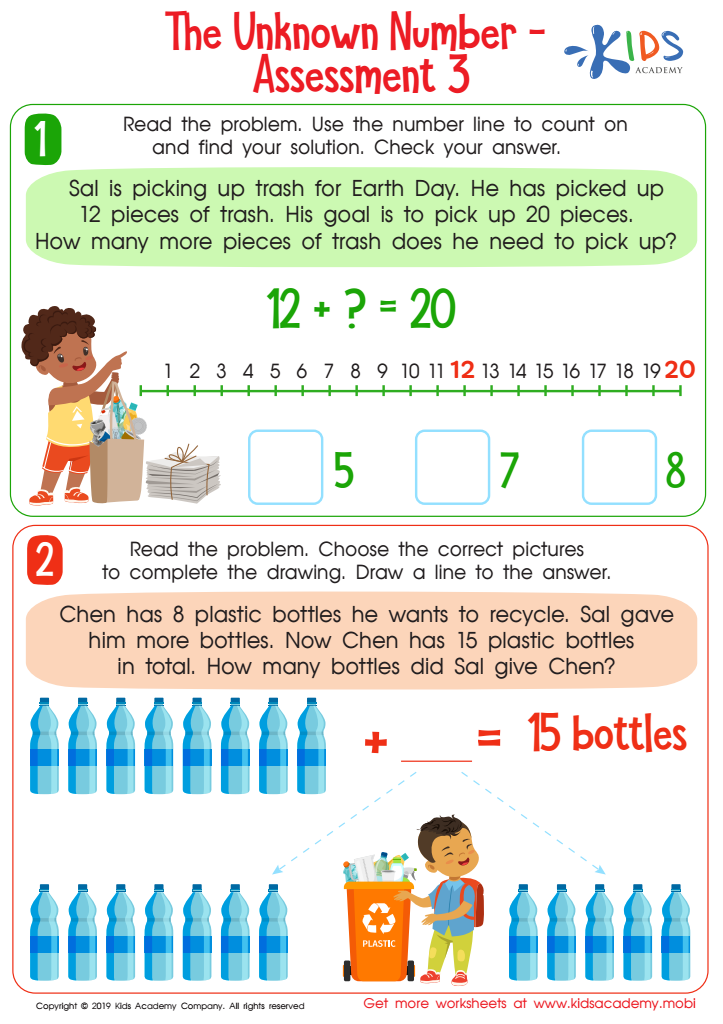
The Unknown Number - Assessment 3 Worksheet








Parents and teachers should recognize the value of introducing basic math concepts, including understanding equations, to children aged 3-6. Early exposure to mathematical thinking fosters cognitive development by encouraging problem-solving and critical thinking skills. When young children encounter simple, age-appropriate equations (such as 2 + 3 = 5), they learn to see the world through the lens of numbers and relationships.
Incorporating equation-based activities in early education helps demystify math, making it feel natural and fun rather than intimidating. Through playful activities like counting blocks, matching quantities, and simple addition or subtraction games, children develop a foundational understanding of how numbers interact. This foundational framework paves the way for more complex math learning in later years, ensuring that children are more prepared and confident when faced with algebra and higher-level math.
Moreover, familiarizing children with equations enriches their language skills. They begin to use specific mathematical vocabulary, enhancing both their verbal expression and comprehension. As educators and parents nurture these skills through enthusiasm, patience, and consistency, they foster a love for learning that transcends mathematics and aids overall academic growth. Introducing equations early also bridges gaps, promoting equity by giving all children the opportunity to thrive in mathematics from the start.








