Understanding graphs Math Worksheets for Ages 3-6
3 filtered results
-
From - To
Introduce your young learner to the exciting world of data with our "Understanding Graphs Math Worksheets for Ages 3-6." Carefully designed for preschool and kindergarten students, our worksheets build foundational math skills through engaging graph activities. Kids will learn to recognize patterns, compare quantities, and interpret simple bar graphs with vibrant visuals. These interactive exercises not only make learning fun but also help develop essential cognitive abilities such as critical thinking and problem-solving. Ideal for early childhood education, homeschool, or classroom use, our worksheets turn math into a hands-on adventure, setting the stage for future success. Explore now and watch your child thrive!
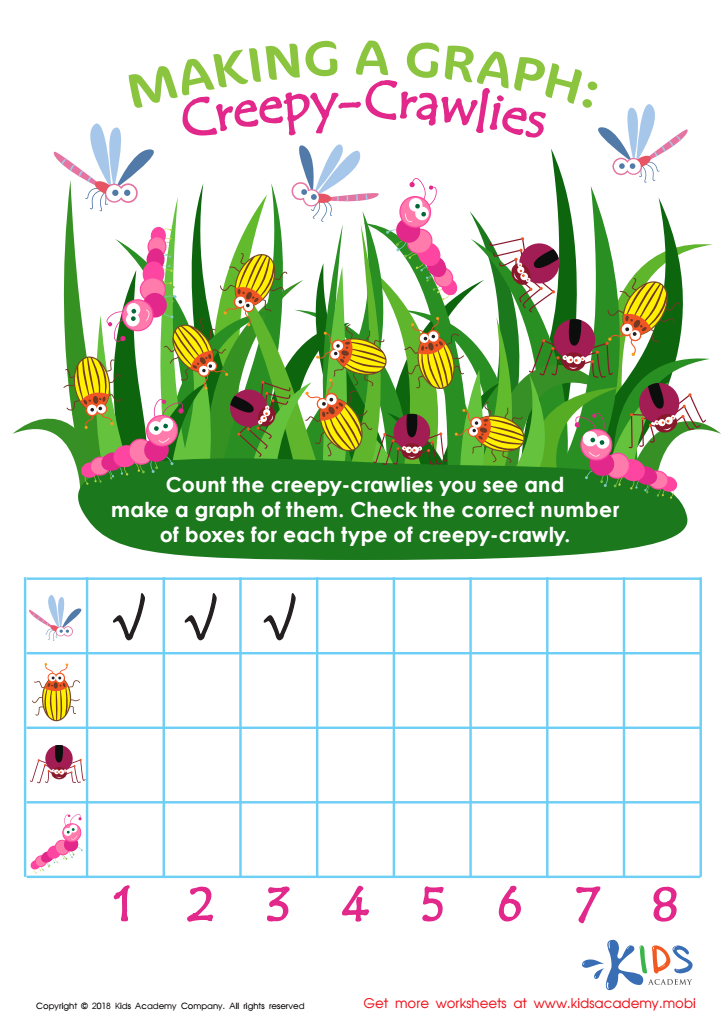
Making a Graph: Creepy Crawlies Worksheet
 Assign to My Students
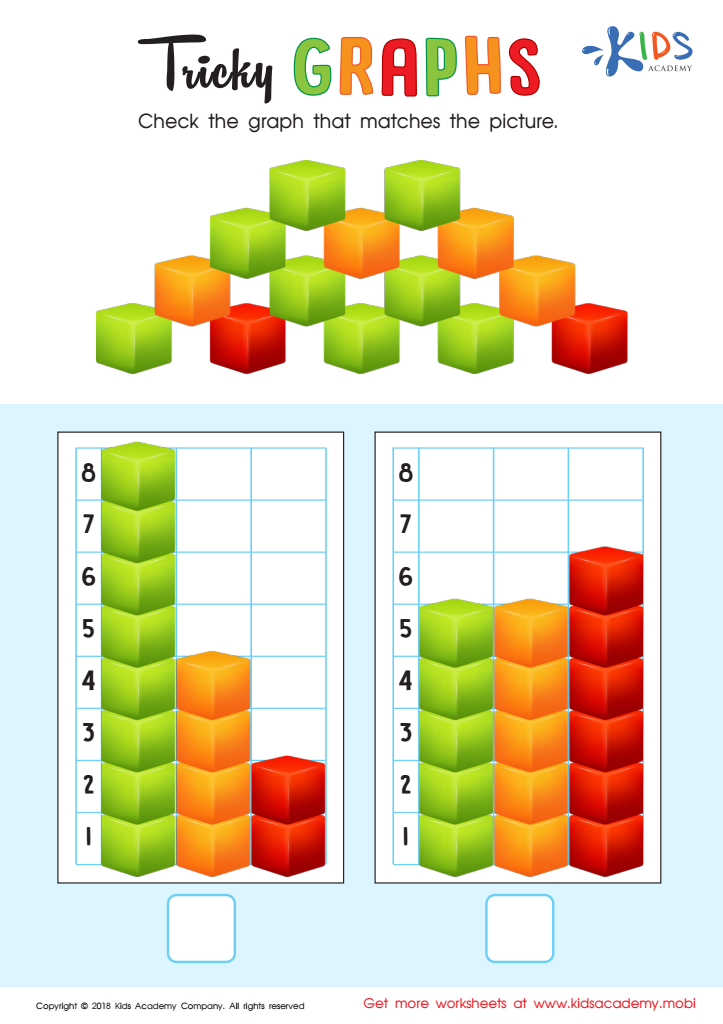
Tricky Graphs Worksheet
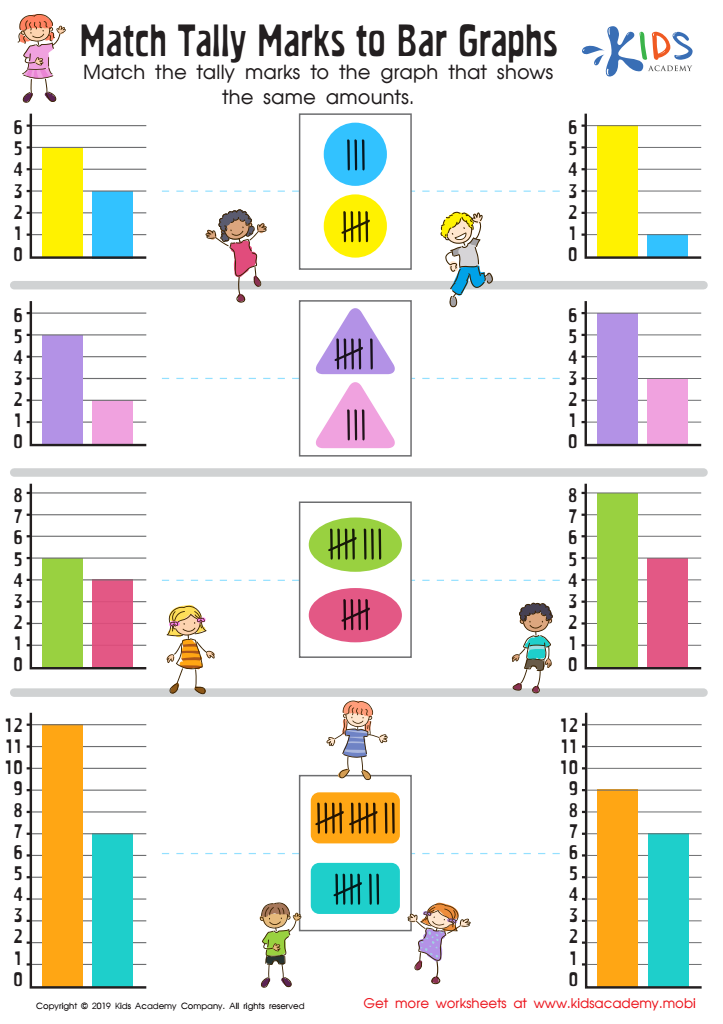
Match Tally Marks to Bar Graphs Worksheet








Understanding graphs at an early age is crucial for cognitive development and fostering foundational math skills. Firstly, learning about graphs engages young children in critical thinking and helps them interpret data in a visual, comprehensive manner. By associating everyday objects or activities with graphical representations, children develop better observational and analytical skills.
Knowing how to read and create simple graphs — like pictographs or bar charts — introduces essential math concepts such as counting, sorting, and comparison. These activities build a foundation for more complex arithmetic and reasoning skills later on, including understanding patterns and relationships between numbers. Moreover, graphs enhance children’s socio-cognitive abilities by teaching them how to communicate information effectively.
Integrating graphs into early childhood education also makes learning math more interactive and enjoyable. Activities involving graphs can incorporate play, making abstract concepts tangible through hands-on experiences. For instance, children might collect data about their favorite toys or the different colors in a picture and represent that information graphically.
This early exposure boosts their confidence and interest in mathematics, setting a positive educational trajectory. Empowering children with these early math skills gives them tools for life, fostering both academic success and everyday problem-solving abilities. Hence, parents and teachers should introduce and nurture graph comprehension in young learners.








