Understanding opposites Math Worksheets for Ages 3-6
4 filtered results
-
From - To
Discover the fun of learning opposites with our engaging math worksheets designed for children ages 3-6. These thoughtfully crafted resources help young learners grasp fundamental concepts of opposites through interactive activities and colorful visuals. Kids can explore pairs like big and small, hot and cold, and more, fostering both math skills and critical thinking. Ideal for at-home or classroom use, our worksheets encourage creative exploration and enhance you child's vocabulary. Join this exciting adventure in understanding opposites! Download our comprehensive collection now and turn learning into a playful experience that will build a solid foundation for early math skills.
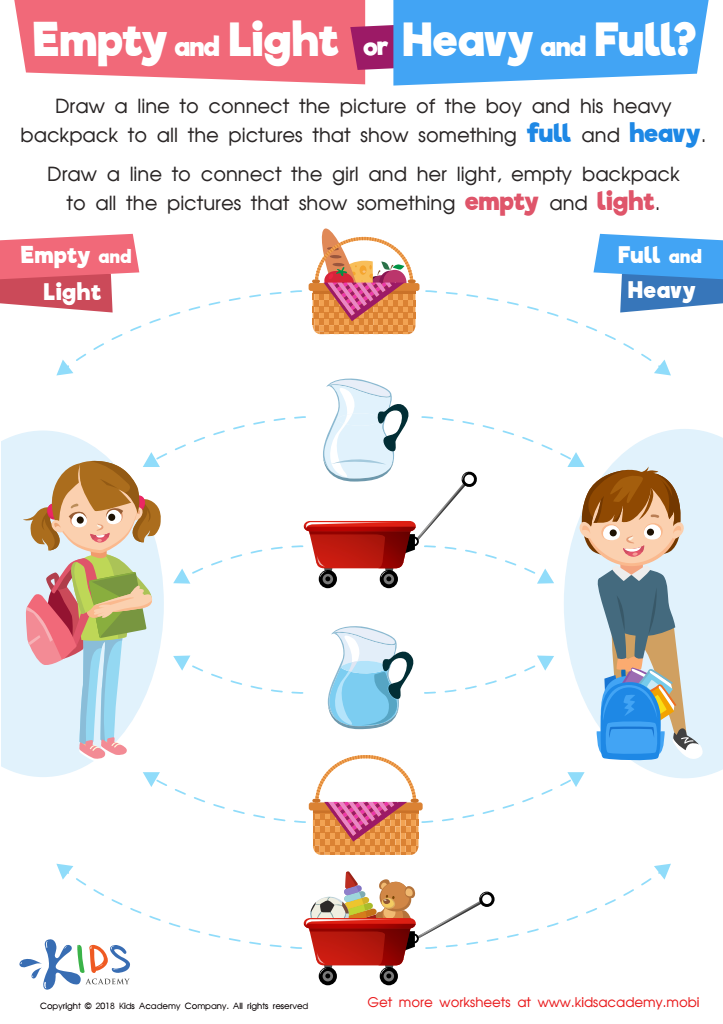
Empty and Light or Heavy and Full? Worksheet
 Assign to My Students
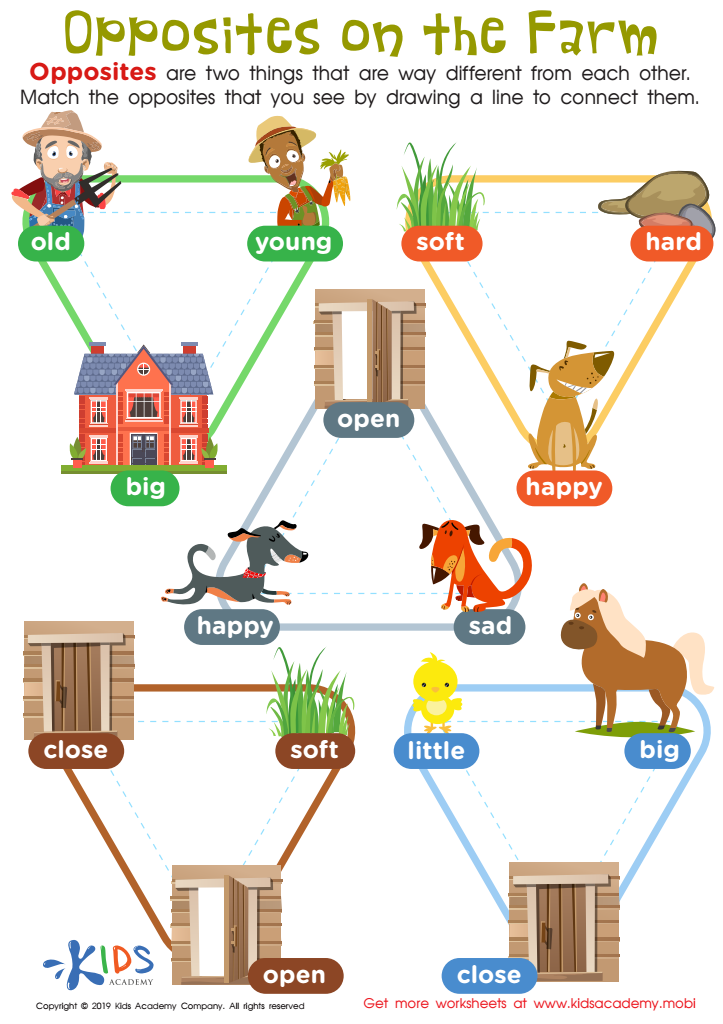
Opposites on the Farm Worksheet
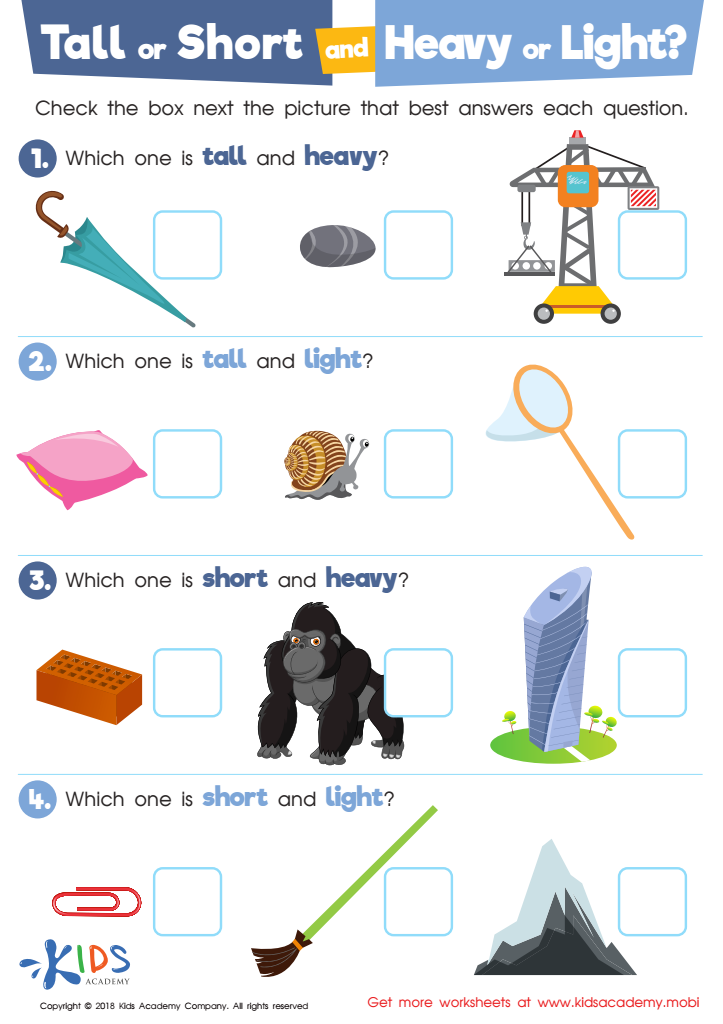
Tall or Short and Heavy or Light? Worksheet
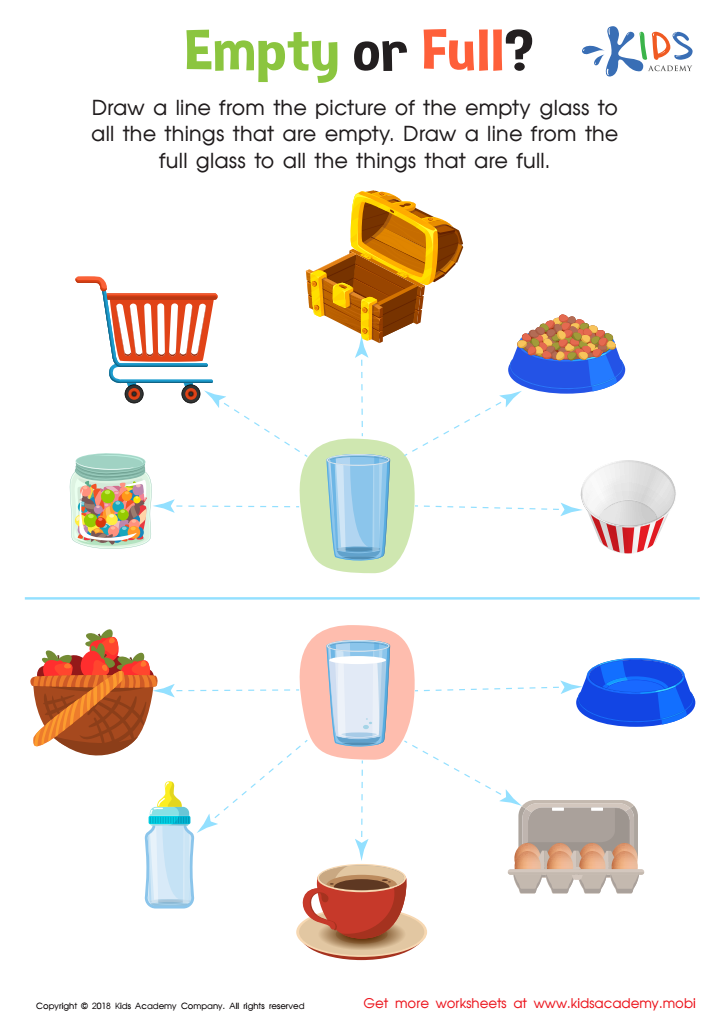
Empty or Full? Worksheet



.jpg)




Understanding opposites is a fundamental concept in early childhood education, particularly in math for ages 3-6. Teaching opposites not only enhances children's mathematical skills but also promotes critical thinking and cognitive development. When children learn about opposites, such as big/small, tall/short, or heavy/light, they begin to grasp the concept of comparison and measurement, laying a solid foundation for future mathematical learning.
Moreover, engaging with opposites helps develop vocabulary and language skills. As children describe differences and similarities between objects, they expand their verbal expression, which is essential for effective communication. Expecting children to identify and articulate opposites cultivates observational skills and enhances their understanding of the world around them.
Additionally, grasping opposites aids in building reasoning skills. Children learn to categorize and sort objects, which introduces them to foundational concepts in statistics and data analysis. This understanding extends beyond math into everyday scenarios, promoting problem-solving abilities.
Ultimately, parents and teachers should care about teaching opposites in math because it fosters holistic development—cognitively, socially, and emotionally. By investing time in this critical area, they prepare young learners for successful futures in more complex mathematical concepts and real-life situations.








