Understanding opposites Math Worksheets for Ages 6-9
3 filtered results
-
From - To
Our collection of "Understanding Opposites Math Worksheets" for ages 6-9 provides engaging activities to help young learners grasp fundamental math concepts through the exploration of opposites. These carefully designed worksheets not only strengthen early math skills but also enhance critical thinking and problem-solving abilities. By comparing and identifying opposite qualities, children build a solid foundation in concepts such as high and low, big and small, and more. Ideal for both classroom and at-home learning, these printable resources make math fun and accessible, ensuring your child develops confidence and proficiency with opposites in math.
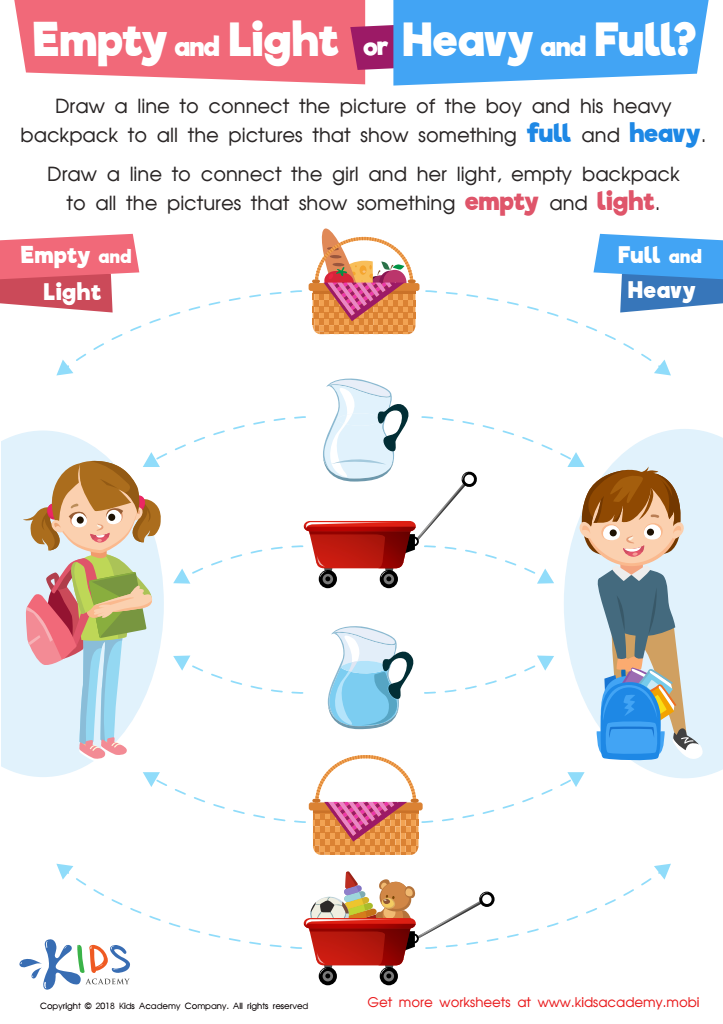
Empty and Light or Heavy and Full? Worksheet
 Assign to My Students
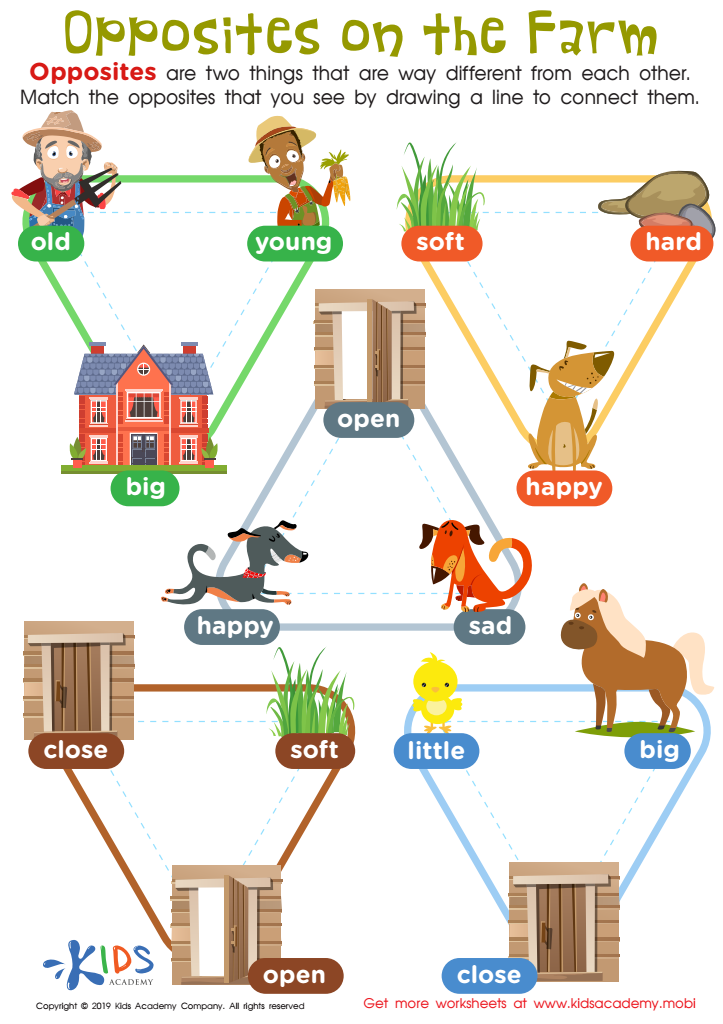
Opposites on the Farm Worksheet
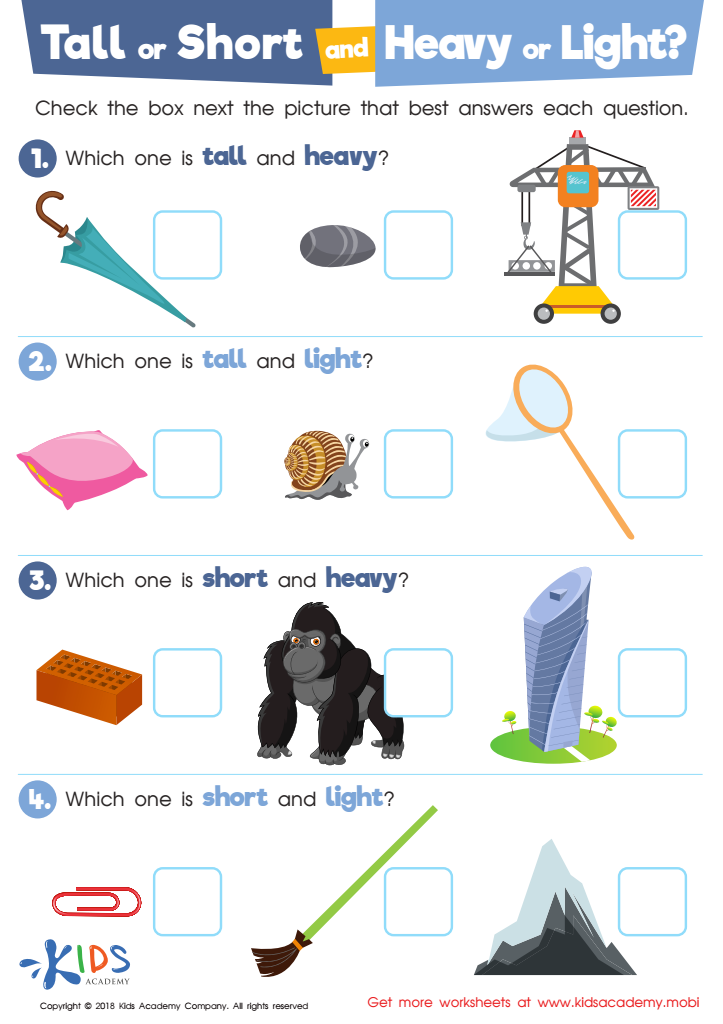
Tall or Short and Heavy or Light? Worksheet







Understanding opposites in math is fundamental for young learners, and it's crucial for parents and teachers to recognize its importance. For children aged 6-9, cognitive development is at a stage where grasping basic concepts is essential for future learning. Opposites in math, such as addition and subtraction, multiplication and division, form the root of these basic concepts and help establish a solid mathematical foundation.
When children learn about opposites, they develop critical thinking skills and logical reasoning. These skills are not only key in math but are also transferable to other academic areas and daily life situations. For instance, knowing that subtraction is the opposite of addition helps children understand the relationship between numbers and operations, enabling them to approach problems from multiple angles and find solutions effectively.
Moreover, understanding opposites helps in recognizing patterns, an essential part of mathematical thinking. Recognizing that hot and cold, tall and short, are opposites allows children to better understand quantitative measures like more and less or greater and smaller.
By fostering an understanding of mathematical opposites at an early age, parents and teachers are equipping children with the tools they need for academic success and instilling confidence in their problem-solving abilities. This foundational knowledge paves the way for more advanced concepts later in their education journey.








