
Understanding shapes Math Worksheets for Ages 3-6
4 filtered results
Difficulty Level
Grade
Age
-
From - To
Subject
Activity
Standards
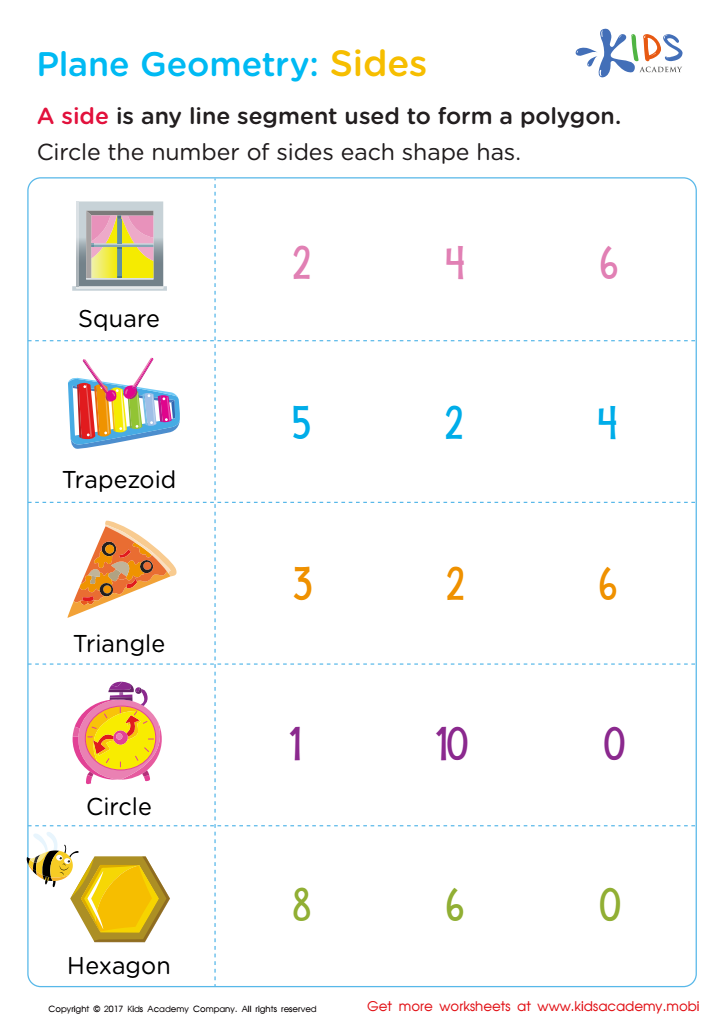
"Understanding Shapes Math Worksheets for Ages 3-6" help young learners explore the world of shapes through fun and engaging activities. These worksheets, created by educational experts, introduce children to basic geometric concepts, ensuring a solid foundation in early math skills. Ideal for preschool and kindergarten students, these printables feature colorful illustrations, matching exercises, and tracing activities designed to enhance shape recognition, fine motor development, and spatial awareness. Perfect for classroom and at-home learning, our worksheets make mastering shapes enjoyable and interactive, fostering a love for math from an early age. Explore our collection and watch your child's confidence soar!
Favorites
With answer key
Interactive
 Assign to My Students
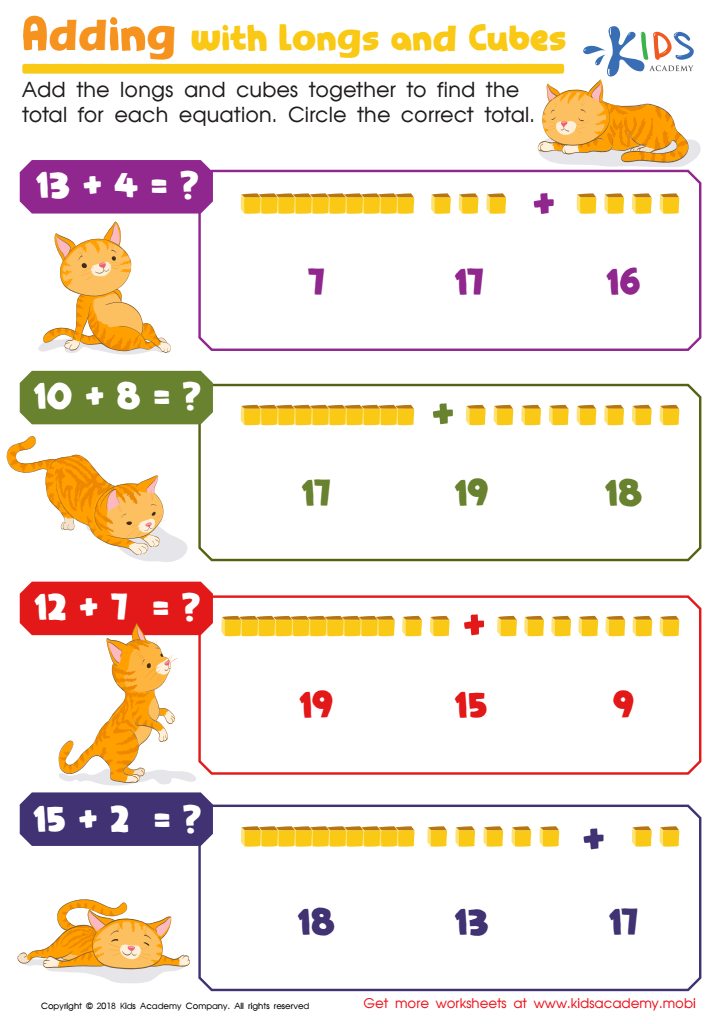
Adding With Longs and Cubes Worksheet
Math might not be your child's favorite, but they must master it to advance. If they're having difficulties or don't like it, use this worksheet to make it easier. Have them add longs and cubes together to find the total for each question, then circle the correct answer. This exercise can help make math experiences better.
Adding With Longs and Cubes Worksheet
Worksheet
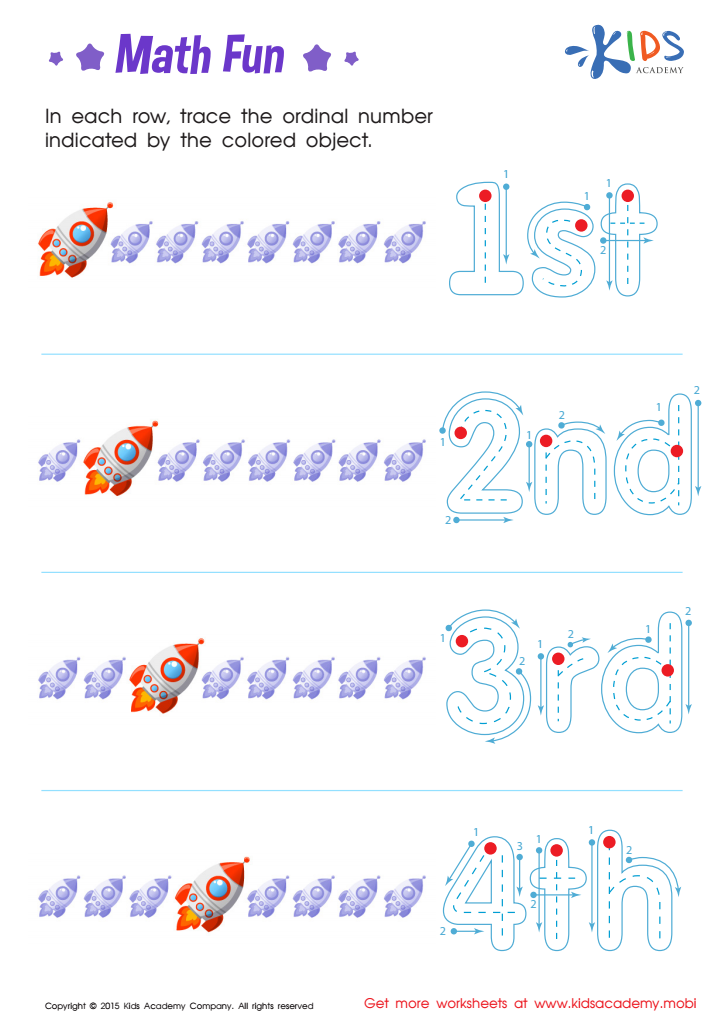
Ordinal Numbers: Math Fun Worksheet
Have fun learning ordinal numbers with our spaceship worksheet! Kids learn best while having fun and with repetition. Featuring vibrant spaceships, your child will understand placement, recognize and write ordinal numbers, and make connections. Understanding ordinal numbers leads to more advanced math concepts. Get your math whiz ready for preschool with our addition/subtraction worksheets! Have fun learning ordinal numbers and master them in no time!
Ordinal Numbers: Math Fun Worksheet
Worksheet
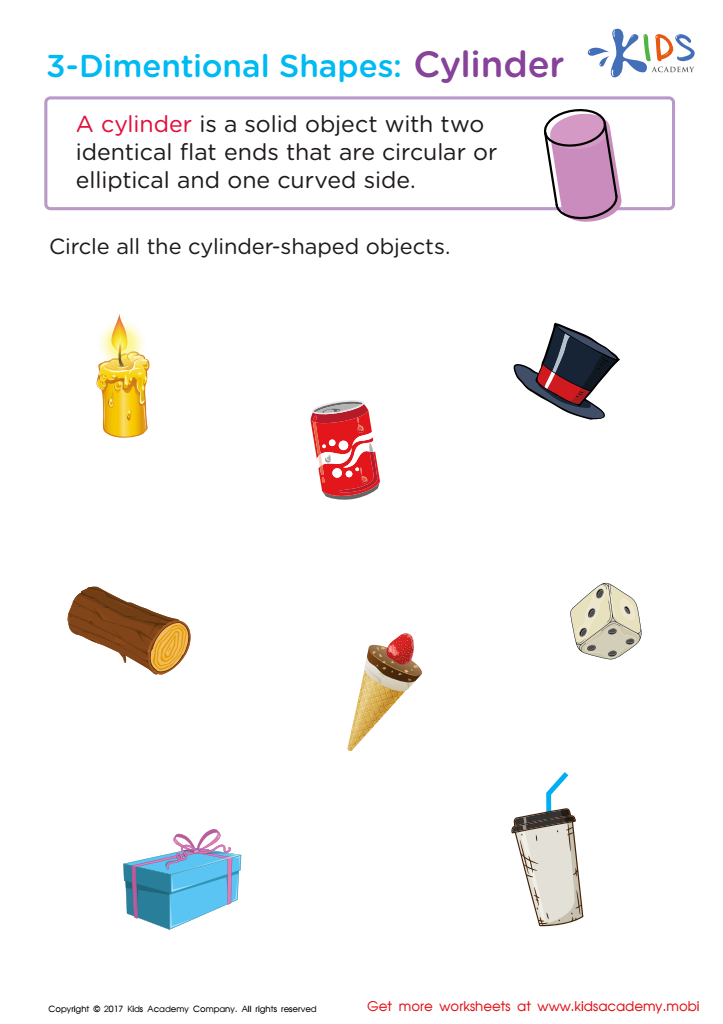
Three–Dimensional Shapes: Cylinder Worksheet
Introduce your toddler to geometry and 3D cylinders with this printable and watch their knowledge grow. It will help them recognize, define, and identify cylinders, as well as differentiate between 3D objects.
Three–Dimensional Shapes: Cylinder Worksheet
Worksheet
Join Kids Academy for Free
Who is primarily going to use this learning content?







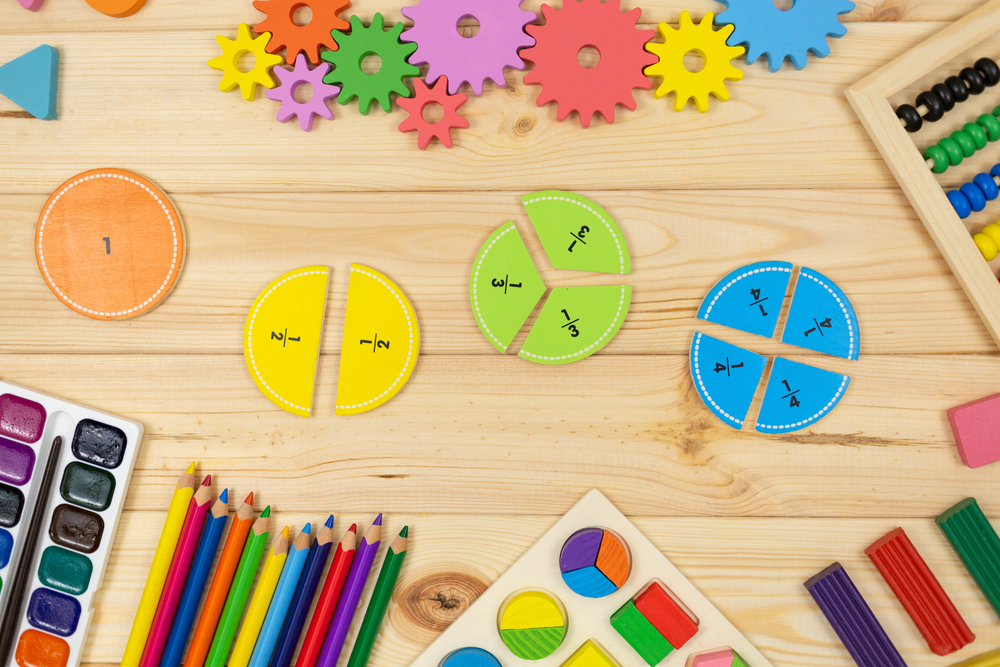
Understanding shapes is a foundational math skill crucial for young children ages 3-6 because it lays the groundwork for future learning in both mathematics and everyday life. At this age, children are starting to make sense of the world around them through observation and exploration. Recognizing and manipulating shapes enhances their spatial awareness, which is essential for interpreting and interacting with their environment.
Shapes are everywhere—blocks, leaves, books, and even traffic signs. By learning to identify and categorize these basic geometric forms, children develop important cognitive skills, including visual discrimination and pattern recognition. These skills are not only fundamental for mathematics but also for reading and problem-solving.
In addition, understanding shapes helps children improve their language and communication skills. As they learn words like "circle," "square," and "triangle," they gain the vocabulary to describe the world more accurately. This boosts their ability to express themselves effectively and follow directions.
Furthermore, shape recognition is a stepping stone to more advanced math concepts, such as symmetry, geometry, and measurement. These form the core of mathematical reasoning and logic, skills that are vital for success in STEM fields. By fostering a solid understanding of shapes early on, parents and teachers set the stage for robust and long-lasting mathematical competence.








