
Underwater animal identification Math Worksheets for Ages 3-6
3 filtered results
Difficulty Level
Grade
Age
-
From - To
Subject
Activity
Standards
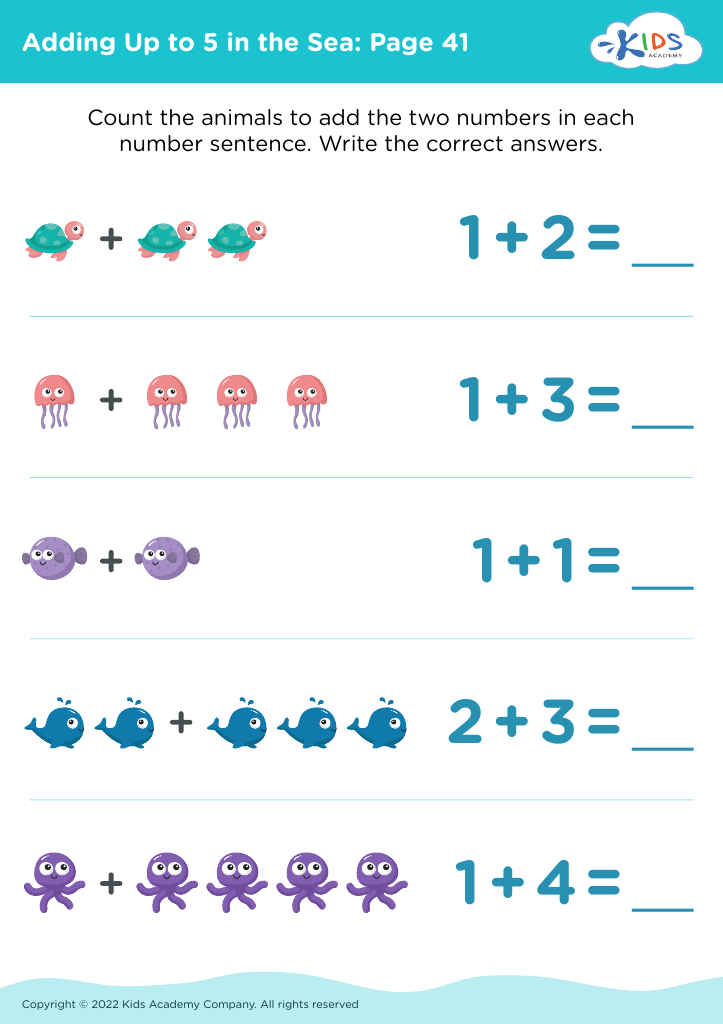
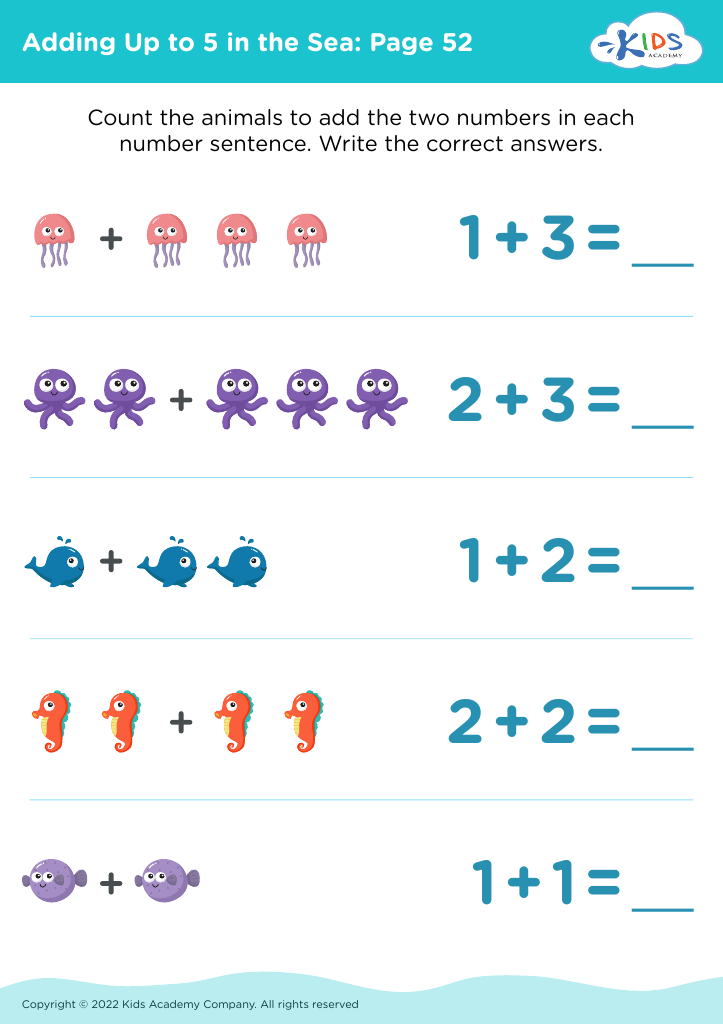
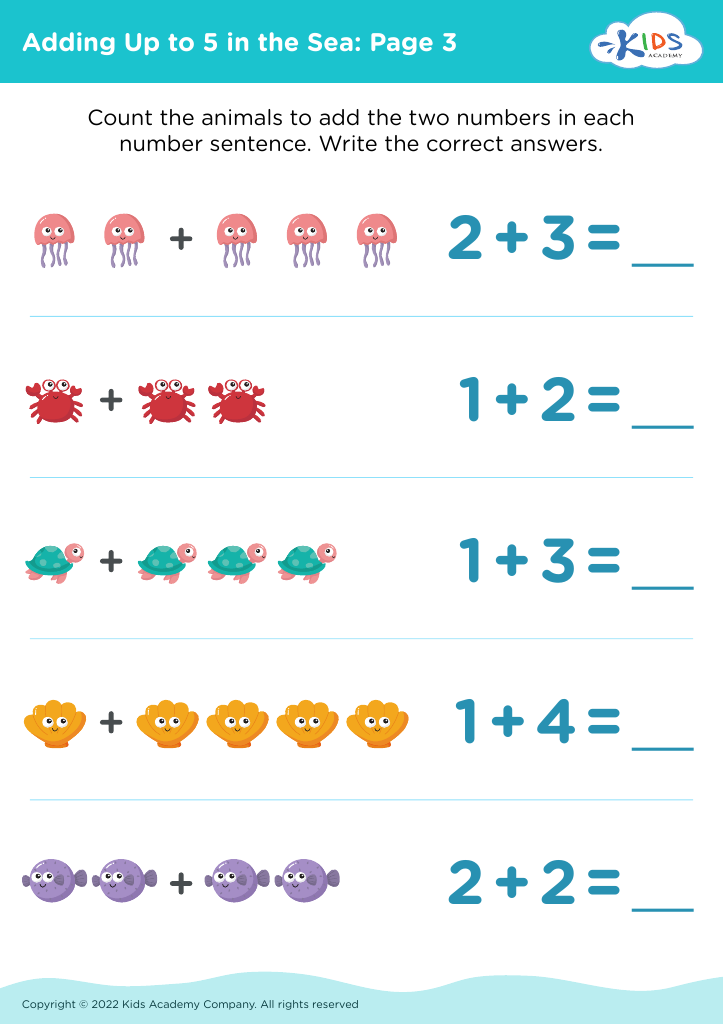
Dive into learning with our "Underwater Animal Identification Math Worksheets" designed specifically for ages 3-6! These fun and engaging worksheets help young learners explore the fascinating world of marine life while developing essential math skills. Children will identify various underwater animals through vibrant illustrations and exciting activities. Each worksheet promotes early numeracy skills such as counting, sorting, and basic addition, all tied to the theme of ocean creatures. Perfect for parents and educators alike, these resources encourage creativity and critical thinking, making math an adventure beneath the waves. Explore, learn, and make a splash in education today!
Favorites
With answer key
Interactive
Join Kids Academy for Free
Who is primarily going to use this learning content?







Parents and teachers should care about underwater animal identification math for ages 3-6 because it promotes early literacy in both science and mathematics. Engaging young children in identifying underwater animals encourages curiosity about the natural world and lays the foundation for ecological awareness. Additionally, linking animals to math concepts introduces foundational skills such as counting, sorting, and recognizing patterns. For example, children can tally the number of fish in a diagram or sort animals by different attributes (e.g., size, color).
This interdisciplinary approach not only enhances cognitive development but also makes learning fun and interactive. Through engaging visuals and activities, children cultivate critical thinking and observation skills while fostering a sense of connection to marine life. Furthermore, this type of learning nurtures teamwork and communication when children engage in collaborative projects, such as creating their own underwater habitats.
Ultimately, introducing underwater animal identification and math at an early age helps develop essential skills while instilling a sense of wonder and appreciation for the ocean's biodiversity. It lays a strong foundation for future learning and encourages a lifelong interest in both science and mathematics, crucial subjects for a well-rounded education.








