Check out this FREE Trial Lesson on Math for age 3-6!

Z

Favorites
With answer key
Interactive
  • 3-6
  • Visual Learning
  • Math
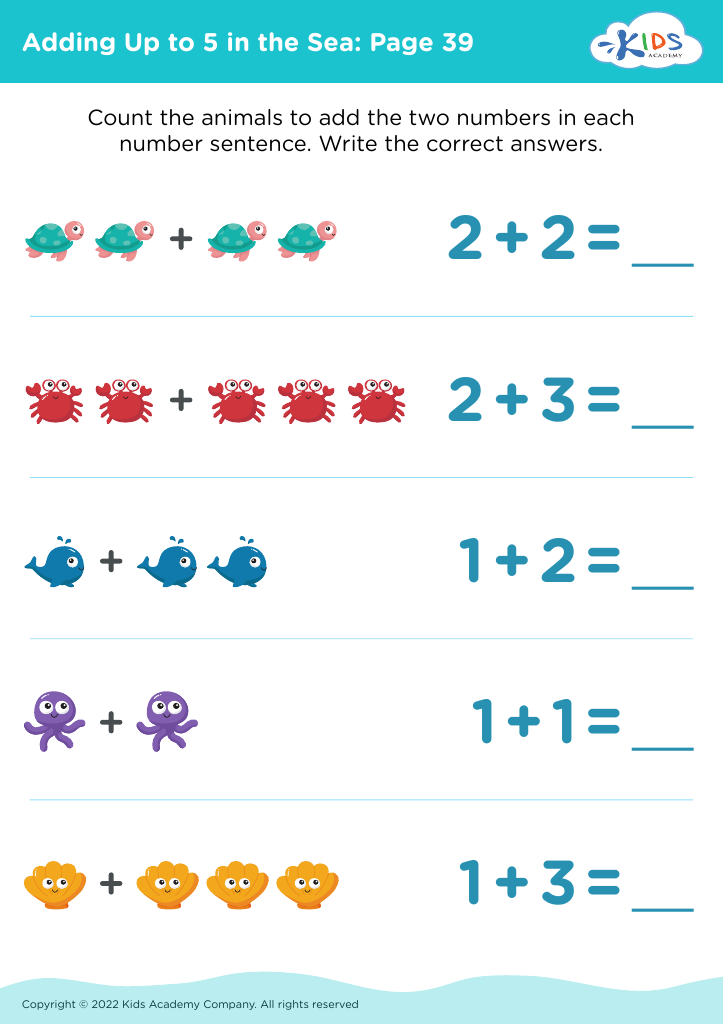
Adding Up to 5 in the Sea: Page 39
Worksheet
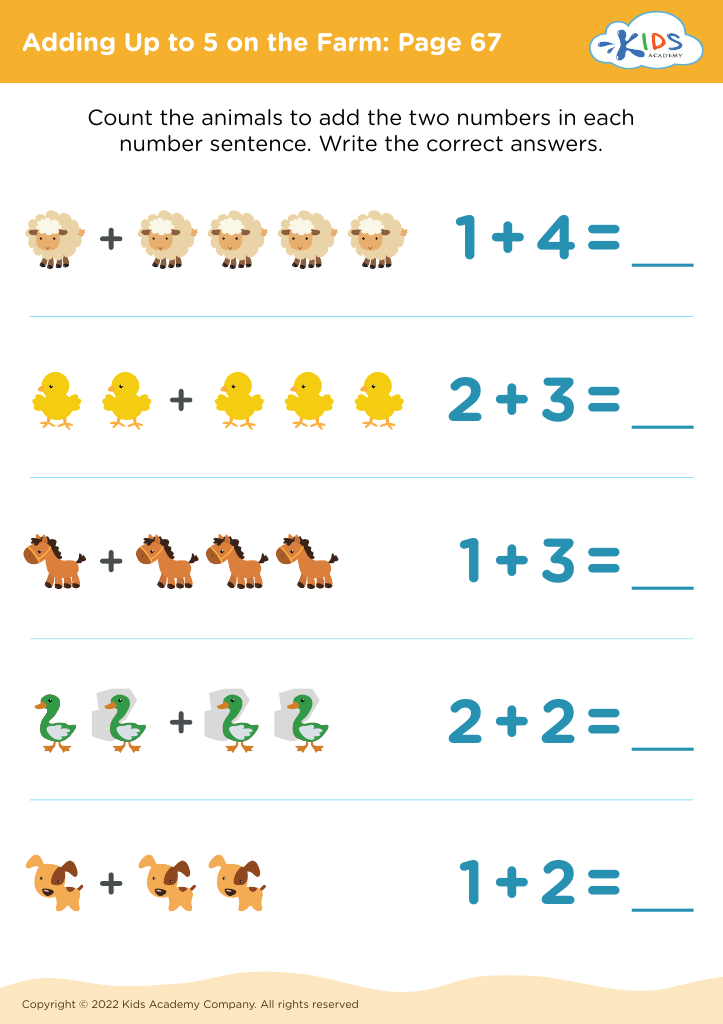
Adding Up to 5 on the Farm: Page 67
Worksheet
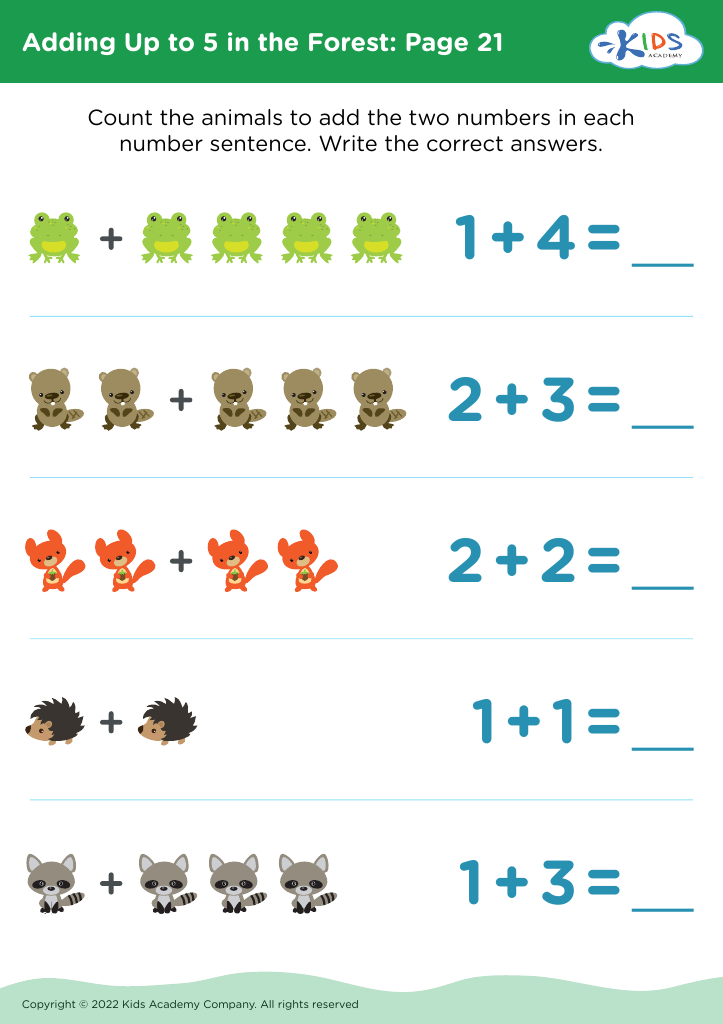
Adding Up to 5 in the Forest: Page 21
Worksheet
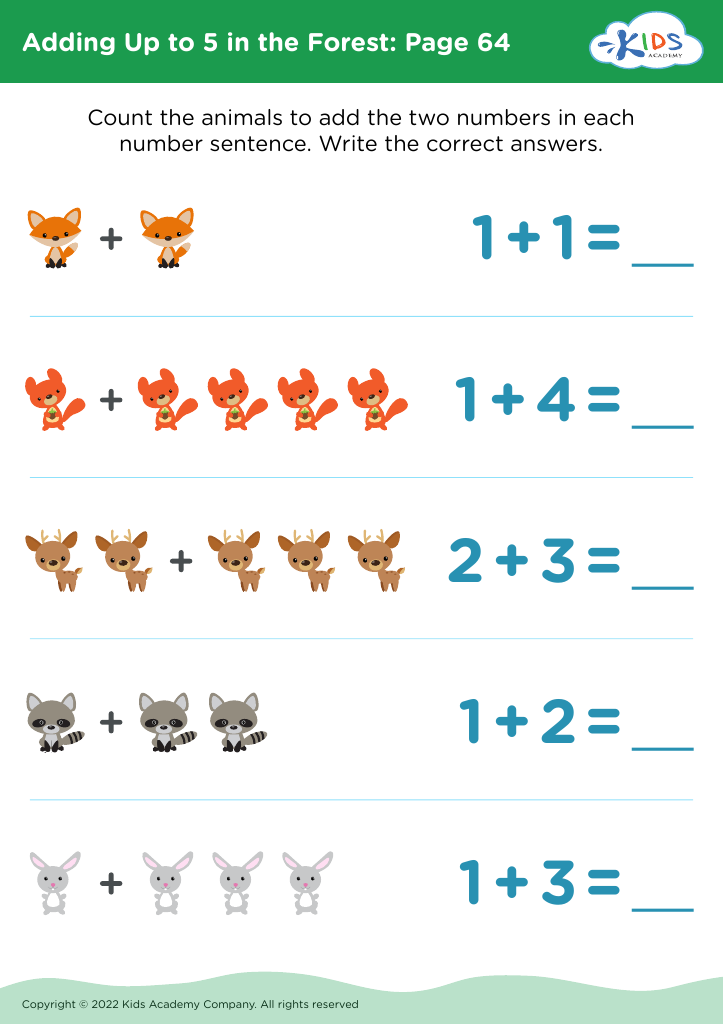
Adding Up to 5 in the Forest: Page 64
Worksheet
Half and Quarter of a Bun Worksheet

Half and Quarter of a Bun Worksheet

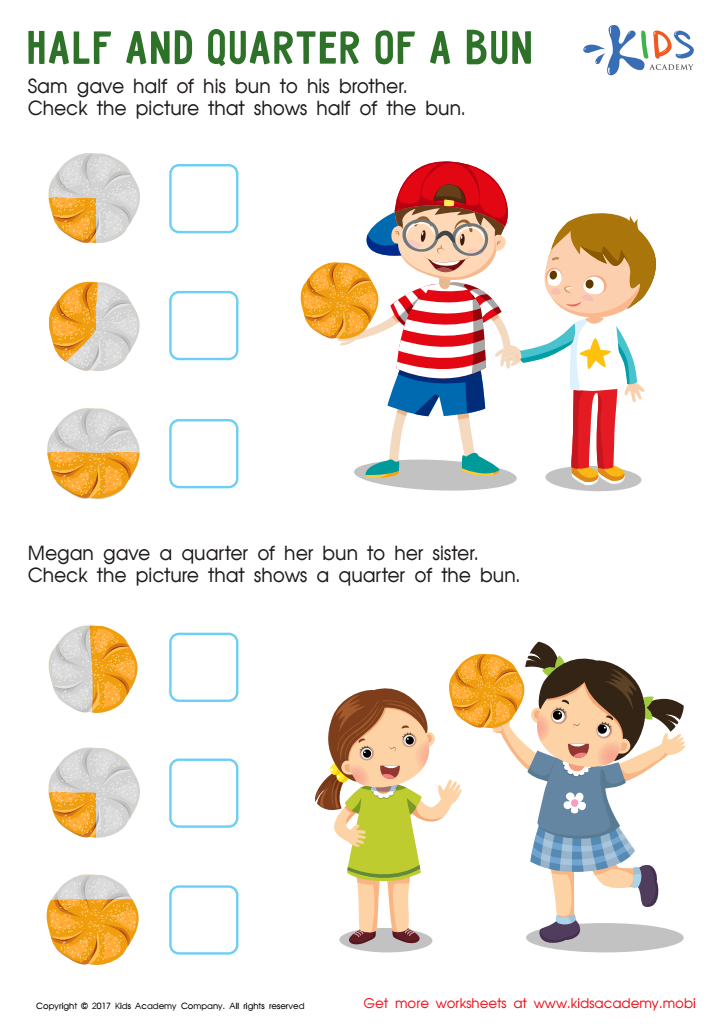
This worksheet introduces Sam, his brother and Megan, her sister, who are sharing buns. Show kids the picture of half and quarter to help them understand. Ask if they know what half and quarter of a shape is before progressing. Help them check the picture showing half and quarter of a bun.
Half and Quarter of a Bun Worksheet
Worksheet
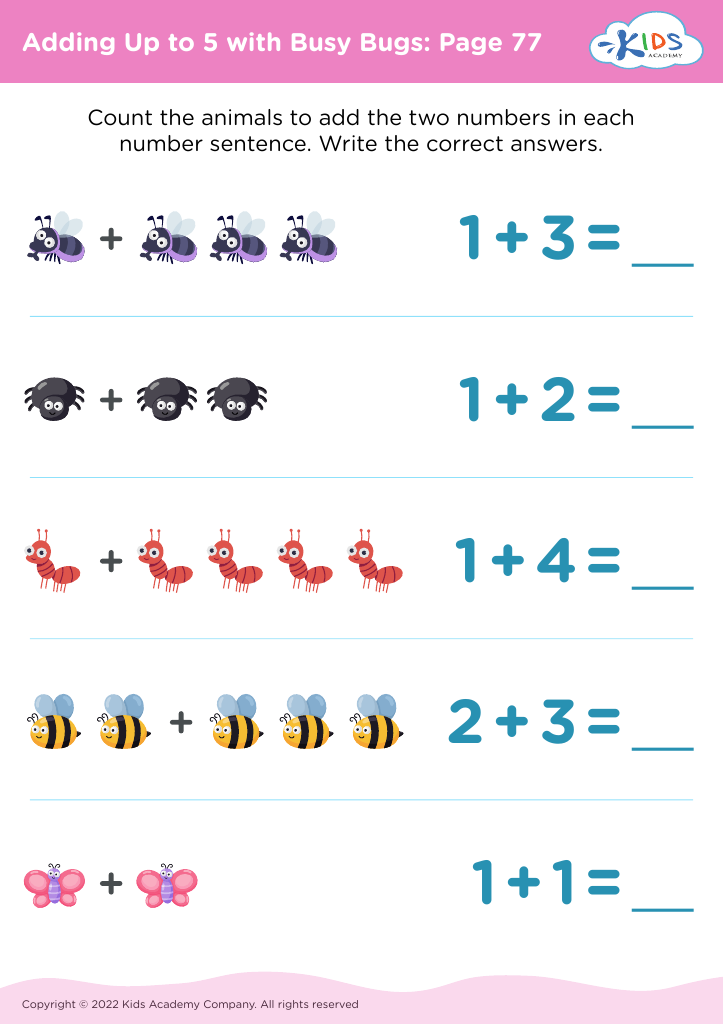
Adding Up to 5 with Busy Bugs: Page 77
Worksheet
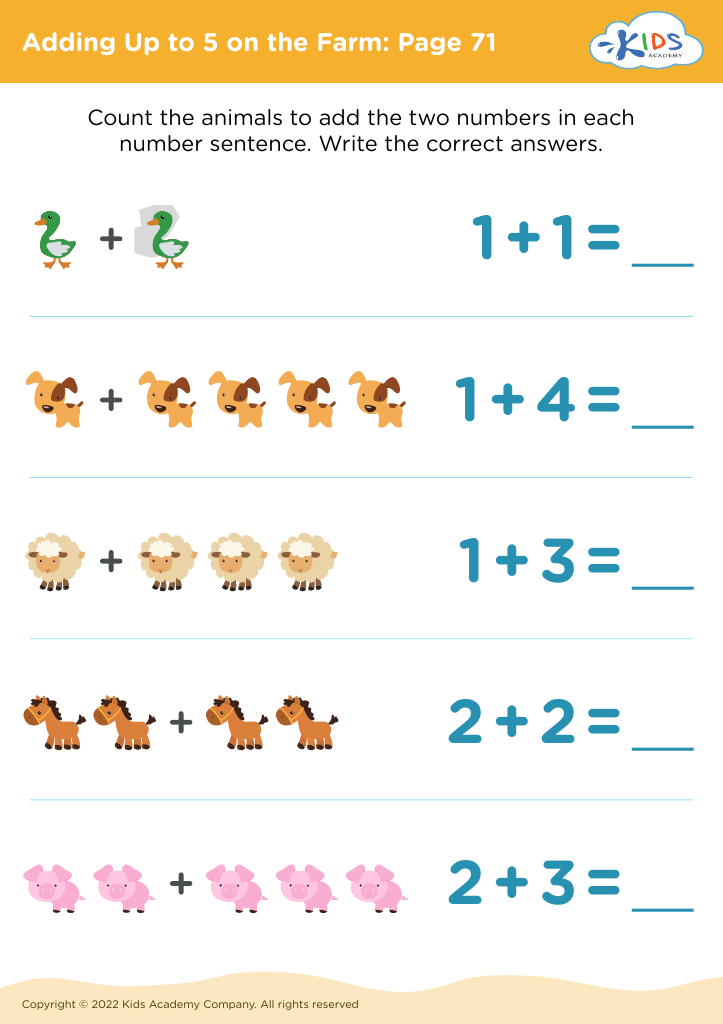
Adding Up to 5 on the Farm: Page 71
Worksheet
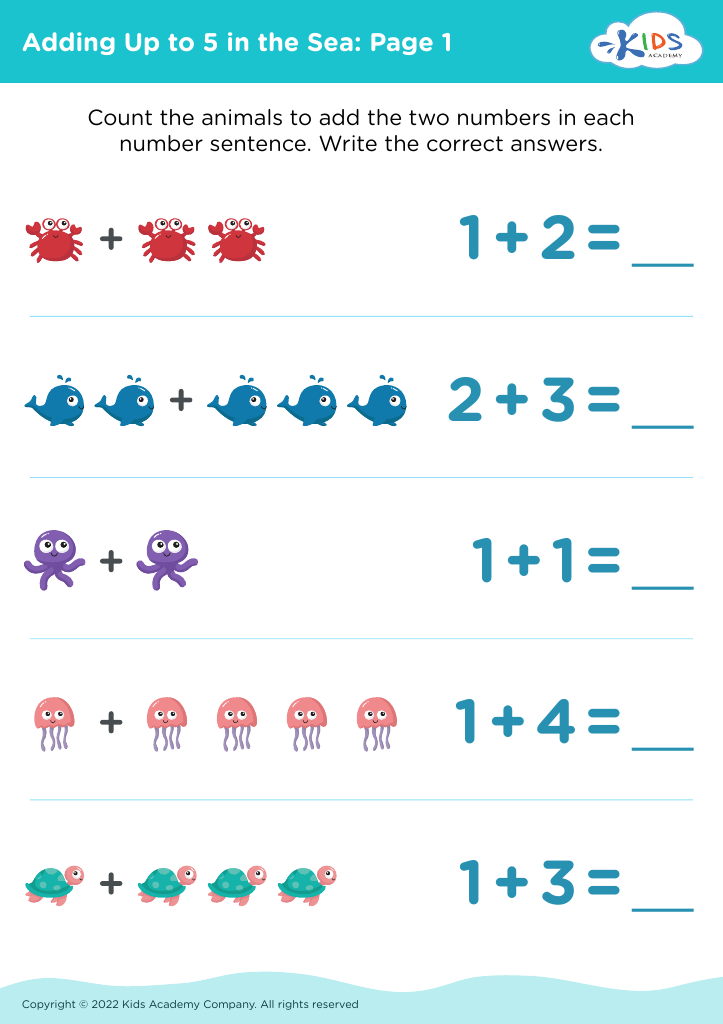
Adding Up to 5 in the Sea: Page 1

Adding Up to 5 in the Sea: Page 1

Adding Up to 5 in the Sea: Page 1
Worksheet
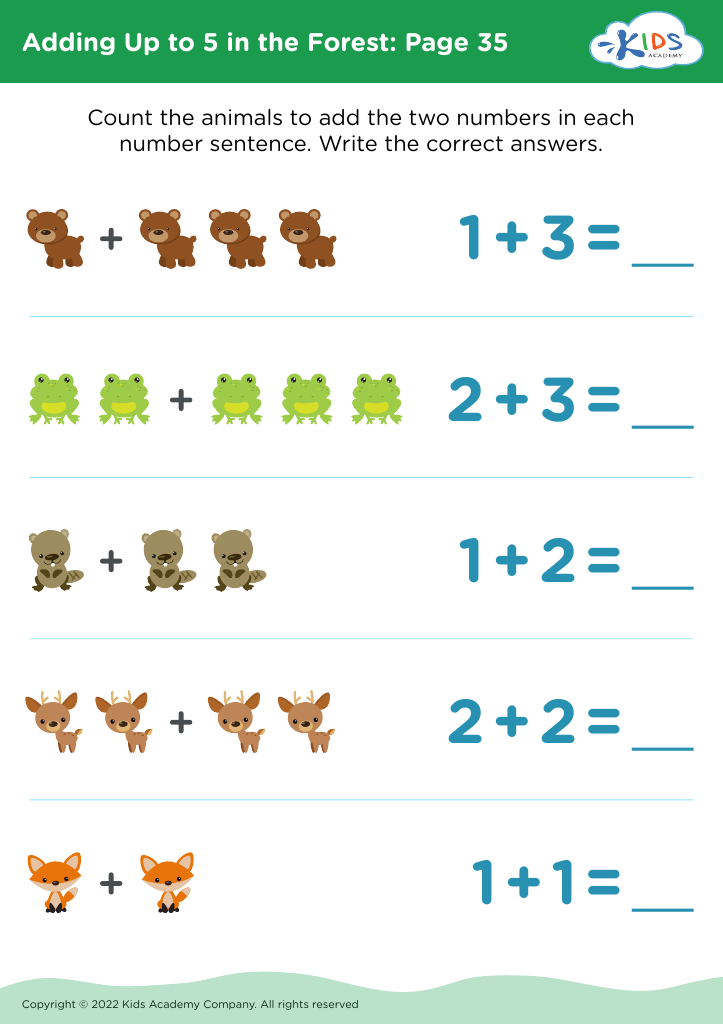
Adding Up to 5 in the Forest: Page 35
Worksheet
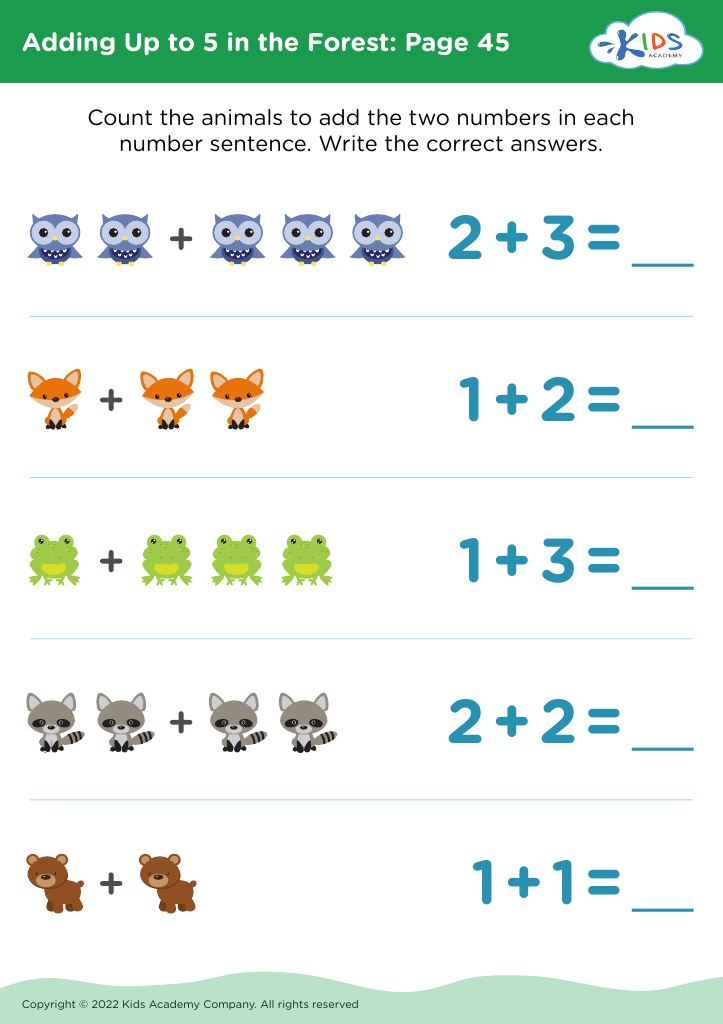
Adding Up to 5 in the Forest: Page 45
Worksheet
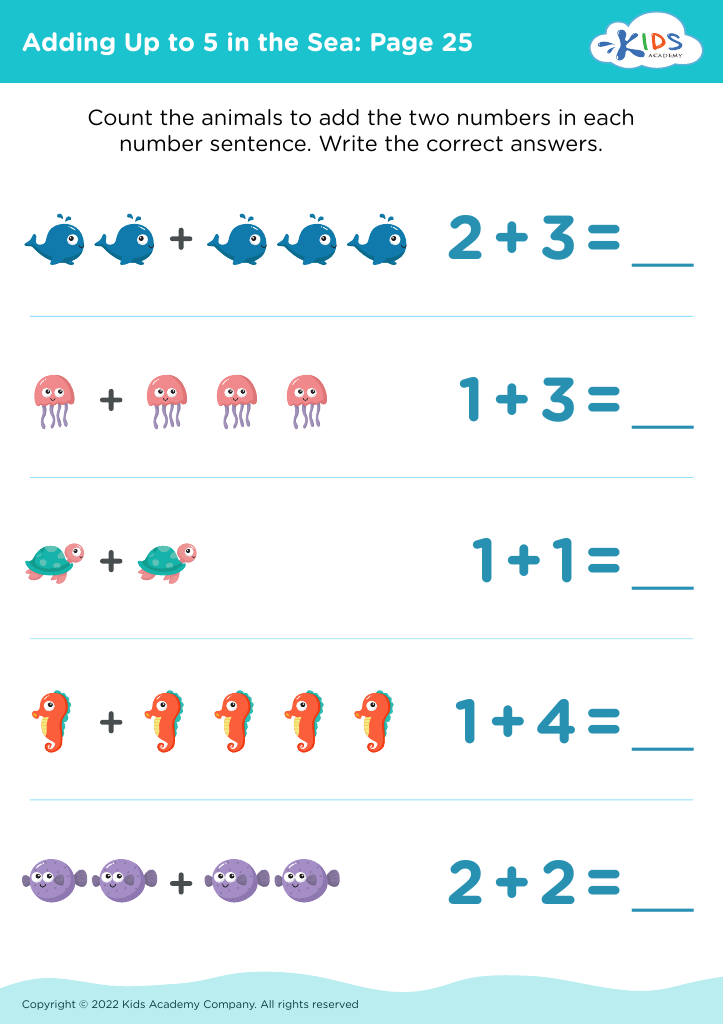
Adding Up to 5 in the Sea: Page 25
Worksheet
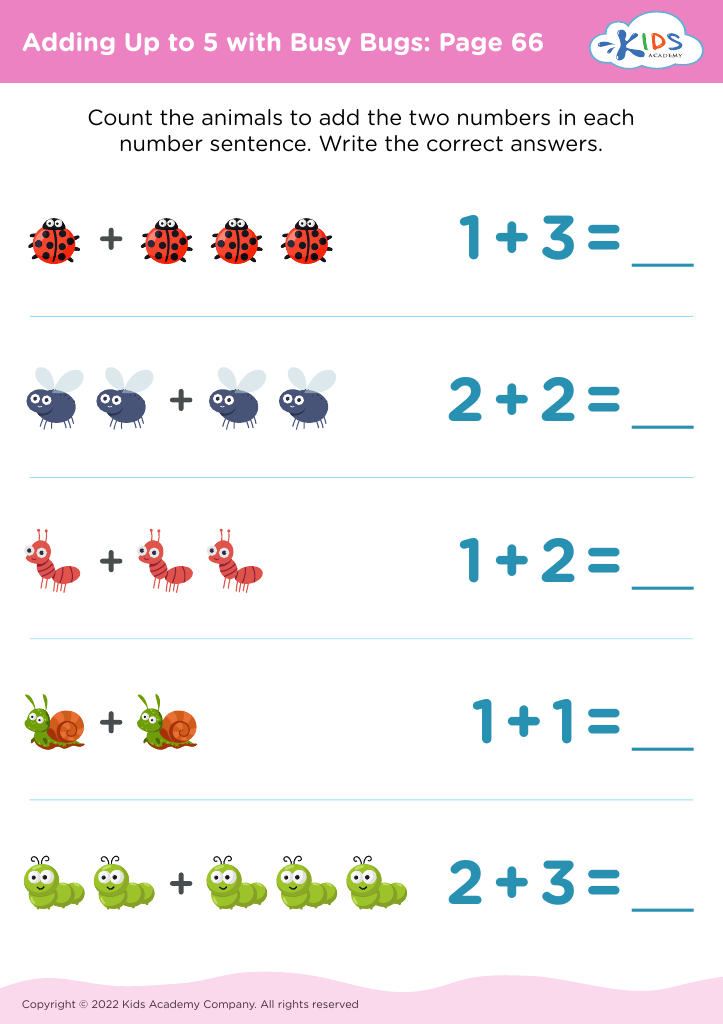
Adding Up to 5 with Busy Bugs: Page 66
Worksheet
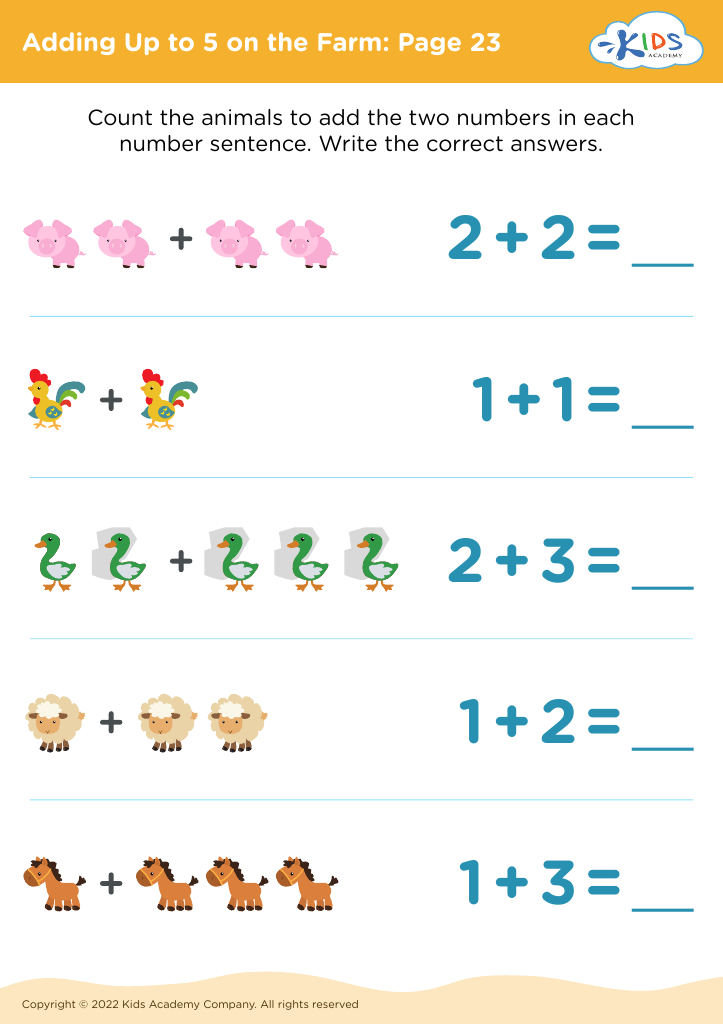
Adding Up to 5 on the Farm: Page 23
Worksheet
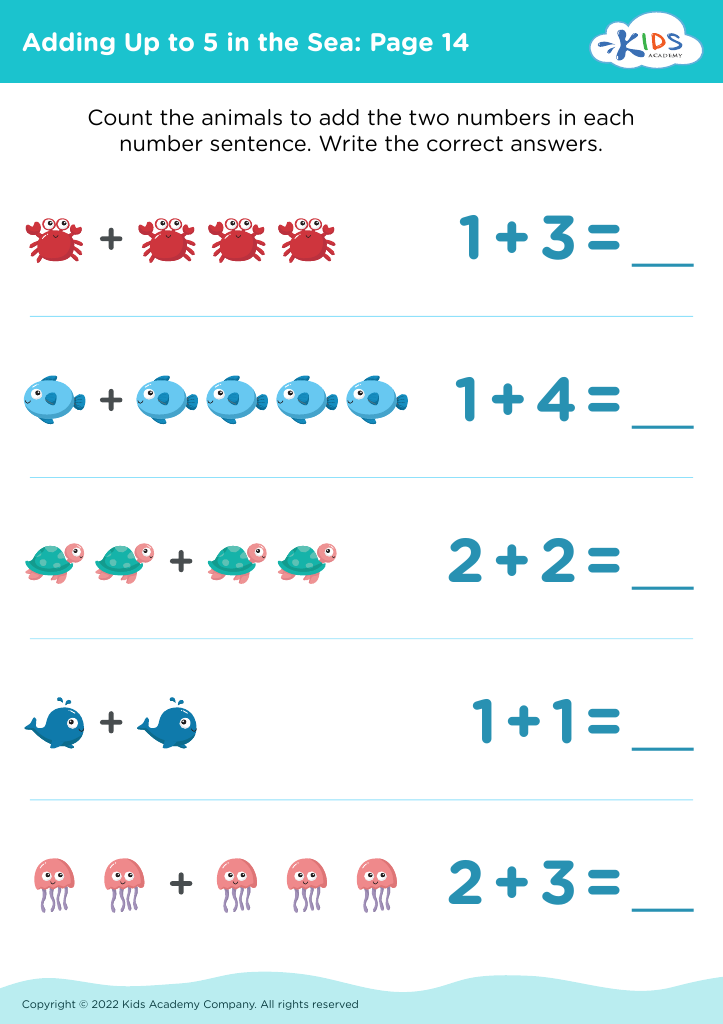
Adding Up to 5 in the Sea: Page 14
Worksheet
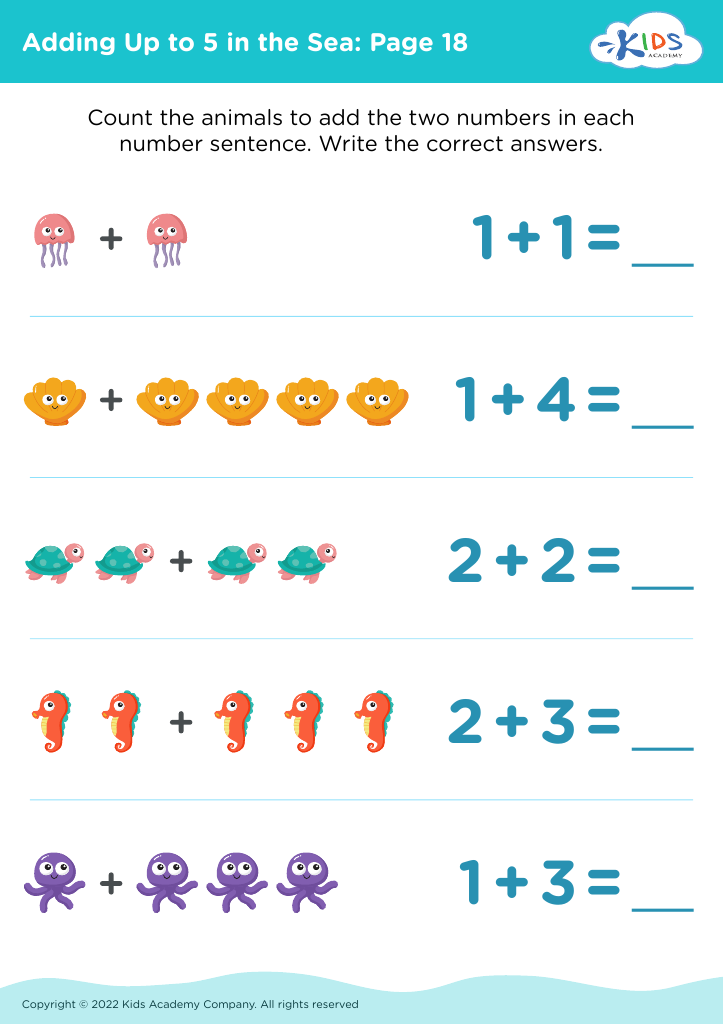
Adding Up to 5 in the Sea: Page 18
Worksheet
Sharing Donuts Worksheet
Sharing Donuts Worksheet
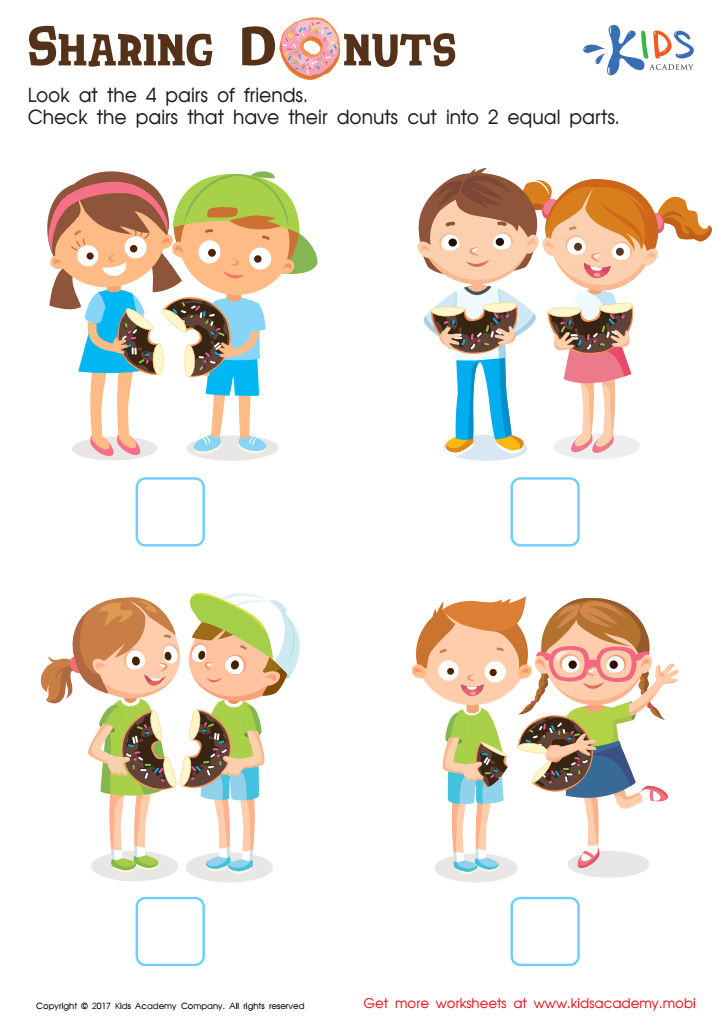
Get your kids to check which of the 4 pairs of friends in the worksheet have evenly-split donuts. No one likes being cheated out of a treat, so it's important to make sure the donuts are divided fairly. Plus, your kids will love the challenge!
Sharing Donuts Worksheet
Worksheet
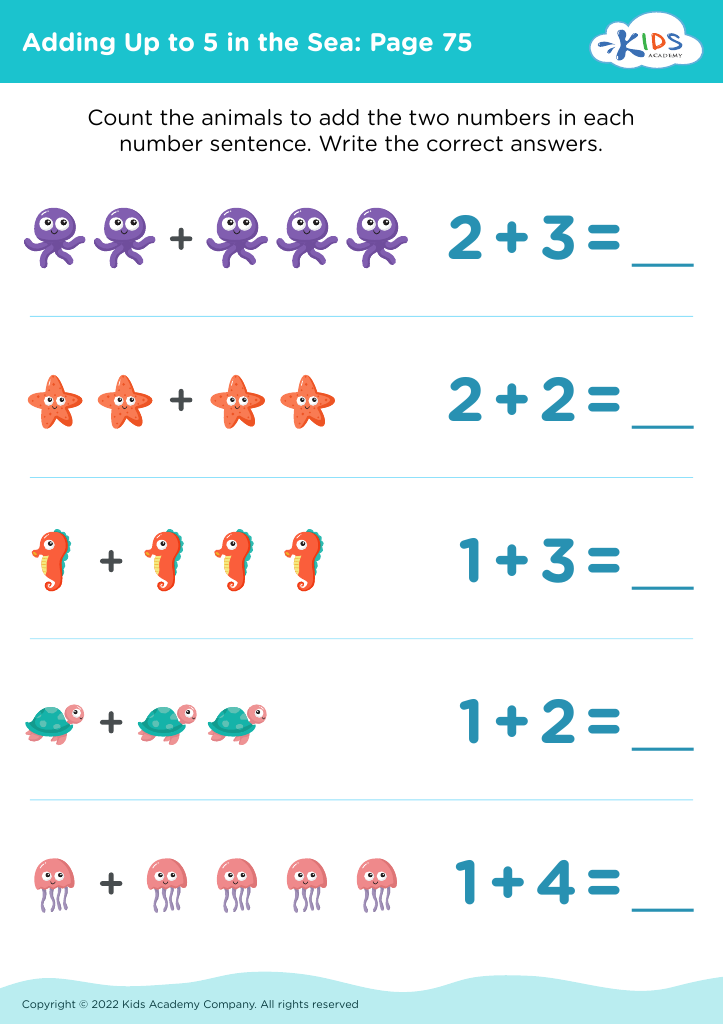
Adding Up to 5 in the Sea: Page 75
Worksheet
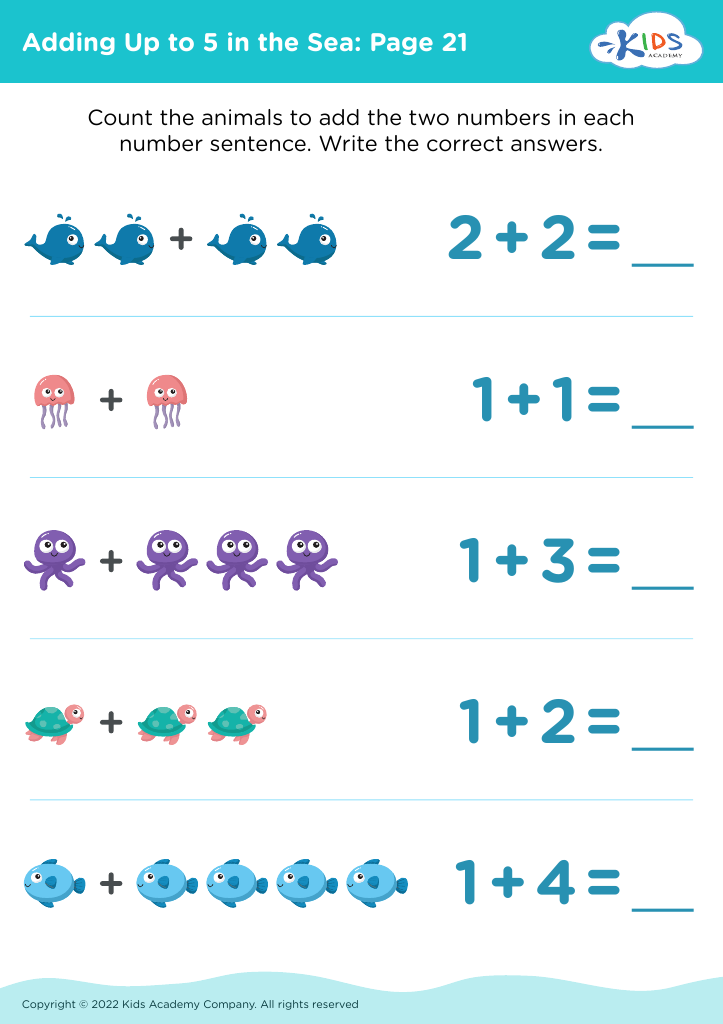
Adding Up to 5 in the Sea: Page 21
Worksheet
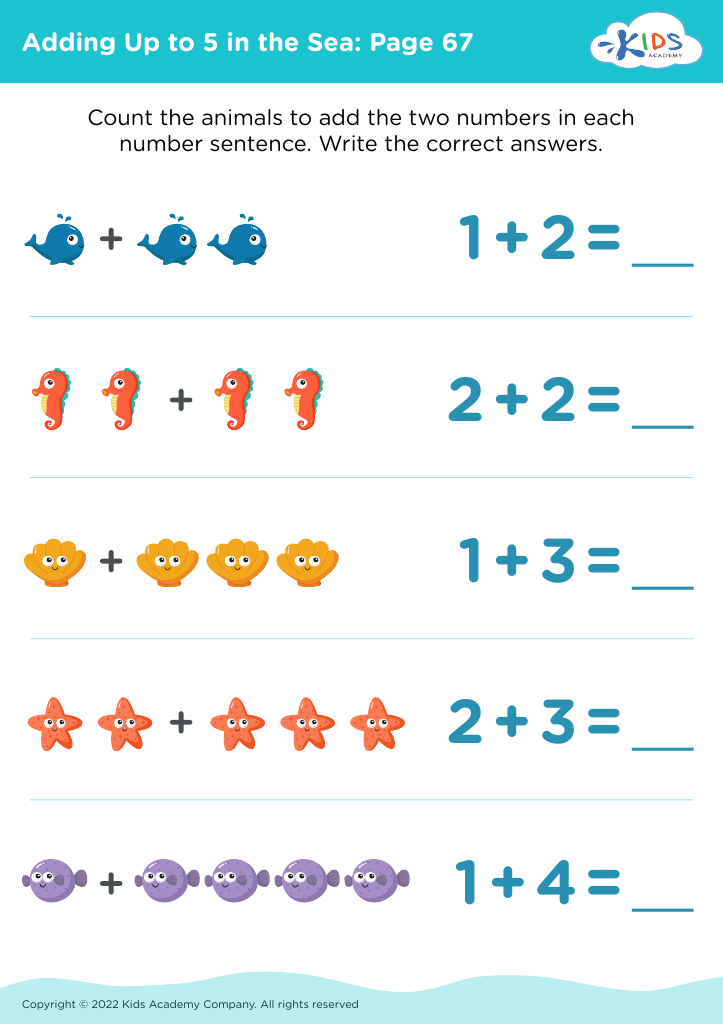
Adding Up to 5 in the Sea: Page 67
Worksheet
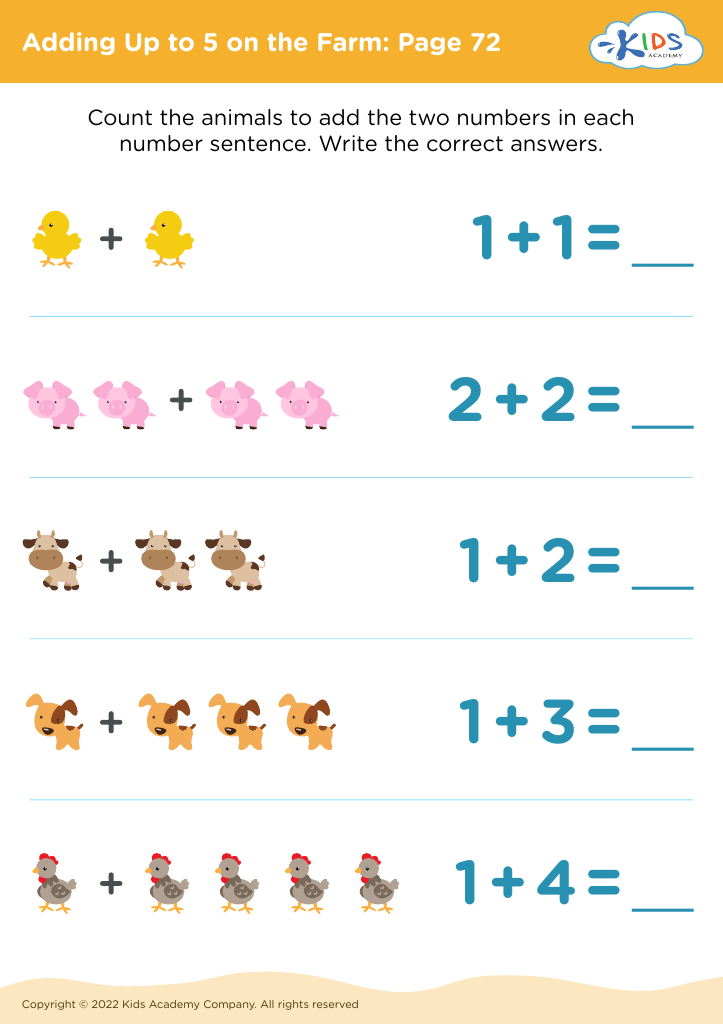
Adding Up to 5 on the Farm: Page 72
Worksheet
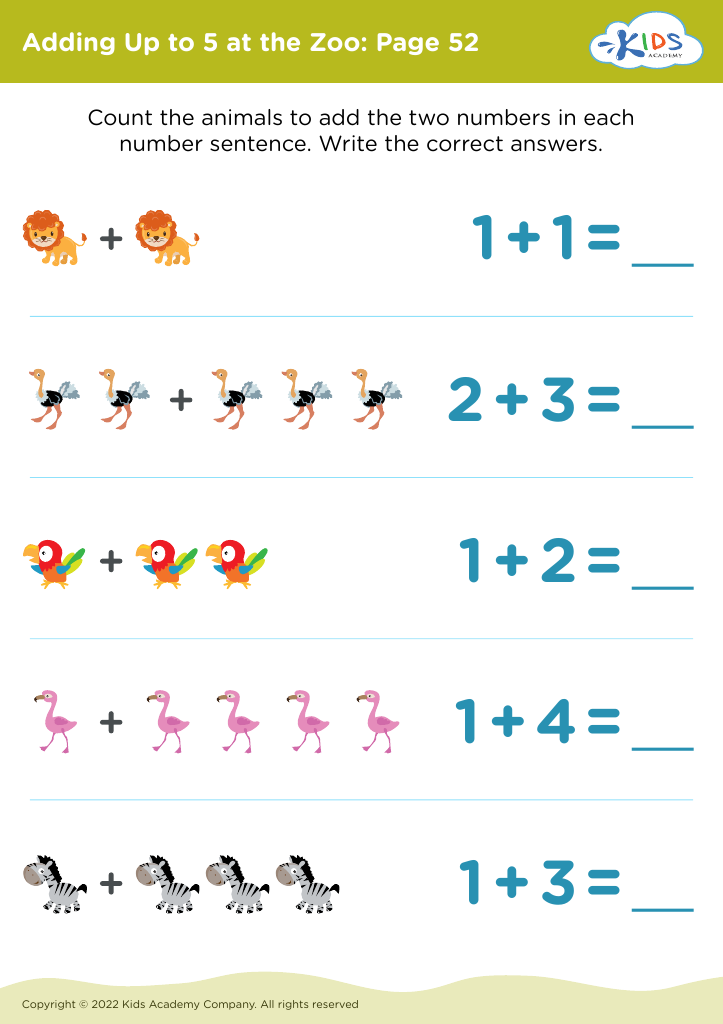
Adding Up to 5 at the Zoo: Page 52
Worksheet
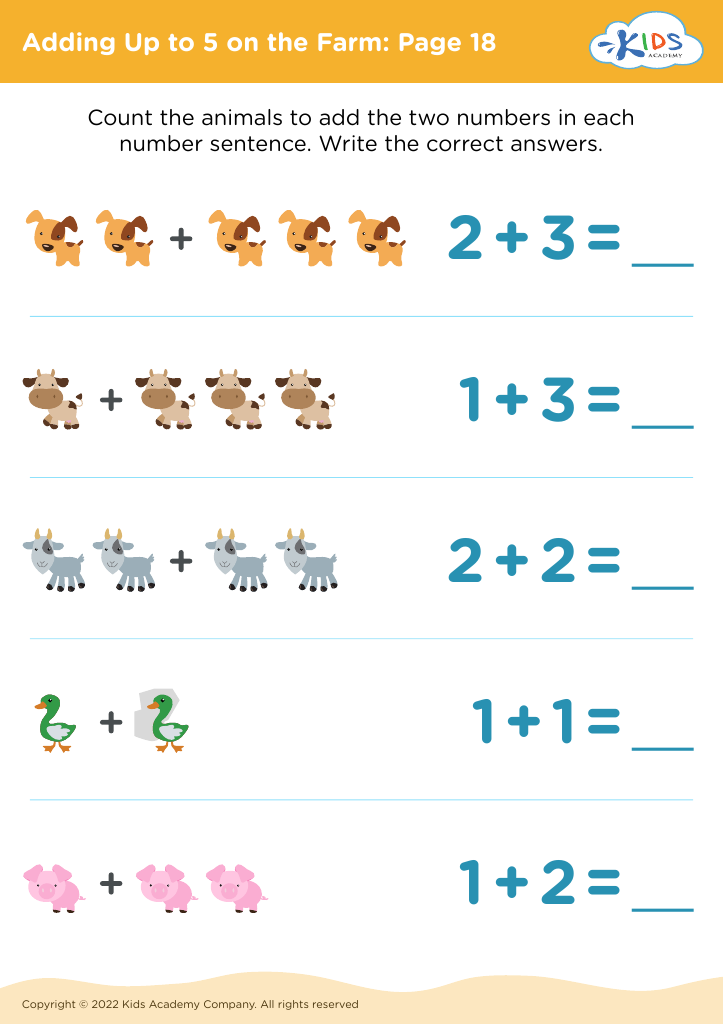
Adding Up to 5 on the Farm: Page 18
Worksheet
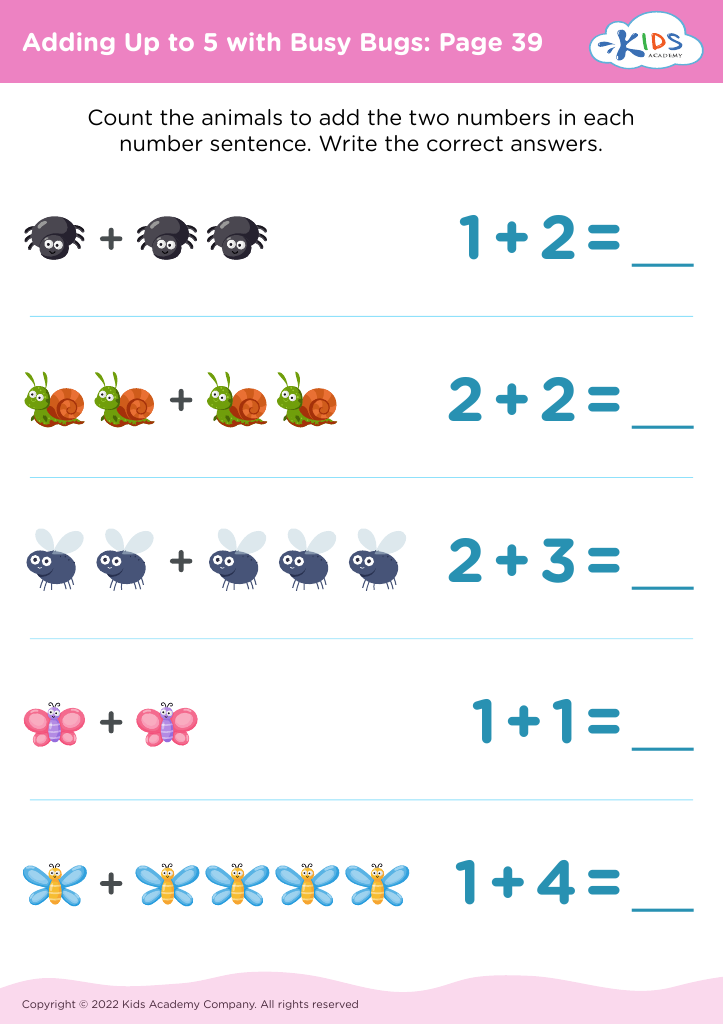
Adding Up to 5 with Busy Bugs: Page 39
Worksheet
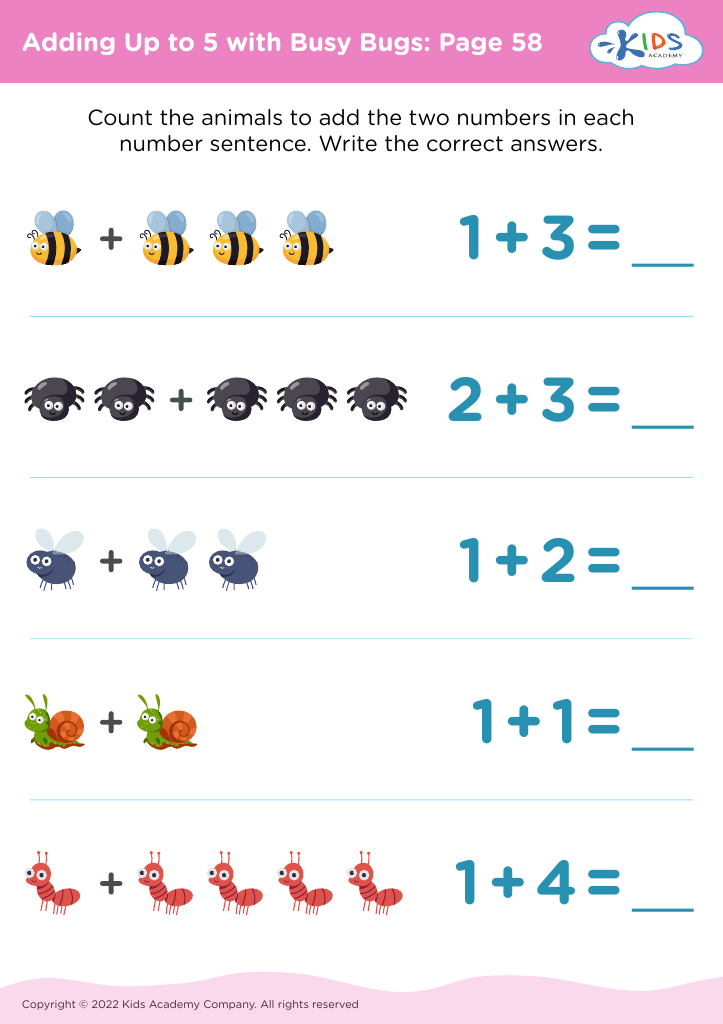
Adding Up to 5 with Busy Bugs: Page 58
Worksheet


Visual learning math is critical for children aged 3-6 as it caters to their natural ways of understanding and exploring the world. At this developmental stage, young learners are often visual thinkers, deriving meaning from images, colors, and spatial relationships. By incorporating visual elements into math education, teachers and parents can engage these young minds effectively, making abstract concepts tangible and relatable.

Visual learning aids, such as manipulatives, charts, and pictorial representations of numbers, help children grasp reasoning and problem-solving skills early on. This not only fosters a deeper understanding of basic math principles but also builds a solid foundation for future learning. Engaging children with colorful, fun visuals makes math enjoyable and less intimidating, thus preventing math anxiety and creating a positive attitude towards the subject.

Furthermore, integrating visual learning into math practices supports diverse learning styles. It allows educators to reach every child, accommodating those who might struggle with traditional rote learning methods. By prioritizing visual learning math, parents and teachers help develop critical thinking, spatial awareness, and cognitive skills, setting children on a path toward academic success and a lifelong love for learning.