
Comparing lengths Measurement Worksheets for Ages 3-6
8 filtered results
Difficulty Level
Grade
Age
-
From - To
Subject
Activity
Standards
Unlock the world of measurement with our "Comparing Lengths Measurement Worksheets" designed for children ages 3-6. Our engaging and educational worksheets introduce young learners to the concepts of longer and shorter through fun activities. Children will enjoy drawing, coloring, and comparing everyday objects to develop early math skills and understand the differences in lengths. Perfect for preschool and kindergarten settings, these worksheets are crafted to enhance critical thinking and improve fine motor skills. Encourage curiosity and confidence in measuring with activities that make learning tangible and delightful. Start exploring lengths today to lay the foundation for future math success!
Favorites
With answer key
Interactive
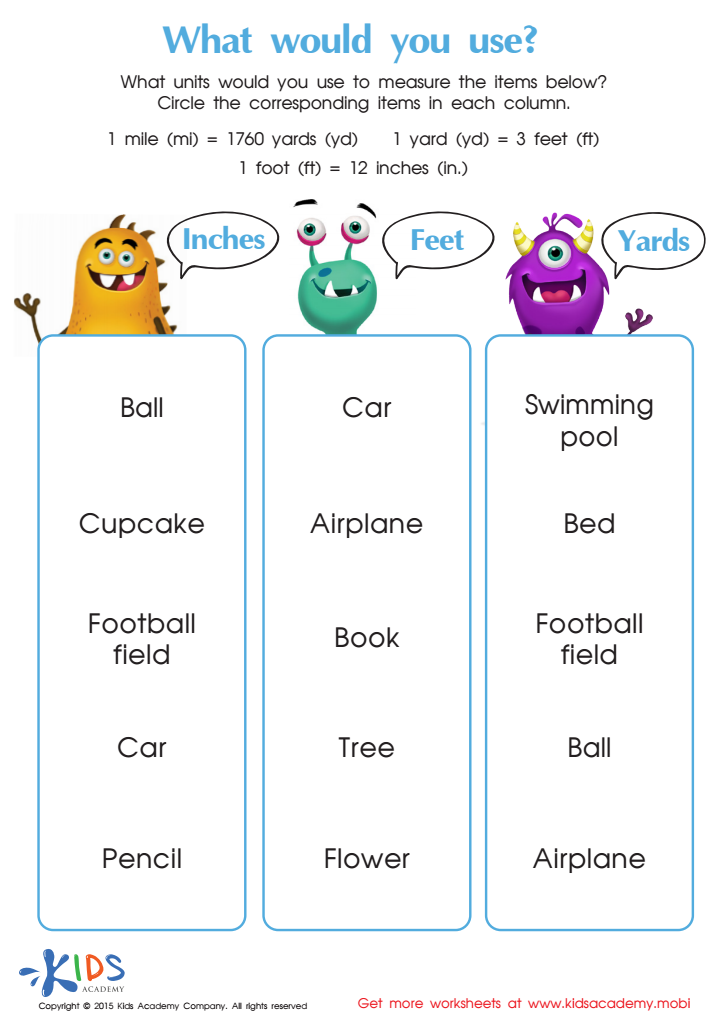
Learning about measuring objects in inches, feet and yards Worksheet
Download, cut and let your preschoolers learn and have fun estimating objects like pencils, airplanes and swimming pools in inches, feet and yards!
 Assign to My Students
Learning about measuring objects in inches, feet and yards Worksheet
Worksheet
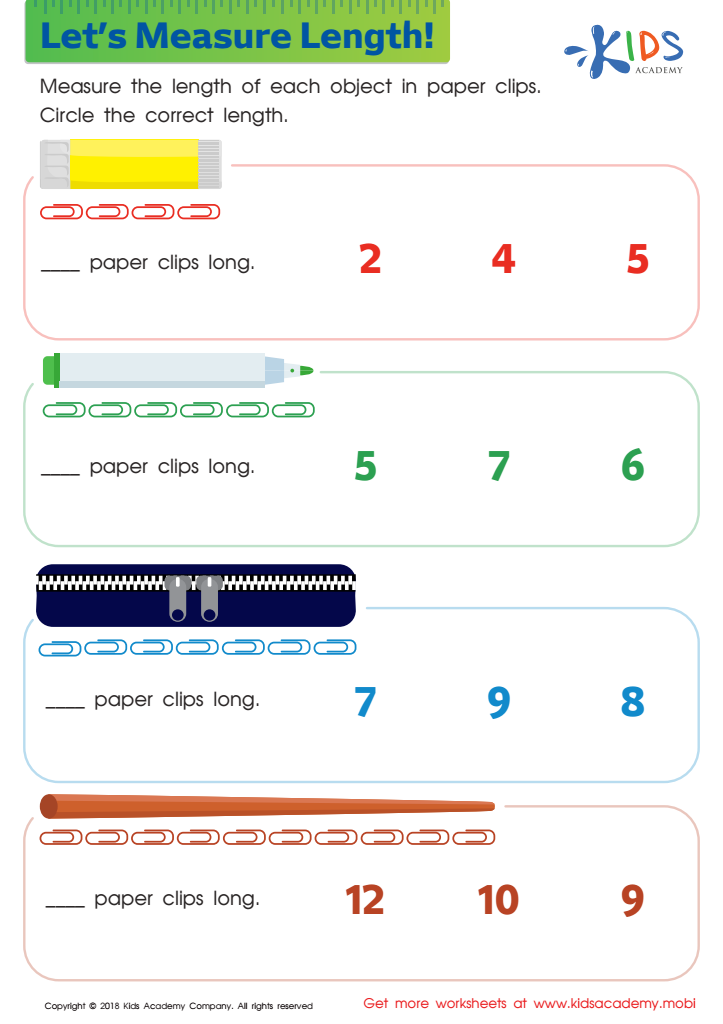
Lets Measure Length Worksheet
It's time to help your child take their measuring skills up a notch! This colorful PDF sheet from Kids Academy introduces kids to measuring with paperclips. Guide them through the page, showing them how to count the clips to measure each image. Then, circle the correct length for each to complete the sheet!
Lets Measure Length Worksheet
Worksheet
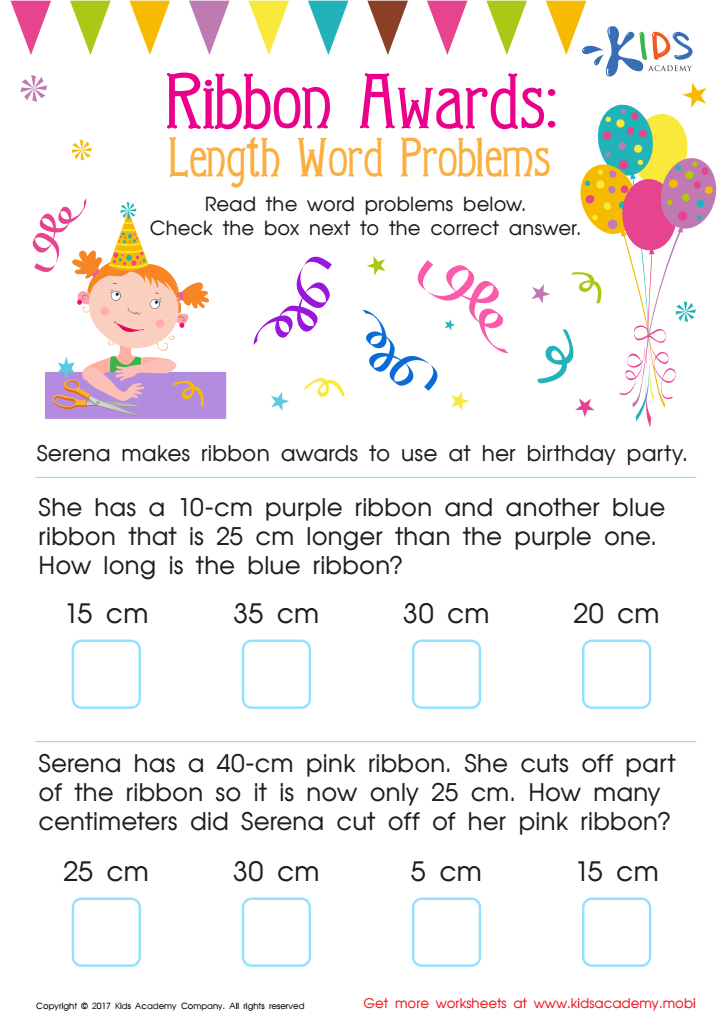
Length Word Problems Worksheet
Word problems help grade 2 students practice measurement using everyday scenarios. This worksheet provides practice in working with centimeters and inches, like measuring ribbon. It's a great way to learn and apply math skills.
Length Word Problems Worksheet
Worksheet
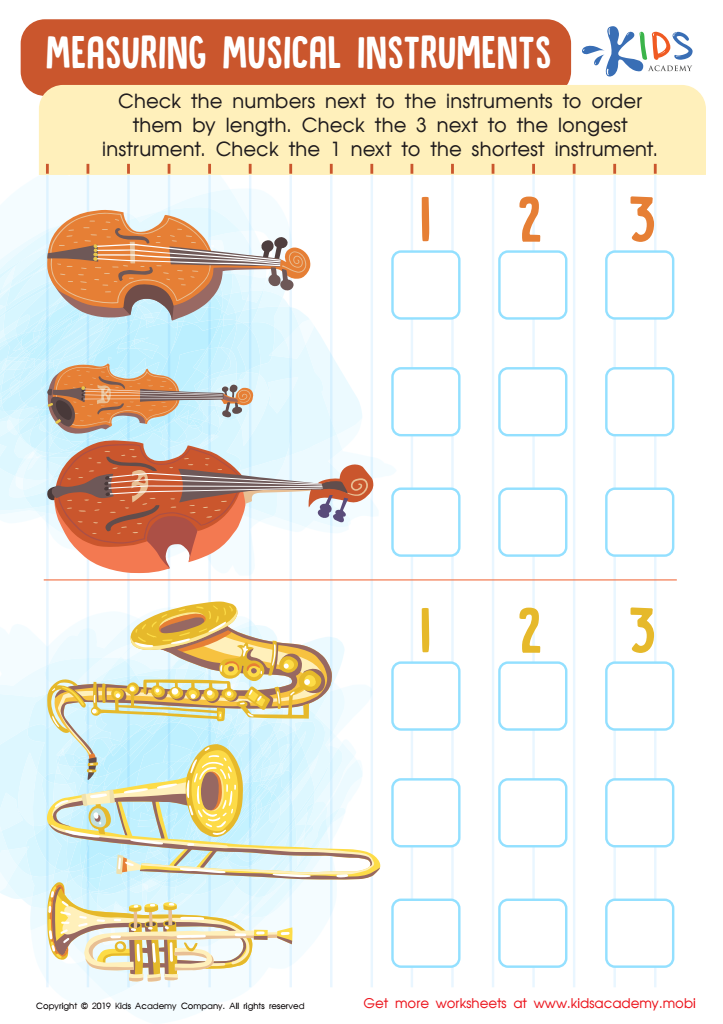
Measuring Musical Instruments Worksheet
Learning measurements can be tricky, but this worksheet makes it easy. Ask your child to identify the instruments in the pictures. Then, order them by length using the numbers. 3 is the longest, 1 is the shortest. Simple exercises like this will help them understand the different metric systems.
Measuring Musical Instruments Worksheet
Worksheet
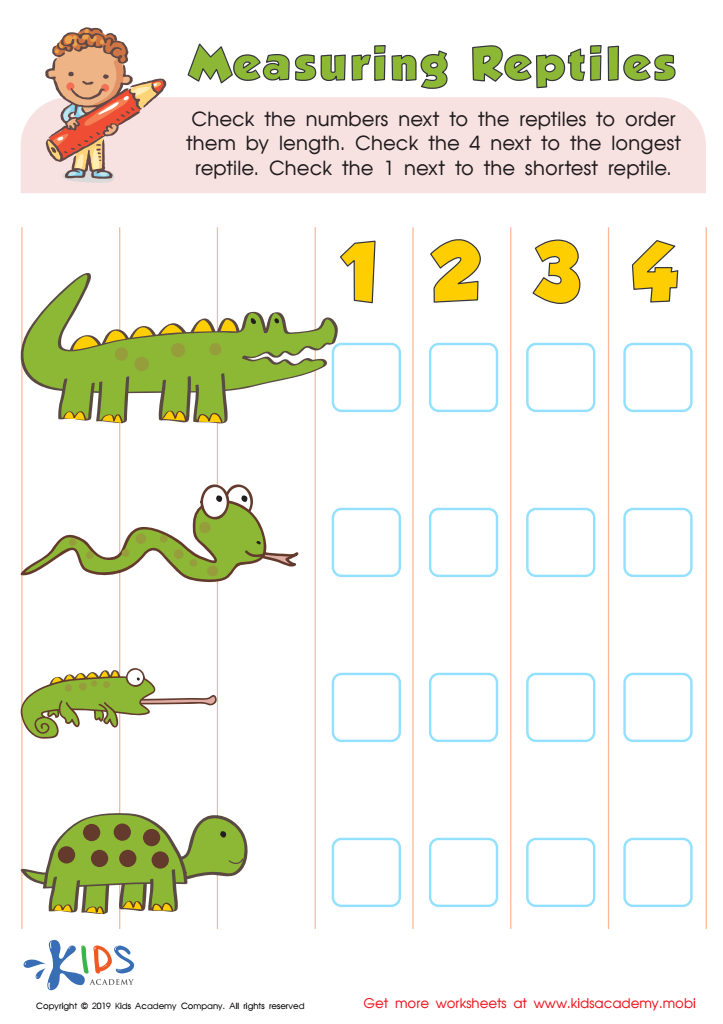
Measuring Reptiles Worksheet
Do your kids know what reptiles are? Ask them to name some and name features. In this activity, your kindergartners will measure with reptiles. Show them the picture and get them to order by length, starting with the one with 4 by the longest reptile, then the one with 1 by the shortest.
Measuring Reptiles Worksheet
Worksheet
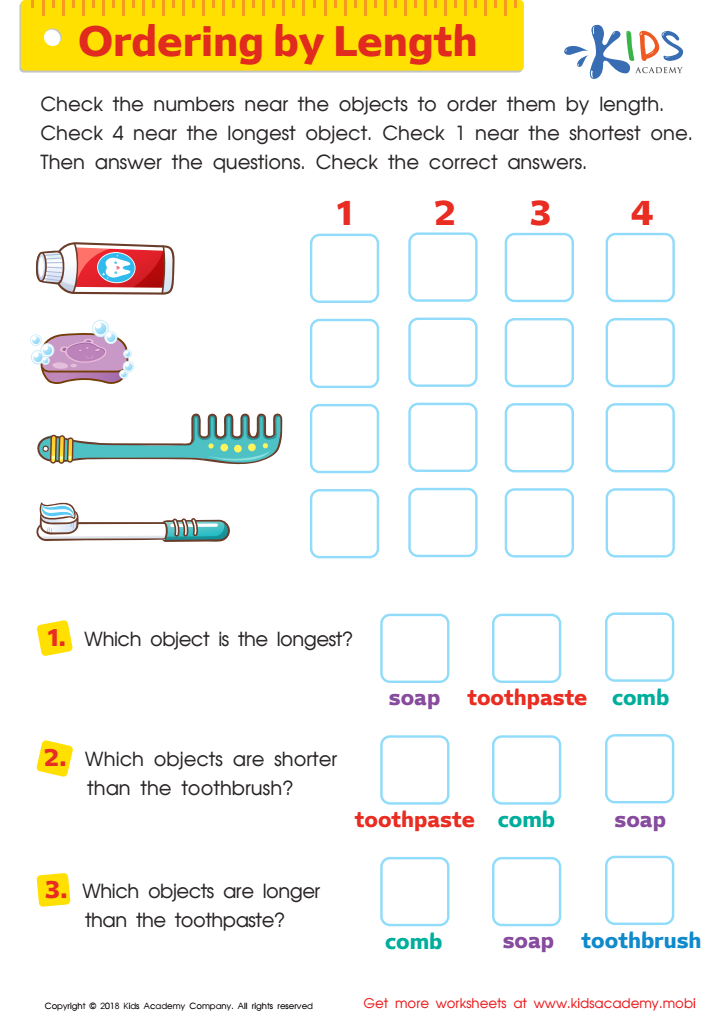
Ordering by Length Worksheet
Compare objects to learn about measurement! Before purchasing a ruler, get kids to understand length by comparing objects and labeling them as longer or shorter than others. Use this printable math worksheet to help children think about measurement. It will show pictures of objects and ask children to categorize them by length.
Ordering by Length Worksheet
Worksheet
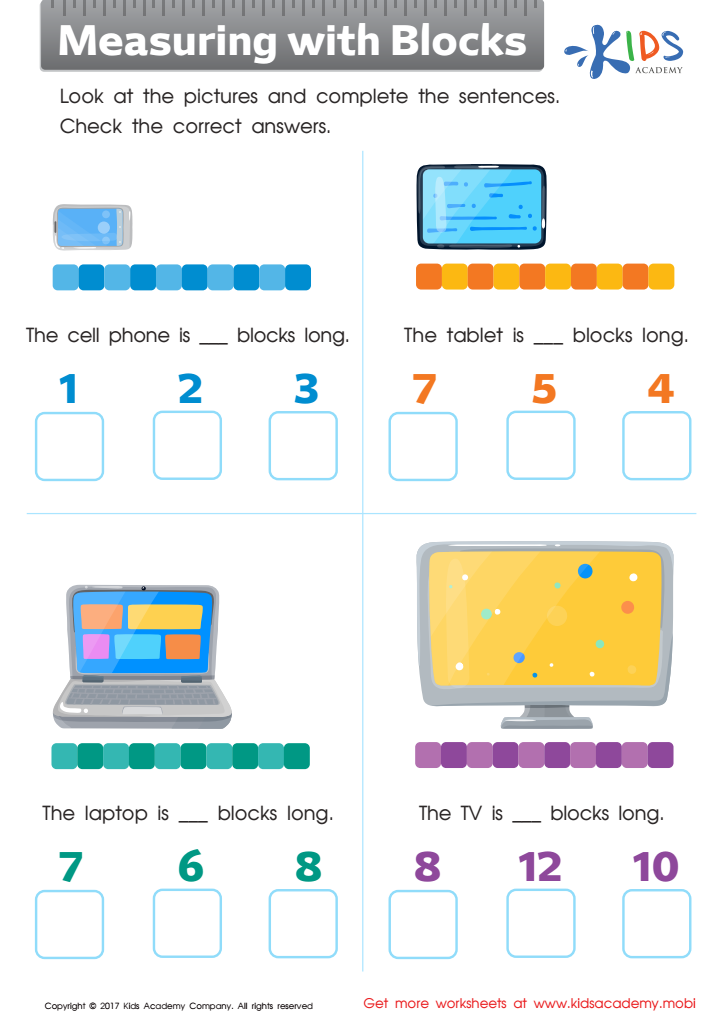
Measuring with Blocks Worksheet
Help your child get ready for math success with this Kids Academy worksheet. It provides colorful blocks to practice measuring objects. Coach them to count the boxes under each picture, then check the box with the right answer. It's a fun way to get acquainted with rulers!
Measuring with Blocks Worksheet
Worksheet
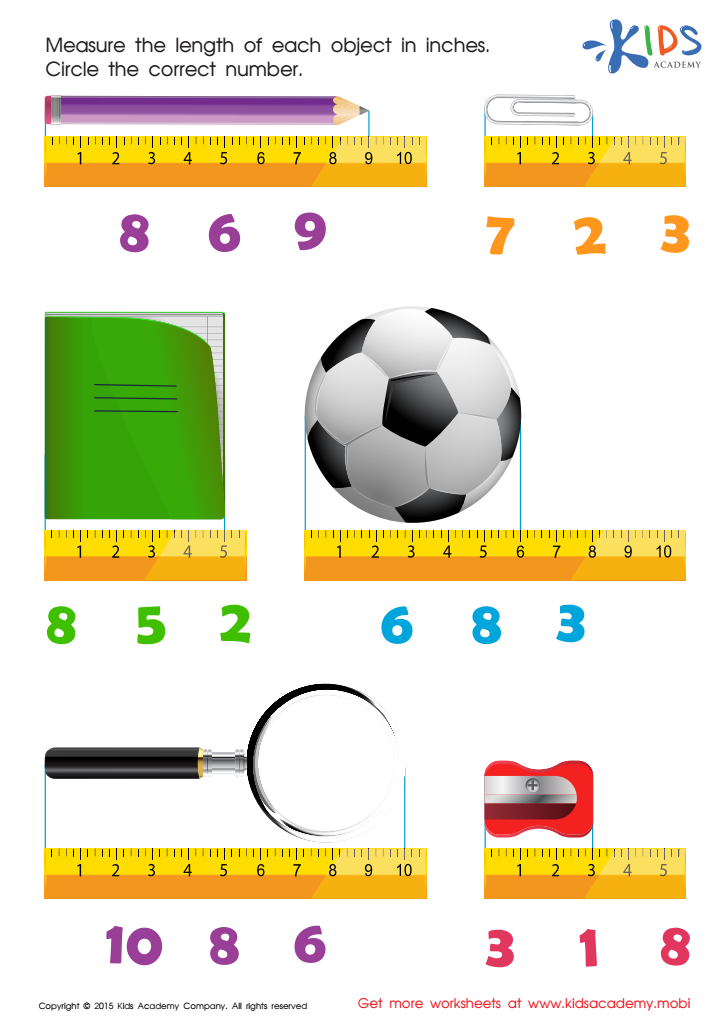
Learning measuring objects in inches Worksheet
Help your little learners gain confidence in using a ruler! Print out our free worksheet, cut out the inch ruler, and let them measure and record objects' width and length. Kids Academy has a variety of math worksheets to make learning math fun! Check out our website for more free printables!
Learning measuring objects in inches Worksheet
Worksheet
Join Kids Academy for Free
Who is primarily going to use this learning content?







Comparing lengths is a fundamental concept in early childhood education that supports children's cognitive development and understanding of the world around them. For parents and teachers, introducing measurement concepts such as length helps young children build essential mathematical skills. It allows them to grasp fundamental concepts such as bigger versus smaller and longer versus shorter, fostering critical thinking and problem-solving abilities.
At ages 3-6, children are naturally curious and enjoy exploration. Comparing lengths encourages hands-on learning through engaging activities, such as measuring objects with non-standard units (like blocks or crayons) or using rulers. These activities not only impart measurement skills but also promote language development as children learn to describe and articulate their observations.
Furthermore, comparing lengths lays the groundwork for future learning in geometry, measurement, and data analysis, supporting later academic success. By making connections to real-life situations—like comparing toys, snacks, or even their own heights—parents and teachers reinforce the relevance of measurement in everyday life. This early introduction cultivates a positive attitude toward math, encouraging confidence and enthusiasm for learning that can last a lifetime. Ultimately, fostering such skills at a young age equips children with valuable tools to navigate and interpret the world around them.








