Comparing objects Measurement Worksheets for Ages 3-6
3 filtered results
-
From - To
Discover engaging "Comparing Objects Measurement Worksheets" designed for children aged 3-6! These worksheets foster early math skills by encouraging kids to compare sizes, lengths, and weights of various objects in a fun and interactive way. Through colorful illustrations and simple language, young learners will enhance their critical thinking and analytical skills while enjoying hands-on activities. Perfect for both classroom and home learning, these worksheets promote foundational concepts in measurement and are suitable for various learning styles. Equip your little ones with the tools they need to explore the world of measurement and make learning an exciting adventure!
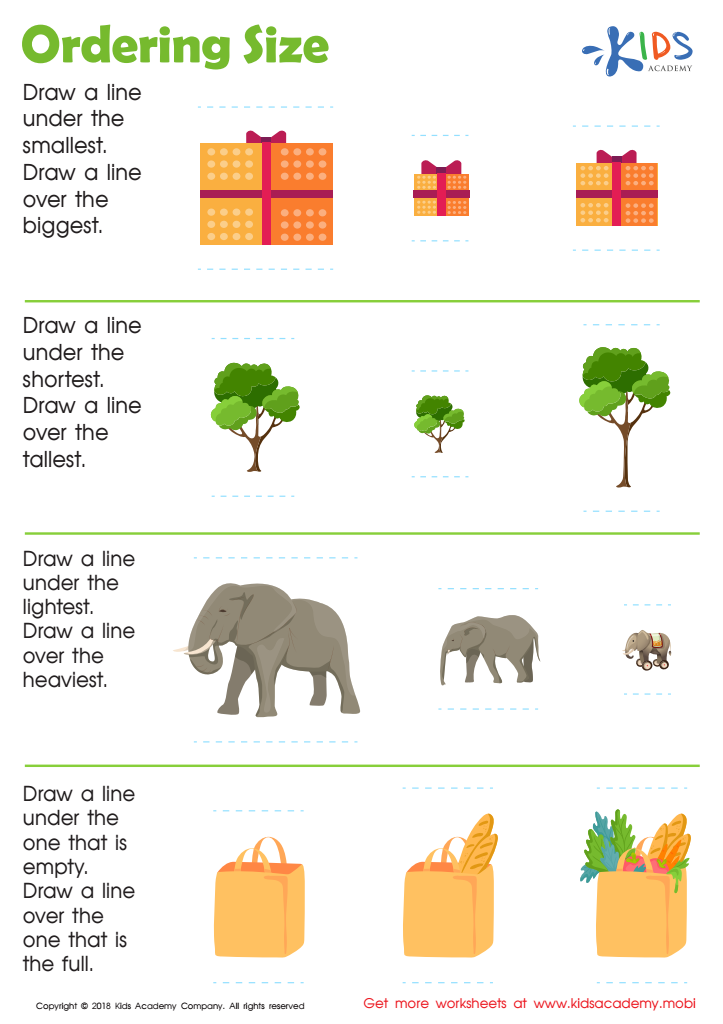
Ordering Size Worksheet
 Assign to My Students
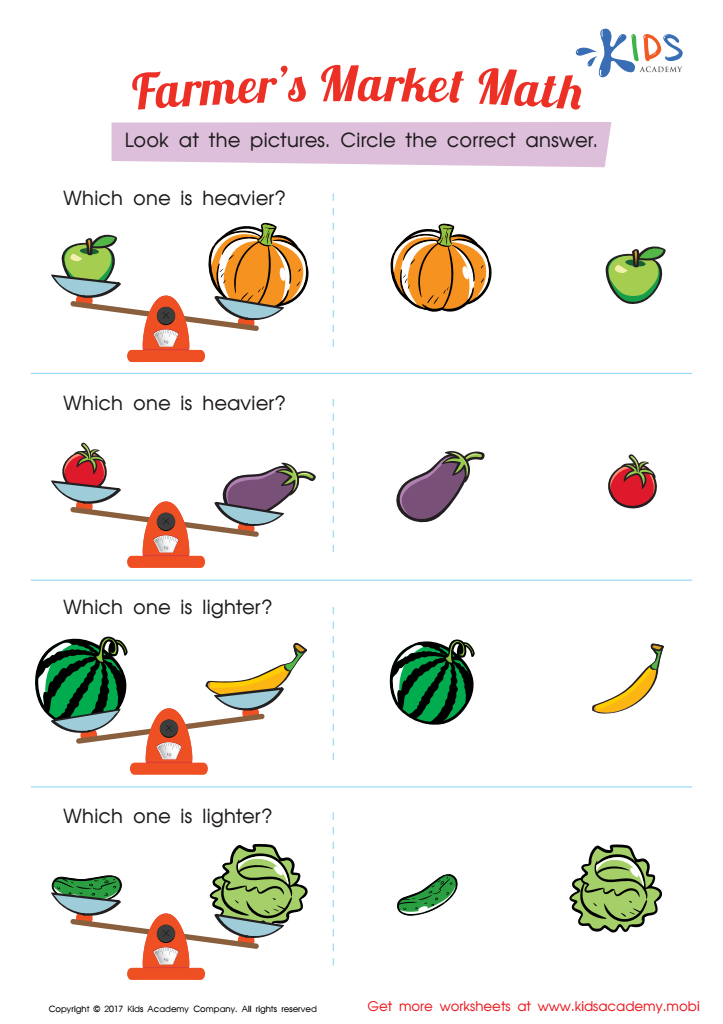
Which One Is Heavier Worksheet
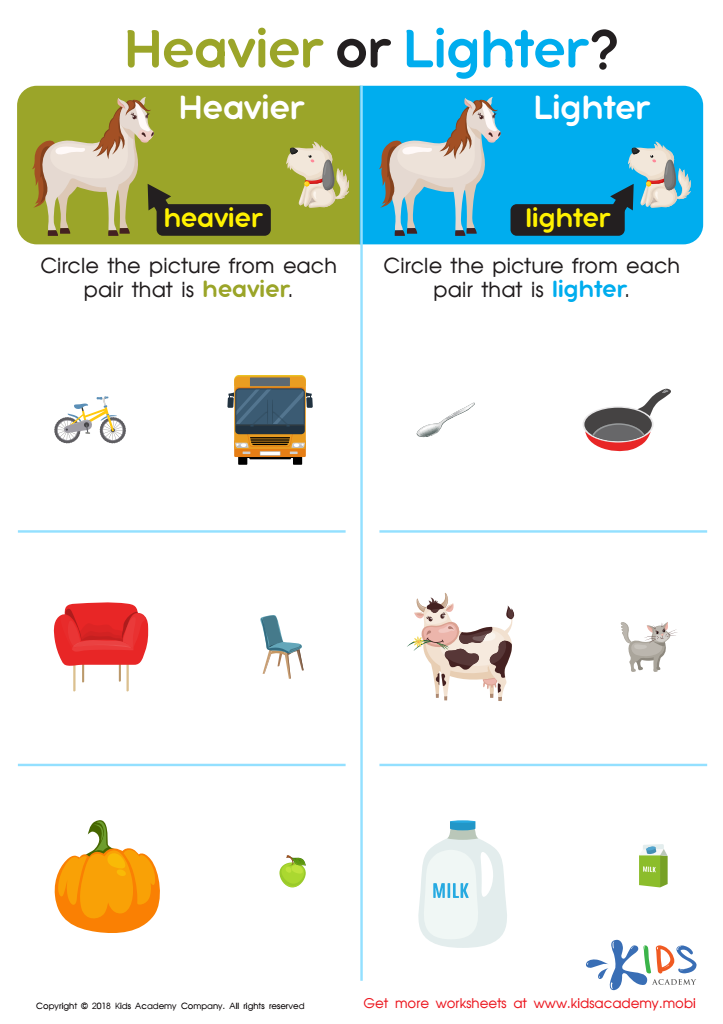
Heavier or Lighter? Worksheet








Comparing objects through measurement is a vital educational activity for children aged 3-6, as it fosters essential cognitive and motor skills. At this young age, children are naturally curious, and engaging in measurement activities enhances their understanding of quantities, sizes, and spatial relationships. This not only supports their mathematical development but also helps them improve critical thinking abilities.
By comparing objects, children learn to identify similarities and differences. For instance, they can explore weight by picking up light and heavy items, or length by comparing sticks or ribbons. These practical experiences reinforce vocabulary such as "long," "short," "heavy," and "light," enriching their language skills in a meaningful context.
Moreover, measurement activities encourage collaboration among peers and can promote social skills. When children work together, they share ideas and develop communication skills as they discuss their observations about the objects they are measuring.
Parents and teachers play a crucial role as facilitators of these activities, guiding children and encouraging inquiry-based learning. By incorporating measurement comparisons in everyday play and learning experiences, adults can spark a love for exploration and discovery, laying a strong foundation for future learning in mathematics and science.








