Understanding measurements Measurement Worksheets for Ages 3-6
9 filtered results
-
From - To
Unlock your child's potential with our "Understanding Measurements" worksheets, designed specifically for ages 3-6. These engaging, printable activities teach children essential measurement concepts in a fun and interactive way. From comparing lengths and heights to grasping the basics of volume and weight, your little learner will develop foundational math skills through hands-on practice. Perfect for preschool and early kindergarten, our worksheets blend colorful visuals with age-appropriate challenges to make learning enjoyable and effective. Explore our collection at Kids Academy and watch your child's confidence in measurements soar!
For additional information, visit our page [link].
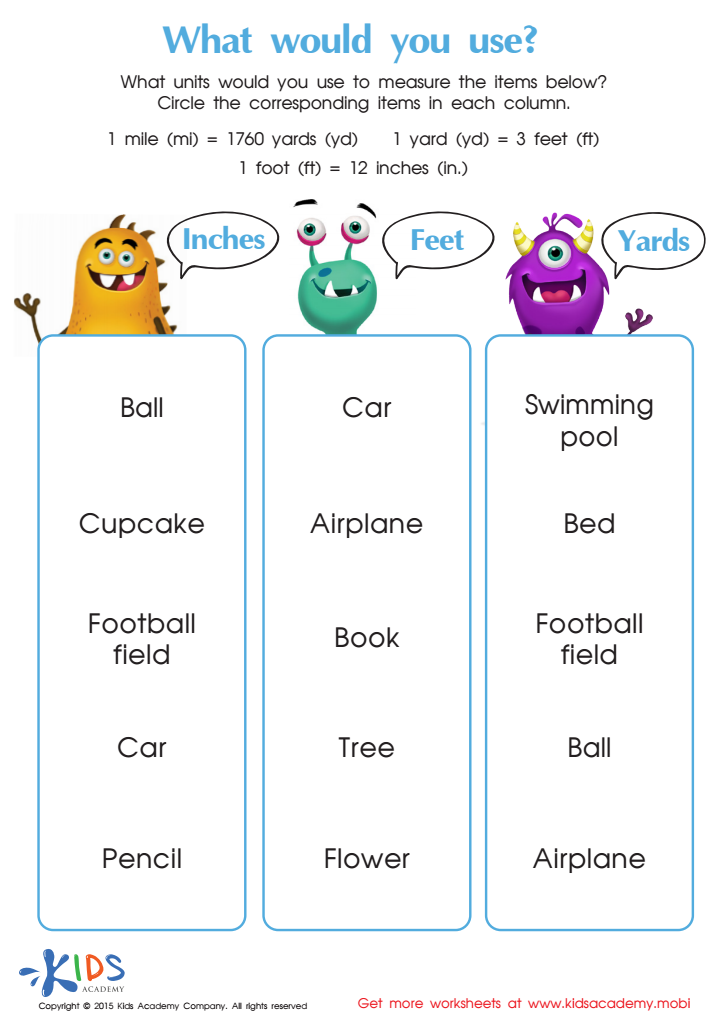
Learning about measuring objects in inches, feet and yards Worksheet
 Assign to My Students
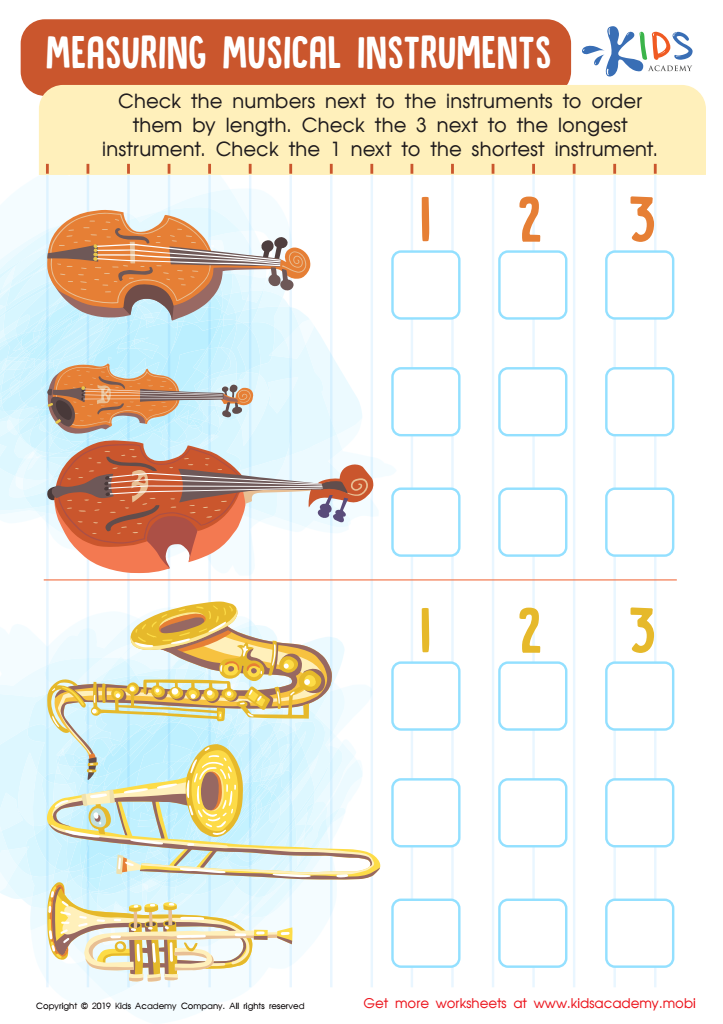
Measuring Musical Instruments Worksheet
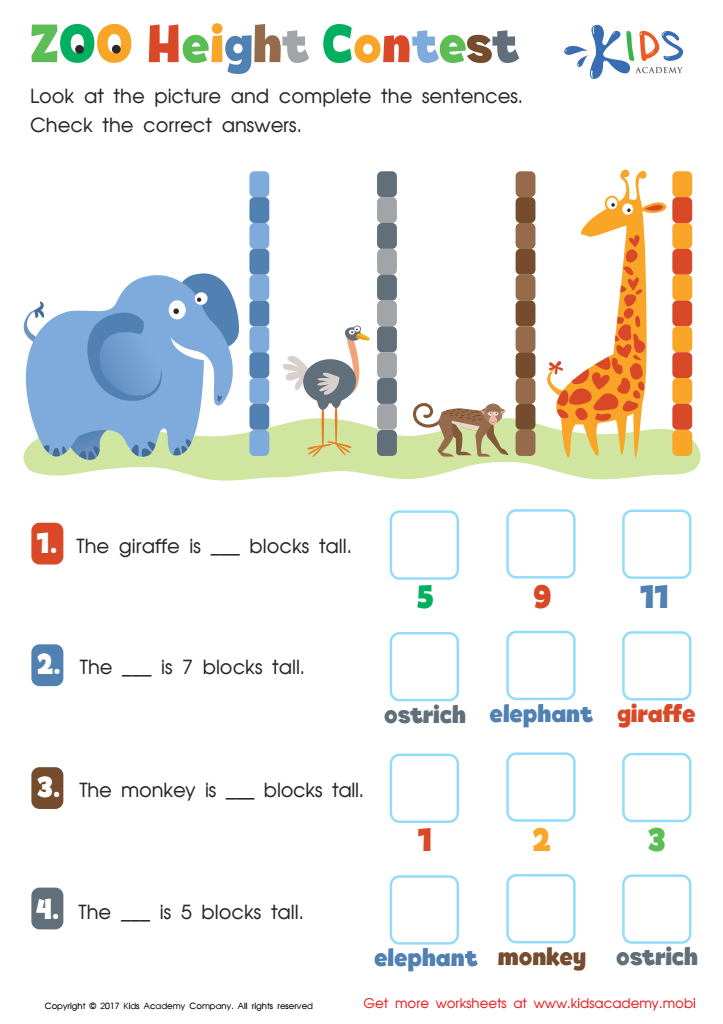
Zoo Height Contest Worksheet
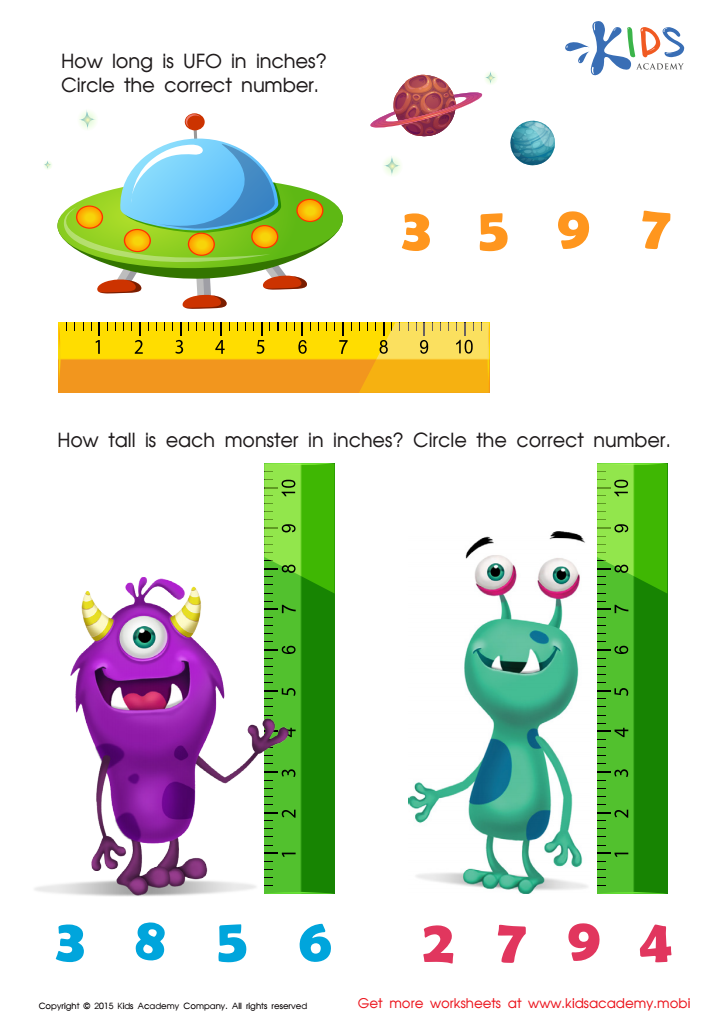
Measuring in Inches Worksheet
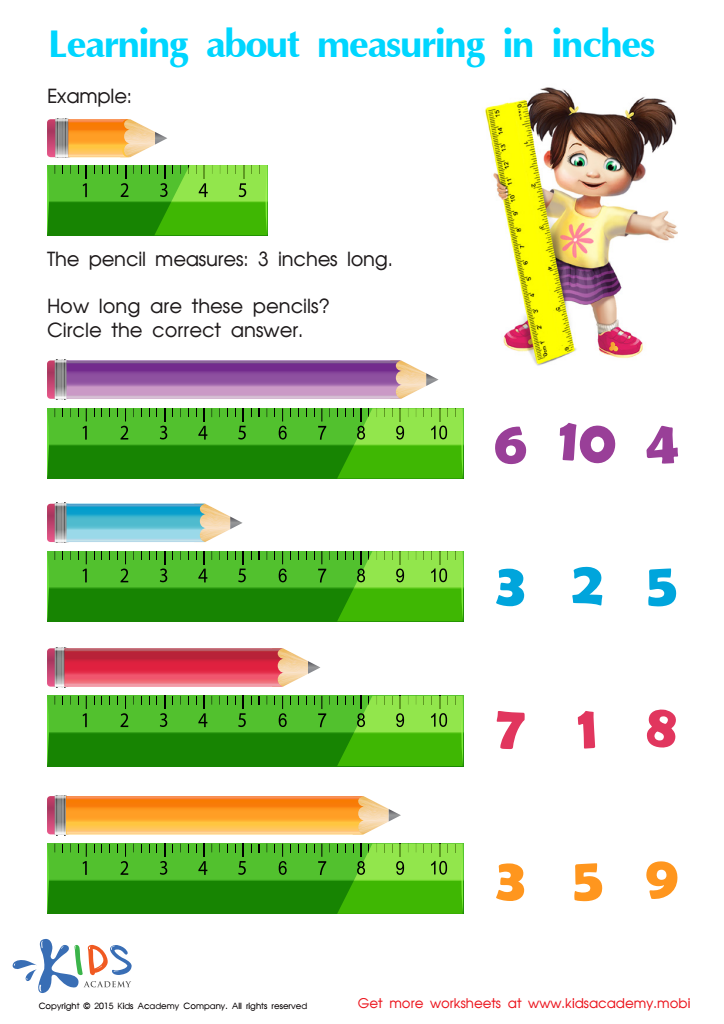
Learning About Measuring In Inches Printable
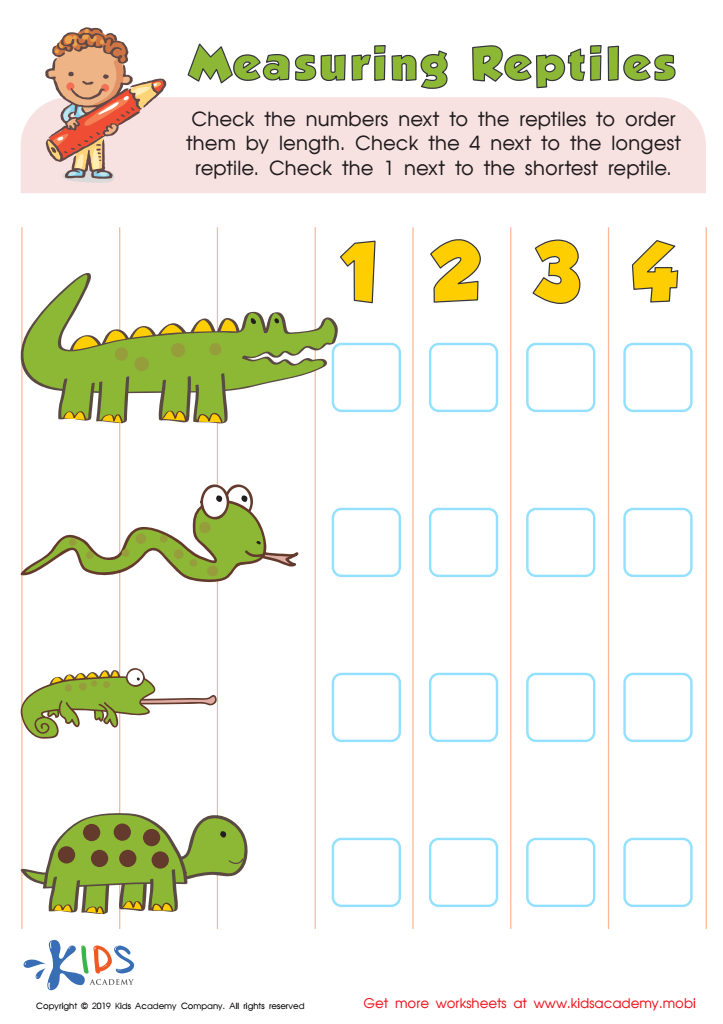
Measuring Reptiles Worksheet
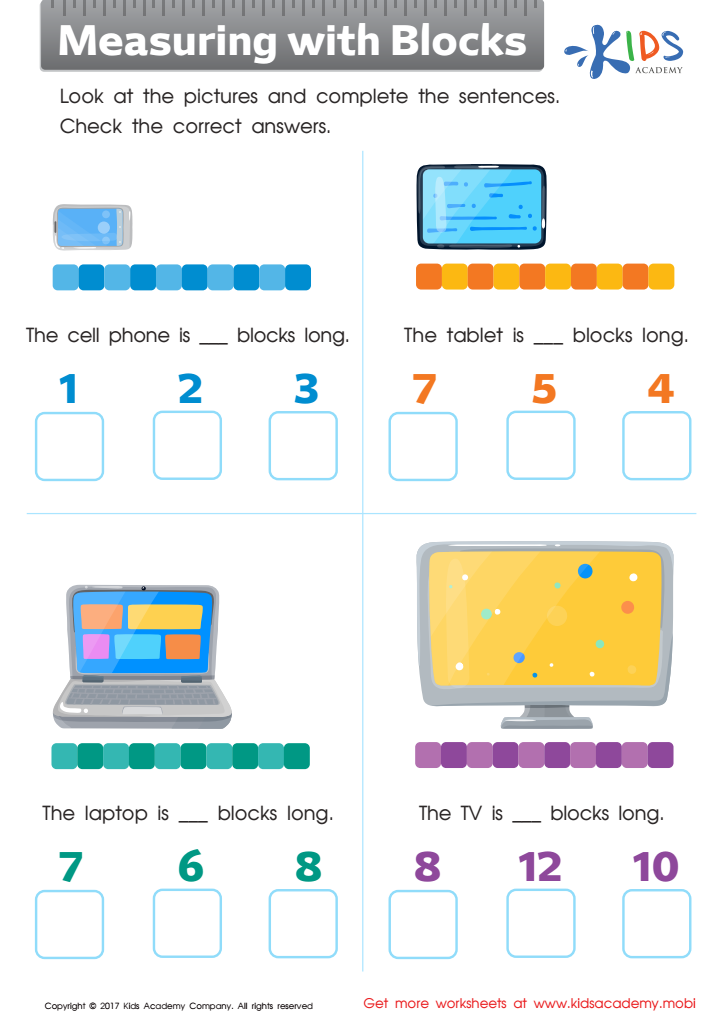
Measuring with Blocks Worksheet
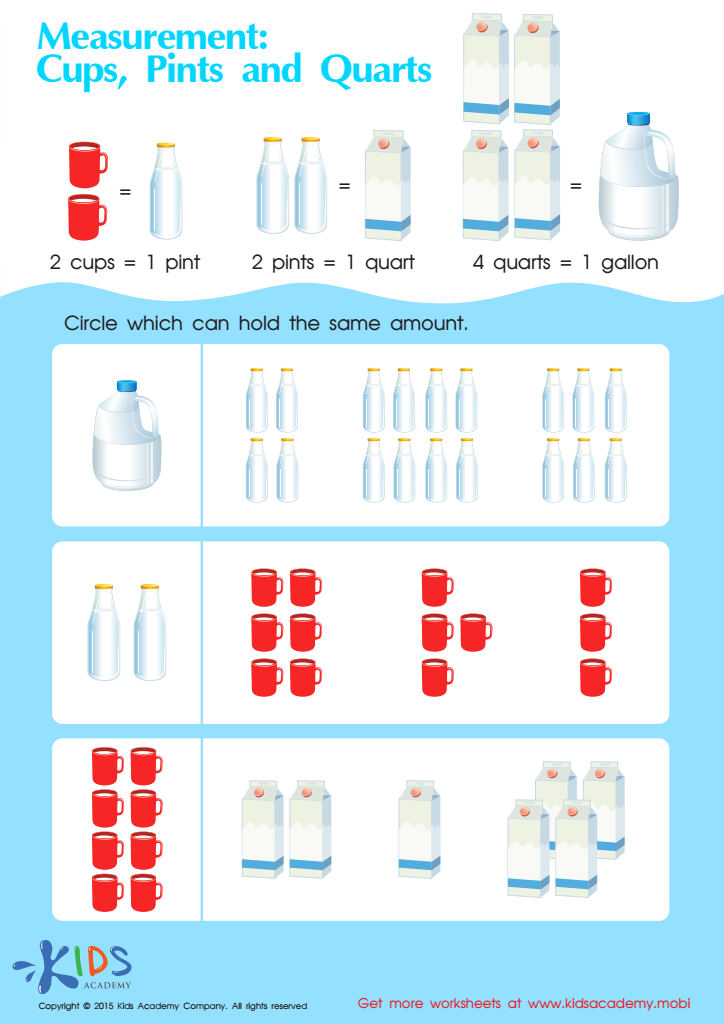
Cups, Pints and Quarts 2 Worksheet
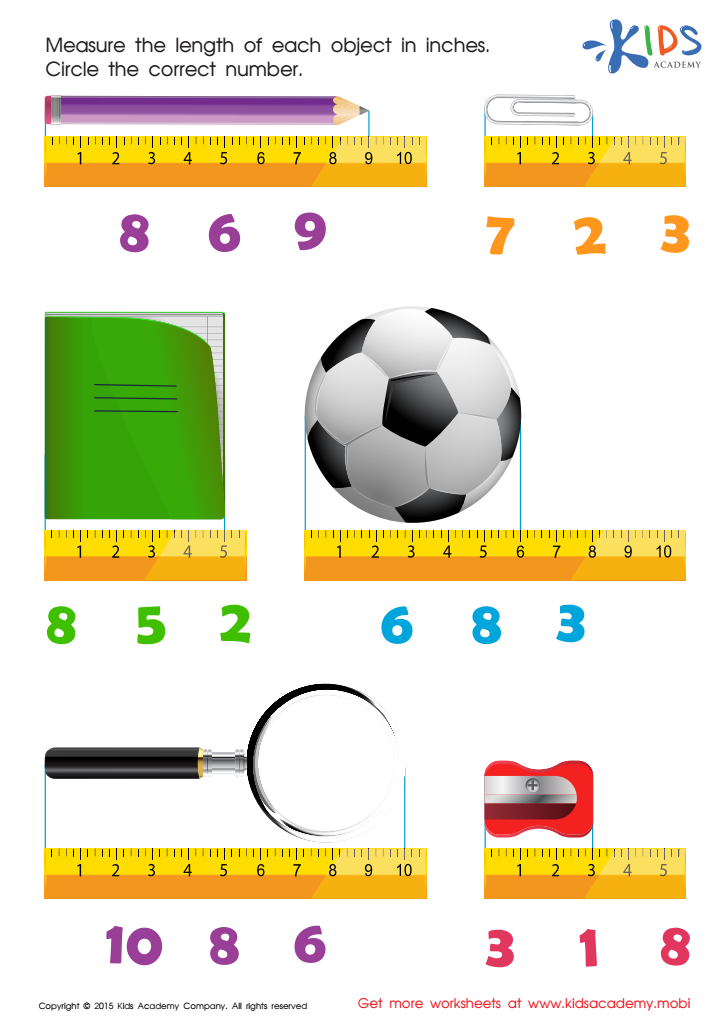
Learning measuring objects in inches Worksheet








Understanding measurements for young children, ages 3-6, is fundamental for their cognitive development and daily problem-solving skills. Measurement concepts such as size, length, weight, and volume help children interpret and understand the world around them. Introducing these concepts early fosters an intuitive grasp of math and science disciplines.
Parents and teachers should care because it lays the groundwork for more advanced mathematical learning. By recognizing differences in measurements, children build their abilities to compare objects, a skill crucial for future math tasks, including understanding numbers and performing computations. Measuring activities, like comparing heights with blocks or determining how much water fits in different containers, make abstract concepts tangible.
Engaging in measurement activities also enhances language development and vocabulary. As children describe objects as "taller," "heavier," or "empty," they expand their descriptive language skills. Furthermore, hands-on measurement encourages curiosity and scientific thinking. When children experiment with measurements, they learn observational skills and critical thinking.
In practical terms, measurement skills are vital for everyday tasks, from cooking to fitting furniture into a space. Equipping children with these skills early helps instill confidence and independence in various real-life situations. Hence, understanding measurements is integral to comprehensive early childhood education.








