Hand-eye Coordination Numbers up to 100 Worksheets for Ages 3-6
3 filtered results
-
From - To
Boost your child's hand-eye coordination with our engaging "Hand-eye Coordination Numbers up to 100 Worksheets" designed for ages 3-6. These fun-filled worksheets blend learning numbers with skill development, making math enjoyable and interactive. Children will enhance their physical coordination as they trace, color, and connect dots while recognizing numbers up to 100. These activities not only improve fine motor skills but also foster early math concepts, laying a solid foundation for future learning. Perfect for home or classroom use, our worksheets encourage independent exploration and creativity, providing young learners with exciting tools to succeed in both math and coordination. Download now!
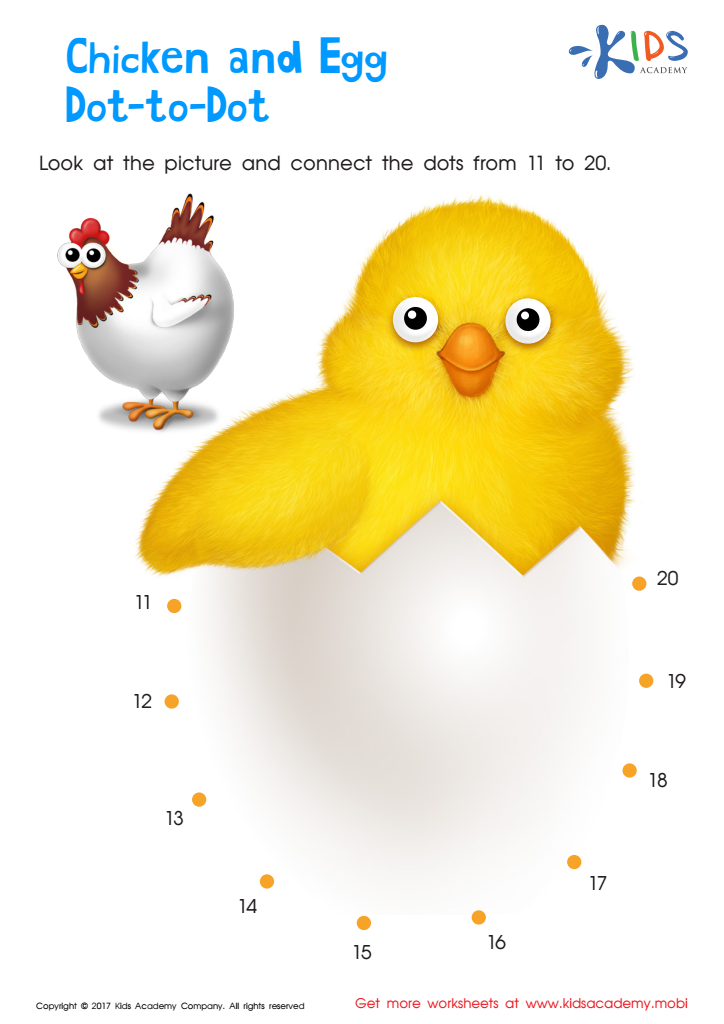
Ordering 11–20: Chicken & Egg Dot–to–dot Worksheet
 Assign to My Students
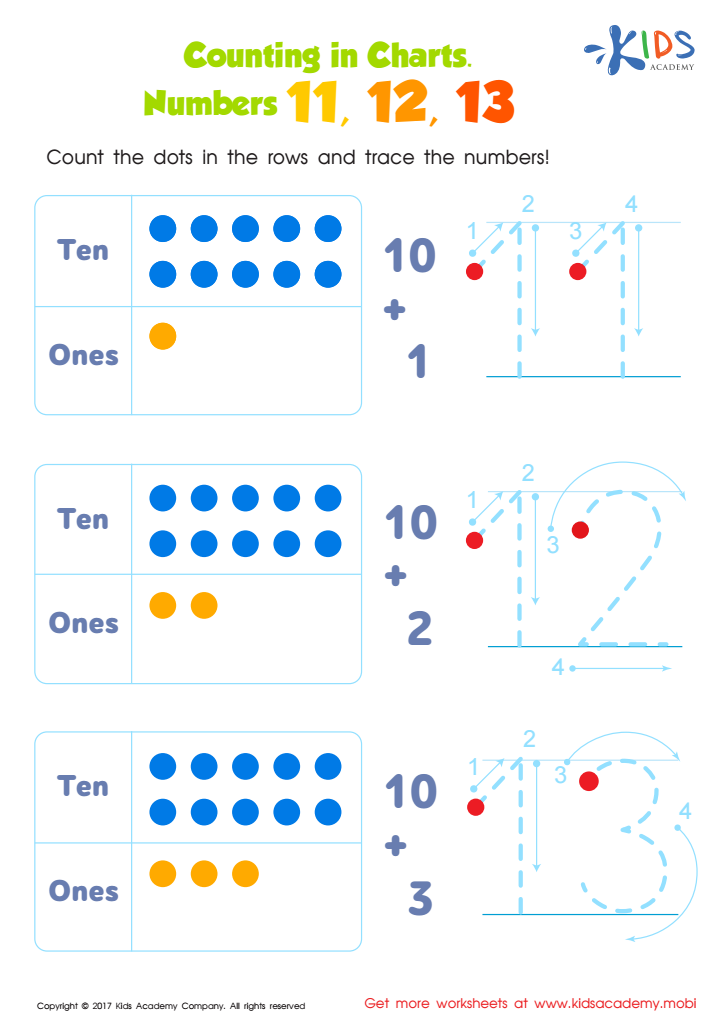
Number Tracing Worksheet For Kindergarten
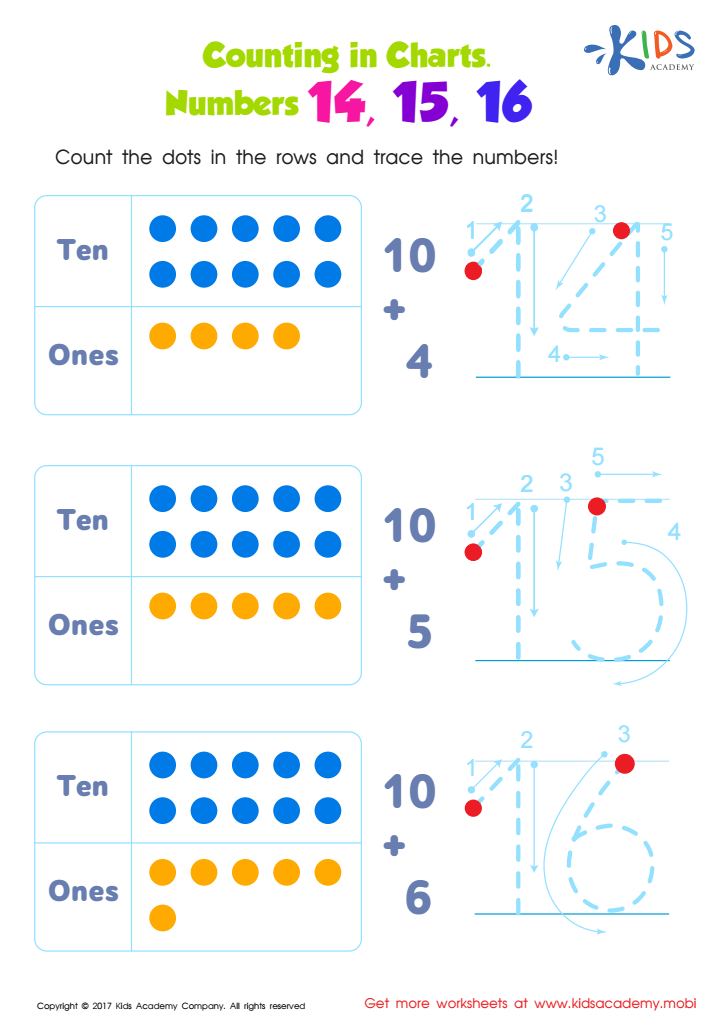
Number Tracing Worksheet


%20(1).jpg)



Hand-eye coordination is a crucial developmental skill for children ages 3 to 6, and it significantly impacts their ability to learn and thrive. Parents and teachers should care about this essential skill, particularly concerning numerical recognition and manipulation of numbers up to 100, as it forms the foundation of various everyday activities, including reading, writing, and math.
For young children, the ability to coordinate visual input with motor actions helps improve precision in tasks such as drawing, cutting with scissors, and even simple sports. When children engage in activities that involve numbers—such as counting objects, stacking blocks, or using educational games—their hand-eye coordination is further enhanced.
Moreover, by nurturing hand-eye coordination alongside number recognition, educators and parents can foster a child’s confidence in dealing with mathematical concepts, paving the way for a positive attitude toward learning. These early skills also set the stage for more complex tasks in later schooling, where advanced coordination can be crucial for subjects like science, art and even physical education.
Ultimately, grasping hand-eye coordination influences a child’s sensory integration, fine motor skills, and overall brain development, making it vital for parents and educators to prioritize these aspects in early childhood education.








