Number Recognition Numbers up to 100 Worksheets for Ages 3-6 - Page 2
27 filtered results
-
From - To
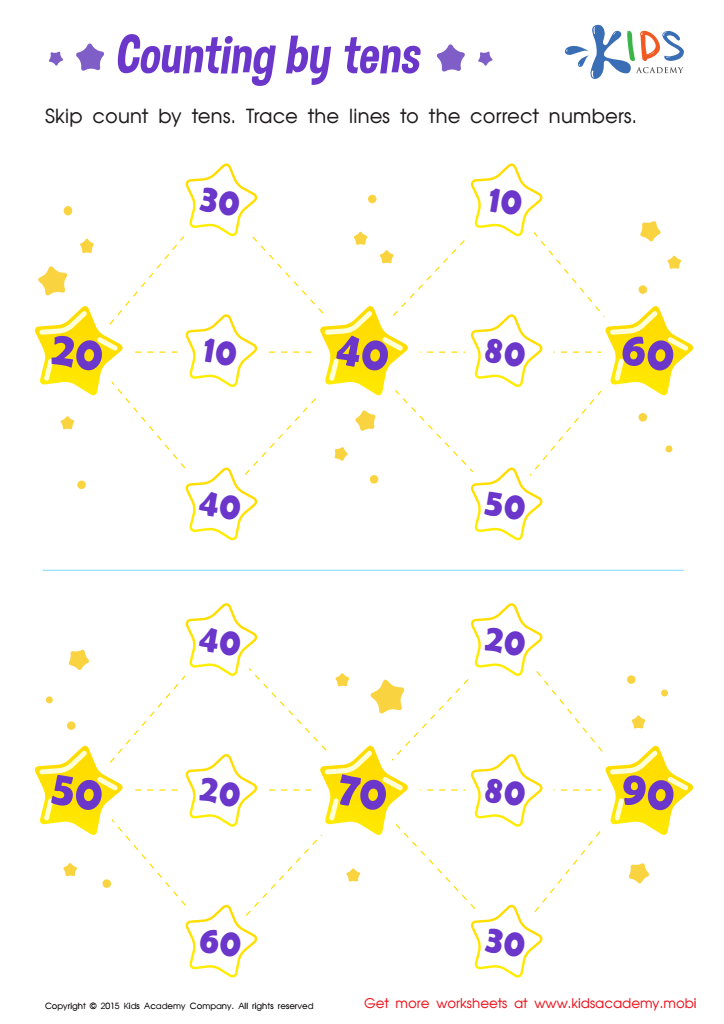
Learn Dozens: Counting by Tens Printable
 Assign to My Students
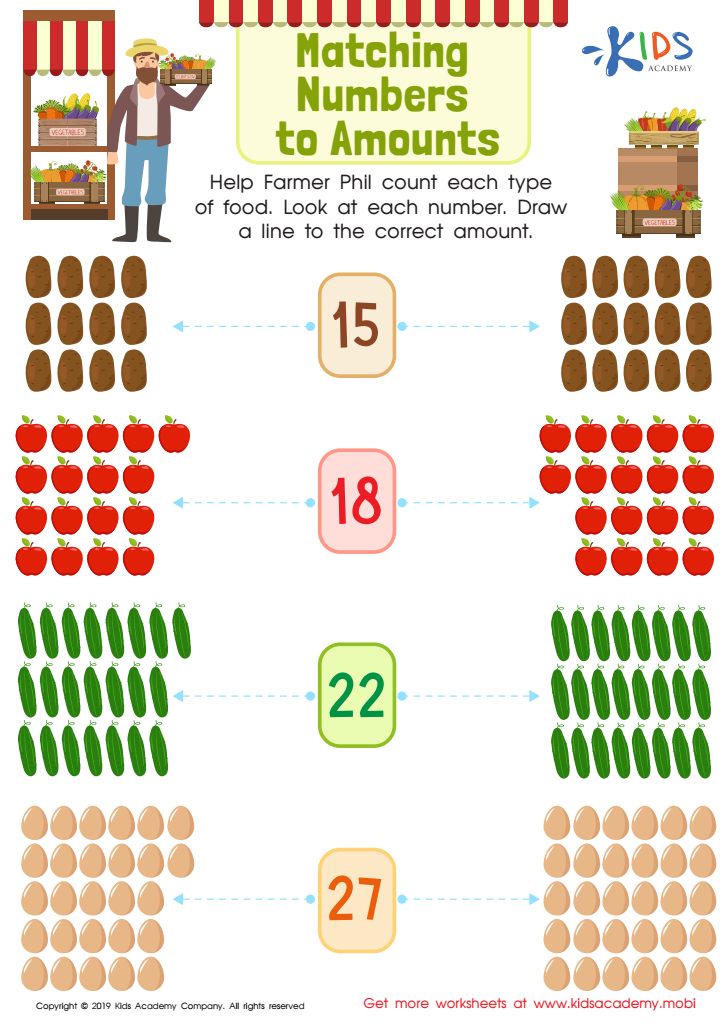
Matching Numbers to Amounts Worksheet

Counting on the City Skyline: Dot-to-Dot Worksheet








Number recognition is a foundational skill that plays a critical role in a child's early mathematical development. For children aged 3-6, recognizing numbers up to 100 is essential because it paves the way for more complex math concepts they will encounter later in their education. When children can identify and understand numbers, they are better prepared to grasp concepts such as counting, addition, and subtraction.
Parents and teachers should prioritize number recognition because it contributes to overall cognitive development. Recognizing numbers helps children develop critical thinking and problem-solving skills as they learn to manipulate numbers in various contexts. Furthermore, number recognition fosters confidence; as children become proficient in identifying numbers, they feel more assured in their mathematical abilities.
Additionally, incorporating number recognition activities in everyday experiences—like counting toys or reading number books—makes learning engaging and relevant. It not only nurtures a child’s interest in mathematics but also establishes a solid foundation for future academic success. Therefore, whether at home or in the classroom, supporting number recognition is crucial for fostering a love for learning and ensuring children are well-equipped for their educational journey.