Number Sequencing Skip Counting Worksheets for Ages 3-6
3 filtered results
-
From - To
Boost your child's math skills with our number sequencing skip counting worksheets designed for ages 3-6! These engaging and interactive worksheets introduce young learners to the concept of skip counting, helping them develop essential numeracy skills in a fun and approachable way. Children will explore patterns by skipping numbers, enhancing their familiarity with sequences, and improving their ability to recognize numerical patterns. Perfect for teachers and parents alike, our worksheets support early math education while fostering a love for learning. Accessible and easy to print, these resources are an excellent addition to any preschool or kindergarten curriculum. Start their math journey today!
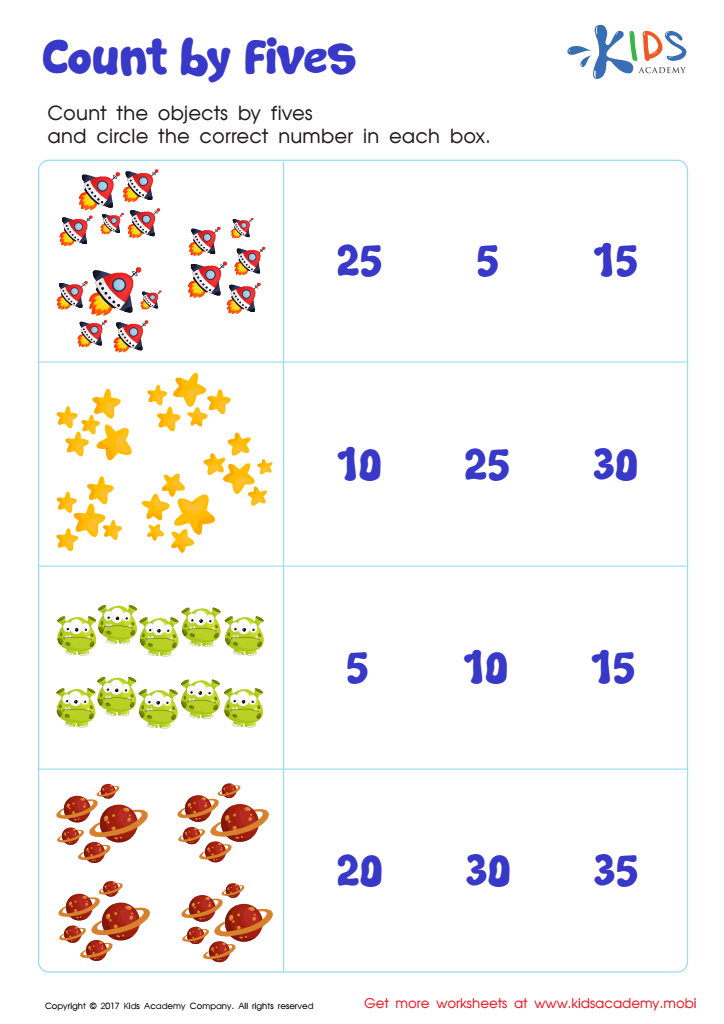
Skip Counting by 5s: Space Math Printable
 Assign to My Students
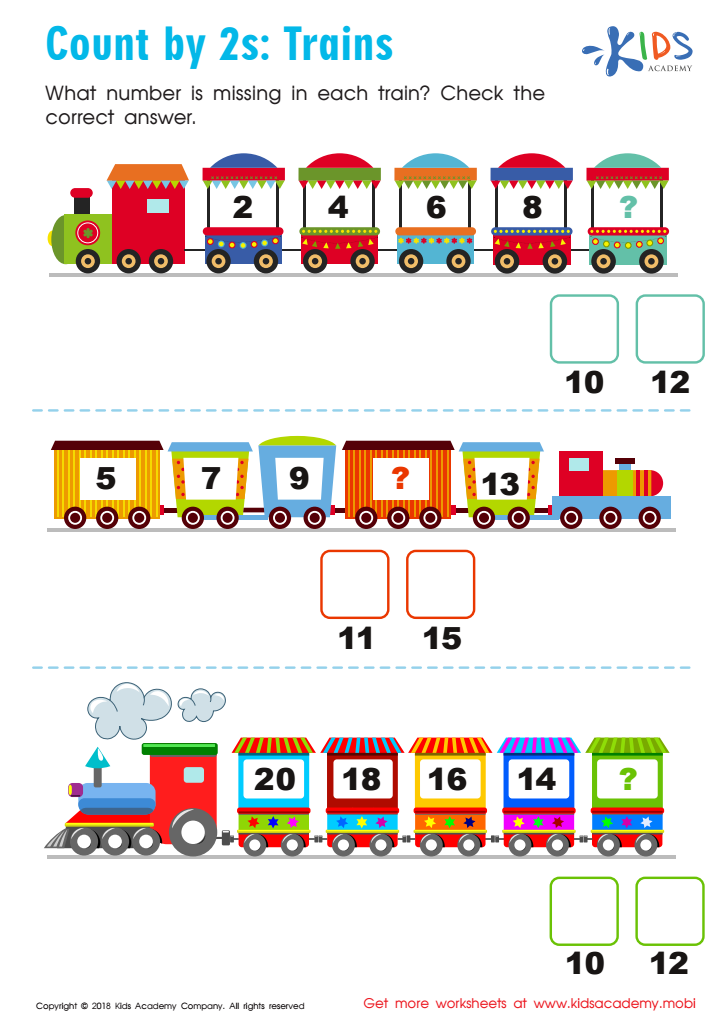
Count by 2's: Trains Worksheet
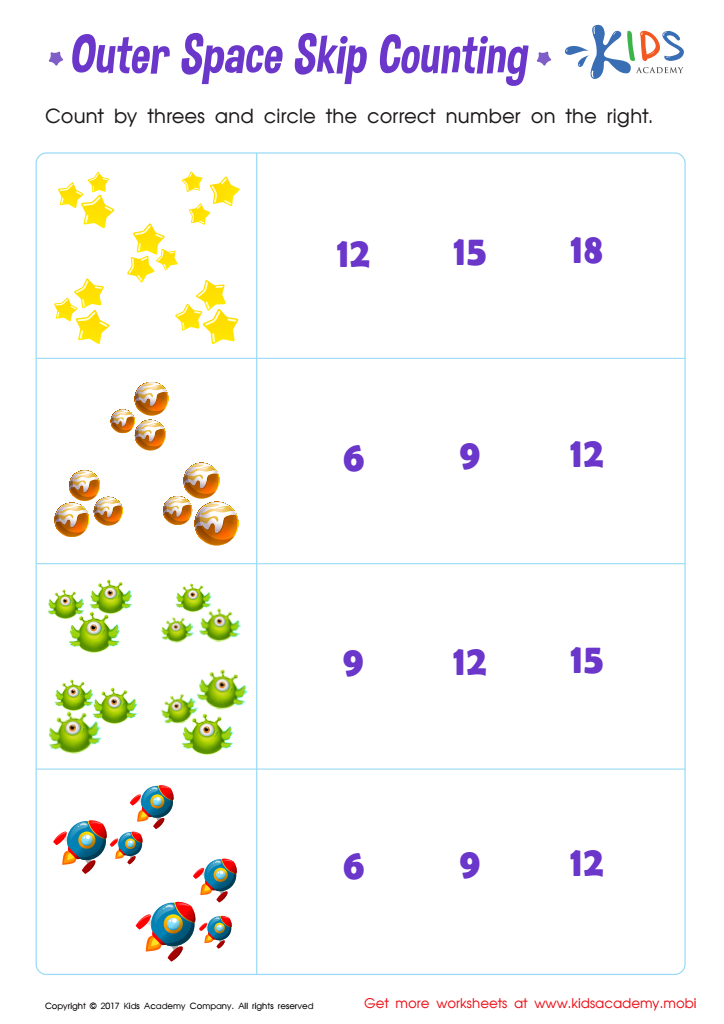
Skip Counting by 3s: Outer Space Skip Counting Printable








Parents and teachers should recognize the importance of number sequencing and skip counting for children aged 3 to 6 as foundational skills in early mathematics education. These concepts not only enhance a child's numerical fluency but also prepare them for more complex mathematical operations later on.
Number sequencing helps children understand the order of numbers, which is crucial for grasping counting principles. It lays the groundwork for recognizing patterns, essential in various mathematical concepts. By engaging in skip counting—such as counting by twos, fives, or tens—children learn to group numbers efficiently, promoting both twisty problem-solving skills and number sense.
These activities foster critical cognitive development, enhancing memory, focus, and attention. They encourage strategic thinking and help children understand relationships between numbers, visualizing quantities in diverse contexts. Additionally, through games and playful activities centered on skip counting, children develop a positive attitude towards mathematics, aiding in building self-confidence.
Moreover, incorporating number sequencing and skip counting into everyday conversations and activities promotes a supportive learning environment. By nurturing a love for numbers at an early age, parents and teachers set children up for future academic success and empower them with essential life skills.








