Problem-Solving Skills Skip Counting Worksheets for Ages 3-6
3 filtered results
-
From - To
Enhance your child's problem-solving skills with our engaging Skip Counting Worksheets for ages 3-6! Designed to make learning fun, these worksheets help young learners master skip counting by focusing on patterns and sequences. Each activity encourages critical thinking as children solve engaging problems, boosting their math confidence and ability. Our specially crafted resources foster cognitive development while making learning interactive and enjoyable. Perfect for parents and educators seeking to build essential foundational skills, these skip counting worksheets are a fantastic way to prepare children for future mathematical challenges. Start your child on the path to success today with these essential tools!
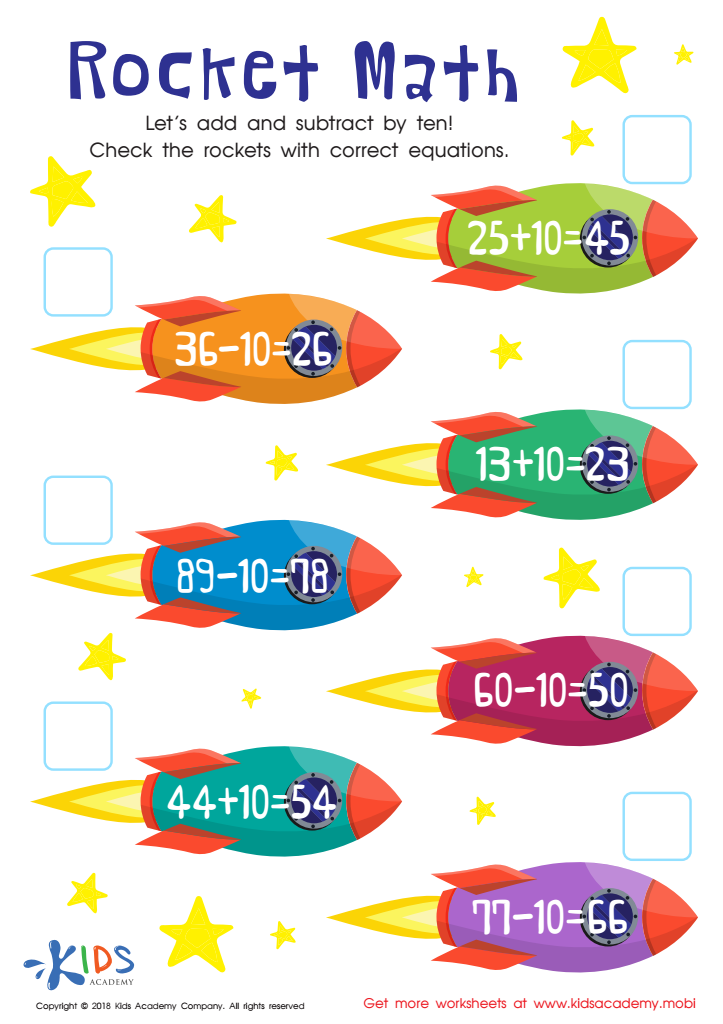
Rocket Math Worksheet
 Assign to My Students
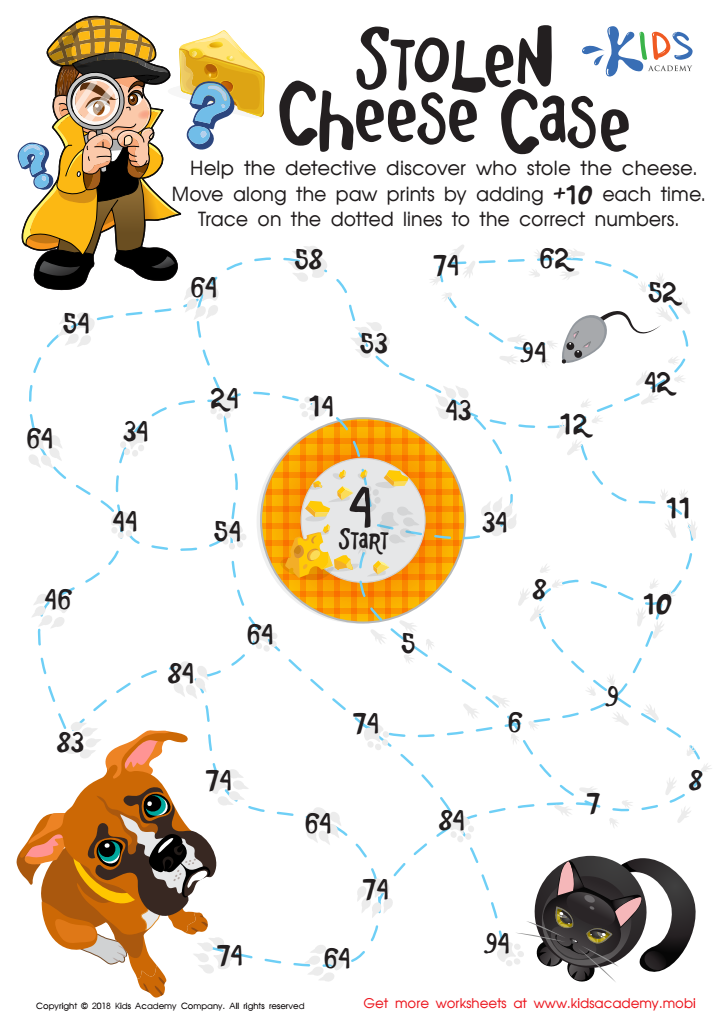
Stolen Cheese Case Maze Worksheet
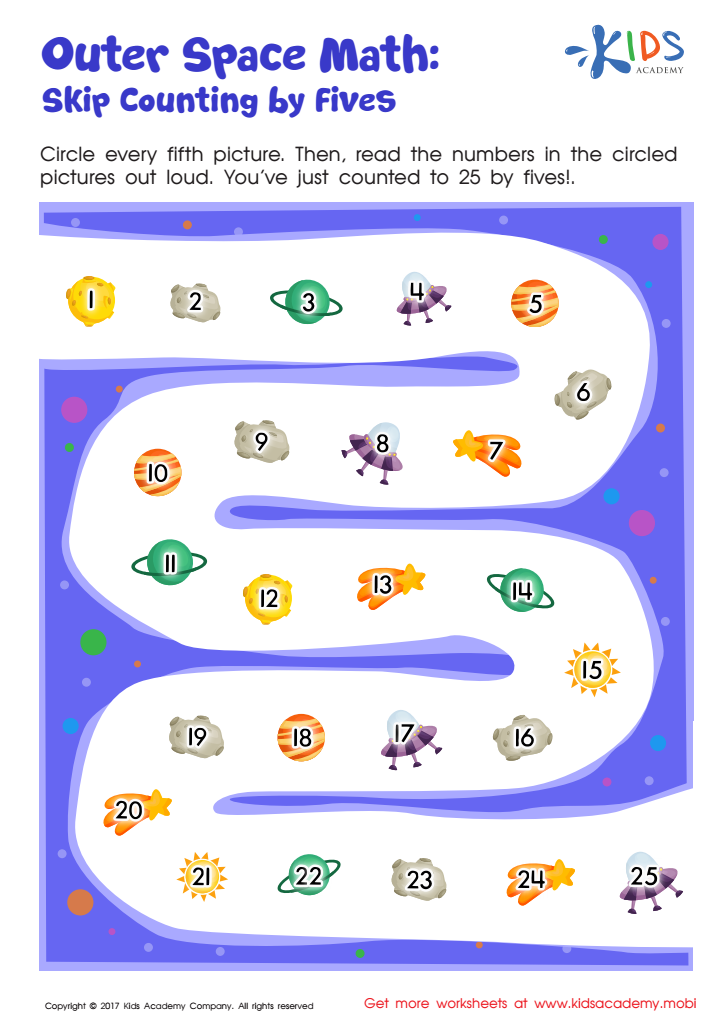
Skip Counting by 5s: Outer Space Math Printable






.jpg)

Problem-solving skills, including skip counting, are foundational for young children's mathematical understanding. For children ages 3-6, skip counting serves as an excellent way to introduce them to patterns, number relationships, and basic arithmetic concepts—critical building blocks for future math proficiency. Parents and teachers should pay attention to these skills because they promote logical thinking and cognitive development.
Firstly, skip counting helps children recognize patterns, the basis of many mathematical concepts. By learning to count by multiples (like 2s, 5s, or 10s), children begin to grasp how numbers relate to one another, facilitating a smoother transition to addition and multiplication.
Additionally, enhancing problem-solving abilities through skip counting encourages aGrowth Mindset. When children learn to approach challenges methodically, they develop resilience and confidence in their ability to tackle more complex problems.
Furthermore, integrating skip counting into daily activities makes learning engaging and less intimidating for young children. By providing fun, interactive experiences—such as counting toys or snacks—parents and teachers can foster positive attitudes towards math that last a lifetime. Encouraging early mastery of these skills not only prepares children for future academic success but also equips them to navigate real-life situations with ease and confidence.








