Animal recognition Word Problems Worksheets for Ages 3-6
4 filtered results
-
From - To
Introduce your child to the enchanting world of animals and numbers with our "Animal Recognition Word Problems Worksheets for Ages 3-6." These engaging worksheets combine critical thinking and fundamental math skills as kids solve simple word problems featuring their favorite animals. Specially designed for young learners, the activities support early math comprehension, counting, and animal literacy. Ideal for both classroom and home use, our printable resources make learning fun and interactive. Tailored for preschool to early elementary students, these worksheets spark curiosity and build foundational skills, boosting confidence and setting the stage for future learning success.
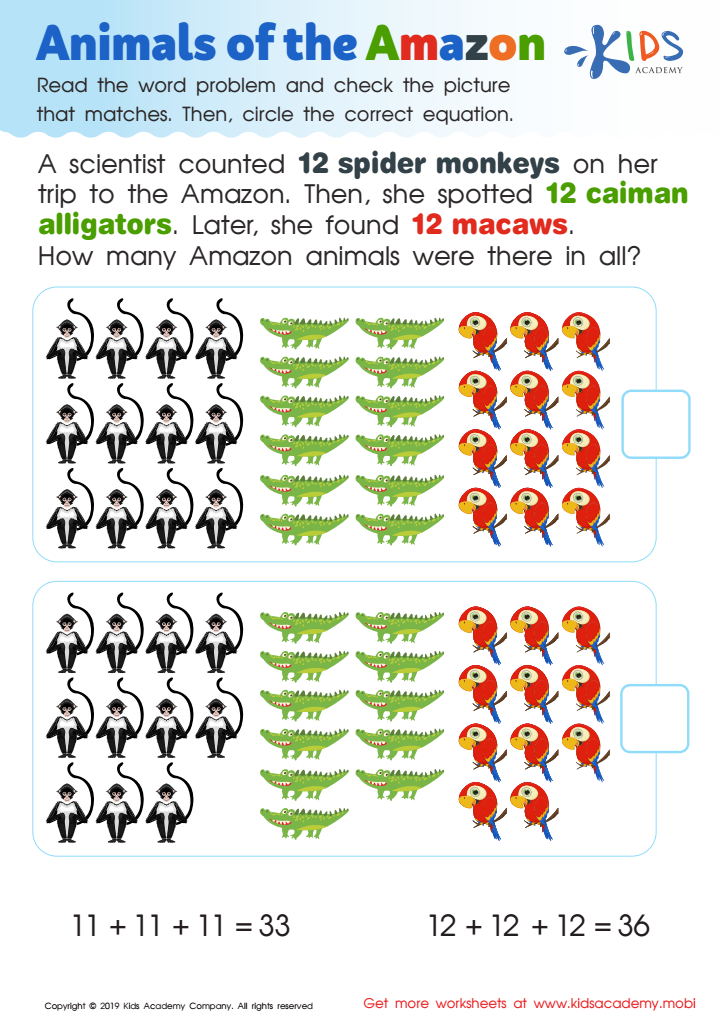
Animals of Amazon Worksheet
 Assign to My Students
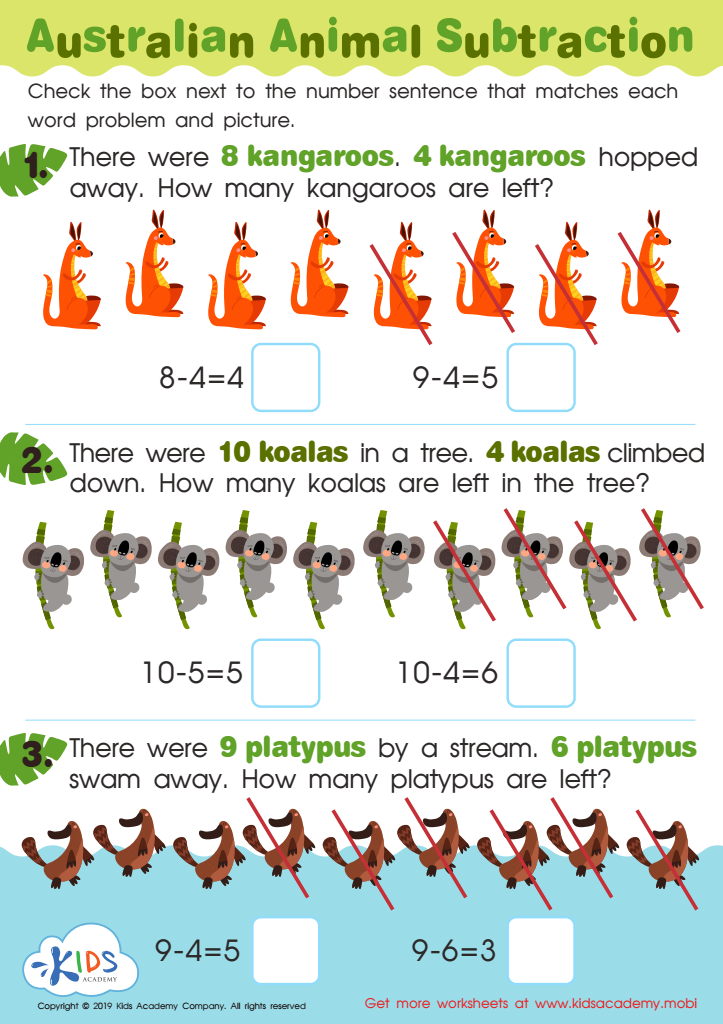
Australian Animal Subtraction Worksheet
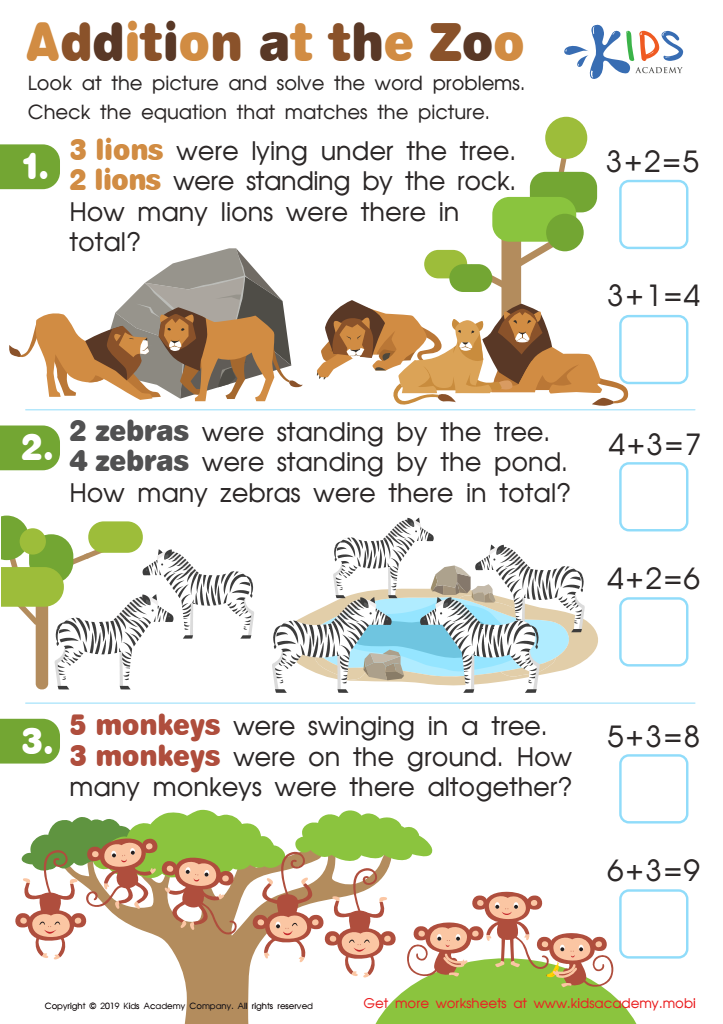
Addition at the Zoo Worksheet
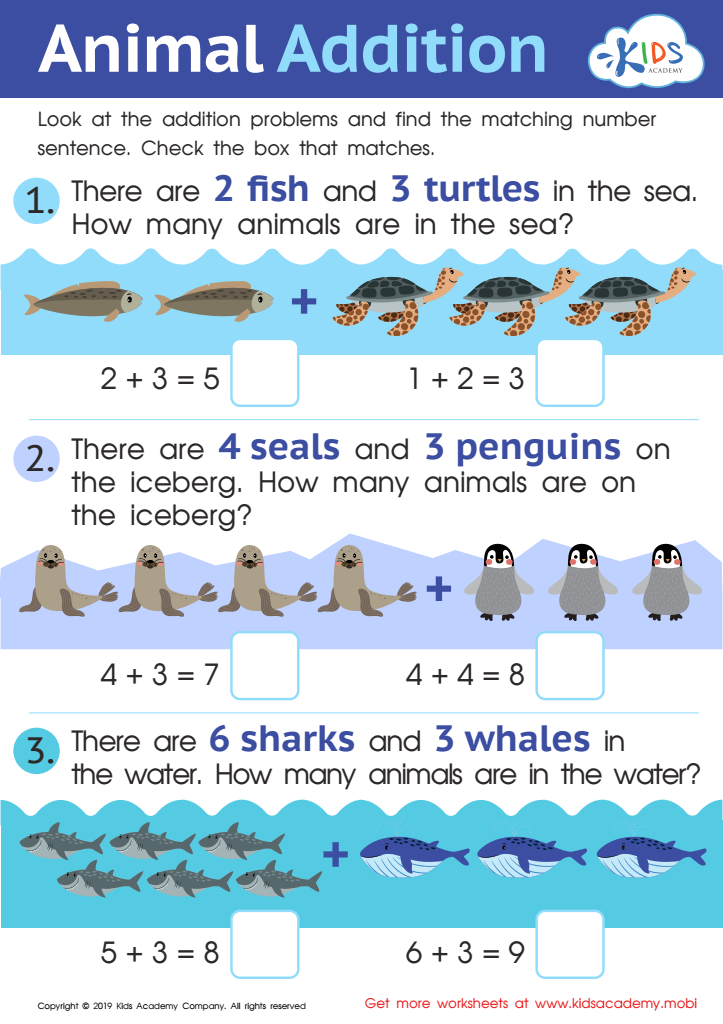
Animal Addition Worksheet








Parents and teachers should care about animal recognition word problems for children ages 3-6 because these activities greatly enhance early cognitive and language development. At this foundational stage, children's brains are highly receptive to new information, and engaging them with word problems centered around familiar and interesting subjects like animals can boost several key skills.
First, these word problems encourage critical thinking and problem-solving abilities. As children work through the problems, they learn to identify and match animal names and images, leading to improved memory and recognition skills. This not only broadens their vocabulary but also enhances their ability to categorize and understand different animal attributes.
Second, incorporating animal recognition into word problems delivers the essentials of early math and literacy in a playful and engaging manner. For example, questions like "How many legs do two dogs have?" blend basic arithmetic with real-world knowledge, promoting numeracy alongside literacy.
Furthermore, these exercises foster emotional and social development. They teach empathy and awareness of the natural world, nurturing curiosity and respect for living creatures, which are crucial traits for well-rounded development.
Involving parents and teachers in this learning process also ensures that activities are guided, appropriately challenging, and a source of shared joy, further solidifying the bond between caregiver and child while making learning an enjoyable experience.








