Basic arithmetic skills Word Problems Worksheets for Ages 3-6
4 filtered results
-
From - To
Enhance your child's math skills with our Basic Arithmetic Skills Word Problems Worksheets for Ages 3-6! Designed to stimulate young minds, these engaging worksheets will help kids understand and apply foundational arithmetic concepts such as addition, subtraction, counting, and number recognition. Each problem is presented in the form of a fun, relatable story to make learning enjoyable and comprehensible for young learners. Perfect for building confidence and problem-solving abilities, our activities will prepare your child for future academic success in a supportive, nurturing environment. Start them on the path to math mastery today! Visit us at Kids Academy to download your free worksheets now.
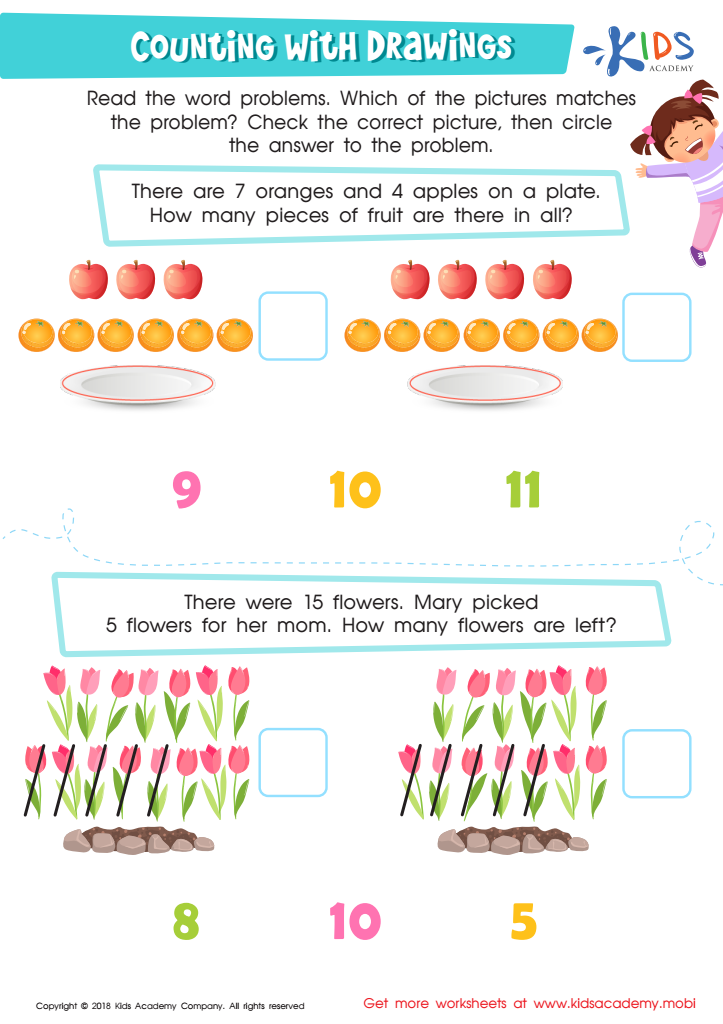
Counting with Drawings: Fruits & Chocolates Worksheet
 Assign to My Students
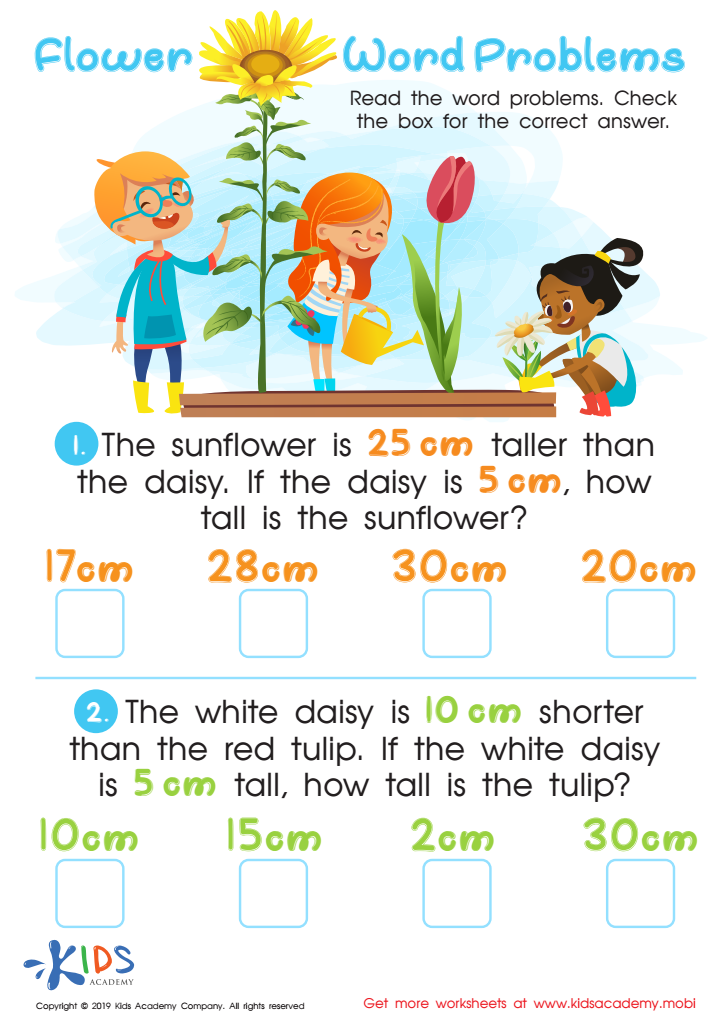
Flower Word Problems Worksheet
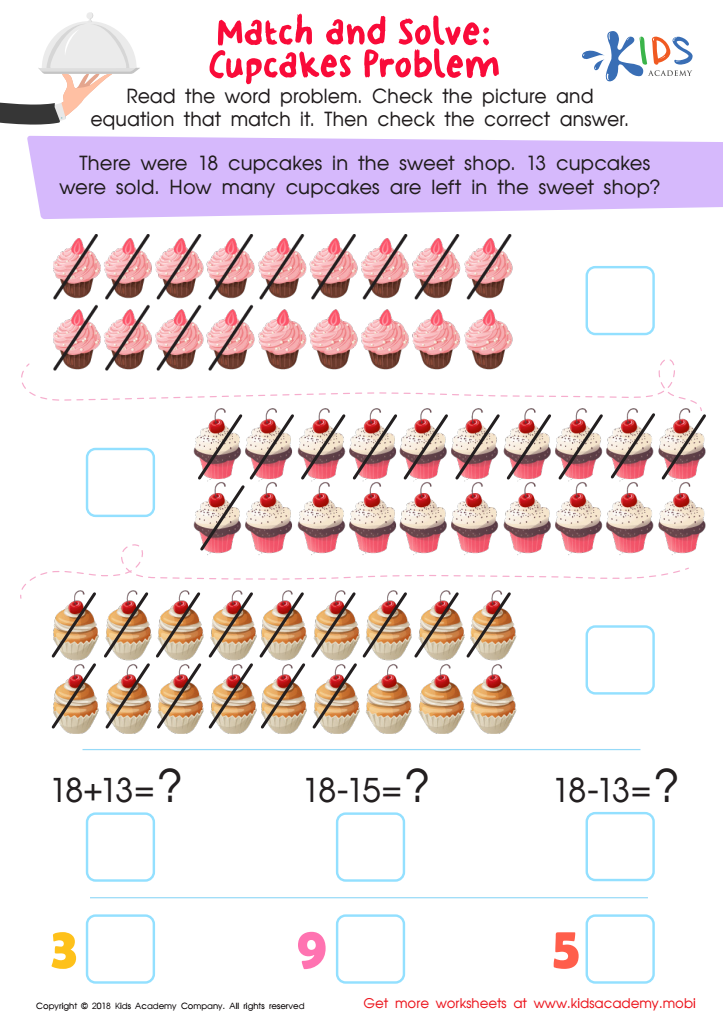
Match and Solve: Cupcakes Problem Worksheet
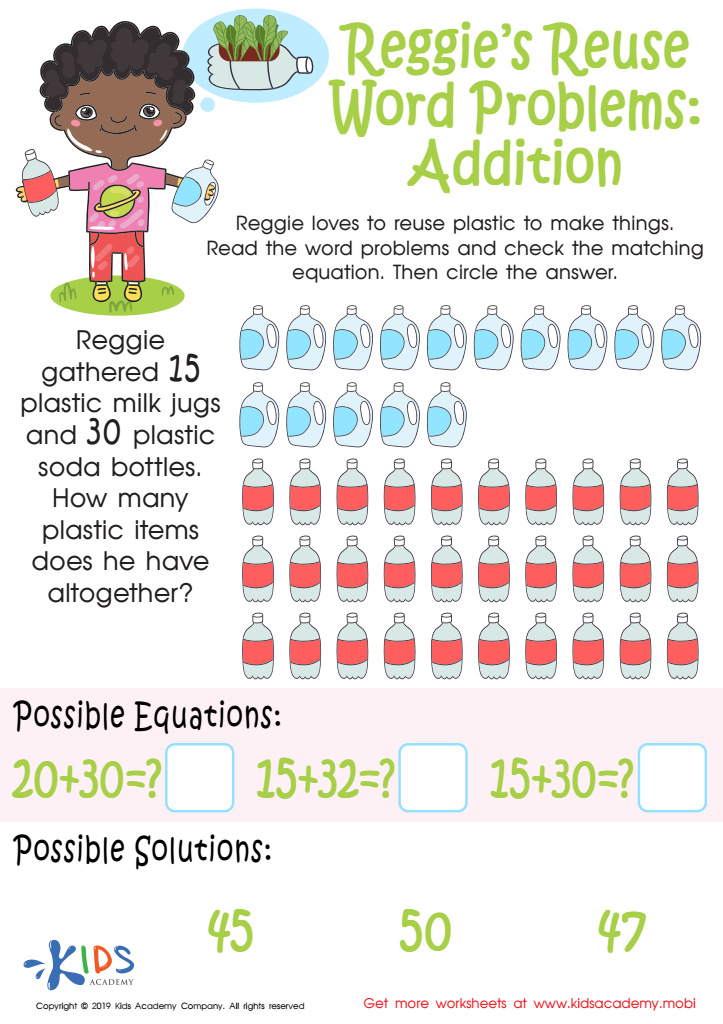
Reggie's Reuse Word Problems: Addition Worksheet








Basic arithmetic skills word problems are fundamental for young children aged 3-6 as they form the bedrock on which future mathematical proficiency is built. Parents and teachers should emphasize these skills because they enhance not only mathematical understanding but also critical thinking and problem-solving abilities. Tackling word problems requires children to interpret and translate verbal information into mathematical terms, bridging the gap between everyday language and abstract numbers.
This early engagement with arithmetic through practical scenarios strengthens cognitive development by fostering skills like counting, addition, and subtraction. By presenting math in context, children not only learn numerical operations but also understand their practical applications, making learning more relatable and meaningful.
Moreover, early success in solving word problems boosts confidence and fosters a positive attitude towards math, reducing future math anxiety. It also prepares children for academic challenges ahead, establishing a robust foundation for topics like algebra, geometry, and advanced problem-solving.
In this formative stage, children are naturally curious and eager to explore, making it the perfect time to introduce basic arithmetic word problems in fun, engaging ways. Incorporating word problems in early education can cultivate lifelong mathematical thinkers, setting the stage for academic success and everyday competence.








